This septuagenarian 'Green-Revolutionary' leads way with sustainable model farming

Anusha N Bhat | coastaldigest.com
February 2, 2019

At 73-years of age, Mahalinga Naik breaks into a smile, when residents of Amai village at Bantwal taluk point towards him as the local 'Green-Revolutionary'. For a man who never received formal education, Naik has been solely credited for creating a sustainable eco-friendly farmland, which once was barren land and could not even bear a sapling.

At a hillock farmland in Adyanadka, approximately 52 kilometre from the Mangalore city, a two-acre land boasts of 200 banana trees, 300 areca nut trees, 75 coconut palm trees, along with different types of cocoa, pepper vines. The layout of the farmland is not only systematic but does not leave any loose end for wastage. "From mini-irrigational system, conservation of water, to harvesting organic manure, the farmland is equipped to look into each aspect of traditional farm land," says famed Editor of Adike Patrike Shree Padre.

While today the agricultural revolution at Adyanadka has awed several agriculturists, in fact it has even fetched Mahalinga Naik with awards including ‘Krushi Panditha’ conferred by the Karnataka government in 2010. Recently, he was honoured with ‘Mangalore Press Club Award 2018’. Shree Padre has also released a small booklet on Naik by the title ‘Guddada Melina Ekvyakti Sainya’.

It was about forty years ago, when Naik was just another sharecropper at a land owned by one Mahabala Bhat. Earning a daily wage between Rs 1.50 to Rs 5, Naik managed his household. However, pleased with his dedication for the farmland, in 1979, Bhat gave Naik a two-acre land from his property.

“I was overjoyed with emotions, and swiftly was able to build a humble hut for my family. But the land had no water source for cultivation, we had to walk for about a kilometre for it and the effort was futile. I realised that to take care of my farmland and feed my family, I had to do something,” he says.

For the need of drawing water, Naik eventually decided to carve a ‘Suranga’ (tunnel) to naturally draw water for his cultivation. However, given his financial condition, Naik says he was unable to hire labourers, therefore he decided to use his part time from agriculture to dig the Suranga.

Each day, Naik would return from cultivation and then religiously start digging ‘Suranga’ to find the source of water. “My search for water was more instinctive than scientific. I started digging at places approximately about 100 feet each, where I thought I could find water, but was repeatedly disappointed,” he says.

In the pursuit for water, Naik says he has been mocked and even called names by locals for wasting his time. “I didn’t mind being called names, but I continued my effort for about 6-7 hours, day or night. At times I had to either crawl or squeeze myself between tiny spaces to get through these tunnels and excavate soil. My wife would not be happy, when she would come searching late at night,” he says.

For close to five-years, Naik failed in his endeavour. “Except rainy season, I never gave up on the excavation work. But by then, I had dug about four tunnels and not coming face to face with water was a bit unsettling,” he says.

It was only when Naik struck the sixth Suranga, in a bit further location that Naik felt some wetness in soil, which was an indication for the presence of water in the area.

With the new found development, Naik’s optimism had no bounds, he immediately went further to a higher topography and aggressively dug to find water and he did.  “It made me confident to probe further and I dug another one for domestic consumption,” he says.

To boost the texture and moisture of the soil, Naik also created small ponds across several places in the farmland which would capture rainwater, which Naik had learnt in an agriculture workshop. Naik even placed close to over 5,000 laterite stones to build retaining walls and prevent soil erosion.

Slowly the efforts paid-off, the same land which earlier harboured fragmented grass patches, eventually saw the growth of banana, cocoa, pepper vines, coconuts and areca-nuts. Besides, the farmland also hosts eight to ten honeycombs, alongside a vegetable garden where he grows ladies finger, cucumber, brinjal and so on.

Naik’s farm has become a must see model-farmland and has over 500 visitors a year. “When people visit, I feel very happy,” says Naik.

Sticking to his principle of Hasige Iddastu Kaalu Chachu (Being content with what one has), Naik says he would use only one acre of land for cultivation. “In another, I have built a house and want the same land to grow as natural forest so that future generation can benefit from it. If my experience can help others learn to make profit out of farming, then that would make me content,” he says.


Comments

Ann Pinto
 - 
Thursday, 9 May 2019

Wonderful....for sharing your story on how it’s possible to revive water and increase the water table and make a living too..

SD
 - 
Monday, 4 Feb 2019

Well done, Mr. Naik! Very happy that all your hard work paid off.

Add new comment

  • Coastaldigest.com reserves the right to delete or block any comments.
  • Coastaldigset.com is not responsible for its readers’ comments.
  • Comments that are abusive, incendiary or irrelevant are strictly prohibited.
  • Please use a genuine email ID and provide your name to avoid reject.
News Network
April 24,2020

Wayanad/Thiruvananthapuram, Apr 24: Amid the strict lockdown, a school teacher travelled from Thiruvananthapuram to Muthanga in Wayanad -- a distance of about 465 km -- on her way to neighbouring Karnataka en route to Delhi following which cases have been registered against her and an excise official.

The woman, Kamna Sharma, said to be working in Kendriya Vidyalaya, Pattom, undertook the journey on April 21 along with her two year-old daughter, police sources told news agency PTI.

An Excise Circle Inspector, Shahjahan, had provided his vehicle to travel allegedly on the instructions of Malappuram excise officer, in whose private vehicle, the woman and the child had reached Wayanad border from Thiruvananthapuram, the sources said.

The two were charged under the Kerala Epidemic Act and various sections of the IPC including sect 269 (negligent act likely to spread infection) and 271 (disobedience to quarantine rule).

Because of the lockdown even inter-district travel is not allowed by police and district administration, unless there is an extremely genuine reason.

A senior police official in Thiruvananthapuram said he does not remember issuing any such pass.

The woman may have "misused" government machinery as private vehicles would have been stopped somewhere during the long journey, he said.

She came to Kalpetta in Wayanad allegedly in an official car of the excise department.

Wayanad District police chief R Elango said that an FIR has been filed based on preliminary information and investigations have begun.

"We will check if she has followed procedures in obtaining a pass and if she made any false claim to get the pass."

As per preliminary information the woman came in an excise official's car from Thamarassery (Kozhikode) to Muthunga(Wayanad), he said. Her mode of transport before that--from Thiruvananthapuram to Wayanad--will also be investigated, he said, adding they have no information if she has reached Delhi.

"We will track down her movement," he said Meanwhile, theWayanad district administration has intensified the lockdown protocol from Thursday to prevent people's movement within and from outside the district/state.

Interception at all the check posts on district an state borders of the district, bordering Tamil Nadu and Karnataka, will also be intensified. No one would be allowed to travel frequently to and fro the district under the pretext of official duty.

Wayanad collector Adhila Abdulla said officials from outside the district will no longer be allowed to commute daily.

"Elderly people above the age of 65 should confine to their homes unless it is extremely urgent or unavoidable. Cases will be registered against family members who allow elderly people to go out for buying medicines and other essentials," she said.

Senior citizens, who live alone, can call either the Fire (101) or Police (100) departments for any help and to get things they need, the collector said.

Whatever relaxations were in place have also been withdrawn with effect from Thursday, she added.

Wayanad and Thiruvananthapuram come under the "Orange B" zone where there are some relaxations.

However, Thiruvananthapuram city limits falls under the hotspot area.

Police said a case was also registered against a doctor and her husband who entered Kerala from Tamil Nadu border.

Comments

Add new comment

  • Coastaldigest.com reserves the right to delete or block any comments.
  • Coastaldigset.com is not responsible for its readers’ comments.
  • Comments that are abusive, incendiary or irrelevant are strictly prohibited.
  • Please use a genuine email ID and provide your name to avoid reject.
News Network
April 28,2020

Mangaluru, Apr 28: Trucks carrying fish loads from Kerala will not be allowed to enter Dakshina Kannada district as the authorities are not being able to control the rush in markets, state Fisheries Minister and district-in-charge Kota Srinivas Poojary said Monday.

The deputy commissioner has been instructed to restrict the entry of fish transport vehicles from outside the district forthwith, in view of the difficulty in maintaining social distancing at the markets identified in the district, the minister told reporters here.

The coastal district has to take more precautionary measures to fight COVID-19 as the number of positive cases have risen in the last couple of days, he said.

Comments

Add new comment

  • Coastaldigest.com reserves the right to delete or block any comments.
  • Coastaldigset.com is not responsible for its readers’ comments.
  • Comments that are abusive, incendiary or irrelevant are strictly prohibited.
  • Please use a genuine email ID and provide your name to avoid reject.
News Network
July 28,2020

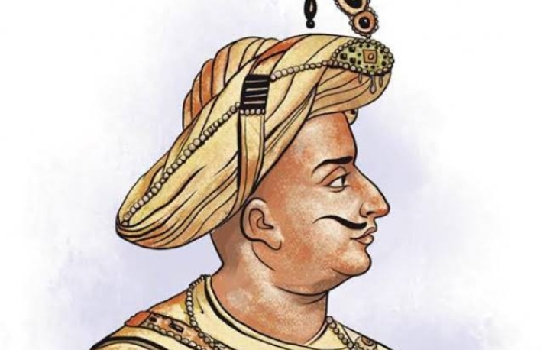
Bengaluru, Jul 28: After the Central Board of Secondary Education (CBSE) reduced the syllabi for Classes 9 to 12 due to COVID-19 pandemic, the Karnataka government has followed the suit. The Department of Public Instruction has omitted the chapters on legendary south Indian rulers Hyder Ali and Tipu Sultan from the textbooks of Class 7 in their attempt to reduce syllabus for state board schools by 30 per cent. 

The department, however, has decided to retain similar chapters on Tipu Sultan in 6th and 10th Classes, though the syllabus in text books for all classes from 1 to 10th has been trimmed. 

The trimmed textbooks uploaded on the website of the Department of State Education Research and Training (DSERT) by Karnataka state Textbook Society revealed removal of chapters on Tipu Sultan for the seventh grade.

Justifying the decision, officials said, "students study similar chapters in Class 6 and more in the 10th grade." Yet another senior official from the Text Book Society said, "Trimming does not mean we have removed half of the syllabus from textbooks. It is only keeping in mind the repetition we have condensed the chapters. In case students study about a particular dynasty in higher grades, then the same had been removed from lower grades."

A few months ago, there was an uproar over dropping of content on Tipu Sultan and MLAs from the ruling BJP also demanded the same and petitioned to the Chief Minister. Even an expert committee led by Prof Baraguru Ramachandrappa suggested to not drop any content on the historic figure. However, the department still decided to drop lessons from one of the classes while keeping the syllabus short for the next 120 active academic days.

Earlier this month, a controversy had erupted over the CBSE's decision to omit topics like federalism, secularism, citizenship, etc while reducing the syllabus for Classes 9 to 12. The education board had issued a detailed clarification later, stating that topics claimed to be dropped "are either being covered by the rationalised syllabus or in the Alternative Academic Calendar of NCERT".

"The rationalisation of syllabus up to 30 per cent has been undertaken by the Board for nearly 190 subjects of class 9 to 12 for the academic session 2020-21 as a one-time measure only. The objective is to reduce the exam stress of students due to the prevailing health emergency situation and prevent learning gaps," it said.

Last week, the Congress in Uttar Pradesh expressed its concern over 'deliberate and systematic' deletions of chapters related to the freedom struggle and the party's role in it from the Class 10-12 syllabi of the Secondary Education Board.

Comments

Add new comment

  • Coastaldigest.com reserves the right to delete or block any comments.
  • Coastaldigset.com is not responsible for its readers’ comments.
  • Comments that are abusive, incendiary or irrelevant are strictly prohibited.
  • Please use a genuine email ID and provide your name to avoid reject.