


Shocking: India's richest 1% corner 73% of wealth generation

Agencies
January 22, 2018

Davos, Jan 22: The richest 1 per cent in India cornered 73 per cent of the wealth generated in the country last year, a new survey showed today, presenting a worrying picture of rising income inequality.

Besides, 67 crore Indians comprising the population's poorest half saw their wealth rise by just 1 per cent, as per the survey released by the international rights group Oxfam hours before the start of the annual congregation of the rich and powerful from across the world in this resort town.

The situation appears even more grim globally, where 82 per cent of the wealth generated last year worldwide went to the 1 per cent, while 3.7 billion people that account for the poorest half of population saw no increase in their wealth.

The annual Oxfam survey is keenly watched and is discussed in detail at the World Economic Forum Annual Meeting where rising income and gender inequality is among the key talking points for the world leaders.

Last year's survey had showed that India's richest 1 per cent held a huge 58 per cent of the country's total wealth -- higher than the global figure of about 50 per cent.

This year's survey also showed that the wealth of India's richest 1 per cent increased by over Rs 20.9 lakh crore during 2017 -- an amount equivalent to total budget of the central government in 2017-18, Oxfam India said.

The report titled 'Reward Work, Not Wealth', Oxfam said, reveals how the global economy enables wealthy elite to accumulate vast wealth even as hundreds of millions of people struggle to survive on poverty pay.

"2017 saw an unprecedented increase in the number of billionaires, at a rate of one every two days. Billionaire wealth has risen by an average of 13 per cent a year since 2010 -- six times faster than the wages of ordinary workers, which have risen by a yearly average of just 2 per cent," it said.

In India, it will take 941 years for a minimum wage worker in rural India to earn what the top paid executive at a leading Indian garment firm earns in a year, the study found.

In the US, it takes slightly over one working day for a CEO to earn what an ordinary worker makes in a year, it added.

Citing results of the global survey of 70,000 people surveyed in 10 countries, Oxfam said it demonstrates a groundswell of support for action on inequality and nearly two-thirds of all respondents think the gap between the rich and the poor needs to be urgently addressed.

With Prime Minister Narendra Modi attending the WEF meeting in Davos, Oxfam India urged the Indian government to ensure that the country's economy works for everyone and not just the fortunate few.

It asked the government to promote inclusive growth by encouraging labour-intensive sectors that will create more jobs; investing in agriculture; and effectively implementing the social protection schemes that exist.

Oxfam also sought sealing of the "leaking wealth bucket" by taking stringent measures against tax evasion and avoidance, imposing higher tax on super-rich and removing corporate tax breaks.

The survey respondents in countries like the US, UK and India also favoured 60 per cent pay cut for CEOs.

The key factors driving up rewards for shareholders and corporate bosses at the expense of workers' pay and conditions, Oxfam said, include erosion of workers' rights; excessive influence of big business over government policy- making; and the relentless corporate drive to minimise costs in order to maximise returns to shareholders.

About India, it said the country added 17 new billionaires last year, taking the total number to 101. The Indian billionaires' wealth increased to over Rs 20.7 lakh crore -- increasing during last year by Rs 4.89 lakh crore, an amount sufficient to finance 85 per cent of the all states' budget on health and education.

It also said India's top 10 per cent of population holds 73 per cent of the wealth and 37 per cent of India's billionaires have inherited family wealth. They control 51 per cent of the total wealth of billionaires in the country.

Oxfam India CEO Nisha Agrawal said it is alarming that the benefits of economic growth in India continue to concentrate in fewer hands.

"The billionaire boom is not a sign of a thriving economy but a symptom of a failing economic system. Those working hard, growing food for the country, building infrastructure, working in factories are struggling to fund their child's education, buy medicines for family members and manage two meals a day. The growing divide undermines democracy and promotes corruption and cronyism," she said.

The survey also showed that women workers often find themselves at the bottom of the heap and nine out of 10 billionaires are men.

In India, there are only four women billionaires and three of them inherited family wealth.

"It would take around 17.5 days for the best paid executive at a top Indian garment company to earn what a minimum wage worker in rural India will earn in their lifetime (presuming 50 years at work)," Oxfam said.

Comments

Ajay
 - 
Monday, 22 Jan 2018

In reality only 1% understand the value of money, rest 99% are busy with padmaavati to be released or not or celebrating the victory in bhima koreogaon

Babu Gowda
 - 
Monday, 22 Jan 2018

The black money held by some sections of the population in India might not have been accounted in the 73% money made by 1% of population. If all the money is accounted, it could be much more than 82%. In poorer countries like India, disparity between the rich and poor will be very high and widening year after year. It is a time bomb. 

Mohan
 - 
Monday, 22 Jan 2018

Still government says ...working for Poor ... but reality is opposite ...Working for rich and corporates .. 

Ravi
 - 
Monday, 22 Jan 2018

Increasing disparity always lead to social disorder and sometime revolts and civil war too !!! Rich''s should at their own should deploy their wealth for upliftment of downtrodden people else their wealth would not remain secured

Ganesh
 - 
Monday, 22 Jan 2018

it is evident that the nexus between politicians taking favourable decisions to benefit business tycoons and most of them are from same state where top leaders from! Why the hell other states are ignored!!

Chakravarthy
 - 
Monday, 22 Jan 2018

Rich save for generation and corner money where as poor do not know what will be their financial position tomorrow.The wide gap is not good for the country.

Karthik
 - 
Monday, 22 Jan 2018

Modi, what you have done?

Jinesh
 - 
Monday, 22 Jan 2018

A study should be done how this one percent spend their money, whether this wealth is getting invested in India or taken abroad

Add new comment

  • Coastaldigest.com reserves the right to delete or block any comments.
  • Coastaldigset.com is not responsible for its readers’ comments.
  • Comments that are abusive, incendiary or irrelevant are strictly prohibited.
  • Please use a genuine email ID and provide your name to avoid reject.
News Network
February 26,2020

Udupi, Feb 26: Thirty senior folk artistes, one from each district across the state, and two folk experts will be presented the ''Karnataka Janapada Academy'' Awards for 2019-20.

Announcing the names of the award winners here on Wednesday, Academy Chairperson Manjamma Jogathi said that while the artistes will get a purse of Rs 25,000 and a citation, the folk experts will be awarded Rs 50,000 and a citation.

The awardees are M Gowramma (Folk singing – Bengaluru Urban), Lakshamma (Bengaluru Rural – Bhajan), Ankanahalli Shivanna (Ramnagaram –Pooja Kunitha), Angadi Venkatesheppa (Kolar-Tatvapada), Rangaiah (Thumkuru-Folk Singing), P G Parameshwarappa (Davangere-Veeragase), Tippanna (Chitradurga – Goravara Kunita), Munireddy (Chikkaballapura-Folk Song), G C Manjappa (Shivamogga – Dollu Kunitha), Mada Shetty (Mysore – Kamsale Kunita), Swami Gowda (Beesuva Padagalu – Mandya), Gowramma (Chamarajnagar –Sobane Pada), J K Ramu (Kodagu-Kodavara Kunitha), Kapini Gowda (Hassan – Kolata), Dr H C Eshwarnayaka (Chikkamagalur-Nati Vaidhya), Sadhu Panara (Udupi-Bhootha Kola), Rukmaiah Gowda (Dakshina Kannada – Siddavesha), Sankamma (Belagavi –Sampradaya Pada), Rukmini Mallappa Haranala (Bagalkote-Wedding folk Song), Mallaiah Rachaiah Thotagunte (Dharawad-Folk Song), Hanumanthappa Dharwad (Haveri –Bhajane Kolata), Nagaraj Jakkammanavar (Gadag – Gigi Pada), Nimbevva Kenchappa Gubbi (Vijayapura-Sobane Pada), Hussainabi Budensaab Siddi (Uttarkannada-Siddi Damami Dance), Gangadara Swami Aggi Mata (Kalburgi – Puruvanthike), Tulasi Rama Bhimarao Suthara (Bidar-Folk Song), Shanthavva Ganda Lachamappa Lamani (Koppal – Lamani Dance), Soogappa Nagappa (Raichur – Tatvapada), Veshagara Mothi Ramanna (Ballari-Hagalu Vesha), Shivamoorthy Thanikedara (Yadagir – Gigi Pada).

Comments

Add new comment

  • Coastaldigest.com reserves the right to delete or block any comments.
  • Coastaldigset.com is not responsible for its readers’ comments.
  • Comments that are abusive, incendiary or irrelevant are strictly prohibited.
  • Please use a genuine email ID and provide your name to avoid reject.
News Network
August 2,2020

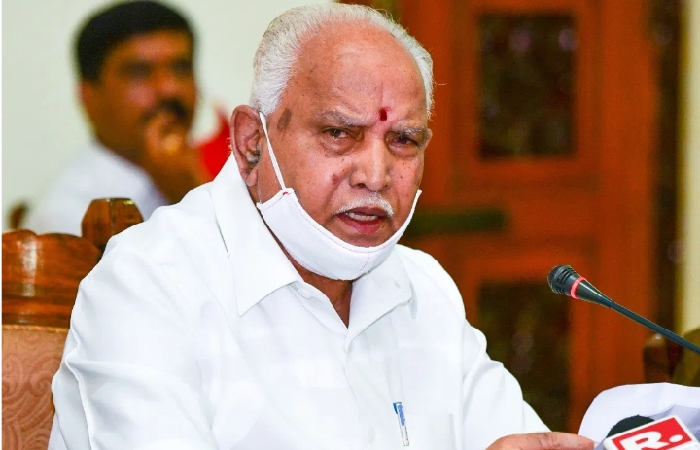
Bengaluru, Aug 2: Within a year of returning to power for the fourth time as Chief Minister in Karnataka, septuagenarian B.S. Yediyurappa has consolidated his position in the ruling BJP to stay the course till the next Assembly elections in mid-2023.

"A combination of factors helped Yediyurappa to consolidate and stay the course for the remaining term of his office to ensure the saffron party retains power in the state though he is unlikely to stake claim for the chief minister's post again as he would be 80 years old by 2023," a party source told news agency here.

Since the 77-year-old seasoned politician assumed office on July 26, 2019, the first year has been tumultuous for him, as he had go through a "trial by fire" what with the party's mighty high command and detractors testing his patience in the face of natural calamities like drought, floods and the Covid pandemic.

The first 7-8 months of the term were spent in tackling drought and floods, winning 12 of the 15 by-elections in December to secure a majority for the ruling party in the lower house and expanding the cabinet in February.

Even as Yediyurappa was settling down to seriously govern after presenting the state budget for fiscal 2020-21 in early March, the coronavirus outbreak overwhelmed him, as the pandemic spread and wreaked havoc, disrupting life, livelihood, economic growth and development.

"While the emphatic victory in the by-elections ensured the government's stability till the assembly term up to mid-2023, the second cabinet expansion on February 6 posed a challenge to Yediyurappa, as he could induct only 10 of the 12 MLAs who defected from the Congress and the Janata Dal-Secular (JD-S) and won the by-elections, triggering a revolt in the party by the loyalists left out of the ministry," the source recalled.

Though Yeddiyurappa has been leading the battle against the virus from day 1 and initially succeeded in controlling it from spreading during the extended lockdown till May 31, reopening the state under Unlock since June has undone the gains, as positive cases shot up to 1,29,287 so far, including 73,219 in Bengaluru after 53,648 recovered from across the state till date, while 2,412 succumbed to the deadly disease since March 9.

"For a state of 7 crore population, the data reveals that the pandemic has been fought on war-footing to contain it from spreading in all the 30 districts, although there are no signs of it going away till a vaccine is found. The chief minister has been trying to balance unlocking the state and containing the infection," a member of the health task force told IANS.

With six cabinet posts in the 34-member ministry being vacant, filling them will be a daunting task for Yediyurappa, as at least 20 legislators, including 5-6 newly elected turncoats and party's veterans are lobbying to become ministers at any cost.

By appointing 20 party legislators as heads of state-run board and corporations, nominating 5 as members of the state legislative council, including JD-S defector A.H. Vishwanath in July and getting 2 Congress defectors R. Shankar and M.T.B. Nagaraj elected as MLCs in June with 2 others, Yediyurappa ensured that these lawmakers would not be in the reckoning for the 6 cabinet posts, as dozen MLAs are already pitching for them.

Nagaraj and Vishwanath lost in the December 5 by-elections, while Shankar was not given a ticket to contest in the by-poll but was assured of making him an MLC with another disgruntled member C.P. Yogeshwar, who lost in the 2018 May assembly polls to JD-S leader and former chief minister H.D. Kumaraswamy of the 14-month-old JD-S and Congress coalition government from May 23, 2018 to July 23, 2019.

Resignations of 17 rebels, including 14 from the Congress and 3 from the JD-S led to the fall of the coalition government, as Kumaraswamy lost the majority in the 225-member assembly on July 23, 2019 in their absence.

Though Yediyurappa led the party to win 105 seats in the 2018 assembly elections and formed a government on May 17, 2018, he resigned 3 days later on May 19, 2018, as he fell 8-9 seats short of the halfway mark (113) for a simple majority in the lower house.

In a post-poll alliance, the JD-S and the Congress formed the coalition government to keep the BJP out of power in May 2018, after the assembly elections gave split verdict and the Congress lost power then.

"The record victory of the ruling party in the May 2019 general elections, when 25 of its 27 contestants won out of 28 Lok Sabha seats from the state, reinforced the popular belief that Yediyurappa is the party's mascot in winning elections and an unquestionable leader of the politically dominant Lingayats in the state," the source pointed out.

When Yediyurappa left the BJP and floated a regional outfit (Karnataka Janata Party) in January 2013, he delivered a body blow to the BJP in the May 2013 state assembly polls, as the votes got split and was defeated by then Congress.

"Besides the party's high command, everyone in the party's state unit, including leaders and cadres are aware of Yediyurappa's popularity across the state, as has the wherewithal to connect with masses and win elections," the source added.

Comments

Add new comment

  • Coastaldigest.com reserves the right to delete or block any comments.
  • Coastaldigset.com is not responsible for its readers’ comments.
  • Comments that are abusive, incendiary or irrelevant are strictly prohibited.
  • Please use a genuine email ID and provide your name to avoid reject.
Agencies
May 17,2020

Washington, May 17: The overall number of global coronavirus cases has increased to over 4.6 million, while the death toll has surpassed 311,000, according to the Johns Hopkins University.

As of Sunday morning, the total number of cases stood at 4,634,068, while the death toll increased to 311,781, the University's Center for Systems Science and Engineering (CSSE) revealed in its latest update.

The US currently accounts for the world's highest number of cases and deaths at 1,467,796 and 88,754, respectively.

In terms of cases, Russia has the second highest number of infections at 272,043, followed by the UK (241,461), Brazil (233,142), Spain (230,698), Italy (224,760), France (179,630), Germany (175,752), Turkey (148,067) and Iran (118,392), the CSSE figures showed.

Meanwhile, the UK accounted for the second highest COVID-19 deaths worldwide at 34,546.

The other countries with over 10,000 deaths are Italy (31,763), Spain (27,563), France (27,532), and Brazil (15,662).

Comments

Add new comment

  • Coastaldigest.com reserves the right to delete or block any comments.
  • Coastaldigset.com is not responsible for its readers’ comments.
  • Comments that are abusive, incendiary or irrelevant are strictly prohibited.
  • Please use a genuine email ID and provide your name to avoid reject.