


Shocking: India's richest 1% corner 73% of wealth generation

Agencies
January 22, 2018

Davos, Jan 22: The richest 1 per cent in India cornered 73 per cent of the wealth generated in the country last year, a new survey showed today, presenting a worrying picture of rising income inequality.

Besides, 67 crore Indians comprising the population's poorest half saw their wealth rise by just 1 per cent, as per the survey released by the international rights group Oxfam hours before the start of the annual congregation of the rich and powerful from across the world in this resort town.

The situation appears even more grim globally, where 82 per cent of the wealth generated last year worldwide went to the 1 per cent, while 3.7 billion people that account for the poorest half of population saw no increase in their wealth.

The annual Oxfam survey is keenly watched and is discussed in detail at the World Economic Forum Annual Meeting where rising income and gender inequality is among the key talking points for the world leaders.

Last year's survey had showed that India's richest 1 per cent held a huge 58 per cent of the country's total wealth -- higher than the global figure of about 50 per cent.

This year's survey also showed that the wealth of India's richest 1 per cent increased by over Rs 20.9 lakh crore during 2017 -- an amount equivalent to total budget of the central government in 2017-18, Oxfam India said.

The report titled 'Reward Work, Not Wealth', Oxfam said, reveals how the global economy enables wealthy elite to accumulate vast wealth even as hundreds of millions of people struggle to survive on poverty pay.

"2017 saw an unprecedented increase in the number of billionaires, at a rate of one every two days. Billionaire wealth has risen by an average of 13 per cent a year since 2010 -- six times faster than the wages of ordinary workers, which have risen by a yearly average of just 2 per cent," it said.

In India, it will take 941 years for a minimum wage worker in rural India to earn what the top paid executive at a leading Indian garment firm earns in a year, the study found.

In the US, it takes slightly over one working day for a CEO to earn what an ordinary worker makes in a year, it added.

Citing results of the global survey of 70,000 people surveyed in 10 countries, Oxfam said it demonstrates a groundswell of support for action on inequality and nearly two-thirds of all respondents think the gap between the rich and the poor needs to be urgently addressed.

With Prime Minister Narendra Modi attending the WEF meeting in Davos, Oxfam India urged the Indian government to ensure that the country's economy works for everyone and not just the fortunate few.

It asked the government to promote inclusive growth by encouraging labour-intensive sectors that will create more jobs; investing in agriculture; and effectively implementing the social protection schemes that exist.

Oxfam also sought sealing of the "leaking wealth bucket" by taking stringent measures against tax evasion and avoidance, imposing higher tax on super-rich and removing corporate tax breaks.

The survey respondents in countries like the US, UK and India also favoured 60 per cent pay cut for CEOs.

The key factors driving up rewards for shareholders and corporate bosses at the expense of workers' pay and conditions, Oxfam said, include erosion of workers' rights; excessive influence of big business over government policy- making; and the relentless corporate drive to minimise costs in order to maximise returns to shareholders.

About India, it said the country added 17 new billionaires last year, taking the total number to 101. The Indian billionaires' wealth increased to over Rs 20.7 lakh crore -- increasing during last year by Rs 4.89 lakh crore, an amount sufficient to finance 85 per cent of the all states' budget on health and education.

It also said India's top 10 per cent of population holds 73 per cent of the wealth and 37 per cent of India's billionaires have inherited family wealth. They control 51 per cent of the total wealth of billionaires in the country.

Oxfam India CEO Nisha Agrawal said it is alarming that the benefits of economic growth in India continue to concentrate in fewer hands.

"The billionaire boom is not a sign of a thriving economy but a symptom of a failing economic system. Those working hard, growing food for the country, building infrastructure, working in factories are struggling to fund their child's education, buy medicines for family members and manage two meals a day. The growing divide undermines democracy and promotes corruption and cronyism," she said.

The survey also showed that women workers often find themselves at the bottom of the heap and nine out of 10 billionaires are men.

In India, there are only four women billionaires and three of them inherited family wealth.

"It would take around 17.5 days for the best paid executive at a top Indian garment company to earn what a minimum wage worker in rural India will earn in their lifetime (presuming 50 years at work)," Oxfam said.

Comments

Ajay
 - 
Monday, 22 Jan 2018

In reality only 1% understand the value of money, rest 99% are busy with padmaavati to be released or not or celebrating the victory in bhima koreogaon

Babu Gowda
 - 
Monday, 22 Jan 2018

The black money held by some sections of the population in India might not have been accounted in the 73% money made by 1% of population. If all the money is accounted, it could be much more than 82%. In poorer countries like India, disparity between the rich and poor will be very high and widening year after year. It is a time bomb. 

Mohan
 - 
Monday, 22 Jan 2018

Still government says ...working for Poor ... but reality is opposite ...Working for rich and corporates .. 

Ravi
 - 
Monday, 22 Jan 2018

Increasing disparity always lead to social disorder and sometime revolts and civil war too !!! Rich''s should at their own should deploy their wealth for upliftment of downtrodden people else their wealth would not remain secured

Ganesh
 - 
Monday, 22 Jan 2018

it is evident that the nexus between politicians taking favourable decisions to benefit business tycoons and most of them are from same state where top leaders from! Why the hell other states are ignored!!

Chakravarthy
 - 
Monday, 22 Jan 2018

Rich save for generation and corner money where as poor do not know what will be their financial position tomorrow.The wide gap is not good for the country.

Karthik
 - 
Monday, 22 Jan 2018

Modi, what you have done?

Jinesh
 - 
Monday, 22 Jan 2018

A study should be done how this one percent spend their money, whether this wealth is getting invested in India or taken abroad

Add new comment

  • Coastaldigest.com reserves the right to delete or block any comments.
  • Coastaldigset.com is not responsible for its readers’ comments.
  • Comments that are abusive, incendiary or irrelevant are strictly prohibited.
  • Please use a genuine email ID and provide your name to avoid reject.
News Network
June 5,2020

Bengaluru, Jun 5: The Karnataka government has asked all its departments and authorities to avoid during all official transactions the nomenclature "Dalit" for members belonging to the Scheduled Castes.

"All the departments and authorities of government of Karnataka are requested that (use of name Dalit) for all official transactions, matters, dealings, certificates, among others," the official circular said.

The Constitutional term Scheduled Caste in English and its appropriate translation in other national languages should alone be used for denoting the persons belonging to the Scheduled Castes/ Scheduled Tribes notified in the presidential orders issued under Article 341 of the Constitution, the circular said.

The circular issued on May 20 notes instructions issued by the Central government in 2018, with reference to the order of the High Court of Madhya Pradesh, Gwalior Bench.

"That the Central government/state government and its functionaries would refrain from using the nomenclature "Dalit" for the members belonging to Scheduled Castes and Scheduled Tribes as the same does not find mentioned in the Constitution or any statute," the order had said.

Pointing out that the Central government had earlier issued instructions that the words "Harijan" and "Girijan" should not be used, the circular said accordingly the Karnataka government also had issued a Government Order in 2010.

Comments

Add new comment

  • Coastaldigest.com reserves the right to delete or block any comments.
  • Coastaldigset.com is not responsible for its readers’ comments.
  • Comments that are abusive, incendiary or irrelevant are strictly prohibited.
  • Please use a genuine email ID and provide your name to avoid reject.
News Network
May 20,2020

Bengaluru, May 20: Ride-sharing company Ola Cabs said on Wednesday it will lay off 1,400 of its employees due to business uncertainty caused by the coronavirus pandemic while the revenue has come down by 95 per cent in the past two months.

"The COVID crisis continues to unfold all around us causing unprecedented economic and social destruction. It has also become evident that the coronavirus will not be eliminated any time soon," wrote co-founder and CEO Bhavish Aggarwal to all Ola employees.

"In these circumstances, today I write to all of you with the toughest decision I have ever taken -- the need to downsize our organisation and let go of 1,400 of our valued employees," he said.

Aggarwal said the fallout of virus has been very tough for the cab aggregating industry in particular. "The company's revenue has come down by 95 per cent over the past two months," he said.

Initially, he said, the company hoped it would be a short-lived crisis and that its impact would be temporary. "But unfortunately, it is not been a short crisis. And the prognosis ahead for our business is very unclear and uncertain. It is going to take a long time for people to go out and about like before."
With more companies preferring to have a large number of employees work from home, air travel limited to essential trips and vacations being put off for better times, the impact of this crisis is definitely going to be long-drawn, said Aggarwal.

"The world is not going to revert to the pre-COVID era anytime soon. Social distancing, anxiety and an abundance of caution will be the operating principles for everyone," he told employees.

Aggarwal said the crisis necessitates the need to conserve cash aggressively so that Ola is able to invest in opportunities in the future, adding the downsizing exercise has been a very tough and sad decision for the management team to make.

"While we restructure our organisation to the new realities of our business, we are also going to recommit ourselves to strengthening our operational excellence and leverage a lot more technology to improve efficiencies and reduce cost across all parts of our business," he said.

Comments

Add new comment

  • Coastaldigest.com reserves the right to delete or block any comments.
  • Coastaldigset.com is not responsible for its readers’ comments.
  • Comments that are abusive, incendiary or irrelevant are strictly prohibited.
  • Please use a genuine email ID and provide your name to avoid reject.
coastaldigest.com news network
August 2,2020

Bengaluru, Aug 2: All the seven Airports in Karnataka have seen poor traffic even after the restoration of domestic flight services post covid-19 lockdown. Interestingly, Mangaluru International Airport, the second biggest in the state, has slipped to third position in number of number of passengers and flights. 

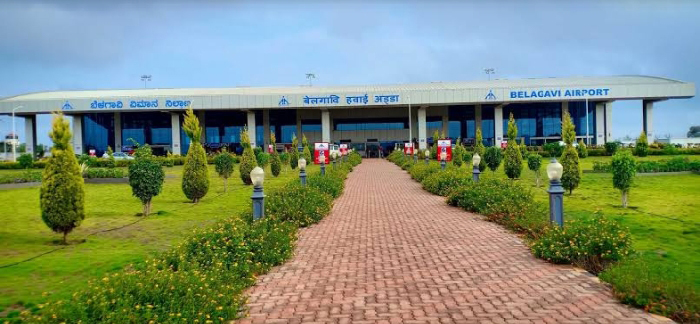
Of all the seven airports in State-- Bengaluru, Mangaluru, Hubballi, Belagavi, Mysuru, Kalaburagi and Vijaynagara (Hosapete)-- it was the Sambra (Belagavi) airport which saw the highest number of passengers and flights after Bengaluru. 

According to Airports Authority of India report released on their website recently, the Sambra airport outperformed the Managluru international airport in June. 

As many 10,224 passengers travelled to or from Belagavi airport in June, whereas Mangaluru airport saw a footfall of only 8,608 passengers including 3,726 international and 4,882 domestic passengers. Belagavi airport handled 391 flights whereas Mangaluru airport handled 190 flights.

Even the Bengaluru international airport saw a decline in the number of passengers and flights in June. Only 3.69 lakh domestic and 10,654 international passengers arrived or departed from Kempegowda International Airport, Bengaluru in June as against 27.59 lakh total passengers in June 2019. 

Between April-June 2020 the Bengaluru airport saw only 4.54 lakh total passengers (domestic and international) as against 84.11 lakh total passenger during the same period last year. The number of flights to and from Bengaluru also saw a huge dip in June with only 731 international (2,582 in June 2019) and 4290 domestic (16,216 in June 2019) flights.

Though the Mysuru domestic airport handled a higher number of flights compared to last June, the number of passengers either arriving or departing saw a decline. Last year June 4,775 passengers travelled in 96 flights, whereas in June 2020 the airport handled 3,158 passengers and 330 flights.

Hubballi airport saw the least number of passengers or flights among the seven airports in Karnataka in June. It saw only 55 passengers either arriving or departing from the city's airport in 14 flights in the month of June. In the same month last year, Hubballi airport, which was third busiest before the pandemic, had facilitated 45,973 passengers and handled 604 flights.

Since April 2020 to June, the Hubballi airport has handled only 18 flights (as against 1,958 during the same period last year) and 122 passengers (1,50,416 between April-June 2019).

Comments

Add new comment

  • Coastaldigest.com reserves the right to delete or block any comments.
  • Coastaldigset.com is not responsible for its readers’ comments.
  • Comments that are abusive, incendiary or irrelevant are strictly prohibited.
  • Please use a genuine email ID and provide your name to avoid reject.