Shocking video appears of Hijab-clad woman abused in New Zealand

February 13, 2017

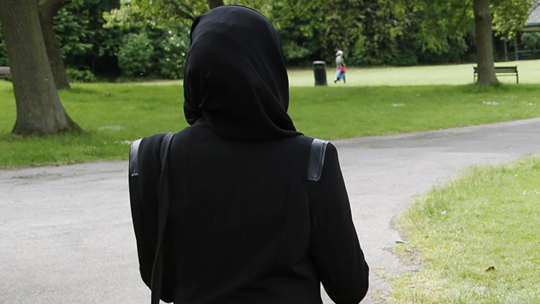
Melbourne, Feb 13: A Hijab-clad Muslim woman and her friends in New Zealand were targets of foul-mouthed racist comments at a rest stop with a woman yelling expletives and throwing beer cans at them.

Hijabclab

Mehpara Khan, 28, a communications consultant, and her four friends were returning to Auckland from a road trip when they stopped in Huntly to use the bathroom and were abused by a woman walking by.

Khan has posted a video on Twitter that shows another woman flinging cans of what appears to be alcohol at her and yelling expletive-laden abuse.

“All of a sudden this woman comes out of the bathroom and starts swearing at us and telling us that we don’t belong there and that we are Muslim b......, that need to F-off, basically,” Khan was quoted as saying by Nea Zealand Herald.

“She then threw a beer can at me and two at my two friends. I’m covered in beer - I feel disgusting,” Khan wrote.

“We weren’t doing anything, we didn’t actually even initially realise she was talking to us,” she said.

“Once she threw in the line of Muslim b-words that’s when we realised she was yelling at us,” she said.

“At this point I decided to start filming her.”

The 27-year-old woman who carried out the attack is shown in the recording ordering Khan and her friends to get back.

A police spokesman said they were “aware” of the video and a formal complaint had been laid.

“Police are assessing the information,” the spokesman said

Islamic Women’s Council’s spokeswoman Anjum Rahman said she was appalled, but not entirely surprised, by the abuse.

“A small number of New Zealanders behaved in that way. She would like to meet with the woman filmed swearing and hurling abuse to help change her attitude towards Muslims,” Rahman said.

However, Khan has received an outpouring of support after posting the video.

“Thanks everyone for your comments and support - this is so overwhelming. I’m still with the police - will try and respond once I’m done,” Khan tweeted.

“My phone is over run with positive messages right now. So good to know that we as Kiwis don’t accept this as our NZ,” she said.

Comments

Lloyd Dsouza
 - 
Wednesday, 15 Feb 2017

You are talking about Muslims in Newzealand , what about Christians in Saudi, Pakistan etc etc? Why their freedom is stopped by their Govt. Answer it 1st then poke out at others.

Zumbi Sasha
 - 
Monday, 13 Feb 2017

media should find out exact reason for her act..

Naren kotian
 - 
Monday, 13 Feb 2017

third rated people , shameless ... if there is no respect why go there ? why cannot u build a new world in islamic world . i see many from one particular community they are ready to do toilet cleaning job abroad ... why ? dont u have self respect ...islamaphobia is every where ... it is justiofied also , many burqa clas women hid suicide bombs and explode ...

Add new comment

  • Coastaldigest.com reserves the right to delete or block any comments.
  • Coastaldigset.com is not responsible for its readers’ comments.
  • Comments that are abusive, incendiary or irrelevant are strictly prohibited.
  • Please use a genuine email ID and provide your name to avoid reject.
News Network
February 28,2020

Feb 28: The Supreme Court on Friday granted more time to the Central Bureau of Investigation (CBI) to file a counter affidavit on a petition filed by Karnataka BJP leader and mining baron Gali Janardhana Reddy seeking permanent relaxation on his bail condition to allow him to visit Karnataka's Bellari and Kadapa in Andhra Pradesh.

A bench of Justices Arun Mishra and Indira Banerjee listed the matter for further hearing on March 16 after the CBI sought more time to do file the counter affidavit.

Earlier, the apex court had issued a notice to the CBI and sought its response on the plea.

Last year, the Court had allowed Reddy to visit the Ballari district for a period of two weeks to meet his father-in-law, who the petitioner claimed had suffered a stroke and also allowed him to move a bail modification application seeking permanent relaxation of his bail condition.

In January 2015, the Supreme Court had granted bail to Reddy in an illegal mining case involving Obulapuram Mining Company (OMC) on the condition that he will not visit any of the mining zones in Karnataka or Andhra Pradesh.

By the time he was granted bail, Reddy had already spent over three years in prison.

Reddy and his brother-in-law BV Srinivas Reddy, who was the Managing Director of OMC, were arrested by the CBI on September 5, 2011.

Comments

Add new comment

  • Coastaldigest.com reserves the right to delete or block any comments.
  • Coastaldigset.com is not responsible for its readers’ comments.
  • Comments that are abusive, incendiary or irrelevant are strictly prohibited.
  • Please use a genuine email ID and provide your name to avoid reject.
Ram Puniyani
June 29,2020

In Minneapolis, US an African American, George Floyd lost his life as the white policeman, Derek Chauvin, caught hold of him and put his knee on his neck. This is a technique developed by Israel police. For nine long minutes the knee of the while policeman was on the neck of George, who kept shouting, I can’t breathe.

Following this gruesome murder America erupted with protests, ‘Black lives matter’. The protestors were not just African Americans but also a large section of whites. Within US one police Chief apologized for the act of this. In a touching gesture of apology the police force came on its knees. This had reverberations in different parts of the World.

The act was the outcome of the remnants of the racial hatred against blacks by the whites. It is the hatred and the perceptions which are the roots of such acts of violence. What was also touching that the state of democracy in US is so deep that even the police apologized, the nation, whites and blacks, stood up as a sensitive collective against this violence.

US is not the only country where the brutal acts of violence torment the marginalized sections of society. In India there is a list of dalits, minorities and adivasis who are regularly subjected to such acts. But the reaction is very different. We have witnessed the case of Tabrez Ansari, who was tied to the pole by the mob and beaten ruthlessly. When he was taken to police station, police took enough time to take him to hospital and Tabrez died.

Mohsin Sheikh, a Pune techie was murdered by Hindu Rashtra Sena mob, the day Modi came to power in 2014. Afrazul was killed by Shambhulal Regar, videotaped the act released on social media. Regar believed that Muslims are indulging in love Jihad, so deserve such a fate. Mohammad Akhlaq is one among many names who were mob lynched on the issue of beef cow. The list can fill pages after pages.

Recently a young dalit boy was shot dead for the crime of entering a temple. In Una four dalits were stripped above waste and beaten mercilessly. Commenting on this act the Union Minister Ramvilas Paswan commented that it is a minor incident. Again the list of atrocities against dalits is long enough. The question is what Paswan is saying is the typical response to such gruesome murders and tortures. In US loss of one black life, created the democratic and humane response. In India there is a general silence in response to these atrocities. Some times after a good lapse of time, the Prime Minister will utter, ‘Mother Bharati has lost a son’. Most of the time victim is blamed. Some social groups raise their voice in some fora but by and large the deafening silence from the country is the norm.

India is regarded as the largest democracy. Democracy is the rule of law, and the ground on which the injustices are opposed. In America though the present President is insensitive person, but its institutions and processes of democratic articulations are strong. The institutions have deepened their roots and though prejudices may be guiding the actions of some of the officers like the killer of George, there are also police officers who can tell their President to shut up if he has nothing meaningful to say on the issue. The prejudices against Blacks may be prevalent and deep in character, still there are large average sections of society, who on the principles of ‘Black lives matter’. There are large sections of vocal population who can protest the violation of basic norms of democracy and humanism.

In India by contrast there are multiple reasons as to why the lives of Tabrez Ansari, Mohammad Akhlaq, Una dalit victims and their likes don’t matter. Though we claim that we are a democracy, insensitivity to injustices is on the rise. The strong propaganda against the people from margins has become so vicious during last few decades that any violence against them has become sort of a new normal. The large populace, though disturbed by such brutalities, is also fed the strong dose of biases against the victims. The communal forces have a great command over effective section of media and large section of social media, which generates Hate against these disadvantaged groups, thereby the response is muted, if at all.

As such also the process of deepening of our democracy has been weak. Democracy is a dynamic process; it’s not a fixed entity. Decades ago workers and dalits could protest for their rights. Now even if peasants make strong protests, dominant media presents it as blocking of traffic! How the roots of democracy are eroded and are visible in the form where the criticism of the ruling dispensation is labelled as anti National..

Our institutions have been eroded over a period of time, and these institutions coming to the rescue of the marginalized sections have been now become unthinkable. The outreach of communal, divisive ideology, the ideology which looks down on minorities, dalits and Adivasis has risen by leaps and bounds.

The democracy in India is gradually being turned in to a hollow shell, the rule of law being converted in to rule of an ideology, which does not have faith in Indian Constitution, which looks down upon pluralism and diversity of this country, which is more concerned for the privileges of the upper caste, rich and affluent. The crux of the matter is the weak nature of democracy, which was on way to become strong, but from decades of 1980s, as emotive issues took over, the strength of democracy started dwindling, and that’s when the murders of the types of George Floyd, become passé. One does complement the deeper roots of American democracy and its ability to protect the democratic institutions, which is not the case in India, where protests of the type, which were witnessed after George Floyd’s murder may be unthinkable, at least in the present times. 

Comments

Add new comment

  • Coastaldigest.com reserves the right to delete or block any comments.
  • Coastaldigset.com is not responsible for its readers’ comments.
  • Comments that are abusive, incendiary or irrelevant are strictly prohibited.
  • Please use a genuine email ID and provide your name to avoid reject.
News Network
April 13,2020

Bengaluru, Apr 13: Karnataka chief minister B S Yediyurappa on Monday said the COVID-19 situation has thrown the state into a deep financial trouble and there is a need to to find ways to overcome the present crisis, as he announced certain measures aimed at resource mobalisation.

He said the state government was awaiting guidelines from the Centre regarding the implementation of lockdown during the next two weeks, and noted that discussions were on regarding relaxations on the sale of liquor and the decision will be taken after April 14.

Yediyurappa on Monday held a meeting with officials of various departments along with his cabinet colleagues and the chief secretary.

"The possible situation once the lockdown is released, was widely discussed in the meeting. Discussion was also held about the financial situation of the state government and how to mobilise resources. Many suggestions were given and it was decided to implement those suggestions," the Chief Minister said.

Speaking to reporters after the meeting, he said, "...the COVID-19 situation has thrown our state into deep financial trouble and there is a need to to find ways to overcome present financial crisis."

Yediyurappa said it was decided to speed up the disposal of cases related to regularisation of unauthorised constructions which are pending before the High Court and Supreme Court, during the meeting.

"If the court decides the matter, thousands of people who own unauthorised houses will be relieved," he said, adding that this will also help government in mobilising resources for fund starved development works.

He said in addition to this the government is planning to auction more than 12,000 corner sites lying idle in Bengaluru, and it was also decided to allow auction of corner and vacant sites in respective urban development authorities across the state.

"By auction of corner sites in Bengaluru, we plan to mobalise about Rs 14,000-15,000 crore. BDA is preparing for it, only if we get good market value we will sell or else no," he added.

It was also decided to amend the law governing permission to allow sites in private and co-operative housing societies, the Chief Minister further said, adding that hundreds of societies were waiting for approval from government for releasing the sites.

Yediyurappa said it was decided to use Rs 1,000 crore available in Rajiv Gandhi Health University to upgrade medical college hospitals.

It was also decided to distribute free milk to slums and poor for one more week, the Chief Minister said while appealing to sugar factory owners to clear the pending payment to the tune of Rs 2,834 crore to farmers in 11 districts.

The government has also released Rs 45 crore compensation for the loss of paddy crop in Raichur and Koppal District due to hailstorm based on report submitted by Deputy Commissioners, he added.

Responding to a question, Yediyurappa said, still no guidelines have come from the Centre on lockdown implementation for next two weeks, we are waiting for it.

Once the guidelines come it will help us to speed up the process of lockdown, and also relaxations if any.

Asked what plans does the government have if states are asked to decide on relaxation, he said, already Prime Minister has said that guidelines will be given, if they say on certain matters states can take decision, we will decide on what needs to be done to improve the state's economy.

To a question on relaxation on sale of liquor through Mysore Sales International Ltd (MSIL) outlets, he said, discussions are on, after April 14, we will take decision in this regard.

Comments

Add new comment

  • Coastaldigest.com reserves the right to delete or block any comments.
  • Coastaldigset.com is not responsible for its readers’ comments.
  • Comments that are abusive, incendiary or irrelevant are strictly prohibited.
  • Please use a genuine email ID and provide your name to avoid reject.