



Shutdown after leak at Kakrapar atomic plant in Gujarat

March 11, 2016

Ahmedabad, Mar 11: One of the two 220 MW units of Kakrapar Atomic Power Station(KAPS) in Gujarat's Surat district was today shut down after leakage of heavy water and a temporary emergency situation was declared but there was no radioactive leak and all workers are safe.kaps1
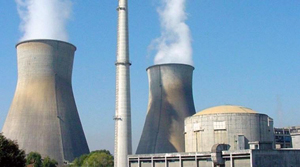
According to officials, the leakage of heavy water that is used in cooling off the nuclear reactor core was detected around 9 am and it was fixed in some time and the temporary emergency was lifted shortly afterwards.

Surat District Collector Rajendra Kumar said there was no leakage of radiation at the plant and the situation was under control. The incident took place on a day when Japan marks the fifth anniversary of Fukushima nuclear disaster caused by a monster tsunami.

KAPS site director L K Jain in a statement said radiation levels in and outside the plant are normal.

"Unit-1 of KAPS, which was operating at its rated power, was shut down at about 9:00 Hrs today. Consequent to a small leak in Primary Heat Transport (PHT) system, the reactor was shut down as intended as per the design provisions. All safety systems are working as intended," the statement said.

"The radioactivity/radiation levels in the plant premises and outside are normal. KAPS 1 and 2 consists of two Units of Pressurized Heavy Water Reactors of 220 MWe each," Jain added.

The KAPS, located on the border of Surat and Tapi districts near Vyara town of Tapi, is run by Nuclear Power Corporation of India Ltd (NPCIL).

"The director of the plant informed me that unit-1 has been shut down following a problem in the primary heat transmission system. There was some leakage of heavy water that is used in cooling the reactor core. At present, the situation is under control," Rajendra Kumar told PTI.

According to KAPS website, the power station has two generation units of Pressurised Heavy Water Reactors (PHWR) that were commissioned during early 90s.

"The problem was detected in the morning and it has been fixed as of now. The plant also declared temporary emergency, which has been lifted after some time.
As of now, there is no emergency and things are under control. We are told that Unit-1 will take some time to start functioning again," Kumar added.

Meanwhile, neighbouring Tapi district administration also swung into action and sought details from plant officials after learning about the leakage. Tapi District Collector B C Patni also confirmed that there was no report of radiation leakage.

"The problem occurred in Unit-1 of the plant at around 9 am. As per the reports received from the site director, all the employees are working in the plant and no internal or external radiation leak took place. The leakage of liquid has been fixed," said Patni.

Comments

Add new comment

  • Coastaldigest.com reserves the right to delete or block any comments.
  • Coastaldigset.com is not responsible for its readers’ comments.
  • Comments that are abusive, incendiary or irrelevant are strictly prohibited.
  • Please use a genuine email ID and provide your name to avoid reject.
News Network
January 27,2020

Jan 27: The Andhra Pradesh Cabinet passed a resolution on Monday setting in motion the process for abolishing the state Legislative Council.

A similar resolution will now be adopted in the Legislative Assembly and sent to the Centre for necessary follow-up action.

With just nine members, the ruling YSR Congress is in minority in the 58-member Legislative Council. The opposition Telugu Desam Party (TDP) has an upper hand with 28 members and the ruling party could get a majority in the House only in 2021 when a number of opposition members will retire at the end of their six-year term.

The move by the Andhra Pradesh cabinet came after the Y S Jaganmohan Reddy government last week failed to pass in the Upper House of the state legislature two crucial Bills related to its plan of having three capitals for the state.

Andhra Pradesh Legislative Council Chairman M A Sharrif on January 22 referred to a select committee the two bills -- AP Decentralisation and Inclusive Development of All Regions Bill, 2020, and the AP Capital Region Development Authority (CRDA) Act (Repeal) Bill -- for deeper examination.

The chairman had said that he was using his discretionary powers under Rule 154 while referring the Bills to the select panel in line with the demand of the TDP.

Following this, the chief minister had told the Assembly, "We need to seriously think whether we need to have such a House which appears to be functioning with only political motives. It is not mandatory to have the Council, which is our own creation, and it is only for our convenience."

"So let us discuss the issue further on Monday and take a decision on whether or not to continue the Council," he had said.

In fact, the YSRC had on December 17 first threatened to abolish the Council when it became clear that the TDP was bent on blocking two Bills related to creation of a separate Commission for SCs and conversion of all government schools into English medium.

As the Legislature was adjourned sine dine on December 17, no further action was taken. But last week, the issue cropped up again as the TDP remained firm on its stand on opposing the three-capitals plan.

The YSRC managed to get two TDP members to its side, but the government failed to get the three capitals Bills passed in the Council.

"What will be the meaning of governance if the House of Elders does not allow good decisions to be taken in the interest of people and block enactment of laws? We need to seriously think about it… Whether we should have such a House or do away with it," the chief minister had said in the Assembly.

Comments

Add new comment

  • Coastaldigest.com reserves the right to delete or block any comments.
  • Coastaldigset.com is not responsible for its readers’ comments.
  • Comments that are abusive, incendiary or irrelevant are strictly prohibited.
  • Please use a genuine email ID and provide your name to avoid reject.
News Network
May 18,2020

New Delhi, May 18: The nationwide tally of COVID-19 cases crossed one lakh on Monday with more people testing positive for the deadly virus in Maharashtra, Gujarat, Tamil Nadu and other states, even as a much-relaxed fourth phase of the lockdown began with restarting of market complexes, autos, taxis and inter-state buses in various parts of the country.

The death toll due to COVID-19 crossed the 3,000-mark too.

With an aim to reboot numerous locked down economic activities, authorities across the country ordered reopening of markets, intra-state transport services and even of barber shops and salons in some states, barring in containment zones.

However, schools, colleges, theatres, malls and religious gatherings are among those that would remain shut down, at least till May 31.

India has been under a lockdown since March 25, which was first supposed to be for 21 days or toll April 14, but was later extended till May 3, then further till May 17 and now for another two weeks till May 31.

However, a number of relaxations have been given in the current fourth phase, while states and union territories have also been granted significant flexibility for deciding the red, orange or green zones in terms of the quantum and severity of the virus spread.

In its morning 8 AM update, the Union Health Ministry put the total number of confirmed COVID-19 cases 96,169 and the death toll at 3,029.

It also said that 36,824 people have so far recovered from the infection.

However, a news agency tally of figures announced by different states and UTs as of 9.40 PM put the number of those having tested positive for the infection at 1,00,096, with a death toll of 3,078 and recoveries at 38,596 across the country.

Maharashtra topped the nationwide tally with over 35,000 confirmed cases and 1,249 deaths, followed by Tamil Nadu with 11,760 confirmed cases and 81 deaths.

Gujarat has also reported 11,746 confirmed cases, while its death toll is higher than that of Tamil Nadu at 694.

Delhi has also crossed the 10,000 mark in terms of the number of confirmed cases, while its death toll has now reached 160.

Gujarat, during the day, recorded 366 new COVID-19 cases and 35 deaths, including 31 from the worst-hit Ahmedabad, taking the state's case count to 11,746 and the number of fatalities to 694, a health department official said.

Maharashtra reported 2,033 new cases, taking the tally to 35,058.

This was the second consecutive day when the state has reported more than 2,000 COVID-19 cases.

Mumbai alone reported 1,185 fresh cases and 23 more deaths, taking the total count of the city to 21,152 and the fatalities to 757.

Of the 1,185 new cases, 300 samples were tested positive in private laboratories between May 12 and 16.

Kerala also saw 29 new cases -- all but one being returnees from overseas and other states --  raising concerns about the state witnessing a possible third wave of the dreaded virus infection.

The state was first to report the virus infection, but at least twice it has already been seen as having flattened the curve of the infection.

The nationwide count of confirmed infections incidentally crossed the crucial one-lakh mark on a day when the fourth phase of the nationwide lockdown kicked in with several relaxations for economic and public activities, barring in containment zones or areas identified as serious hotspots of the virus infection.

Revising its strategy for COVID-19 testing, ICMR also said on Monday that returnees and migrants who show symptoms for influenza-like illness will be tested for coronavirus infection within seven days of ailment and stressed that no emergency clinical procedure, including deliveries, should be delayed for lack of testing.

The Indian Council of Medical Research (ICMR) in its revised strategy for coronavirus testing in India also added that all hospitalised patients who develop symptoms for influenza-like illness (ILI) and frontline workers involved in containment and mitigation of COVID-19 having such signs will also be tested for coronavirus infection through RT-PCR test.

Besides, asymptomatic direct and high-risk contacts of a confirmed case are to be tested once between day five and day 10 of coming in contact, the new document stated.

Asymptomatic contacts of a confirmed case were being tested once between day five and day 14.

The Health Ministry also said that for every one lakh population, there are 7.1 coronavirus cases in India so far as against 60 globally.

It also said the recovery rate of coronavirus cases in India stood at 38.39 per cent.

Besides, India also joined nearly 120 countries at a crucial conference of the World Health Organisation in pushing for an impartial and comprehensive evaluation of the global response into the coronavirus crisis as well as to examine the origin of the deadly infection.

Since the first case of the deadly coronavirus was reported in China last December, more than 47 lakh people have tested for this virus across the world and over 3 lakh have lost their lives.

India is the 11th most affected country, while the US tops the chart with over 14.9 lakh confirmed cases so far.

China's official tally of confirmed infections is less than 84,000, while it has reported more than 4,600 deaths.

Comments

Add new comment

  • Coastaldigest.com reserves the right to delete or block any comments.
  • Coastaldigset.com is not responsible for its readers’ comments.
  • Comments that are abusive, incendiary or irrelevant are strictly prohibited.
  • Please use a genuine email ID and provide your name to avoid reject.
News Network
June 25,2020

New Delhi, Jun 25: Diesel price in the national capital crossed the Rs 80 per litre-mark for the first time ever on Thursday as oil companies raised prices for the 19th day, taking the cumulative rate to Rs 10.63 a litre.

Petrol price, after a day's hiatus, was hiked by 16 paise and the increase in less than three weeks now totals Rs 8.66 per litre.

Petrol price in Delhi was hiked to Rs 79.92 per litre from Rs 79.76, while diesel rates were increased to Rs 80.02 a litre from Rs 79.88, according to a price notification of state oil marketing companies.

Diesel had for the first time become costlier than petrol in Delhi on Wednesday and has now crossed the Rs 80 per litre-mark.

Rates differ from state to state depending on the incidence of value-added tax (VAT).

However, diesel is costlier than petrol only in the national capital where the state government had raised local sales tax or VAT on the fuel sharply last month. It costs less than petrol in other cities.

The 19th daily increase in rates since oil companies on June 7 restarted revising prices in line with costs after ending an 82-day hiatus in rate revision, has taken diesel prices to fresh highs.

In 19 straight days, diesel price has gone up by Rs 10.63 per litre. Petrol price has been hiked on 18 occasions since June 7 and now totals to Rs 8.66 a litre.

Comments

Add new comment

  • Coastaldigest.com reserves the right to delete or block any comments.
  • Coastaldigset.com is not responsible for its readers’ comments.
  • Comments that are abusive, incendiary or irrelevant are strictly prohibited.
  • Please use a genuine email ID and provide your name to avoid reject.