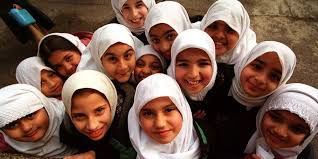
Siddu govt to develop minority colonies, modernise madrasas

[email protected] (CD Network)
May 23, 2016

Bengaluru, May 23: Municipal Administration and Minorities Affairs Minister Qamarul Islam said that Siddaramaiah-led Congress government in Karnataka has, over the past three years, allocated Rs. 2,528 crore for minority welfare, as opposed to Rs. 1,145 crore set aside by the previous BJP government during its five-year tenure.

muslimsReleasing a booklet on the achievements of his department in the past three years, in Kalaburgi recently, the Minister said the government has laid more emphasis on education of minorities.

He also said the government has decided to introduce three more schemes for minority welfare — for comprehensive development of minority colonies, for modernisation of madrasas, and for a time-bound capability-building programme for minority students studying in Urdu medium.

He said that Karnataka is the only State in the country to establish exclusive residential schools for minorities. The State has 16 Morarji Desai residential schools and six Navodaya Residential Schools for the minorities.

He said the State's efforts to establish exclusive residential schools for the minorities have received appreciation from the Union government as well.

The Minister said in the first phase, the government had filled up 1,000 posts of teachers, wardens and cooks in these schools, adding that recruitment for another 1,540 posts was under way.

The Minister said there are proposals to establish a few more residential schools.

He also said the State has been a “trendsetter” in extending financial assistance to minority students to pursue higher education abroad, and in the last two years, 50 students have been provided scholarships and financial assistance of up to Rs. 20 lakh.
He said Karnataka also has the highest number of minority hostels — a total of 256. Of these, 132 were established in the past three years, he said.

He said while 45 minority hostels were functioning in their own building, measures have been initiated to identify land and take up construction of their own building for the remaining hostels.

Comments

welwisher
 - 
Monday, 23 May 2016

No benefit is received from the Karnataka Government for the minority. All bull shit... Simply eating money from the central government.

SK
 - 
Monday, 23 May 2016

While giving the bullshit figures, CAN he give the beneficiary places, so that the truth can be checked....All barking dogs......

Add new comment

  • Coastaldigest.com reserves the right to delete or block any comments.
  • Coastaldigset.com is not responsible for its readers’ comments.
  • Comments that are abusive, incendiary or irrelevant are strictly prohibited.
  • Please use a genuine email ID and provide your name to avoid reject.
Agencies
February 20,2020

India ranked 77th on a sustainability index that takes into account per capita carbon emissions and ability of children in a nation to live healthy lives and secures 131st spot on a flourishing ranking that measures the best chance at survival and well-being for children, according to a UN-backed report.

The report was released on Wednesday by a commission of over 40 child and adolescent health experts from around the world. It was commissioned by the World Health Organization (WHO), UN Children's Fund (UNICEF) and The Lancet medical journal.

In the report assessing the capacity of 180 countries to ensure that their youngsters can survive and thrive, India ranks 77th on the Sustainability Index and 131 on the Flourishing Index, it said.

Flourishing is the geometric mean of Surviving and Thriving. For Surviving, the authors selected maternal survival, survival in children younger than 5 years old, suicide, access to maternal and child health services, basic hygiene and sanitation, and lack of extreme poverty.

For Thriving, the domains were educational achievement, growth and nutrition, reproductive freedom, and protection from violence.

Under the Sustainability Index, the authors noted that promoting today's national conditions for children to survive and thrive must not come at the cost of eroding future global conditions for children's ability to flourish.

The Sustainability Index ranks countries on excess carbon emissions compared with the 2030 target. This provides a convenient and available proxy for a country's contribution to sustainability in future.

The report noted that under realistic assumptions about possible trajectories towards sustainable greenhouse gas emissions, models predict that global carbon emissions need to be reduced from 39·7 giga­ tonnes to 22·8 gigatonnes per year by 2030 to maintain even a 66 per cent chance of keeping global warming below 1·5°C.

It said that the world's survival depended on children being able to flourish, but no country is doing enough to give them a sustainable future.

"No country in the world is currently providing the conditions we need to support every child to grow up and have a healthy future," said Anthony Costello, Professor of Global Health and Sustainability at University College London, one of the lead authors of the report.

"Especially, they're under immediate threat from climate change and from commercial marketing, which has grown hugely in the last decade," said Costello – former WHO Director of Mother, Child and Adolescent health.

Norway leads the table for survival, health, education and nutrition rates - followed by South Korea and the Netherlands. Central African Republic, Chad and Somalia come at the bottom.

However, when taking into account per capita CO2 emissions, these top countries trail behind, with Norway 156th, the Republic of Korea 166th and the Netherlands 160th.

Each of the three emits 210 per cent more CO2 per capita than their 2030 target, the data shows, while the US, Australia, and Saudi Arabia are among the 10 worst emitters. The lowest emitters are Burundi, Chad and Somalia.

According to the report, the only countries on track to beat CO2 emission per capita targets by 2030, while also performing fairly – within the top 70 – on child flourishing measures are: Albania, Armenia, Grenada, Jordan, Moldova, Sri Lanka, Tunisia, Uruguay and Vietnam.

"More than 2 billion people live in countries where development is hampered by humanitarian crises, conflicts, and natural disasters, problems increasingly linked with climate change," said Minister Awa Coll-Seck from Senegal, Co-Chair of the commission.

The report also highlights the distinct threat posed to children from harmful marketing.

Evidence suggests that children in some countries see as many as 30,000 advertisements on television alone in a single year, while youth exposure to vaping (e-cigarettes) advertisements increased by more than 250 per cent in the US over two years, reaching more than 24 million young people.

Studies in Australia, Canada, Mexico, New Zealand and the US – among many others – have shown that self-regulation has not hampered commercial ability to advertise to children.

Children's exposure to commercial marketing of junk food and sugary beverages is associated with purchase of unhealthy foods and overweight and obesity, linking predatory marketing to the alarming rise in childhood obesity, it said.

The number of obese children and adolescents increased from 11 million in 1975 to 124 million in 2016 – an 11-fold increase, with dire individual and societal costs, the report said.

To protect children, the authors call for a new global movement driven by and for children.

Specific recommendations include stopping CO2 emissions with the utmost urgency, to ensure children have a future on this planet; placing children and adolescents at the centre of global efforts to achieve sustainable development, the report said.

New policies and investment in all sectors to work towards child health and rights; incorporating children's voices into policy decisions and tightening national regulation of harmful commercial marketing, supported by a new Optional Protocol to the UN Convention on the Rights of the Child, it said.


Comments

Add new comment

  • Coastaldigest.com reserves the right to delete or block any comments.
  • Coastaldigset.com is not responsible for its readers’ comments.
  • Comments that are abusive, incendiary or irrelevant are strictly prohibited.
  • Please use a genuine email ID and provide your name to avoid reject.
News Network
March 13,2020

Bengaluru, Mar 13: Senior IPS officer KSR Charan Reddy, who was the Additional Director General of Police in Criminal Investigation Department, Karnataka passed away in Bengaluru on Friday after prolonged illness. 

He was reportedly battling cancer for at least three years now and had suffered multiple recurs after treatment. 

"Shri Charan Reddy, IPS, ADGP, Karnataka State, passed away this morning, after a prolonged illness. He was one of our finest officers. Always stood tall and held his head high!! May his soul rest in peace," Retired IPS officer and former Director General of Police (Fire Services) MN Reddi tweeted. 

IPS officer Charan Reddy was heading the Special Investigation Team of the Lokayukta when he arrested Vijayanagara MLA Anand Singh in 2015 for illegally transporting iron ore out of Ballari. The illegal mining scam had rocked the former BJP government in 2011.

Karnataka Chief Minister BS Yediyurappa condoled his death and said that he was an honest officer in the state. "Charan Reddy was a dedicated and honest officer. I pray that his soul rests in peace. I pray that god gives his family the strength to go through such a turbulent time after his departure," BS Yediyurappa tweeted. 

A 1993-batch IPS officer, Charan Reddy KSR is originally from Chittoor and has served under various departments of the state's police force. He was serving as the Inspector General of Police in Belagavi division in 2013, when he was transferred to Bengaluru as the IGP (Training). In 2014, he was posted as the IGP of the SIT probing the illegal mining scam in which former Tourism Minister Gali Janardhana Reddy is also allegedly involved.

He was transferred out of the SIT in Lokayukta in 2016 and posted as Additional Commissioner of Police (law and order) in Bengaluru. He served as the ADGP of Crime in Mangaluru in 2018 and was later appointed as the Additional Director General of Police (training) the same year. In 2019, he was transferred and appointed as the ADGP of CID.

Comments

Add new comment

  • Coastaldigest.com reserves the right to delete or block any comments.
  • Coastaldigset.com is not responsible for its readers’ comments.
  • Comments that are abusive, incendiary or irrelevant are strictly prohibited.
  • Please use a genuine email ID and provide your name to avoid reject.
News Network
March 13,2020

Mysuru, Mar 13: A state-of-the-art viral research laboratory in the city has been identified as one of the testing laboratories for the detection of COVID-19, official sources said here on Friday.

The samples of suspected cases could be sent to the lab for analysis and it would take about three hours to get the results.

The Viral Research and Diagnostic Laboratory (VRDL), which was set up from Central grants and functions at the Microbiology Department of K.R. Hospital, has been authorised to carry out the tests. This lab in Mysuru is among the 52-plus laboratories in the country.

Though the VRDL is equipped to carry out the tests, the sole authority of confirming the virus lies with the Indian Council of Medical Research (ICMR)-National Institute of Virology (NIV) in Pune. VRDL is also the sole agency for collection and transportation of suspected samples of COVID-19 to NIV.

VRDL, which is part of the Mysore Medical College and Research Institute, functions on the advice of NIV.

According to the guidelines issued by ICMR, the results of the tests done here have to be shared with NIV the same day and the labs are not supposed to disclose the results since the NIV is the only authority to declare positive cases. Also, confirmation from the NIV should be awaited in case the samples test negative for COVID-19. The ICMR, in the guidelines made available on its website, has advised clinicians at labs to isolate the patient tested positive for COVID-19 in the identified facility and follow bio-safety precautions.

VRDL is a part of a network of labs established by the Department of Health Research, Government of India. The rise in the number of viral outbreaks and the resultant mortality had been cited as key reasons for the launch of network of such hi-tech labs in the country.

The NIV and the National Centre for Disease Control, Delhi, are the top laboratories for the network, while the National Institute of Epidemiology, Chennai, is the supervising authority for the data generated by the network of labs, sources added.

Comments

Add new comment

  • Coastaldigest.com reserves the right to delete or block any comments.
  • Coastaldigset.com is not responsible for its readers’ comments.
  • Comments that are abusive, incendiary or irrelevant are strictly prohibited.
  • Please use a genuine email ID and provide your name to avoid reject.