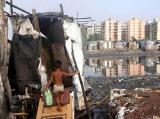
Snap action: defecate in open, find photo posted online

April 9, 2016

Mathura, Apr 9: To deter the practice of open defecation, authorities here have resorted to naming and shaming offenders by posting their pictures on social media.

defegateDistrict authorities today inspected several villages here under the Swachh Bharat initiative and took action against offenders.

They even posted their pictures on WhatsApp to deter such habits. "A total of 18 villages were inspected and 36 officials have been assigned to this task," Chief Development Officer Manish Kumar Verma said.

"Several persons were caught defecating in the open. Villagers were also made aware of the ills of this practice," he said.

The CDO said efforts are being made to make the villages free of open defecation by April 15, adding that they were looking to accomplish the same target with 150 villages of the district by August 15.

Comments

AK
 - 
Saturday, 9 Apr 2016

The Govt should also provide the Toilets & water facilities to the POOR before defaming them

Add new comment

  • Coastaldigest.com reserves the right to delete or block any comments.
  • Coastaldigset.com is not responsible for its readers’ comments.
  • Comments that are abusive, incendiary or irrelevant are strictly prohibited.
  • Please use a genuine email ID and provide your name to avoid reject.
Agencies
June 2,2020

Singapore, Jun 2: Moody's Investors Service on Tuesday downgraded 11 Indian banks along with as many non-financial companies and infrastructure majors besides four government-related issuers following a downgrade of the Indian government's issuer rating to Baa3 from Baa2 with a negative outlook.

The rapid and widening spread of the coronavirus outbreak, deteriorating global economic outlook, volatile oil prices and asset price declines are creating a severe and extensive credit shock across many sectors, regions and markets, said Moody's.

The Indian banking sector has been affected given the disruptions to India's economic activity from the coronavirus outbreak, which is weakening borrowers' credit profiles, it added.

The 11 lenders include Bank of Baroda, Bank of India, Canara Bank, Central Bank of India, Export-Import Bank of India, HDFC Bank, Indian Overseas Bank, IndusInd Bank, Punjab National Bank, State Bank of India and Union Bank of India.

The 11 non-finance companies are Oil and Natural Gas Corporation, Hindustan Petroleum Corporation, Oil India, Indian Oil Corporation, Bharat Petroleum Corporation, Petronet LNG, Tata Consultancy Services, Infosys, Reliance Industries, UPL Corporation and Genpact.

The 11 infrastructure companies are NTPC, NHPC, National Highways Authority of India, Power Grid Corporation, Gail India, Adani Green Energy Restricted Group (RG-2), Adani Transmission Restricted Group, Adani Ports and Special Economic Zone, Adani Transmission, Adani Electricity Mumbai and Azure Power Solar Energy.

The four Indian government-related issuers are Indian Railway Finance Corporation, Housing and Urban Development Corporation, Power Finance Corporation and REC Ltd.

"Government-related issuers in India have been affected because of disruptions to India's economy which will weaken borrowers' credit profiles," said Moody's.

Comments

Add new comment

  • Coastaldigest.com reserves the right to delete or block any comments.
  • Coastaldigset.com is not responsible for its readers’ comments.
  • Comments that are abusive, incendiary or irrelevant are strictly prohibited.
  • Please use a genuine email ID and provide your name to avoid reject.
News Network
May 15,2020

New Delhi, May 15: A group of doctors from the AIIMS, Raipur has recommended restrictions on the use of mobile phones in healthcare institutions amid the COVID-19 pandemic, warning that such devices can be a potential carrier of the virus and lead to infection among healthcare workers.

In a commentary published in the BMJ Global Health journal, the doctors stated that mobile phone surfaces are a peculiar 'high-risk' surface, which can directly come in contact with the face or mouth, even if hands are properly washed and one study indicates that some healthcare workers use phones every 15 minutes to two hours.

Though there have been many significant guidelines from various health organisations like the WHO and CDC focusing on prevention and control of disease, the commentary highlighted "there is no mention of or focus on mobile phones in these guidelines, including the WHO infection control and prevention guidelines, which recommends the use of handwashing".

In healthcare facilities, phones are used to communicate with other health care workers, look up recent medical guidelines, research drug interactions, understand adverse events and side effects, conduct telemedicine appointments and track patients among others, stated the document.

The document has been authored by Dr Vineet Kumar Pathak, Dr Sunil Kumar Panigrahi, Dr M Mohan Kumar, Dr Utsav Raj and Dr Karpaga Priya P from the Department of Community and Family Medicine.

"In their tendency to come in direct contact with the face, nose or eyes in healthcare settings, mobile phones are perhaps second only to masks, caps or goggles," the authors said.

"However, they are neither disposable nor washable like these other three, thus warranting disinfection. Mobile phones can effectively negate hand hygiene... There is growing evidence that mobile phones are a potential vector for pathogenic organisms," they said.

It is the need of the hour to address proper hygienic use of mobile phones in healthcare settings. In a study in India, almost 100 per cent of health workers of a tertiary care hospital used mobile phones in the hospital, but only 10 per cent of them had at any time wiped their mobile phones clean, the commentary published on April 22 said.

"The safest thing to do is to consider your phone as an extension of your hand, so remember you are transferring whatever is on your phone to your hand," Dr Pathak said.

Amidst the ongoing pandemic, two biggest mobile phone companies have uploaded their user support guidelines, saying that 70 pc isopropyl alcohol or Clorox Disinfecting Wipes can be used to gently wipe the exterior surface of phones in switched-off mode.

However, in doing so, the use of bleach or entry of moisture through any of the openings must be avoided, and any harsh chemical may damage the oleophobic screen, leading to damage in the touch screen sensitivity of the phone, the article stated.

Mobile phones are one of the most highly touched surfaces according to the Centers for Disease Control and Prevention (CDC), along with counters, tabletops, doorknobs, bathroom fixtures, toilets, keyboards, tablets and bedside tables.

The doctors recommended restriction on mobile phone usage in healthcare settings like hospital wards, ICUs and operation theatres, while advocating the use of headphones to prevent contact with the face while talking.

There should be no sharing of mobile phones, headphones or headsets of any kind. In addition, where available, the use of interdepartmental intercom facility may be promoted.

"Although hand hygiene and mobile phone use by a person are not mutually exclusive, it is high time to acknowledge the potential role of mobile phones in disease transmission cascade and to take evidence-based appropriate actions. This is especially important, given the ongoing COVID-19 pandemic," the authors said.

They said it is necessary for government agencies and the WHO to generate public awareness and to formulate suitable information, education and communication material on mobile phone hygiene, especially in healthcare settings.

AIIMS, New Delhi, Resident Doctors' Association (RDA) General Secretary, Dr Srinivas Rajkumar T said even outside health care settings, people should pay special attention to the usage of mobile phones as they carry them to all places.

"Phone and computer peripherals like keyboard, mouse, etc. should be covered with transparent plastic covers which can be cleaned without interfering with their function. Cleaning hands by soap or alcohol-based hand sanitizer before and after contact with phone and between contact with other surfaces can decrease the risk of potential transmission.

"Using a handsfree headset, dedicated operator/assistant per ward handling the communication via common line in hospitals while on duty can enable communication without compromising safety," Dr Srinivas said.


Comments

Add new comment

  • Coastaldigest.com reserves the right to delete or block any comments.
  • Coastaldigset.com is not responsible for its readers’ comments.
  • Comments that are abusive, incendiary or irrelevant are strictly prohibited.
  • Please use a genuine email ID and provide your name to avoid reject.
News Network
March 5,2020

New Delhi, Mar 5: Union Health Minister Harsh Vardhan assuring that the government has the coronavirus crisis under control, is like the Titanic captain telling passengers not to panic as his ship was unsinkable, Congress leader Rahul Gandhi said on Thursday.

Gandhi's remarks came after Vardhan's assurance in Parliament that the government is taking all necessary measures to prevent the spread of COVID-19 (coronavirus disease) in India.

“The health minister saying that the Indian government has the coronavirus crisis under control, is like the Captain of the Titanic telling passengers not to panic as his ship was unsinkable,” Gandhi said in a tweet.

“It's time the government made public an action plan backed by solid resources to tackle this crisis,” he said.

RMS Titanic was a British passenger liner that sank in the North Atlantic Ocean in the early morning hours of April 15, 1912, after striking an iceberg during her maiden voyage from Southampton to New York.

Gandhi has been raising concerns over the coronavirus infection since long. In a February 12 tweet, he had said coronavirus is an extremely serious threat to “our people and our economy”.

“My sense is the government is not taking this threat seriously. Timely action is critical,” he had said.

Earlier this week, Gandhi had hit out at Prime Minister Narendra Modi over the detection of fresh coronavirus cases in the country, saying he should quit wasting India's time “playing the clown” with his social media accounts when India is facing an emergency.

With the message of “Here's how it's done”, Gandhi had also tweeted a video of Singaporean Prime Minister Lee Hsien Loong addressing Singaporeans on how to deal with the coronavirus.

The number of coronavirus cases in India is 29, including 16 Italians, the government had said on Wednesday, adding all international passengers will now be screened at airports, amid growing concern over the spread of the respiratory infection.

Comments

Add new comment

  • Coastaldigest.com reserves the right to delete or block any comments.
  • Coastaldigset.com is not responsible for its readers’ comments.
  • Comments that are abusive, incendiary or irrelevant are strictly prohibited.
  • Please use a genuine email ID and provide your name to avoid reject.