Snap action: defecate in open, find photo posted online

April 9, 2016

Mathura, Apr 9: To deter the practice of open defecation, authorities here have resorted to naming and shaming offenders by posting their pictures on social media.

defegateDistrict authorities today inspected several villages here under the Swachh Bharat initiative and took action against offenders.

They even posted their pictures on WhatsApp to deter such habits. "A total of 18 villages were inspected and 36 officials have been assigned to this task," Chief Development Officer Manish Kumar Verma said.

"Several persons were caught defecating in the open. Villagers were also made aware of the ills of this practice," he said.

The CDO said efforts are being made to make the villages free of open defecation by April 15, adding that they were looking to accomplish the same target with 150 villages of the district by August 15.

Comments

AK
 - 
Saturday, 9 Apr 2016

The Govt should also provide the Toilets & water facilities to the POOR before defaming them

Add new comment

  • Coastaldigest.com reserves the right to delete or block any comments.
  • Coastaldigset.com is not responsible for its readers’ comments.
  • Comments that are abusive, incendiary or irrelevant are strictly prohibited.
  • Please use a genuine email ID and provide your name to avoid reject.
Agencies
April 23,2020

New Delhi, Apr 23: The nationwide lockdown in India which started about a month ago has impacted nearly 40 million internal migrants, the World Bank has said.

The lockdown in India has impacted the livelihoods of a large proportion of the country's nearly 40 million internal migrants. Around 50,000 60,000 moved from urban centers to rural areas of origin in the span of a few days, the bank said in a report released on Wednesday.

According to the report -- 'COVID-19 Crisis Through a Migration Lens' -- the magnitude of internal migration is about two-and-a-half times that of international migration.

Lockdowns, loss of employment, and social distancing prompted a chaotic and painful process of mass return for internal migrants in India and many countries in Latin America, it said.

Thus, the COVID-19 containment measures might have contributed to spreading the epidemic, the report said.

Governments need to address the challenges facing internal migrants by including them in health services and cash transfer and other social programmes, and protecting them from discrimination, it said.

World Bank said that coronavirus crisis has affected both international and internal migration in the South Asia region.

As the early phases of the crisis unfolded, many international migrants, especially from the Gulf countries, returned to countries such as India, Pakistan, and Bangladesh until travel restrictions halted these flows.

Some migrants had to be evacuated by governments, such as those of China and Iran, it said.

Before the coronavirus crisis, migrant outflows from the region were robust, the report said.

The number of recorded, primarily low-skilled emigrants from India and Pakistan rose in 2019 relative to the prior year but is expected to decline in 2020 due to the pandemic and oil price declines impacting the Gulf countries.

In India, the number of low-skilled emigrants seeking mandatory clearance for emigration rose slightly by eight percent to 368,048 in 2019.

In Pakistan, the number of emigrants jumped 63 per cent to 6,25,203 in 2019, largely due to a doubling of emigration to Saudi Arabia, it said.

According to the bank, migration flows are likely to fall, but the stock of international migrants may not decrease immediately, since migrants cannot return to their countries due to travel bans and disruption to transportation services.

In 2019, there were around 272 million international migrants.

The rate of voluntary return migration is likely to fall, except in the case of a few cross-border migration corridors in the South (such as Venezuela-Colombia, Nepal-India, Zimbabwe South Africa, Myanmar-Thailand), it said.

Migrant workers tend to be vulnerable to the loss of employment and wages during an economic crisis in their host country, more so than native-born workers.

Lockdowns in labour camps and dormitories can also increase the risk of contagion among migrant workers.

Many migrants have been stranded due to the suspension of transport services. Some host countries have granted visa extensions and temporary amnesty to migrant workers, and some have suspended the involuntary return of migrants, it said.

Observing that government policy responses to the COVID-19 crisis have largely excluded migrants and their families back home, the World Bank said there is a strong case for including migrants in the near-term health strategies of all countries, given the externalities associated with the health status of an entire population in the face of a highly contagious pandemic.

The Bank said governments would do well to consider short, medium and long-term interventions to support stranded migrants, remittance infrastructure, loss of subsistence income for families back home, and access to health, housing, education, and jobs for migrant workers in host/transit countries and their families back home.

The pandemic has also highlighted the global shortage of health professionals and an urgent need for global cooperation and long-term investments in medical training, it said.


Comments

Add new comment

  • Coastaldigest.com reserves the right to delete or block any comments.
  • Coastaldigset.com is not responsible for its readers’ comments.
  • Comments that are abusive, incendiary or irrelevant are strictly prohibited.
  • Please use a genuine email ID and provide your name to avoid reject.
News Network
July 23,2020

New Delhi, Jul 23: A Delhi court Thursday allowed 198 Indonesians to walk free on payment of varying fines, after they accepted mild charges under the plea bargain process, related to various violations including visa norms while attending the Tablighi Jamaat event here during the COVID-19 lockdown.

Metropolitan Magistrate Vasundhara Azad allowed 100 Indonesians to walk free on payment of a fine of Rs 7,000 each, said advocates Ashima Mandla, Fahim Khan and Ahmed Khan, appearing for them.

Metropolitan Magistrate Swati Sharma allowed 98 Indonesians to walk free on payment of a fine of Rs 5,000 each.

The court directed the 98 Indonesians to deposit their fines to PM CARES Fund.

The Sub-divisional magistrate of Defence Colony, who was the complainant in the case, Assistant Commissioner of Police of Lajpat Nagar and Inspector of Nizamuddin said they have no objection to it.

However, one Indonesian did not plead guilty to the charges against them and claimed trial before the court.

Under plea bargaining, the accused plead guilty to the offence praying for a lesser punishment. The Criminal Procedure of Code allows for plea bargaining in cases where the maximum punishment is 7-year imprisonment; offences don''t affect the socio-economic conditions of the society and the offence is not committed against a woman or a child below 14 years.

The foreigners were chargesheeted for attending the religious congregation at Nizamuddin Markaz event in the national capital by allegedly violating visa conditions, indulging in missionary activities illegally and violating government guidelines, issued in the wake of Covid-19 outbreak in the country.

They were granted bail earlier by the court on a personal bond of Rs 10,000 each.

Comments

Add new comment

  • Coastaldigest.com reserves the right to delete or block any comments.
  • Coastaldigset.com is not responsible for its readers’ comments.
  • Comments that are abusive, incendiary or irrelevant are strictly prohibited.
  • Please use a genuine email ID and provide your name to avoid reject.
Agencies
August 3,2020

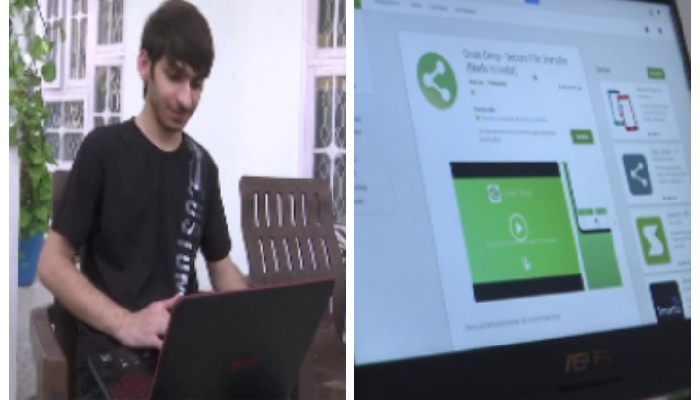
Rajouri, Aug 3: Ashfaq Mehmood Choudhary, a 17-year-old boy from Chattyear of Jammu and Kashmir's Rajouri district, has developed a file-sharing app 'Dodo Drop' which would enable users to share audios, videos, images, and texts between two devices without Internet access.

While speaking to media persons, Ashfaq Mehmood said that the 'Dodo Drop' application is an alternative to the Chinese 'SHAREit' app. "The Indian government has banned several Chinese apps due to data breaching, and among those apps was SHAREit which was used for sharing files.

Users faced a lot of problems due to the ban, and so I decided to make this file-sharing app. With 'Dodo Drop', users can share audios, videos, images, and even texts," he said.

Ashfaq said that it took him four weeks to develop the application, and it was launched on August 1 this year. The 'Dodo Drop' application has a transfer rate of up to 480 mbps, which is faster than the SHAREit app and is "quite easy" to use.

"Users can transfer data comprising photos, videos, audios, apps, texts, etc. between two devices with no Internet access. The transfers are fully encrypted and secure," he added.

"Our Prime Minister has always asserted the need for decreasing the dependency on foreign products and apps and to focus on the development of India-based apps. I tried to be part of the initiative of 'Aatmanirbhar Bharat' by developing an India-based file-sharing app. I want to develop global-standard apps for India," he added.

"We support and cooperate with him. He generates his own income by working on some projects and utilises it. We will continue to support him," said Parvez Ahmed Choudhary, Ashfaq's father.

In July, the Ministry of Electronics and Information Technology (MEITY) banned 47 apps, which were variants and cloned copies of the 59 apps banned earlier in June. These banned clones included SHAREit Lite, Tiktok Lite, Helo Lite, BIGO LIVE Lite, and VFY Lite.

The 59 apps had been banned by the Centre in June in view of the information available that they were engaged in activities which were "prejudicial to sovereignty and integrity and defence" of the country.

Almost all the apps banned had some preferential Chinese interest and the majority had parent Chinese companies.

The ban came amid border tensions with China in the Eastern Ladakh region.

Comments

Add new comment

  • Coastaldigest.com reserves the right to delete or block any comments.
  • Coastaldigset.com is not responsible for its readers’ comments.
  • Comments that are abusive, incendiary or irrelevant are strictly prohibited.
  • Please use a genuine email ID and provide your name to avoid reject.