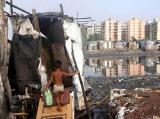
Snap action: defecate in open, find photo posted online

April 9, 2016

Mathura, Apr 9: To deter the practice of open defecation, authorities here have resorted to naming and shaming offenders by posting their pictures on social media.

defegateDistrict authorities today inspected several villages here under the Swachh Bharat initiative and took action against offenders.

They even posted their pictures on WhatsApp to deter such habits. "A total of 18 villages were inspected and 36 officials have been assigned to this task," Chief Development Officer Manish Kumar Verma said.

"Several persons were caught defecating in the open. Villagers were also made aware of the ills of this practice," he said.

The CDO said efforts are being made to make the villages free of open defecation by April 15, adding that they were looking to accomplish the same target with 150 villages of the district by August 15.

Comments

AK
 - 
Saturday, 9 Apr 2016

The Govt should also provide the Toilets & water facilities to the POOR before defaming them

Add new comment

  • Coastaldigest.com reserves the right to delete or block any comments.
  • Coastaldigset.com is not responsible for its readers’ comments.
  • Comments that are abusive, incendiary or irrelevant are strictly prohibited.
  • Please use a genuine email ID and provide your name to avoid reject.
News Network
January 27,2020

Jan 27: The Andhra Pradesh Cabinet passed a resolution on Monday setting in motion the process for abolishing the state Legislative Council.

A similar resolution will now be adopted in the Legislative Assembly and sent to the Centre for necessary follow-up action.

With just nine members, the ruling YSR Congress is in minority in the 58-member Legislative Council. The opposition Telugu Desam Party (TDP) has an upper hand with 28 members and the ruling party could get a majority in the House only in 2021 when a number of opposition members will retire at the end of their six-year term.

The move by the Andhra Pradesh cabinet came after the Y S Jaganmohan Reddy government last week failed to pass in the Upper House of the state legislature two crucial Bills related to its plan of having three capitals for the state.

Andhra Pradesh Legislative Council Chairman M A Sharrif on January 22 referred to a select committee the two bills -- AP Decentralisation and Inclusive Development of All Regions Bill, 2020, and the AP Capital Region Development Authority (CRDA) Act (Repeal) Bill -- for deeper examination.

The chairman had said that he was using his discretionary powers under Rule 154 while referring the Bills to the select panel in line with the demand of the TDP.

Following this, the chief minister had told the Assembly, "We need to seriously think whether we need to have such a House which appears to be functioning with only political motives. It is not mandatory to have the Council, which is our own creation, and it is only for our convenience."

"So let us discuss the issue further on Monday and take a decision on whether or not to continue the Council," he had said.

In fact, the YSRC had on December 17 first threatened to abolish the Council when it became clear that the TDP was bent on blocking two Bills related to creation of a separate Commission for SCs and conversion of all government schools into English medium.

As the Legislature was adjourned sine dine on December 17, no further action was taken. But last week, the issue cropped up again as the TDP remained firm on its stand on opposing the three-capitals plan.

The YSRC managed to get two TDP members to its side, but the government failed to get the three capitals Bills passed in the Council.

"What will be the meaning of governance if the House of Elders does not allow good decisions to be taken in the interest of people and block enactment of laws? We need to seriously think about it… Whether we should have such a House or do away with it," the chief minister had said in the Assembly.

Comments

Add new comment

  • Coastaldigest.com reserves the right to delete or block any comments.
  • Coastaldigset.com is not responsible for its readers’ comments.
  • Comments that are abusive, incendiary or irrelevant are strictly prohibited.
  • Please use a genuine email ID and provide your name to avoid reject.
News Network
March 11,2020

New Delhi, Mar 11: Jyotiraditya Scindia, the Madhya Pradesh politician whose surprise exit from the Congress has brought the Kamal Nath government to the brink of collapse, joined the Bharatiya Janata Party on Wednesday. Scindia joined the BJP at an event in national capital Delhi in the presence of party chief JP Nadda.

Scindia, who was warmly welcomed by Nadda, described 10 March, the day that he exited from the Congress as one of the two life-changing days of his life. The first, he said, was 30 September 2001 when he lost his father. Scindia underscored that the Congress was not the party that it had been and had been living in denial.

Scindia had ended his 18-year-old association with the Congress on Tuesday after meetings with Home Minister Amit Shah and Prime Minister Narendra Modi.

Scindia’s exit from the Congress was followed by resignation letters by about 22 MLAs who had been sequestered in Karnataka. The resignation letters were, however, sent to the Governor and not the assembly speaker, and threatens to upend the Kamal Nath government which has a wafer-thin majority.

If the resignations are accepted, the effective strength of the MP assembly will come down to 206, leaving the Bharatiya Janata Party (BJP) with a slender majority beyond the halfway mark of 103 with its 107 MLAs. For now, the Congress is trying to persuade the MLAs to not pull down the state government.

In his resignation letter to Congress chief Sonia Gandhi that Scindia put out on Twitter soon after, he alluded to his discomfort in the party over the last year or so. “...as you well know, this is a path that has been drawing itself out over the last year,” he had written in his letter.

It was seen as a reference to the Congress settling for Kamal Nath as the chief minister after the 2018 state elections though it was Scindia who had led from the front to oust the BJP from Madhya Pradesh. Scindia’s supporters had hoped that the Congress would tell Kamal Nath to give up his second charge - as the party chief in the state - but this also didn’t happen.

The first hint that something was amiss came in November last year when Scindia removed a reference to the Congress in his Twitter bio and instead wrote “public servant and cricket enthusiast”. He had then explained the change to an effort to make the Twitter bio shorter.

Jyotyiraditya Scindia’s aunt Yashodhara Raje Scindia appeared to declare soon after that the 49-year-old would join the BJP when she welcomed his resignation, calling it “ghar wapsi” or homecoming. “Jyotiraditya was being neglected in Congress,” Yashodhara Raje Scindia said.

Scindia’s grandmother, Vijaya Raje Scindia, was one of the founders of the Jana Sangh, the precursor to the BJP. His aunt Vasundhara Raje is a former Union minister and ex-chief minister of Rajasthan and another aunt Yashodhara Raje is a former minister in the Madhya Pradesh cabinet.

Comments

Add new comment

  • Coastaldigest.com reserves the right to delete or block any comments.
  • Coastaldigset.com is not responsible for its readers’ comments.
  • Comments that are abusive, incendiary or irrelevant are strictly prohibited.
  • Please use a genuine email ID and provide your name to avoid reject.
News Network
May 6,2020

New Delhi, May 6: Taking a cue from states, the Centre announced one of the steepest hikes in duties on petrol and diesel in the recent past, by raising it by Rs 10 and Rs 13 per litre, respectively, in a notification issued late on Tuesday.

Retail prices, however, will see no change as the price hike will be absorbed by oil marketing companies against the fall in crude prices.

Road and infrastructure cess was hiked by Rs 8 for petrol and diesel and the special additional excise duty (SAED) was hiked by Rs 2 per litre and Rs 5 per litre, respectively. While the road cess will only go into the Centre’s coffers, the hike on account of SAED will be passed on to states via devolution at 42 per cent. Hence, the states will get only Rs 0.84 per litre in case of petrol and Rs 2.1 in case of diesel.

The decision comes after several states increased the value added tax (VAT) on petrol and diesel making use of the lower price regime. The Delhi government on Tuesday increased VAT on petrol and diesel to 30 per cent each, from 27 and 16.75, respectively. As a result, the price of petrol in Delhi increased by Rs 1.67 to Rs 71.26 a litre and diesel by Rs 7.10 to Rs 69.29 in Delhi on Tuesday.

Amid falling international crude oil prices, the Centre introduced an enabling provision in March to raise excise duty on petrol and diesel by Rs 8 per litre in the Finance Act. The government had on March 14 raised excise duty on petrol and diesel by? 3 per litre each, which was to help raise an additional ?39,000 crore in revenue annually.

This duty hike included Rs 2 a litre increase in SAED and Rs 1 in road and infrastructure cess. It raised SAED to Rs 10 for petrol and Rs 4 for diesel. The limit has now been increased to Rs 18 a litre in case of petrol and Rs 12 in case of diesel by way of amendment of the Eighth Schedule of the Finance Act.

Economists said the move would impact retail inflation by over half a percentage point at least. “With lower consumption, there was loss of revenue for Centre and states, who earn Rs 6 trillion annually or Rs 50,000 crore monthly from fuel. Amid lockdown in April, the collection must have come down to just Rs 5,000 crore, and this will hold for May.

This means that Centre and states have lost 20 per cent of annual revenue from fuel. Hence, they have hiked duties to recover losses,” said Madan Sabnavis, chief economist, CARE Ratings. He added that the hike will impact inflation by at least 0.6-0.7 percentage points.

According to industry experts, an estimate of the additional government revenue cannot be made as the consumption of petrol and diesel has dropped to 40 per cent of what it was before the lockdown. The duty hike comes following a drop in international crude oil prices in April, owing to lower consumption figures globally. At 11.50 pm on Tuesday, Brent was priced at $30.67 a barrel, while West Texas Intermediate (WTI) crude was seen at $24.36 a barrel. On Monday, the Indian basket of crude oil was priced at $23.38 a barrel, after touching a 15-year low last month.


Comments

Add new comment

  • Coastaldigest.com reserves the right to delete or block any comments.
  • Coastaldigset.com is not responsible for its readers’ comments.
  • Comments that are abusive, incendiary or irrelevant are strictly prohibited.
  • Please use a genuine email ID and provide your name to avoid reject.