Snap action: defecate in open, find photo posted online

April 9, 2016

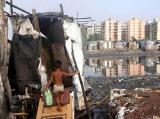
Mathura, Apr 9: To deter the practice of open defecation, authorities here have resorted to naming and shaming offenders by posting their pictures on social media.

defegateDistrict authorities today inspected several villages here under the Swachh Bharat initiative and took action against offenders.

They even posted their pictures on WhatsApp to deter such habits. "A total of 18 villages were inspected and 36 officials have been assigned to this task," Chief Development Officer Manish Kumar Verma said.

"Several persons were caught defecating in the open. Villagers were also made aware of the ills of this practice," he said.

The CDO said efforts are being made to make the villages free of open defecation by April 15, adding that they were looking to accomplish the same target with 150 villages of the district by August 15.

Comments

AK
 - 
Saturday, 9 Apr 2016

The Govt should also provide the Toilets & water facilities to the POOR before defaming them

Add new comment

  • Coastaldigest.com reserves the right to delete or block any comments.
  • Coastaldigset.com is not responsible for its readers’ comments.
  • Comments that are abusive, incendiary or irrelevant are strictly prohibited.
  • Please use a genuine email ID and provide your name to avoid reject.
News Network
March 27,2020

Thiruvananthapuram, Mar 27: Kerala Police social media team is using innovative methods to get people engaged in the home during the lockdown period. From conversing with people to giving them suggestions of must watch movies and sharing links of e-books Kerala police have become new 'chat friend' of people in the state.
"The traditional method of policing of interacting with people is not possible due to social distancing, so Kerala police is using the digital platform to reach out to people," Additional Director General of Police (ADGP), Head Quarters Manoj Abraham, who is heading the social media wing told ANI.
"We used social media and tried to be different at the same time innovative. From creating awareness to taking precautions we through various videos like police dance, coronavirus animations etc reached out to people. We used film stars also and used local dialect. It has got good reach and public acceptance. The most important aspect is that they received the underlying message well and are staying home" he added.
Abraham also said that Social Media team of Kerala Police is also fighting the fake news and rumours being spread at the COVID- 19 times.
"Some people were misusing social media by spreading wrong information. We also went behind those who tried to sell medicines saying it is good against Coronavirus. We crushed them with an iron hand - registered cases and arrested them. We send a strong message in social media that no rumour-mongering will be allowed, " he said.
He said the Kerala Police realised that people staying indoors was one of the keys to winning the fight against COVID-19.
"We started a chat box with the public. People were in their houses and they used the time to chat with police on various aspects of lockdown. We provided them with the right information, " he said.
The social media team has prepared a list of e-books that can be downloaded and also has a list of must watch movies. Not only that the team also occasionally share jokes with people during chat sessions.
Prime Minister Narendra Modi on Tuesday announced a 21-day lockdown in the entire country effective from midnight to deal with the spread of coronavirus, saying that "social distancing" is the only option to deal with the disease.

Comments

Add new comment

  • Coastaldigest.com reserves the right to delete or block any comments.
  • Coastaldigset.com is not responsible for its readers’ comments.
  • Comments that are abusive, incendiary or irrelevant are strictly prohibited.
  • Please use a genuine email ID and provide your name to avoid reject.
News Network
January 15,2020

Jan 15: Uttar Pradesh Chief Minister Yogi Adityanath said on Tuesday that the Muslim population in India increased manifold since the partition because they were given special rights and facilities, according to a report by The Indian Express.

"The Muslim population in India has increased manifold since 1947, it has gone up by seven to eight times. No one has any objection. If they, as citizens of the country, work for development, they are welcome. Their population has increased because they have been given special rights and facilities. All possible steps were taken to ensure their growth," Adityanath said while addressing a rally in Gaya organised by the BJP in support of the Citizenship (Amendment) Act.

He asked the audience, "But what happened in Pakistan?" Claiming that the Hindu population in Pakistan had decreased since 1947, he asked why it was so.

Yogi said that the countrywide anti-CAA protests are a "conspiracy" hatched from afar by those resentful of a united and grand India and these are being aided by a "crooked" opposition. He further charged that those opposing the legislation were committing the "paap" (sin) of working against national interests.

"For taking such a step, Prime Minister Narendra Modi and Home Minister Amit Shah deserve acclaim. Instead, they are being attacked", Yogi lamented.

Comments

India
 - 
Wednesday, 15 Jan 2020

He himself contradicts his statements. He claims the Muslim population rose 8-9 (according to him) times since 1947. If he was educated its simple 73 years have passed the population grows. Still, the Muslim population is only a minority against the majority. He talks about special rights and facilities given yes agreed but not by him it's by the Constitution of India and for all the minorities. So it's not you its Constitution of India.  The majority of the people are against the act CAA is against the very fundamental of the Constitution of India which PM & HM are taking away from the people. If you disagree, disrespect, go against it then you are against the country itself in Hindi deshdruhi. 

Add new comment

  • Coastaldigest.com reserves the right to delete or block any comments.
  • Coastaldigset.com is not responsible for its readers’ comments.
  • Comments that are abusive, incendiary or irrelevant are strictly prohibited.
  • Please use a genuine email ID and provide your name to avoid reject.
Agencies
June 30,2020

United Nations, Jun 30: India accounts for 45.8 million of the world's 142.6 million "missing females" over the past 50 years, a report by the United Nations said on Tuesday, noting that the country along with China form the majority of such women globally.

The State of World Population 2020 report released on Tuesday by the United Nations Population Fund (UNFPA), the world organisation's sexual and reproductive health agency, said that the number of missing women has more than doubled over the past 50 years - from 61 million in 1970 to a cumulative 142.6 million in 2020.

Of this global figure, India accounted for 45.8 million missing females as of 2020 and China accounted for 72.3 million.

Missing females are women missing from the population at given dates due to the cumulative effect of postnatal and prenatal sex selection in the past, the agency said.

Between 2013 and 2017, about 460,000 girls in India were missing' at birth each year. According to one analysis, gender-biased sex selection accounts for about two-thirds of the total missing girls, and post-birth female mortality accounts for about one-third, the report said.

Citing data by experts, it said that China and India together account for about 90-95 per cent of the estimated 1.2 million to 1.5 million missing female births annually worldwide due to gender-biased (prenatal) sex selection.

The two countries also account for the largest number of births each year, it said.

The report cites data by Alkema, Leontine and others, 2014 National, Regional, and Global Sex Ratios of Infant, Child, and under-5 Mortality and Identification of Countries with Outlying Ratios: A Systematic Assessment' from The Lancet Global Health.

According to their analysis, India has the highest rate of excess female deaths, 13.5 per 1,000 female births, which suggests that an estimated one in nine deaths of females below the age of 5 may be attributed to postnatal sex selection.

The report notes that governments have also taken action to address the root causes of sex selection. India and Vietnam have included campaigns that target gender stereotypes to change attitudes and open the door to new norms and behaviours.

They spotlight the importance of daughters and highlight how girls and women have changed society for the better. Campaigns that celebrate women's progress and achievements may resonate more where daughter-only families can be shown to be prospering, it said.

The report said that successful education-related interventions include the provision of cash transfers conditional on school attendance; or support to cover the costs of school fees, books, uniforms and supplies, taking note of successful cash-transfer initiatives such as Apni Beti Apna Dhan' in India.

It said that preference for a male child manifested in sex selection has led to dramatic, long-term shifts in the proportions of women and men in the populations of some countries.

This demographic imbalance will have an inevitable impact on marriage systems. In countries where marriage is nearly universal, many men may need to delay or forego marriage because they will be unable to find a spouse, the report said.

This so-called "marriage squeeze", where prospective grooms outnumber prospective brides, has already been observed in some countries and affects mostly young men from lower economic strata.

"At the same time, the marriage squeeze could result in more child marriages, the report said citing experts.

Some studies suggest that the marriage squeeze will peak in India in 2055. The proportion of men who are still single at the age of 50 is forecast to rise after 2050 in India to 10 per cent, it said.

The UN report said that every year, millions of girls globally are subjected to practices that harm them physically and emotionally, with the full knowledge and consent of their families, friends and communities.

At least 19 harmful practices, ranging from breast ironing to virginity testing, are considered human rights violations, according to the UNFPA report, which focuses on the three most prevalent ones: female genital mutilation, child marriage, and extreme bias against daughters in favour of sons.

Harmful practices against girls cause profound and lasting trauma, robbing them of their right to reach their full potential, says UNFPA Executive Director Dr. Natalia Kanem.

This year, an estimated 4.1 million girls will be subjected to female genital mutilation. Today, 33,000 girls under age 18 will be forced into marriages, usually to much older men and an extreme preference for sons over daughters in some countries has fuelled gender-biased sex selection or extreme neglect that leads to their death as children, resulting in the 140 million missing females.

The report said that ending child marriage and female genital mutilation worldwide is possible within 10 years by scaling up efforts to keep girls in school longer and teach them life skills and to engage men and boys in social change.

Investments totalling USD 3.4 billion a year through 2030 would end these two harmful practices and end the suffering of an estimated 84 million girls, it said.

A recent analysis revealed that if services and programmes remain shuttered for six months due to the COVID-19 pandemic, an additional 13 million girls may be forced into marriage and 2 million more girls may be subjected to female genital mutilation between now and 2030.

The pandemic both makes our job harder and more urgent as so many more girls are now at risk, Kanem said.


Comments

Add new comment

  • Coastaldigest.com reserves the right to delete or block any comments.
  • Coastaldigset.com is not responsible for its readers’ comments.
  • Comments that are abusive, incendiary or irrelevant are strictly prohibited.
  • Please use a genuine email ID and provide your name to avoid reject.