Snap action: defecate in open, find photo posted online

April 9, 2016

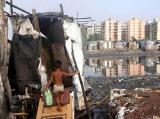
Mathura, Apr 9: To deter the practice of open defecation, authorities here have resorted to naming and shaming offenders by posting their pictures on social media.

defegateDistrict authorities today inspected several villages here under the Swachh Bharat initiative and took action against offenders.

They even posted their pictures on WhatsApp to deter such habits. "A total of 18 villages were inspected and 36 officials have been assigned to this task," Chief Development Officer Manish Kumar Verma said.

"Several persons were caught defecating in the open. Villagers were also made aware of the ills of this practice," he said.

The CDO said efforts are being made to make the villages free of open defecation by April 15, adding that they were looking to accomplish the same target with 150 villages of the district by August 15.

Comments

AK
 - 
Saturday, 9 Apr 2016

The Govt should also provide the Toilets & water facilities to the POOR before defaming them

Add new comment

  • Coastaldigest.com reserves the right to delete or block any comments.
  • Coastaldigset.com is not responsible for its readers’ comments.
  • Comments that are abusive, incendiary or irrelevant are strictly prohibited.
  • Please use a genuine email ID and provide your name to avoid reject.
News Network
July 19,2020

Lucknow, Jul 19: The animal markets, which are usually bustling with activity ahead of Bakrid, are desolate this year.

The Covid-19 pandemic has shorn all festivals of public celebrations, and people are apprehensive that the tradition of animal sacrifice may be affected due to social distancing norms.

Also there is a massive drop in demand for sacrificial animals due to the financial impact of the crisis.

Chairman of All India Jamiat-ul-Quresh Sirajuddin Qureshi urged the government to come out with guidelines for carrying out the celebrations in the traditional way.

The festival will fall on July 31 or August 1. Buyers and sellers start thronging the animal markets almost two weeks ahead of the festival. But this year only a negligible number of buyers have turned up in animal markets in old Lucknow areas including Nakkhas, according to traders.

"It is very difficult to say as to what the government is thinking. 'Qurbani' is a matter of faith for the Muslims. We appeal to the government to deliberate and find a solution. This is a national problem, and our office bearers are speaking to different state governments," Qureshi said.

In the absence of guidelines, not many madrassas are buying animals for sacrifice, he said.

"The madrasas where collective 'qurbani' is done, are also not coming forward. In Bakrid, along with goats, buffaloes are also sacrificed. The government should ensure that people who are transporting the animals are not harassed by the police," Qureshi said.

Prominent Muslim cleric Khalid Rasheed Farang Mahali said he had raised the issue with the Uttar Pradesh chief minister.

"I have recently met Chief Minister Yogi Adityanath requesting him to issue guidelines for Bakrid. I am hopeful that the guidelines will be released soon," he said.

Rahat Ali, a goat trader from Rajasthan said, thousands of people will be affected due to the reduced demand for animals.

"The animal trade works in a chain involving farmers who rear animals, small traders and big traders.

"The traders buy the animals from the farmers. These are then sent to various states like Maharashtra, Gujarat and Uttar Pradesh. In the absence of demand, I did not purchase animals this year," he said.

Sajid, who supplies goats to various districts in western Uttar Pradesh, said the lockdown has affected the livelihood of people and not many have the money to buy animals for sacrifice.

"The lockdown has drained the people of their money. As a result, the animals are not getting sold," he said.

The Maharashtra government has come out with guidelines for Eid al-Adha, also known as Bakrid or Id-ul-Zuha, noting that there is a ban in place on all religious programmes and people should offer "namaz" in their homes and not in mosques.

It also said sacrificial animals should be bought online or over the phone as markets dealing with them will be closed, adding that "qurbani" should preferably be symbolic.

There will be no relaxation in restrictions for Eid in containment zones, and people are directed not to congregate in public places on the day of the festival, it added. 

Comments

Add new comment

  • Coastaldigest.com reserves the right to delete or block any comments.
  • Coastaldigset.com is not responsible for its readers’ comments.
  • Comments that are abusive, incendiary or irrelevant are strictly prohibited.
  • Please use a genuine email ID and provide your name to avoid reject.
Agencies
May 21,2020

Eminent river engineer and former professor of civil engineering at IIT in the Banaras Hindu University (BHU) Prof. U.K. Choudhary has said that the judicious use of river technology can help resolve the Coronavirus crisis as well as the plight of Ganga river.

Choudhary, who is also founder of Ganga Research Centre at IIT (BHU), said: "The Ganga water contains a significantly higher proportion of bacteriophages - a kind of virus that kill bacteria. Our ancient scriptures like Vedas, Puranas and Upanishads say that Ganga jal is medicinal water. Scientists later found that Ganga water has bacteriophages capable of killing pathogens."

Explaining further, he said, "Let us analyze the source of bacteriophages. If we take three rivers of Himalayan origin having sources at different heights -the Ganga (Gomukh), Yamuna (Yamunotri) and the Sone river, we find the colours of waters are different. The whitish colour of Ganga water, greenish colour of Yamuna water and the brownish colour of Sone water is also indicative. As Gomukh is the highest among the three, its water comes from lowest depth of aquifer as compared to Yamunotri and Sone river," he explained.

Thus, the quality of river water is proportional to height of origin point. This defines the genetic character of Ganga water. The balanced flow of this water in entire length of the Ganga defines the medicinal property of Ganga water," he stated.

Prof Chaudhary said that the bacteriophages in the Ganga can curb the spread of coronavirus through soil, water and air.
He suggested that the idea is to preserve the medicinal value of Ganga water and to use it to fight Corona. He said that this can be done by opening the gates of all the dams and barrages in a way that the discharge through each is similar to the water at Gomukh. In this way, the concentration of bacteriophage will be enhanced in Ganga water making it more effective against pathogens.

"With increasing diffusion of bacteriophages in water and soil, the spread of Coronavirus will be impacted and reduced. This methodology and technique can also help maintain the quality of Ganga water later when the problem of Corona ends," he said.

Comments

Add new comment

  • Coastaldigest.com reserves the right to delete or block any comments.
  • Coastaldigset.com is not responsible for its readers’ comments.
  • Comments that are abusive, incendiary or irrelevant are strictly prohibited.
  • Please use a genuine email ID and provide your name to avoid reject.
Agencies
August 4,2020

New Delhi, Aug 4: Over 50 per cent of COVID-19 deaths in India have taken place among people aged 60 years and above and 37 per cent deaths have been reported among patients in the age group of 45 to 60 years, Health Ministry said on Tuesday.

Addressing a press conference, Rajesh Bhushan, Secretary, Health Ministry said that 11 per cent COVID-19 deaths took place in the age group of 26 to 44.

The 18 to 25 age group and those below 18 years reported one per cent deaths each.
"Currently, 5,86,298 active COVID-19 cases are in India and over 12 lakh people have recovered.

50 per cent deaths due to COVID19 have taken place among the age group of 60 years or above and 37 per cent deaths took place in the age group between 45 to 60 years," Bhushan said.

"A total of 11 per cent COVID-19 deaths took place in the age group of 26 to 44. Only 1 per cent in 18 to 25 age group and 1 per cent in below the age of 18 years," he added.

Bhushan said that 68 per cent of COVID-19 deaths have been reported among male patients and 32 per cent among female patients which is broadly in line with the global scenario.

The number of recovered COVID-19 patients in India is increasing daily and is now over double the number of active cases.

Bhushan said that the case fatality rate (CFR) is lowest since the first lockdown.

"More than 2 crore COVID-19 tests have been conducted, including more than 6.6 lakh tests in the last 24 hours. Recovered cases are now double of the active cases. 

The case fatality rate (CFR) is lowest since the first lockdown," he said
"This is the first time after the first lockdown that the fatality rate is at the lowest, at 2.10 per cent. The fatality rate has seen a progressive decline and it is continuing, which is a good sign," he added.

According to the World Health Organisation, CFR is a measure of the severity of a disease and is defined as the proportion of reported cases of a specified disease or condition which are fatal within a specified time.

Comments

Add new comment

  • Coastaldigest.com reserves the right to delete or block any comments.
  • Coastaldigset.com is not responsible for its readers’ comments.
  • Comments that are abusive, incendiary or irrelevant are strictly prohibited.
  • Please use a genuine email ID and provide your name to avoid reject.