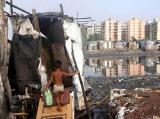
Snap action: defecate in open, find photo posted online

April 9, 2016

Mathura, Apr 9: To deter the practice of open defecation, authorities here have resorted to naming and shaming offenders by posting their pictures on social media.

defegateDistrict authorities today inspected several villages here under the Swachh Bharat initiative and took action against offenders.

They even posted their pictures on WhatsApp to deter such habits. "A total of 18 villages were inspected and 36 officials have been assigned to this task," Chief Development Officer Manish Kumar Verma said.

"Several persons were caught defecating in the open. Villagers were also made aware of the ills of this practice," he said.

The CDO said efforts are being made to make the villages free of open defecation by April 15, adding that they were looking to accomplish the same target with 150 villages of the district by August 15.

Comments

AK
 - 
Saturday, 9 Apr 2016

The Govt should also provide the Toilets & water facilities to the POOR before defaming them

Add new comment

  • Coastaldigest.com reserves the right to delete or block any comments.
  • Coastaldigset.com is not responsible for its readers’ comments.
  • Comments that are abusive, incendiary or irrelevant are strictly prohibited.
  • Please use a genuine email ID and provide your name to avoid reject.
Agencies
June 15,2020

New Delhi, Jun 15: Average temperature of India experienced a rise of 0.7 degree Celsius, along with decline in rainfall, significant increase in frequency of very severe cyclonic storms and droughts in over a decade due to human activities, the Ministry of Earth Sciences in its research report said.

The contentions were made in a report issued by the ministry on the impact of climate change. It will be published by Union Minister Harsh Vardhan on June 19.

According to the report, "Since the middle of the twentieth century, India witnessed rise in temperature; decrease in monsoon; rise in extreme temperature and rainfall, droughts, and sea levels; and increase intensity of severe cyclones.

The report, prepared by researchers of the Centre for Climate Change Research, a cell under The Ministry's Indian Institute of Tropical Meteorology, Pune, further stated that there is compelling scientific evidence that human activities have influenced these changes in regional climate.

India's average temperature has risen by around 0.7 degrees Celsius during 1901-2018, it said, adding that the rise is largely on account of GHG-induced warming and partially offset by forcing due to anthropogenic aerosols.

It states that the average temperature over India is projected to rise by 4.4 degrees Celsius, while the intensity of heat waves is likely to increase by 3-4 times by the end of the century.

In the 30-year period between 1986 and 2015, temperatures of the warmest day and the coldest night of the year have risen by about 0.63 degrees Celsius and 0.4 degree Celsius.

According to the report, by the end of the century, the temperatures of the warmest day and the coldest night are projected to rise by approximately 4.7 degrees Celsius and 5.5 degrees Celsius, respectively.

Alarmingly, sea surface temperature of the tropical Indian Ocean has also risen by one degrees Celsius on average during 1951-2015.

"The frequency of very severe cyclonic storms during the post-monsoon season has increased significantly (+1 event per decade) during the last two decades (2000-2018)," it added.

This came in the backdrop of Cyclone 'Amphan' and 'Nisarga' which made landfalls on May 20 and June 3 and killed several people, flattened villages, and destroyed farms.

"This is the first-ever climate change assessment report for India. This report will be very useful for policy makers, researchers, social scientists, economists, and students," said M. Rajeevan, secretary, the Ministry of Earth Sciences.

Besides this, the report also highlighted various other unnerving data on climate change in the country. Both the frequency and extent of droughts have increased significantly during 1951-2016.

The overall decrease of seasonal "summer monsoon rainfall" during the last 6-7 decades has led to an increased propensity for droughts over India.

"In particular, areas over central India, southwest coast, southern peninsula and north-eastern India have experienced more than 2 droughts per decade, on average, during this period. The area affected by drought has also increased by 1.3 per cent per decade over the same period."

The Hindu Kush Himalayas (HKH) also experienced a temperature rise of about 1.3 degree Celsius during 1951-2014.

Several areas of the Himalayas have experienced a declining trend in snowfall and also retreat of glaciers in recent decades. By the end of the twenty-first century, its annual mean surface temperature is projected to increase by about 5.2 degree Celsius.

The summer monsoon precipitation from June to September over India has also declined by around 6 per cent from 1951 to 2015, with notable decreases over the Indo-Gangetic Plains and the Western Ghats, the report further states.

Comments

Add new comment

  • Coastaldigest.com reserves the right to delete or block any comments.
  • Coastaldigset.com is not responsible for its readers’ comments.
  • Comments that are abusive, incendiary or irrelevant are strictly prohibited.
  • Please use a genuine email ID and provide your name to avoid reject.
News Network
May 25,2020

New Delhi, May 25: Realtors' apex body CREDAI has written a letter to Prime Minister Narendra Modi, seeking immediate relief measures to tide over the crisis caused by the COVID-19 pandemic.

The association, which has around 15,000 developer members, has sought one-time debt restructuring, lower interest rate on home loans and tax sops to boost liquidity and demand in the sector.

In an open letter to the prime minister, the Confederation of Real Estate Developers' Associations of India (CREDAI) said, "In this distressful situation arising out of the COVID-19 calamity, we in the real estate sector seek immediate relief for our survival."

Stating that the sector contributes substantially to the country's GDP and has backward and forward linkages with almost 250 industries, CREDAI said, "Our survival, therefore, is not just desirable, it is rather crucial for the economy."

Liquidity crunch, stagnant demand and cartelization of raw materials are major impediments for the industry to kickstart, it added.

CREDAI made seven recommendations to revive the sector and sought immediate intervention from the prime minister.

Pointing out that the situation is "much worse" than global financial crisis in 2008, CREDAI said "a one-time restructuring scheme as was permitted by RBI in 2008 may be quickly instituted by all lending institutions."

Since real estate was already reeling under a cyclical downturn before COVID-19, debt restructuring needs to be allowed for all accounts which were standard as on December 31, 2019, it added.

CREDAI demanded that all banks, non-banking financial companies (NBFCs) and housing finance companies (HFCs) should be directed to provide additional credit equal to 20 per cent of the existing real estate project related advances with no additional security and without the classification of project as NPA.

The penal interest charged by banks and financial institutions should be suspended for a period of one year or until such time as it takes for the pandemic to abate.

To revive housing demand, CREDAI suggested that "government should reduce the maximum rate of interest on new home loans to 5 per cent by subsidizing the interest component of EMIs for next five years."

The limit of principal deduction on housing loan under Section 80C should be increased to 2.5 lakh.

Interest deduction under Section 24 on housing loan for homebuyers may be increased to Rs 10 lakh, it said.

There should be no capital gains for residential properties held for a period longer than one year.

CREDAI also demanded that the subvention scheme be allowed again by National Housing Bank (NHB) and the Reserve Bank.

Under the scheme, builders used to pay EMIs on behalf of homebuyers during construction of projects.

"The economic uncertainty and job insecurity at the moment would not allow purchase of residential property at this time. A scheme whereby a homebuyer would need to pay only margin money with no EMI for 24 months will address this insecurity," the letter said.

The association pointed out that prices of cement and steel have been increased during the lockdown period, and asked for crackdown on cartelisation by manufacturers.

On the GST front, CREDAI said that the current regime of GST provides a rate of 1 per cent  for affordable housing.

"The limit of Rs 45 lakh serves as a criterion of affordability for the purpose of GST. On all other housing, GST is applied at the rate of 5 per cent without input tax credit. It has been felt that the criterion of Rs 45 lakh is too low an index of affordability anywhere across the country, and especially so in the metros," the letter said.

It will serve as an inducement to buyers in the metros if the benefit of GST at the rate of 1 per cent is extended to units costing up to Rs 75 lakh, the association said.

CREDAI pointed out that the flat rate of 5 per cent GST for under construction residential housing is causing cost build up and is acting as a deterrent for sale of under construction projects since there is no GST on completed units.

It suggested that GST rate of 1 per cent and 5 per cent, without input tax credit, should continue.

"However, an option of GST @12 per cent for normal housing/ 8 per cent for affordable housing (with 1/3rd deduction for land i.e. effective GST rate of 8 per cent for normal housing and effective GST rate of 5 per cent for affordable housing) with input tax credit (ITC) benefits in line with the scheme applicable for the works contracts for government may be revived and made applicable to the real estate," the letter said.

Lastly, CREDAI demanded that a Rs 25,000 crore stress fund for completing stalled housing projects should be deployed at the earliest.

"We shall be grateful for your much-needed intervention for the above mentioned measures required to revive the real estate sector," CREDAI said in the letter to the PM.


Comments

Add new comment

  • Coastaldigest.com reserves the right to delete or block any comments.
  • Coastaldigset.com is not responsible for its readers’ comments.
  • Comments that are abusive, incendiary or irrelevant are strictly prohibited.
  • Please use a genuine email ID and provide your name to avoid reject.
News Network
June 22,2020

New Delhi, Jun 22: With an increase of 14,821 new cases and 445 deaths, India's COVID-19 count reached 4,25,282 on Monday.

According to the latest update by the Union Ministry of Health and Family Welfare (MoHFW), 13,699 deaths have been recorded due to the infection so far in the country.

The rise in confirmed cases today is lower than the highest spike of 15 thousand plus cases registered on Sunday.

The count includes 1,74,387 active cases, and 2,37,196 cured/discharged/migrated patients.

Maharashtra with 1,32,075 confirmed cases remains the worst-affected by the infection so far in the country. The state's count includes 60,161 active, 65,744 cured, discharged patients while 6,170 deaths have been reported due to the infection so far.

Meanwhile, the national capital today became the second-worst affected region in the country with the number of confirmed cases in Delhi reaching 59,746 as opposed to Tamil Nadu's 59,377 cases.

While 2,175 deaths have been reported in Delhi due to the infection so far, the toll in Tamil Nadu stands at 757.

Comments

Add new comment

  • Coastaldigest.com reserves the right to delete or block any comments.
  • Coastaldigset.com is not responsible for its readers’ comments.
  • Comments that are abusive, incendiary or irrelevant are strictly prohibited.
  • Please use a genuine email ID and provide your name to avoid reject.