Snap action: defecate in open, find photo posted online

April 9, 2016

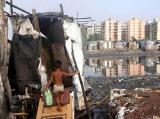
Mathura, Apr 9: To deter the practice of open defecation, authorities here have resorted to naming and shaming offenders by posting their pictures on social media.

defegateDistrict authorities today inspected several villages here under the Swachh Bharat initiative and took action against offenders.

They even posted their pictures on WhatsApp to deter such habits. "A total of 18 villages were inspected and 36 officials have been assigned to this task," Chief Development Officer Manish Kumar Verma said.

"Several persons were caught defecating in the open. Villagers were also made aware of the ills of this practice," he said.

The CDO said efforts are being made to make the villages free of open defecation by April 15, adding that they were looking to accomplish the same target with 150 villages of the district by August 15.

Comments

AK
 - 
Saturday, 9 Apr 2016

The Govt should also provide the Toilets & water facilities to the POOR before defaming them

Add new comment

  • Coastaldigest.com reserves the right to delete or block any comments.
  • Coastaldigset.com is not responsible for its readers’ comments.
  • Comments that are abusive, incendiary or irrelevant are strictly prohibited.
  • Please use a genuine email ID and provide your name to avoid reject.
Agencies
May 4,2020

Mumbai, May 4: Days after Facebook, private equity firm Silver Lake said it will invest 56.56 billion rupees ($746.74 million) in Reliance Industries's digital arm, giving it a valuation of 4.90 trillion rupees. Silver Lake on Monday agreed to pay Rs 5,655.75 crore to buy 1.15 per cent stake in the firm that houses billionaire Mukesh Ambani's telecom arm Jio.

The investment in Jio Platforms comes within days of Facebook investing USD 5.7 billion to buy a 9.99 per cent stake in Jio Platforms. The investment is at a premium of 12.5 per cent to the Facebook deal.

"This investment values Jio Platforms at an equity value of Rs 4.90 lakh crore and an enterprise value of Rs 5.15 lakh crore and represents a 12.5 per cent premium to the equity valuation of the Facebook investment announced on April 22, 2020," Reliance said in a statement.

Comments

Add new comment

  • Coastaldigest.com reserves the right to delete or block any comments.
  • Coastaldigset.com is not responsible for its readers’ comments.
  • Comments that are abusive, incendiary or irrelevant are strictly prohibited.
  • Please use a genuine email ID and provide your name to avoid reject.
News Network
April 15,2020

New Delhi, Apr 15: As the world grapples with coronavirus, researchers have found the presence of a different kind of coronavirus -- bat coronavirus (BtCoV) --in two bat species from Kerala, Himachal Pradesh, Puducherry and Tamil Nadu, according to a study by the Indian Council of Medical Research (ICMR).

There is no evidence or research to claim that these bat coronaviruses can cause disease in humans, said Dr Pragya D Yadav, Scientist at the National Institute of Virology (NIV), Pune and also the first author of study.

The study has been published in the Indian Journal of Medical Research,

Twenty-five bats of Rousettus and Pteropus species from Kerala, Himachal Pradesh, Puducherry and Tamil Nadu were found positive for BtCoV in Kerala, Himachal Pradesh, Puducherry and Tamil Nadu.

"These bat coronaviruses have no relation with SARS-CoV2 responsible for the COVID-19 pandemic," Yadav said, adding that Pteropus bat species were earlier found positive for Nipah virus in 2018 and 2019 in Kerala.

"Bats are considered to be the natural reservoir for many viruses, of which some are potential human pathogens. In India, an association of Pteropus medius bats with the Nipah virus was reported in the past. It is suspected that the recently emerged severe acute respiratory syndrome coronavirus 2 (SARS-CoV-2) also has its association with bats," the objective of the study titled 'Detection of coronaviruses in Pteropus and Rousettus species of bats from different states of India' stated.

"In the present scenario of changing demography and ecological manipulations, it is challenging to have checks on the encounters of bats with other animals and humans," the study stated, highlighting that the need for active and continuous surveillance remains crucial for outbreak alerts for bat-associated viral agents with epidemic potential, which would be helpful in timely interventions.

"Although CoVs in the subfamily coronavirinae do not usually produce clinical symptoms in their natural hosts (bats), accidental transmission of these viruses to humans and other animals may result in respiratory, enteric, hepatic or neurologic diseases of variable severity. It is still not understood as to why only certain CoVs can infect people," the study said.

The scientists stressed on the need of proactive surveillance of zoonotic infections in bats.

The detection and identification of such viruses from bats also recommends cross-sectional antibody surveys (human and domestic animals) in localities where the viruses have been detected.

Similarly, if the epidemiological situation demands, evidence-based surveillance should also be conducted, the study said while emphasing on the need of developing strong mechanisms for working jointly with various stakeholders such as wildlife, poultry, animal husbandry and human health departments.

"In conclusion, our study showed detection of bat CoVs in two species of Indian bats. Continuous active surveillance is required to identify the emerging novel viruses with epidemic potential," Dr Yadav said.

Elaborating on the study, Dr Yadav said throat and rectal swab samples of two bat species -- Rousettus and Pteropus -- from seven states were screened for the bat coronvirus during which the representative samples collected from Kerala, Himachal Pradesh, Puducherry and Tamil Nadu tested positive while those from Karnataka, Chandigarh, Punjab, Telengana, Gujarat and Odisha came out negative.

The reverse-transcription polymerase chain reaction (RT-PCR) tests and sequencing were used for the confirmation of the findings.

"This is an ongoing study to understand the prevalence of the Nipah virus in bats," she said.

Comments

Add new comment

  • Coastaldigest.com reserves the right to delete or block any comments.
  • Coastaldigset.com is not responsible for its readers’ comments.
  • Comments that are abusive, incendiary or irrelevant are strictly prohibited.
  • Please use a genuine email ID and provide your name to avoid reject.
News Network
June 7,2020

Bhopal, June 7: In a shocking incident of medical cruelty, an 80-year-old man was tied to a hospital bed in Madhya Pradesh after he allegedly failed to make payment of fees for his treatment. The incident took place at the City Hospital in Shajapur.  

The hospital, however, claimed that he was having convulsions and as a result had his hands and legs tied so that he could not hurt himself.

The man’s family members have accused the hospital authorities of resorting to the heinous act after they failed to pay a fee of Rs 11,000 for his treatment at the. 

“We had deposited a bill of Rs 5,000 at the time of admission but when the treatment took a few more days, we did not have the money to pay the bill,” his daughter told the channel.

The hospital, however, maintained that the man was shackled because he was suffering from an electrolyte imbalance. “He was having convulsions because of electrolyte imbalance,” an unidentified doctor said. “We tied him so that he could not hurt himself.” 
The doctor claimed the hospital had waived off the man’s bill on “humanitarian grounds”.

Chief Minister Shivraj Singh Chouhan took cognizance of the matter and promised strict action against the hospital authorities. 

The Shajapur administration has also ordered an inquiry and has sent a police team to the hospital for investigation, the district collector told media persons.

Comments

Add new comment

  • Coastaldigest.com reserves the right to delete or block any comments.
  • Coastaldigset.com is not responsible for its readers’ comments.
  • Comments that are abusive, incendiary or irrelevant are strictly prohibited.
  • Please use a genuine email ID and provide your name to avoid reject.