Speeding car rams into electric pole; cops avert major catastrophe

[email protected] (CD Network)
May 28, 2016

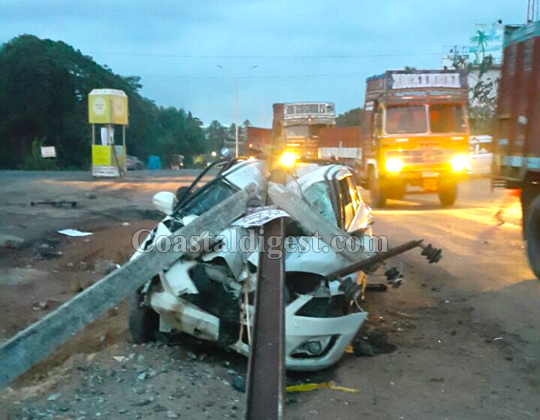
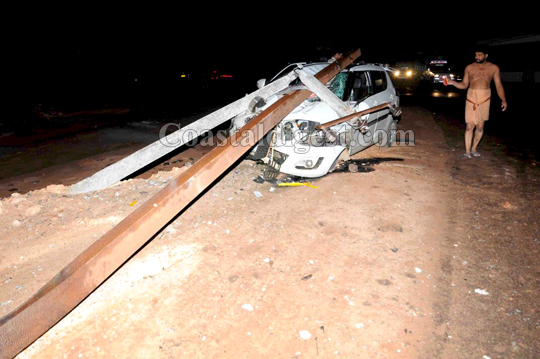
Mangaluru, May 28: In what could have been a major catastrophe, a speeding car rammed into an electric pole on an over-bridge at Thokkottu on the outskirts of the city in the early hours of Saturday.

car2

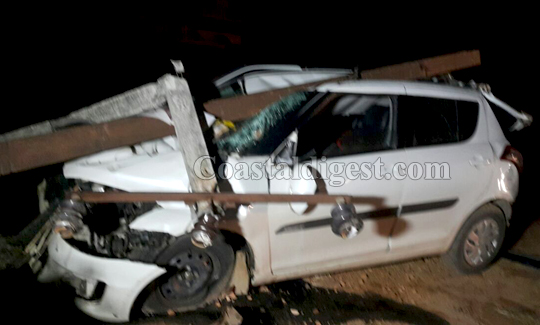
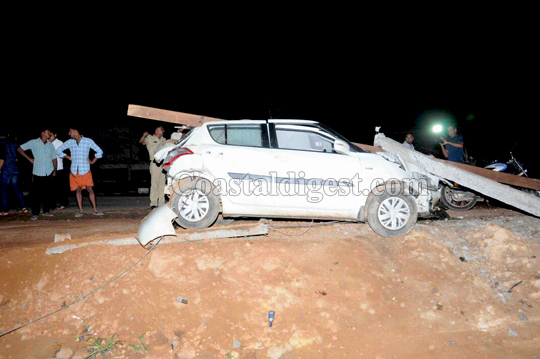
The intensity of the collision was such that the electric pole broke into two pieces and fell on the same car badly damaging it besides injuring its four occupants.

While a 20-year-old man identified as Ismaeel (20), suffered severe injuries, the three others suffered minor injuries.

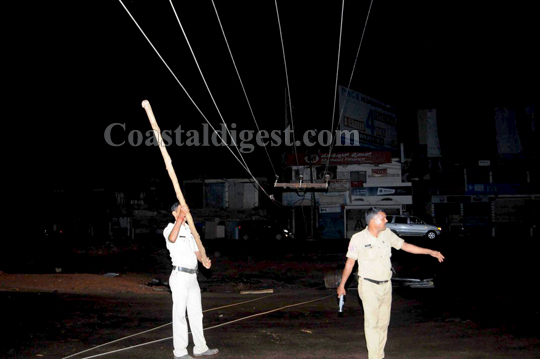
The incident occurred at around 3 a.m. The presence of mind of local residents and police averted a tragedy when the repeated phone calls to Mescom office landline remained unanswered.

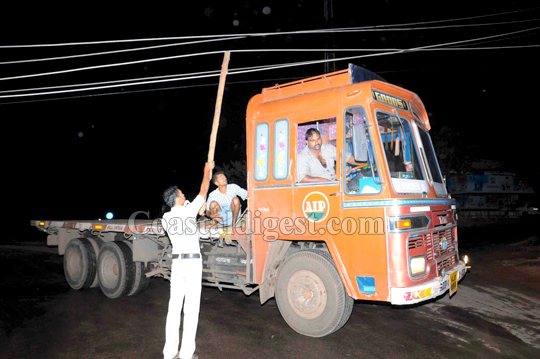
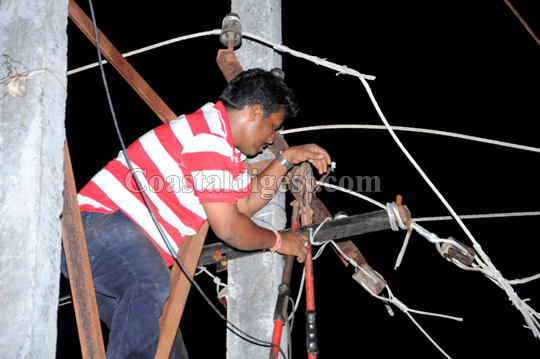
It is learnt that the police personnel rescued the occupants of the car by lifting the electric pole using available equipments. Later, the police went to the Mescom office and fetched the linemen in their jeep.

A case has been registered at jurisdictional Ullal police station and investigations are on. The swift car also was seized by the police.

car1

caracc 1

caracc 2

caracc 3

caracc 4

caracc 5

Comments

farooqu
 - 
Saturday, 28 May 2016

by looking at the car, we feel nobody would be alive, seriously god saved them. over speed may be the reason for this accident, when youths get together in car dont know what kind of energy drive them speed.

jeevan
 - 
Saturday, 28 May 2016

lucky escape, good job by police and locals, thanks for saving the lives

Mahesh
 - 
Saturday, 28 May 2016

i must say a great escape, otherwise it would be a worst disaster.

Add new comment

  • Coastaldigest.com reserves the right to delete or block any comments.
  • Coastaldigset.com is not responsible for its readers’ comments.
  • Comments that are abusive, incendiary or irrelevant are strictly prohibited.
  • Please use a genuine email ID and provide your name to avoid reject.
News Network
July 2,2020

Bengaluru, Jul 1: Veteran actor and comedian, Rajagopal, who was known for his outstanding mimicry skills in Sandalwood breathed his last on the night of July 1, that is yesterday. He was one of the favourite comedians among the audiences and is said to have been suffering from kidney and asthma problems.

He passed away at his residence in Bangalore.

The well-recognised comedian has worked in more than 600 movies in his career, along with Tamil movies. The actor was active in the film industry since 1983 and had acted with many stars like Vishnuvardhan, Ambareesh, Prabhakar among others. He is also known for mimicking actress Kalpana's voice very well.

Recently, he also had claimed that new directors, new producers in the Kannada film industry had not been calling veterans to play parts in their movies and preferring fresh talent. He also had been going through a financial crisis due to the lockdown. Rajagopal has also worked in TV serials for some time in his career.  He has acted in super hit movies like, ‘Real Police’, ‘Sadakaru’, ‘Goosi Gang’, ‘Super Police’, and others as well.

The lockdown has seen the demise of many South Indian stars. Chiranjeevi Sarja too passed away last month, leaving the industry in shock. Now, a famous comedian's demise has also saddened the industry further.

Comments

Add new comment

  • Coastaldigest.com reserves the right to delete or block any comments.
  • Coastaldigset.com is not responsible for its readers’ comments.
  • Comments that are abusive, incendiary or irrelevant are strictly prohibited.
  • Please use a genuine email ID and provide your name to avoid reject.
News Network
June 26,2020

Bengaluru, Jun 26: The National Restaurant Association of India (NRAI) on Thursday came up with a Standard Operating Procedure (SOP) for restaurants whereby among other physical distancing norms, it has suggested a 2-metre gap between tables.

Formulated in partnership with Releski, a Bengaluru based skill-tech company, the SoP suggests that in case of back-to-back seating, people sitting with their backs towards each other will have their seats divided by 'Plexiglass' divider raised up to 2 meters from the ground.

"In a typical restaurant, the improvised seating plan should have a minimum distance of 2 metres between tables. The distance of 2 metres (6 feet) between tables should measure from one edge of the table to the other table's edge," it said.

In case of loose or free seating such as in banquet style or food court style seating, a minimum 2 meters of distance should be maintained between tables.

The guidelines noted that, to encourage physical distancing, restaurants have to sacrifice their seating capacity, to promote health and safety, and also to gain trust from their patrons.

"In order to perform this, divide your restaurants under different sectors. Pull out your restaurant's floor plan and colour code different sections red and yellow. Red sections are potential areas where maximum footfall or traffic is observed. Yellow sections are areas where the footfalls are average," it said.

All the red sections are encircled or bordered by placing barricades or Q manager and will open at specific points to access the yellow section and all the opening points will have hand sanitisers and sprays, and every guest who walks from red zones to yellow zones will sanitise himself/herself to reduce the chances of contamination.

For air conditioning, the guidelines of CPWD shall be followed which inter alia emphasises that the temperature setting of all air conditioning devices should be in the range of 24-30 degree Celsius, relative humidity should be in the range of 40- 65 per cent, intake of fresh air should be as much as possible and cross ventilation should be adequate, the guidelines suggested.

The industry body has also suggested appointment of a COVID-free Ambassador who would operate as the Chief Health Officer within the restaurant team, preferably from the management team in each shift.

The ambassador's would put the new daily work routines into practice, to monitor compliance with good practice and to lead the preventative measures, adapt to health & safety recommendations and requirements of the restaurant and oversee the implementation of the norms.

Anurag Katriar, President of NRAI and CEO & Executive Director of deGustibus Hospitality, said: "Every restaurant cutting across formats is facing the harsh reality of subdued to shut business volumes in the present and the uncertainty of business environment in the future. One thing is certain that hygiene and safety will be a key differentiator in the post-pandemic restaurant operations."

Comments

Add new comment

  • Coastaldigest.com reserves the right to delete or block any comments.
  • Coastaldigset.com is not responsible for its readers’ comments.
  • Comments that are abusive, incendiary or irrelevant are strictly prohibited.
  • Please use a genuine email ID and provide your name to avoid reject.
News Network
April 19,2020

Kasaragod, Apr 19: Kasaragod, Kerala's COVID-19 hotspot, is the only district in the southern state lacking adequate health infrastructure.

In spite of treating the highest number of COVID-19 patients in the state with meagre infrastructural facilities and even without the support of a medical college in the north Kerala district, no deaths have been reported due to coronavirus.

The state health department views the performance of M Kunhiraman and his team, consisting of Janardhana Naik and Krishna Naik, at the General hospital in Kasaragod as a success story.

"Not only did they control the situation quickly with minimum infrastructure, they also started turning out a large number of negative cases within a few weeks and creditably ensured zero mortality.

This can be showcased as a best global model," Chairman of the Information Education and Communication (IEC) Committee and Project Director Kerala State Aids Control Society, R Ramesh said.

Recalling the ordeal, Janardhana Naik said his first major challenge was the physical examination of a patient with suspected COVID-19.

"Even with the PPE kit, nobody knew how effective they were and it took a whole 30 minutes to wear them properly.

But as time passed, we got accustomed to it," he said.

The traditional method of dealing with a patient involved knowing his or her history, observation and physical examination.

For hundreds of years, the hands-on body approach has been the soul of the doctor-patient relationship -- taking the pulse, tapping on and listening to the chest, feeling lumps.

With the onset of COVID-19 all that has changed.

"In fact, the whole exercise was fraught with grave risks because everything connected with COVID-19 was new.

Doctors have to keep a distance even though the physical examination wearing a Personal Protective Equipment (PPE) is difficult.

Sounds from the body are inaudible, vision is blurred through the smog-covered goggles and a stethoscope seldom has any use," Janardhana Naik said.

It was from March 15 that the hospital started receiving COVID-19 patients, primarily from Dubai.

By the time the first person came, the hospital was ready for him.

Soon, patient numbers began to swell and in a couple of weeks they reached about 91.

From then on, it was teamwork.

Committees were formed for each and every task, including the help desk, IT, treatment, medical board, training, food, waste disposal and data maintenance.

Initially, patients had many misgivings about the hospital.

"Some were disillusioned and even aggressive. Some were not happy with the facilities the hospital had to offer.

But gradually through good treatment and counselling by a psychiatrist, who visited the hospital on alternate days, the confidence and mood of the patients changed and they became friendly with the staff," Naik elaborated.

Counselling was also given to the concerned family members of the patients.

Besides treatment, the medical staff had to spend a considerable amount of time clearing the doubts of patients.

When they got discharged some patients insisted on seeing the faces of the medical staff, who till then were anonymous entities covered from head to toe.

Some even wanted to take selfies with them.

However, the medical team politely turned down their requests and preferred to remain hidden in their work attires.

The mood of the patients also rubbed off on the doctors and hospital staff.

All the physicians and hospital staff are now more confident of dealing with contagious diseases after treating COVID-19 patients.

"Our previous experience of treating H1N1, Chikungunya and Dengue cases helped us a lot.

Words of encouragement from the Health Minister K K Shailaja, Health Principal Secretary Dr Rajan N Khobragade and Health Services Director Dr Sarita R L gave us the impetus to build up confidence.

Moreover, the field health workers did a wonderful job in containing the viral spread," Naik added.

As the number of coronavirus cases rose, the state government on April 5 deputed a 26-member medical team from Thiruvananthapuram to set up a COVID-19 hospital in the district.

They turned a block of the under construction Government Medical College as a hospital-like facility, setting up a 200 bed facility to treat coronavirus patients.


Comments

Add new comment

  • Coastaldigest.com reserves the right to delete or block any comments.
  • Coastaldigset.com is not responsible for its readers’ comments.
  • Comments that are abusive, incendiary or irrelevant are strictly prohibited.
  • Please use a genuine email ID and provide your name to avoid reject.