


Stay away from Puttur temple festivities: High Court tells AB Ibrahim

[email protected] (CD Network)
March 31, 2016

Bengaluru, Mar 30: The Karnataka High Court today directed the state government to reprint the invitation card for a festival at Puttur temple after it admitted the error of printing the name of Dakshina Kannada Deputy Commissioner A B Ibrahims name, in violation of Hindu Religious and Charitable Endowments Act.
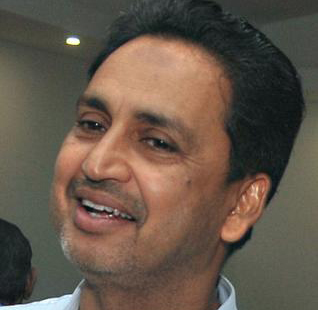
abibrahimA division bench, comprising Chief Justice Subhro Kamal Mukherjee and Justice Ravi Malimath, passed the order, saying that "in order to avoid any controversy and confusion between the devotees and the Deputy Commissioner, the court directs the government to reprint the invitation of the annual festival."

The bench said that as per Section seven of the Hindu Religious and Charitable Endowments Act, a non-Hindu cannot participate in any such function or event.

"Ibrahim is a non-Hindu and he practises a religion which does not allow idol worship," it added." The court also directs Ibrahim not to participate in any such event in future," the bench said.

A group of devotees of Puttur Mahalingeshwara temple, who had filed the petition, had pointed out that the inclusion of the name of Ibrahim was against the Endowment Act of the government.

Contrary to the earlier stand of defending inclusion of Ibrahim's name in the invitation card, the government admitted its error of doing so before the division bench.

Law and Parliamentary Affairs Minister T B Jayachandra had defended the government's stand by saying that Ibrahim has done nothing wrong and acted in his capacity as the Deputy Commissioner as per the Muzrai Department's rules.

The controversy had created political ripples when Vishwa Hindu Parishad and Bajrang Dal raised objections over the inclusion of Ibrahim's name in the invitation card.

The 10-day festival is held from April 17 every year in the temple at Puttur, 52 km from Manguluru, in which thousands of devotees from various parts of the state, participate.

Printing DC's name on invite was a mistake'

The State government told the High Court that it was a “mistake” to print the name of A.B. Ibrahim, on the invitation card of the annual festival of Puttur Mahalingeshwara temple.

Advocate-General Madhusudan R. Naik made this submission during the hearing on a PIL petition, filed by Mahathobara Sri Mahalingeshwara Devara Bhaktha Samiti, Puttur.

Also, the Advocate-General told a Division Bench, comprising Chief Justice Subhro Kamal Mukherjee and Justice Ravi Malimath, that “the DC concerned [Mr. Ibrahim] will not participate in any religious function of this particular temple.”

The petitioner had complained that Mr. Ibrahim's name was printed in violation of the provisions of the Karnataka Hindu Religious Institutions and Charitable Endowments Act 1997, which makes it mandatory that only officers professing Hindu faith could be given charge of Hindu religious institutions.

Comments

Fair talker
 - 
Thursday, 31 Mar 2016

For a silly matter, was it necessary to make such a big issue until knocking HC door.

Our people don't hesitate to waste time, efforts, resources.

when controversy was started the DC himself should have initiated to exclude his name.
Very unfortunate, such a silly matter can not be solved without HC intervention.

shabeer
 - 
Thursday, 31 Mar 2016

Allah Saved DC from sin.....

Ahmed
 - 
Thursday, 31 Mar 2016

Good decision by Honorable court. Court recognizes that DC is practicing a religion which does not allow idol worship and can not take part in Temple activities. Same way we should admit that we cannot even chant \Jai Mata Di\", or \"Jai Bharat Mata\" because it is idol praising. But, we have no problem in chanting Hindustan Zindabad, Bharath Ki Jai etc.,"

Shaan
 - 
Thursday, 31 Mar 2016

Good decision of honorable Karnataka high court, satya meva jayathe, finally won Law, satya and dharma.

Add new comment

  • Coastaldigest.com reserves the right to delete or block any comments.
  • Coastaldigset.com is not responsible for its readers’ comments.
  • Comments that are abusive, incendiary or irrelevant are strictly prohibited.
  • Please use a genuine email ID and provide your name to avoid reject.
Agencies
February 20,2020

India ranked 77th on a sustainability index that takes into account per capita carbon emissions and ability of children in a nation to live healthy lives and secures 131st spot on a flourishing ranking that measures the best chance at survival and well-being for children, according to a UN-backed report.

The report was released on Wednesday by a commission of over 40 child and adolescent health experts from around the world. It was commissioned by the World Health Organization (WHO), UN Children's Fund (UNICEF) and The Lancet medical journal.

In the report assessing the capacity of 180 countries to ensure that their youngsters can survive and thrive, India ranks 77th on the Sustainability Index and 131 on the Flourishing Index, it said.

Flourishing is the geometric mean of Surviving and Thriving. For Surviving, the authors selected maternal survival, survival in children younger than 5 years old, suicide, access to maternal and child health services, basic hygiene and sanitation, and lack of extreme poverty.

For Thriving, the domains were educational achievement, growth and nutrition, reproductive freedom, and protection from violence.

Under the Sustainability Index, the authors noted that promoting today's national conditions for children to survive and thrive must not come at the cost of eroding future global conditions for children's ability to flourish.

The Sustainability Index ranks countries on excess carbon emissions compared with the 2030 target. This provides a convenient and available proxy for a country's contribution to sustainability in future.

The report noted that under realistic assumptions about possible trajectories towards sustainable greenhouse gas emissions, models predict that global carbon emissions need to be reduced from 39·7 giga­ tonnes to 22·8 gigatonnes per year by 2030 to maintain even a 66 per cent chance of keeping global warming below 1·5°C.

It said that the world's survival depended on children being able to flourish, but no country is doing enough to give them a sustainable future.

"No country in the world is currently providing the conditions we need to support every child to grow up and have a healthy future," said Anthony Costello, Professor of Global Health and Sustainability at University College London, one of the lead authors of the report.

"Especially, they're under immediate threat from climate change and from commercial marketing, which has grown hugely in the last decade," said Costello – former WHO Director of Mother, Child and Adolescent health.

Norway leads the table for survival, health, education and nutrition rates - followed by South Korea and the Netherlands. Central African Republic, Chad and Somalia come at the bottom.

However, when taking into account per capita CO2 emissions, these top countries trail behind, with Norway 156th, the Republic of Korea 166th and the Netherlands 160th.

Each of the three emits 210 per cent more CO2 per capita than their 2030 target, the data shows, while the US, Australia, and Saudi Arabia are among the 10 worst emitters. The lowest emitters are Burundi, Chad and Somalia.

According to the report, the only countries on track to beat CO2 emission per capita targets by 2030, while also performing fairly – within the top 70 – on child flourishing measures are: Albania, Armenia, Grenada, Jordan, Moldova, Sri Lanka, Tunisia, Uruguay and Vietnam.

"More than 2 billion people live in countries where development is hampered by humanitarian crises, conflicts, and natural disasters, problems increasingly linked with climate change," said Minister Awa Coll-Seck from Senegal, Co-Chair of the commission.

The report also highlights the distinct threat posed to children from harmful marketing.

Evidence suggests that children in some countries see as many as 30,000 advertisements on television alone in a single year, while youth exposure to vaping (e-cigarettes) advertisements increased by more than 250 per cent in the US over two years, reaching more than 24 million young people.

Studies in Australia, Canada, Mexico, New Zealand and the US – among many others – have shown that self-regulation has not hampered commercial ability to advertise to children.

Children's exposure to commercial marketing of junk food and sugary beverages is associated with purchase of unhealthy foods and overweight and obesity, linking predatory marketing to the alarming rise in childhood obesity, it said.

The number of obese children and adolescents increased from 11 million in 1975 to 124 million in 2016 – an 11-fold increase, with dire individual and societal costs, the report said.

To protect children, the authors call for a new global movement driven by and for children.

Specific recommendations include stopping CO2 emissions with the utmost urgency, to ensure children have a future on this planet; placing children and adolescents at the centre of global efforts to achieve sustainable development, the report said.

New policies and investment in all sectors to work towards child health and rights; incorporating children's voices into policy decisions and tightening national regulation of harmful commercial marketing, supported by a new Optional Protocol to the UN Convention on the Rights of the Child, it said.

Comments

Add new comment

  • Coastaldigest.com reserves the right to delete or block any comments.
  • Coastaldigset.com is not responsible for its readers’ comments.
  • Comments that are abusive, incendiary or irrelevant are strictly prohibited.
  • Please use a genuine email ID and provide your name to avoid reject.
News Network
March 11,2020

Mar 11: The Karnataka government on Wednesday started a campaign called 'Namaste over Handshake' that encourages people to greet in the traditional Indian style, to tackle the spread of coronavirus.

The campaign also includes health advice on how people can protect themselves from the infection by adopting hygiene practices such as regularly washing hands to prevent the spread of COVID-19.

As part of the campaign, the state health and family welfare department has uploaded a poster on the social media, featuring a 'Bharatnatyam' dancer draped in a red saree saying 'Namaste'.

"Use Namasthe to greet others, fight against corona" read a message on the poster online.

The poster has health helpline numbers (104 and 011- 23978046) for public queries on the viral disease, which has claimed 4,251 lives worldwide.

A health department official told PTI that as part of the campaign, posters have been uploaded on social media and it would be printed and despatched to different districts to be put up at important junctions.

"We had been working on this idea. Kerala has already done it. They are using Kathakali dancers whereas we are using a Bharatanatyam dancer as our model," the official said.

Medical Education Minister K Sudhakar too had insisted that people should adopt 'Namasthe' or 'Namaskara' to greet people instead of handshakes or hugs.

Comments

Add new comment

  • Coastaldigest.com reserves the right to delete or block any comments.
  • Coastaldigset.com is not responsible for its readers’ comments.
  • Comments that are abusive, incendiary or irrelevant are strictly prohibited.
  • Please use a genuine email ID and provide your name to avoid reject.
coastaldigest.com web desk
June 27,2020

New Delhi, June 27: The Prime Minister Narendra Modi-led union government of India is not ready to stop all imports from aggressive China in spite of mount calls to boycott Chinese products in India.

The Centre is reportedly considering to stop only non-essential imports from the neighbouring country.

However, the Inward shipment in sectors such as automobiles, pharmaceuticals, certain electronics and others will continue until a domestic alternative is found.

“India will gradually move towards import substitution. It will not happen overnight. In the meantime, attention has to be paid on production and job creation. We cannot throttle our industry. There are certain absolutely essential imports. Needless to say, those will keep going,” official sources said.

Sources said that both the government and the industry are in the process of identifying products that can be domestically manufactured in the medium term. There are certain chemicals, automotive components, handicrafts, cosmetics, agriculture items and certain consumer electronics, which can be manufactured domestically in the short to medium term. The government is doing all it can to raise the capacity of domestic industries.

However, there are certain other imports in the automobile and the pharmaceutical sectors which cannot be done away within the short to medium term. Their domestic production at the moment may not be that cost-effective.

The six-crore strong traders’ body CAIT has been at the forefront of such a demand and has launched a campaign to celebrate Indian Diwali this year with a total absence of Chinese goods.

“Ease of doing business, capital availability at lower rates and globally competitive logistics and energy costs are some of the prerequisites that the government should look into to ensure the growth of the domestic auto component industry,” according to Automotive Component Manufacturers Association of India (ACMA) Director General Vinnie Mehta.

Maruti Suzuki Chairman R C Bhargava said, “People who are boycotting Chinese goods have to remember that in some cases it may lead to their being asked to pay more for the same product."

Meanwhile, domestic rating agency Acuite Ratings & Research has analysed the current import portfolio from China and found 40 sub-sectors have the potential to lower their import dependency on China. These sectors contribute to $33.6 billion worth of imports from China and about 25% of these imports can be substituted by local manufacturing without any significant additional investments.

Comments

Add new comment

  • Coastaldigest.com reserves the right to delete or block any comments.
  • Coastaldigset.com is not responsible for its readers’ comments.
  • Comments that are abusive, incendiary or irrelevant are strictly prohibited.
  • Please use a genuine email ID and provide your name to avoid reject.