



Stay away from Puttur temple festivities: High Court tells AB Ibrahim

[email protected] (CD Network)
March 31, 2016

Bengaluru, Mar 30: The Karnataka High Court today directed the state government to reprint the invitation card for a festival at Puttur temple after it admitted the error of printing the name of Dakshina Kannada Deputy Commissioner A B Ibrahims name, in violation of Hindu Religious and Charitable Endowments Act.
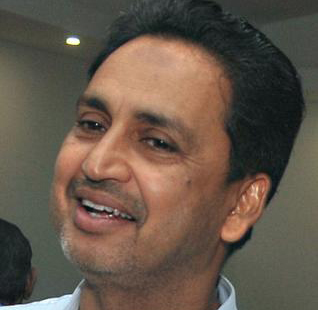
abibrahimA division bench, comprising Chief Justice Subhro Kamal Mukherjee and Justice Ravi Malimath, passed the order, saying that "in order to avoid any controversy and confusion between the devotees and the Deputy Commissioner, the court directs the government to reprint the invitation of the annual festival."

The bench said that as per Section seven of the Hindu Religious and Charitable Endowments Act, a non-Hindu cannot participate in any such function or event.

"Ibrahim is a non-Hindu and he practises a religion which does not allow idol worship," it added." The court also directs Ibrahim not to participate in any such event in future," the bench said.

A group of devotees of Puttur Mahalingeshwara temple, who had filed the petition, had pointed out that the inclusion of the name of Ibrahim was against the Endowment Act of the government.

Contrary to the earlier stand of defending inclusion of Ibrahim's name in the invitation card, the government admitted its error of doing so before the division bench.

Law and Parliamentary Affairs Minister T B Jayachandra had defended the government's stand by saying that Ibrahim has done nothing wrong and acted in his capacity as the Deputy Commissioner as per the Muzrai Department's rules.

The controversy had created political ripples when Vishwa Hindu Parishad and Bajrang Dal raised objections over the inclusion of Ibrahim's name in the invitation card.

The 10-day festival is held from April 17 every year in the temple at Puttur, 52 km from Manguluru, in which thousands of devotees from various parts of the state, participate.

Printing DC's name on invite was a mistake'

The State government told the High Court that it was a “mistake” to print the name of A.B. Ibrahim, on the invitation card of the annual festival of Puttur Mahalingeshwara temple.

Advocate-General Madhusudan R. Naik made this submission during the hearing on a PIL petition, filed by Mahathobara Sri Mahalingeshwara Devara Bhaktha Samiti, Puttur.

Also, the Advocate-General told a Division Bench, comprising Chief Justice Subhro Kamal Mukherjee and Justice Ravi Malimath, that “the DC concerned [Mr. Ibrahim] will not participate in any religious function of this particular temple.”

The petitioner had complained that Mr. Ibrahim's name was printed in violation of the provisions of the Karnataka Hindu Religious Institutions and Charitable Endowments Act 1997, which makes it mandatory that only officers professing Hindu faith could be given charge of Hindu religious institutions.

Comments

Fair talker
 - 
Thursday, 31 Mar 2016

For a silly matter, was it necessary to make such a big issue until knocking HC door.

Our people don't hesitate to waste time, efforts, resources.

when controversy was started the DC himself should have initiated to exclude his name.
Very unfortunate, such a silly matter can not be solved without HC intervention.

shabeer
 - 
Thursday, 31 Mar 2016

Allah Saved DC from sin.....

Ahmed
 - 
Thursday, 31 Mar 2016

Good decision by Honorable court. Court recognizes that DC is practicing a religion which does not allow idol worship and can not take part in Temple activities. Same way we should admit that we cannot even chant \Jai Mata Di\", or \"Jai Bharat Mata\" because it is idol praising. But, we have no problem in chanting Hindustan Zindabad, Bharath Ki Jai etc.,"

Shaan
 - 
Thursday, 31 Mar 2016

Good decision of honorable Karnataka high court, satya meva jayathe, finally won Law, satya and dharma.

Add new comment

  • Coastaldigest.com reserves the right to delete or block any comments.
  • Coastaldigset.com is not responsible for its readers’ comments.
  • Comments that are abusive, incendiary or irrelevant are strictly prohibited.
  • Please use a genuine email ID and provide your name to avoid reject.
News Network
May 30,2020

Bengaluru, May 30: Bengaluru City civic body Bruhat Bengaluru Mahanagara Palike (BBMP) has slapped a fine of Rs 50,000 on the food delivery startup Swiggy for irresponsible disposal of waste, an official said on Friday.

"Thinking of food is great - Swiggy. Hope you also think of segregating waste and disposing of it responsibly," tweeted BBMP Solid Waste Management Special Commissioner D. Randeep.

Randeep said a penalty of Rs 50,000 was imposed on Swiggy Kitchen at Katriguppe in the city for the violation.

"The incident with respect to waste segregation has been brought to our notice and happened at one of our kitchens in Bengaluru," confirmed a Swiggy spokesperson to IANS without revealing the exact details.

He said the startup is aware of its civic responsibility and has stringent processes to ensure high standards of compliance.

"While we investigate and rectify the root cause of the matter, we are reinforcing necessary awareness on the best practices to be followed amongst our teams and partner network to ensure complete compliance with waste management," the spokesperson added.

Swiggy has been penalised earlier as well for its irresponsible disposal of waste.

Recently, the BBMP’s solid waste management department has also fined an apartment complex Rs 15,000 for not segregating waste into dry, wet and reject categories.

Waste disposal norms for apartments

"Segregation of waste is mandatory in apartments. Onus of enforcing segregation rules lies on the (apartment) association and waste should be segregated as dry, wet and reject," said Randeep.

InClover Grand Apartments at Baiyappanhalli was penalised for the offence of improper waste disposal. Similarly, BBMP marshals also caught and fined some people openly discarding waste in public spaces.

"Dear citizens, please change your old habits. Our marshals are watching and will fine those who throw garbage in public spaces," BBMP Special Commissioner Randeep said.

He shared the photographs of two scooter-borne individuals being caught in the act and penalised at Kuvempunagar in Bengaluru.

Comments

Add new comment

  • Coastaldigest.com reserves the right to delete or block any comments.
  • Coastaldigset.com is not responsible for its readers’ comments.
  • Comments that are abusive, incendiary or irrelevant are strictly prohibited.
  • Please use a genuine email ID and provide your name to avoid reject.
News Network
March 23,2020

Mangaluru, Mar 23: In its efforts to contain the outbreak of COVID-19, the district administration has ordered that all shops and establishments selling essential commodities to remain open only between 0600 hrs and 1200 hrs from Tuesday till March 31.

Dakshina Kannada Deputy Commissioner Sindhu B Rupesh, in a press release here, announced that autorickshaws and taxis should not ferry passengers and should be utilised only during emergencies and for transportation of essential commodities among others.

Ms Sindhu has also ordered shutting down industries. Only those industries involved in the production of essential commodities, medicines, medical instruments, medicine, fuel, farm produce among others had been exempted, Please log in to get detailed story.

Comments

Add new comment

  • Coastaldigest.com reserves the right to delete or block any comments.
  • Coastaldigset.com is not responsible for its readers’ comments.
  • Comments that are abusive, incendiary or irrelevant are strictly prohibited.
  • Please use a genuine email ID and provide your name to avoid reject.
Agencies
May 8,2020

Washington D.C., May 8: The prime time for brain development in a child's life is the first year, where the infant spends most of the time asleep. It is the time when neural connections form and sensory memories are encoded.

However, when sleep is disrupted, as occurs more often among children with autism, brain development may be affected, too.

New research led by the University of Washington finds that sleep problems in a baby's first 12 months may not only precede an autism diagnosis but also may be associated with altered growth trajectory in a key part of the brain, the hippocampus.

The study, which was published in the American Journal of Psychiatry, researchers report that in a sample of more than 400 taken of 6- to 12-month-old infants, those who were later diagnosed with autism were more likely to have had difficulty falling asleep.

It also states that this sleep difficulty was associated with altered growth trajectories in the hippocampus.

"The hippocampus is critical for learning and memory, and changes in the size of the hippocampus have been associated with poor sleep in adults and older children.

As many as 80 per cent of the children with autism spectrum disorder have sleep problems," said Annette Estes, director of the UW Autism Center and senior author of the study.

"In our clinical experience, parents have a lot of concerns about their children's sleep, and in our work on early autism intervention, we observed that sleep problems were holding children and families back," added Estes, who is also a UW professor of speech and hearing sciences.

"It could be that altered sleep is part-and-parcel of autism for some children. One clue is that behavioural interventions to improve sleep don't work for all children with autism, even when their parents are doing everything just right. This suggests that there may be a biological component to sleep problems for some children with autism," said Estes.

To consider links among sleep, brain development, and autism, researchers at the IBIS Network looked at MRI scans of 432 infants, surveyed parents about sleep patterns, and measured cognitive functioning using a standardized assessment.

At the outset of the study, infants were classified according to their risk for developing autism: Those who were at higher risk of developing autism -- about two-thirds of the study sample -- had an older sibling who had already been diagnosed.

Infant siblings of children with autism have a 20 per cent chance of developing autism spectrum disorder -- a much higher risk than children in the general population.

In the current study, 127 of the 432 infants were identified as "low risk" at the time the MRI scans were taken because they had no family history of autism.

They later evaluated all the participants at 24 months of age to determine whether they had developed autism. Of the roughly 300 children originally considered "high familial risk," 71 were diagnosed with autism spectrum disorder at that age.

Problems with sleep were more common among the infants later diagnosed with an autism spectrum disorder, as were larger hippocampi. No other subcortical brain structures were affected, including the amygdala, which is responsible for certain emotions and aspects of memory, or the thalamus, a signal transmitter from the spinal cord to the cerebral cortex.

The authors note that while parents reported more sleep difficulties among infants who developed autism compared to those who did not, the differences were very subtle and only observed when looking at group averages across hundreds of infants.

Sleep patterns in the first years of life change rapidly as infants transition from sleeping around the clock to a more adult-like sleep/wake cycle. Until further research is completed, Estes said, it is not possible to interpret challenges with sleep as an early sign of increased risk for autism.

Comments

Add new comment

  • Coastaldigest.com reserves the right to delete or block any comments.
  • Coastaldigset.com is not responsible for its readers’ comments.
  • Comments that are abusive, incendiary or irrelevant are strictly prohibited.
  • Please use a genuine email ID and provide your name to avoid reject.