Swacch Mangaluru Abhiyan completes 35 weeks; Marnamikatta gets a new look

[email protected] (CD Network)
January 18, 2016

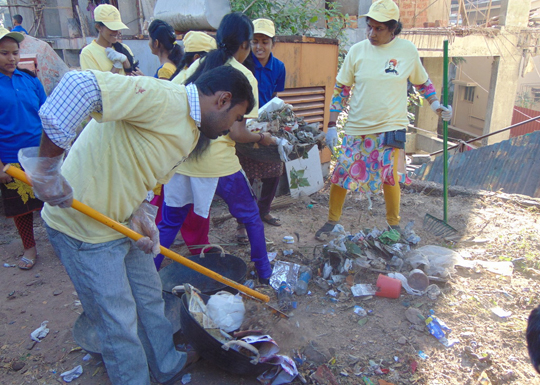
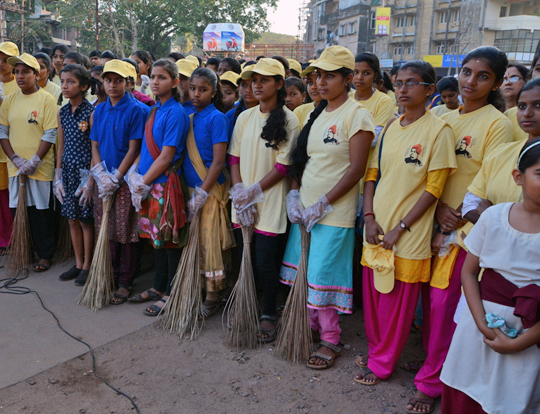
Mangaluru, Jan 18: The Swacch Mangaluru Abhiyan being carried out by Ramakrishna Mission has now completed 35 weeks. On Sunday cleanliness drive was conducted at Marnamikatta area as part of the campaign.
rkm 10

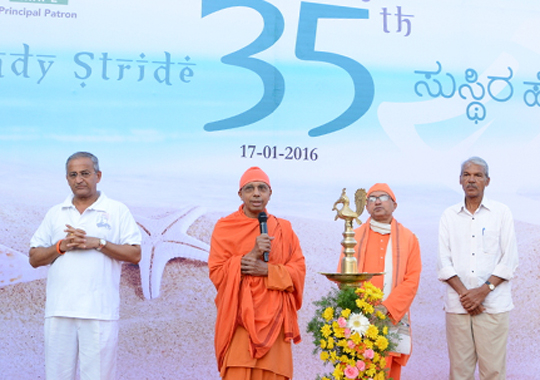
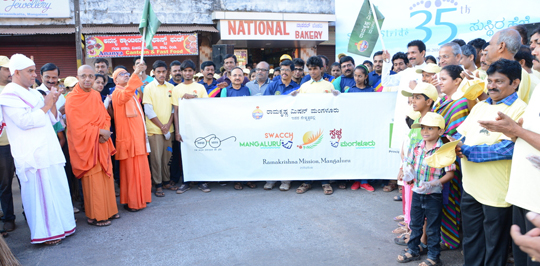
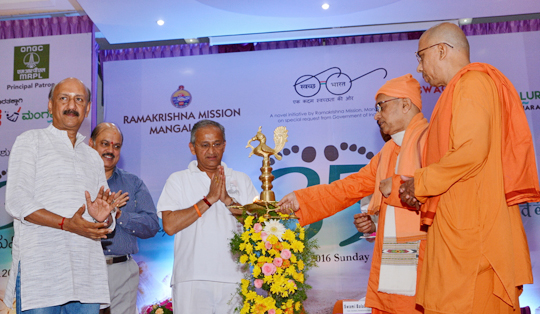
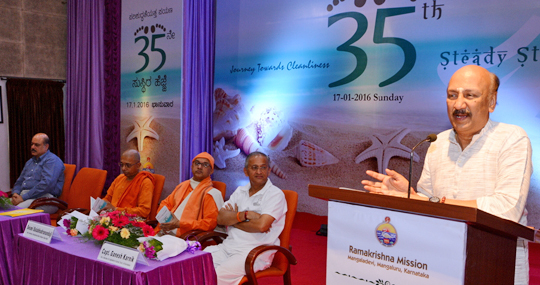
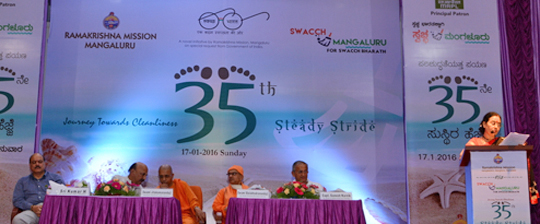
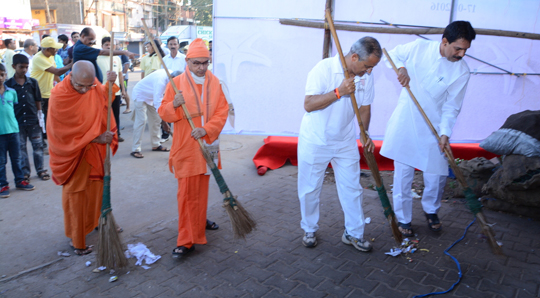
A small stage programme was organized near Marnamikata circle. Swami Balabhadranandaji, Asst. Secretary, Ramakrsihna Mission, Belur Math and Nalin Kumar Kateel, MP, Dakshian Kannad Dist. were the chief guests. Swami Balabhadranandaji speaking on the occasion lauded the efforts of Mangalore Ramakrsihna Mission and remarked that the Ashram has set a role model in nation for its sustained cleanliness drive. He also highlighted the importance of youths joining their hands in this drive. Nalin Kumar Kateel too appreciated the sustained and active leadership of the Ramakrsihna Mission in the Swacchata Abhiyan initiated by Sri Narendra Modi. Both the dignitaries flagged off the 35th drive near Marnamikatta Circle.
rkm 2

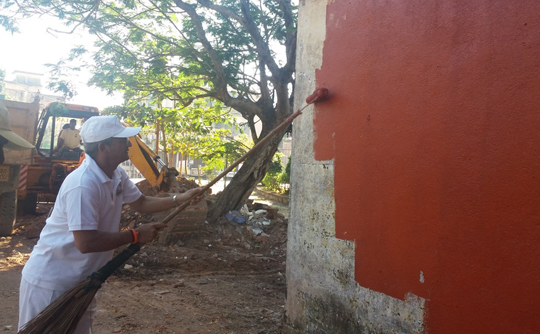
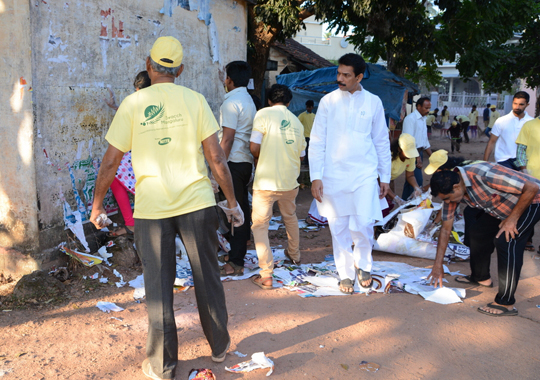
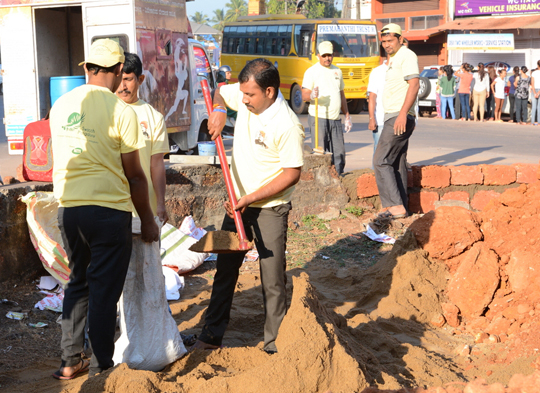
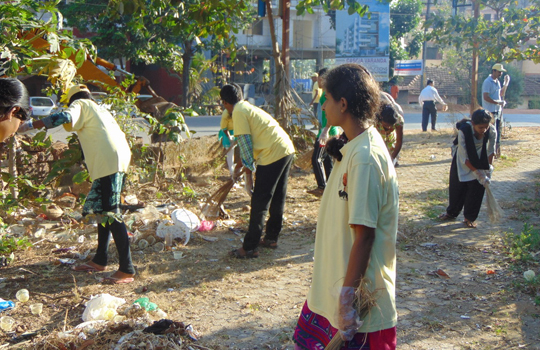
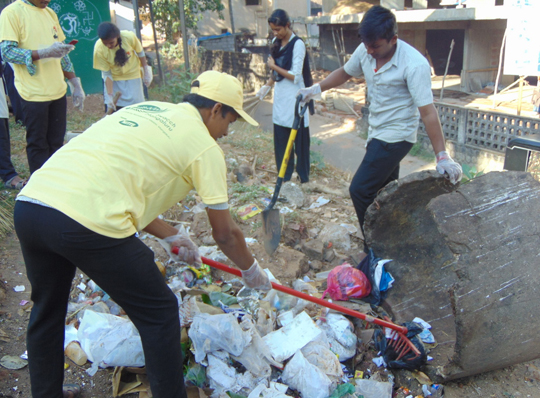
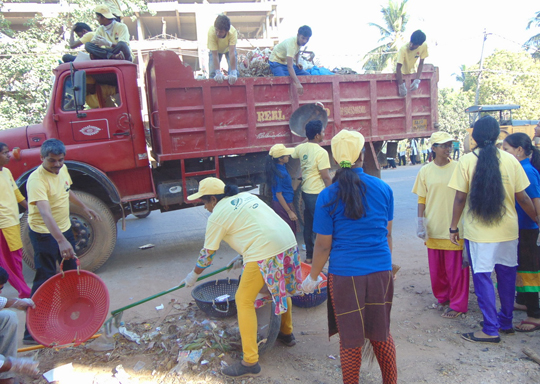
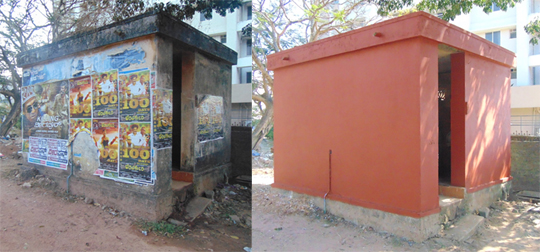
Swamijis and the guests then cleaned the surroundings of Marnamikatta circle with brooms. All the four roads leading to the circle were thoroughly cleaned. The road leading from Morgan’s Gate to Marnamikatta circle was neglected for years together and heaps of garbage which was lying on the road were cleared using JCB and tipper. The public toilet situated in the area lacked maintenance and all sorts of posters stuck on the walls had ruined the look. The walls were cleared off all the posters, cleaned and repainted thus giving a new look.
rkm 20

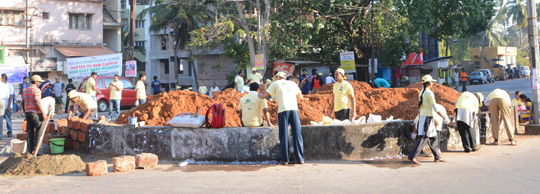
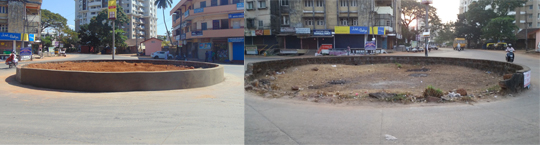
Marnamikatta circle was dilapidated for the past few years and was an eye sore for the regular commuters in that area. The volunteers of the Abhiyan taking the help of professionals in this regard have been working on repairing the same by building walls for the circle using laterite stones and ten loads of mud. This wall will be painted by the members of Isiri arts in days to come.

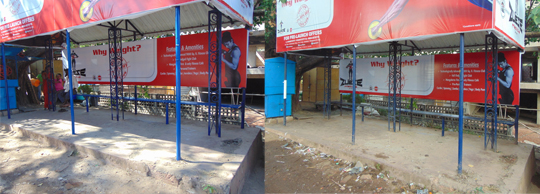
The dilapidated bus shelter that lacked maintenance was cleaned and painted giving a much needed facelift.
rkm 6

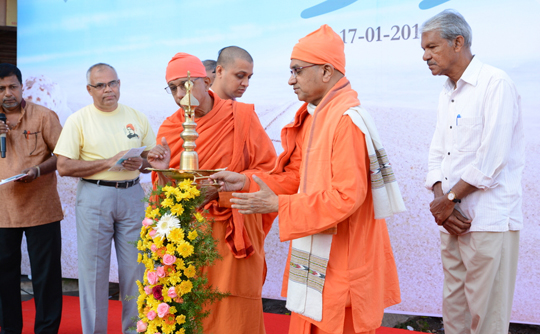
The 35th Abhiyan concluded with a small programme in the Ashrama Audirouim later which was inaugurated by Swami Balabhadranandaji from Kolkata. Sri Kumar, MD, MRPL, who are the principal Sponsors of the drives speaking on the occasion expressed their satisfaction and pride in associating with Ramakrsihna Mission in the Swacchata Abhiyan and lauded the sustained efforts of the Ashram in this regard.

Volunteers distributed handbills on Swacch Mangaluru Abhiyan to about 1000 households to generate awareness among the localites in the area.

Volunteers of Nivedita Balaga, Students of GFGC, Car Street, Members of Art of Living foundation, Members of Rotary Club Hillside, Sri Rajashekhar Hebbar, Dr Satish Rao, Sri Suresh Shetty, Sri Shubhoday Alva, Sri Dilraj Alva, Sri M R Vasudev and several other eminent men actively participated in the Abhiyan. MRPL, Principal Patron of the event sponsored the drive.
rkm 1

rkm 3

rkm 4

rkm 5

rkm 7

rkm 9

rkm 11

rkm 12

rkm 13

rkm 14

rkm 15

rkm 16

rkm 17

rkm 18

rkm 19

Comments

Rahul
 - 
Monday, 18 Jan 2016

People were started swacch bharat.. After that most of them stopped. Even feku. But RKM still doing.. Great.. Everyone should do.

sai
 - 
Monday, 18 Jan 2016

Good job ( But only for publicity ).

we have lot area in Mangalore taluk , there is no place through waste garbage, then how you can keep clean .

please arrange for it ,then city will be automatic clean,no need
Abiyans.

aharkul
 - 
Monday, 18 Jan 2016

Very appreciable and good job.

Keep it up Mr. Nalin Kumar Kateel.

Add new comment

  • Coastaldigest.com reserves the right to delete or block any comments.
  • Coastaldigset.com is not responsible for its readers’ comments.
  • Comments that are abusive, incendiary or irrelevant are strictly prohibited.
  • Please use a genuine email ID and provide your name to avoid reject.
News Network
July 7,2020

Bengaluru, Jul 7: There seems no impact of Covid-19 on kharif crop sowing in Karnataka with the current year actually being ahead of previous years, according to an official here on Monday.

"In agriculture, as far as sowing is concerned, there is no impact of COVID-19," Agriculture Commissioner Brijesh Kumar Dikshit told IANS. One of the reasons, according to Dikshit, is that people in rural areas are aware, but not scared of the pandemic.

"In rural India, coronavirus is there. People are aware, not scared. They are taking precautions, but don't have any phobia," he said.

Another reason was that by June the number of infections in Karnataka was not as high as other states, when a lot of sowing was done, he said.

By the end of June, Karnataka saw 15,242 Covid-19 cases. Of that, 7,074 were active.

The sowing is ahead of previous year as it's mostly dependent on weather. "It's ahead of previous years. Agriculture is directed by weather and rains had been slightly earlier this year," he said.

According to Karnataka State Natural Disaster Monitoring Centre, at 185 mm the state received 14 mm less rain in June against the normal 199 mm. "It's like a normal year, or slightly a good year," he said.

Some crops will be sown in the last fortnight of July and few more will extend up to August 15. "The last two weeks will be critical and on July 31 we should be able to tell whether we are short or ahead," he said.

According to preliminary indications, the Commissioner said the area under agriculture is increasing this year, which could also be because that labourers might have come back.

Comments

Add new comment

  • Coastaldigest.com reserves the right to delete or block any comments.
  • Coastaldigset.com is not responsible for its readers’ comments.
  • Comments that are abusive, incendiary or irrelevant are strictly prohibited.
  • Please use a genuine email ID and provide your name to avoid reject.
News Network
March 25,2020

Bengaluru, Mar 25: Karnataka Minister Dr K Sudhakar has been allocated all matters related to COVID-19 by the Governor on the advice of Chief Minister BS Yediyurappa.
Health Minister B Sriramulu, who earlier handled matters related to COVID-19, has been allotted the Backward Class Welfare Development portfolio.
Karnataka on Monday announced a complete lockdown in the state till April 1.
"In the wake of the coronavirus outbreak, the entire state will be locked down from 12 o'clock night of March 23 to April 1. People are requested to strictly follow it to contain the coronavirus spread," Yediyurappa had said.

Comments

Add new comment

  • Coastaldigest.com reserves the right to delete or block any comments.
  • Coastaldigset.com is not responsible for its readers’ comments.
  • Comments that are abusive, incendiary or irrelevant are strictly prohibited.
  • Please use a genuine email ID and provide your name to avoid reject.
Agencies
May 8,2020

Washington D.C., May 8: The prime time for brain development in a child's life is the first year, where the infant spends most of the time asleep. It is the time when neural connections form and sensory memories are encoded.

However, when sleep is disrupted, as occurs more often among children with autism, brain development may be affected, too.

New research led by the University of Washington finds that sleep problems in a baby's first 12 months may not only precede an autism diagnosis but also may be associated with altered growth trajectory in a key part of the brain, the hippocampus.

The study, which was published in the American Journal of Psychiatry, researchers report that in a sample of more than 400 taken of 6- to 12-month-old infants, those who were later diagnosed with autism were more likely to have had difficulty falling asleep.

It also states that this sleep difficulty was associated with altered growth trajectories in the hippocampus.

"The hippocampus is critical for learning and memory, and changes in the size of the hippocampus have been associated with poor sleep in adults and older children.

As many as 80 per cent of the children with autism spectrum disorder have sleep problems," said Annette Estes, director of the UW Autism Center and senior author of the study.

"In our clinical experience, parents have a lot of concerns about their children's sleep, and in our work on early autism intervention, we observed that sleep problems were holding children and families back," added Estes, who is also a UW professor of speech and hearing sciences.

"It could be that altered sleep is part-and-parcel of autism for some children. One clue is that behavioural interventions to improve sleep don't work for all children with autism, even when their parents are doing everything just right. This suggests that there may be a biological component to sleep problems for some children with autism," said Estes.

To consider links among sleep, brain development, and autism, researchers at the IBIS Network looked at MRI scans of 432 infants, surveyed parents about sleep patterns, and measured cognitive functioning using a standardized assessment.

At the outset of the study, infants were classified according to their risk for developing autism: Those who were at higher risk of developing autism -- about two-thirds of the study sample -- had an older sibling who had already been diagnosed.

Infant siblings of children with autism have a 20 per cent chance of developing autism spectrum disorder -- a much higher risk than children in the general population.

In the current study, 127 of the 432 infants were identified as "low risk" at the time the MRI scans were taken because they had no family history of autism.

They later evaluated all the participants at 24 months of age to determine whether they had developed autism. Of the roughly 300 children originally considered "high familial risk," 71 were diagnosed with autism spectrum disorder at that age.

Problems with sleep were more common among the infants later diagnosed with an autism spectrum disorder, as were larger hippocampi. No other subcortical brain structures were affected, including the amygdala, which is responsible for certain emotions and aspects of memory, or the thalamus, a signal transmitter from the spinal cord to the cerebral cortex.

The authors note that while parents reported more sleep difficulties among infants who developed autism compared to those who did not, the differences were very subtle and only observed when looking at group averages across hundreds of infants.

Sleep patterns in the first years of life change rapidly as infants transition from sleeping around the clock to a more adult-like sleep/wake cycle. Until further research is completed, Estes said, it is not possible to interpret challenges with sleep as an early sign of increased risk for autism.

Comments

Add new comment

  • Coastaldigest.com reserves the right to delete or block any comments.
  • Coastaldigset.com is not responsible for its readers’ comments.
  • Comments that are abusive, incendiary or irrelevant are strictly prohibited.
  • Please use a genuine email ID and provide your name to avoid reject.