


Swachh Bharat mission: Mysuru cleanest city; Modi’s Varanasi among dirtiest

February 15, 2016

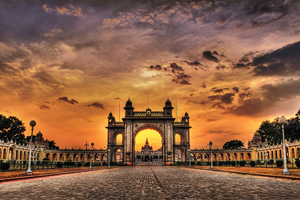
New Delhi, Feb 15: For the second time in a row, Mysuru was today ranked cleanest city, followed by Chandigarh whereas Dhanbad and Prime Minister Narendra Modi's constituency, Varanasi, are among the 10 least clean cities in India, as per the first survey after the launch of 'Swachh Bharat' mission in 2014.mysore
The survey, which was released by Urban Development Minister Venkaiah Naidu here, covered 73 cities including 51 cities with more than 10 lakh population on cleanliness and sanitation.

"Swachh Survekshan-2016 is primarily intended to measure the impact of the efforts under Swachh Bharat Mission launched after the survey of 2014," Naidu added.

While Mysuru has topped the list followed by Chandigarh, Tiruchirappalli and NDMC area of the national capital, Dhanbad in Jharkhand has been ranked the worst.The city of palaces was ranked first in the list of 476 cities last year.

Other cities which have found place in 10 cleanest category in the Survey, conducted by Quality Council of India, include Visakhapatnam (Andhra Pradesh), Surat (Gujarat), Rajkot (Gujarat), Gangtok (Sikkim), Pimpri-Chindwad (Maharashtra) and Greater Maharashtra.

The least clean cities included Dhanbad (Jharkhand), Asansol (West Bengal), Itanagar (Arunachal Pradesh), Patna (Bihar), Meerut (Uttar Pradesh), Raipur (Chhattisgarh), Ghaziabad (Uttar Pradesh), Jamshedpur (Jharkhand), Varanasi (Uttar Pradesh) and Kalyan Dombivili (Maharashtra).

Cities from South and West continue to do well overall but those in other parts of the country, particularly, in the North are beginning to catch up with the traditional leaders, Naidu said.

"The results of the survey were analysed to identify the top leaders, aspiring leaders, cities where accelerated efforts need to be made and the slow movers," he added.

Last cleanliness survey was conducted in 2014 among 476 cities with a population of one lakh and above and its results were announced last year. That survey was done before the launch of 'Swachh Bharat' mission'.

"This (ranking) is meant to help the cities know where they stand in absolute terms and in relation to others besides what more needs to be done by each city to ensure sanitation. In that sense, the survey is more holistic, participatory, purposeful and meaningful for future guidance and evolving course of action," the minister added.

Here is the list of 10 clean cities:
1. Mysuru (Karnataka)
2. Chandigarh
3. Tiruchiraplli (Tamil Nadu)
4. New Delhi
5. Visakhapatnam (Andhra Pradesh)
6. Surat (Gujarat)
7. Rajkot (Gujarat)
8. Gangtok (Sikkim)
9. Pimpri Chinchwad (Maharashtra)
10. Greater Mumbai (Maharashtra)

Cities at the bottom of the list:
64. Kalyan Dombivili (Maharashtra)
65. Varanasi (Uttar Pradesh)
66. Jamshedpur (Jharkhand)
67. Ghaziabad (Uttar Pradesh)
68. Raipur (Chhattisgarh)
69. Meerut (Uttar Pradesh)
70. Patna (Bihar)
71. Itanagar (Arunachal Pradesh)
72. Asansol (West Bengal)
73. Dhanbad (Jharkhand)

Cities that have the potential to lead the pack:
Panaji (Goa, ranked 16)
Thane (Maharashtra, ranked 17)
Coimbatore (Tamil Nadu,ranked 18)
Hyderabad (Andhra Pradesh, ranked 19)
Nagpur (Maharashtra, ranked 20)
Bhopal (Madhya Pradesh, ranked 21)
Allahabad (Uttar Pradesh, ranked 22)
Vijayawada (Andhra Pradesh, ranked 23)
Bhubaneswar (Odisha, ranked 24)
Indore (Madhya Pradesh, ranked 25)
Madurai (Tamil Nadu,ranked 26)
Shimla (Himachal Pradesh, ranked 27)
Lucknow (Uttar Pradesh, ranked 28)
Jaipur (Rajasthan, ranked 29)
Gwalior (Madhya Pradesh, ranked 30)
Nashik (Maharashtra, ranked 31)
Warangal (Telengana, ranked 32)
Agartala (Tripura, ranked 33)
Ludhiana (Punjab, ranked 34)
Vasai-Virar (Maharashtra, ranked 35)

Cities that need acceleration:
Chennai (Tamil Nadu, ranked 36)
Gurgaon (Haryana, ranked 37)
Bengaluru (Karnataka, ranked 38)
South Muncipal Corporation of Delhi (New Delhi, ranked 39)
Thiruvananthapuram (Kerala, ranked 40)
Aizawl (Mizoram, ranked 41)
Gandhinagar (Gujarat, ranked 42)
North MCD (New Delhi, ranked 43)
Kozhikode (Kerala, ranked 44)
Kanpur (Uttar Pradesh, ranked 45)
Durg (Chhattisgarh, ranked 46)
Agra (Uttar Pradesh, ranked 47)
Srinagar (Jammu and Kashmir, ranked 48)
Amritsar (Punjab, ranked 49)
Guwahati (Assam, ranked 50)
Faridabad (Haryana, ranked 51)
East MCD (New Delhi, ranked 52)
Shillong (Meghalaya, ranked 53)

Comments

Zeeshan
 - 
Tuesday, 16 Feb 2016

Mangalore not on Top 53, of the 73 recognized cities is hard to believe. regardless, need to take this survey in right spirit and every mangalorean need to contribute in their bit in not making the city any dirty. We helplessly trust that our Municipal and district administration shall feel the guilt of not making the city in good ranks and take measures to improve...We mangalorean City-Zens are proud of our city for its history & potential and should fight every evil trying to destroy its growth and prosperity.

Add new comment

  • Coastaldigest.com reserves the right to delete or block any comments.
  • Coastaldigset.com is not responsible for its readers’ comments.
  • Comments that are abusive, incendiary or irrelevant are strictly prohibited.
  • Please use a genuine email ID and provide your name to avoid reject.
News Network
April 18,2020

Bengaluru, Apr 18: Hours after announcing that two-wheelers will be allowed to ply and that IT/BT companies can resume operations with 33 per cent strength, Chief Minister B S Yediyurappa on Saturday took a u-turn and rolled them back, citing “public opinion” as the reason. 

Earlier in the day, Yediyurappa announced that, after April 20, there will not be any restriction on the movement of two-wheelers in areas that are not COVID-19 containment zones. Yediyurappa also said that a third of IT/BT employees will be allowed to go to the office after April 20. 

“In the backdrop of public opinion and after discussions with senior officials, it has been decided that the prohibition on two-wheelers will continue throughout the lockdown period,” a statement from the Chief Minister’s Office said. “And in the IT/BT sector, only essential services will be allowed and the work-from-home policy will continue.” 

According to sources, the u-turn came following opposition from Yediyurappa’s Cabinet colleagues. “If I was in the meeting, I’d not have allowed it,” a minister said. Only Home Minister Basavaraj Bommai and Revenue Minister R Ashoka were in the meeting Yediyurappa held earlier in the day. The Opposition also stemmed from the fact that there was no need to make decisions on the lockdown when the Cabinet was scheduled to meet on April 20, sources said. 

The incoordination was apparent on Friday when Deputy Chief Minister CN Ashwath Narayan, the IT/BT minister, said 50 per cent of employees in the sector will be permitted to work while Yediyurappa said this would depend on the number of cases reported in the coming days. 

Other announcements made by Yediyurappa remain unchanged.

“Places, where COVID-19 cases are reported, will be identified as containment zones. In such containment zones, an incident commander will be appointed and given magisterial power. Teams comprising the police and health department officials will oversee the lockdown,” Yediyurappa said. “Lockdown will be much more stringent in these areas and no one will be allowed to step out. Essential supplies will be delivered home.”

According to Bommai, there were 32 containment zones in Bengaluru and ‘hotspots’ have been identified in eight districts.

With an eye on restarting economic activities, the government will allow construction work and industries. “In urban areas, construction work will be allowed to start wherever construction workers have the facility to stay on site,” Yediyurappa said. “The manufacturing sector in rural areas and industrial units located in the special economic zones (SEZ) and townships in urban areas will be allowed to function,” he said.

Stating that inter-state travel will be prohibited, Yediyurappa said the districts of Bengaluru Urban, Bengaluru Rural and Ramnagara will be considered as one only for the movement of industrial workers.

Asked about liquor sale, Yediyurappa said a decision will be taken after May 3. The government has already prohibited liquor sale till April 20 midnight.

Comments

Add new comment

  • Coastaldigest.com reserves the right to delete or block any comments.
  • Coastaldigset.com is not responsible for its readers’ comments.
  • Comments that are abusive, incendiary or irrelevant are strictly prohibited.
  • Please use a genuine email ID and provide your name to avoid reject.
News Network
May 19,2020

Bengaluru, May 19: Containment zones in Karnataka will be much smaller in size under the latest lockdown norms. However, rules and loopholes will be tightened and action against violators will be stringent in order to check the spread of the disease.

Revised guidelines issued by the Centre to the state, reveal containment zones are delineated based on mapping of cases and contacts. Intensive action will be carried out in these areas with the aim of breaking the chain of transmission. Therefore, the area of a containment zone should be appropriately defined by the district administration/local urban bodies with technical inputs at local level.

The health department is considering shrinking the size of containment zones from the existing 100 metres to open up more space for economic activities. Medical education minister K Sudhakar, also a member of the Covid taskforce, said additional chief secretary (health department) Javed Akthar will issue a new definition of a containment zone after the Covid-19 taskforce holds its next meeting.

“We are planning to further shrink it and restrict containment zones to an apartment complex, independent house or even a lane where the Covid-19 patient resides,” Sudhakar said. He went on to say bigger containment zones will impede businesses and normal activities in the vicinity, something which the government wants to avoid.

The minister said Karnataka will also do away with colour-coding districts. “With restrictions being relaxed for almost all activities, it does not make sense to pursue with colour codes. It is either containment zone or outside containment zone,” he said.

In rural areas, the minister said containment zones will be identified by the taluk heads. Government sources say it is difficult to restrict activities to certain areas or smaller location in rural areas as farmers and people will have to travel to the outskirts of their villages for their livelihood.

An official said, a containment operation (large outbreak or cluster) is deemed successful when no case is reported in 28 days from the containment zone.

Comments

Add new comment

  • Coastaldigest.com reserves the right to delete or block any comments.
  • Coastaldigset.com is not responsible for its readers’ comments.
  • Comments that are abusive, incendiary or irrelevant are strictly prohibited.
  • Please use a genuine email ID and provide your name to avoid reject.
News Network
May 10,2020

Bengaluru, May 10: Amid the coronavirus lockdown, two police inspectors were suspended for their alleged involvement in the illegal sale of cigarettes.

"Two police inspectors suspended after an enquiry found their involvement in illegal sale of cigarettes during the lockdown in Bengaluru," informed Joint Commissioner of Police (Crime) Sandeep Patil while speaking to news agency.

More details in this regard are awaited.

Comments

Add new comment

  • Coastaldigest.com reserves the right to delete or block any comments.
  • Coastaldigset.com is not responsible for its readers’ comments.
  • Comments that are abusive, incendiary or irrelevant are strictly prohibited.
  • Please use a genuine email ID and provide your name to avoid reject.