


Swachh Bharat mission: Mysuru cleanest city; Modi’s Varanasi among dirtiest

February 15, 2016

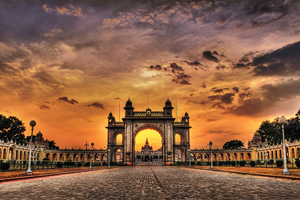
New Delhi, Feb 15: For the second time in a row, Mysuru was today ranked cleanest city, followed by Chandigarh whereas Dhanbad and Prime Minister Narendra Modi's constituency, Varanasi, are among the 10 least clean cities in India, as per the first survey after the launch of 'Swachh Bharat' mission in 2014.mysore
The survey, which was released by Urban Development Minister Venkaiah Naidu here, covered 73 cities including 51 cities with more than 10 lakh population on cleanliness and sanitation.

"Swachh Survekshan-2016 is primarily intended to measure the impact of the efforts under Swachh Bharat Mission launched after the survey of 2014," Naidu added.

While Mysuru has topped the list followed by Chandigarh, Tiruchirappalli and NDMC area of the national capital, Dhanbad in Jharkhand has been ranked the worst.The city of palaces was ranked first in the list of 476 cities last year.

Other cities which have found place in 10 cleanest category in the Survey, conducted by Quality Council of India, include Visakhapatnam (Andhra Pradesh), Surat (Gujarat), Rajkot (Gujarat), Gangtok (Sikkim), Pimpri-Chindwad (Maharashtra) and Greater Maharashtra.

The least clean cities included Dhanbad (Jharkhand), Asansol (West Bengal), Itanagar (Arunachal Pradesh), Patna (Bihar), Meerut (Uttar Pradesh), Raipur (Chhattisgarh), Ghaziabad (Uttar Pradesh), Jamshedpur (Jharkhand), Varanasi (Uttar Pradesh) and Kalyan Dombivili (Maharashtra).

Cities from South and West continue to do well overall but those in other parts of the country, particularly, in the North are beginning to catch up with the traditional leaders, Naidu said.

"The results of the survey were analysed to identify the top leaders, aspiring leaders, cities where accelerated efforts need to be made and the slow movers," he added.

Last cleanliness survey was conducted in 2014 among 476 cities with a population of one lakh and above and its results were announced last year. That survey was done before the launch of 'Swachh Bharat' mission'.

"This (ranking) is meant to help the cities know where they stand in absolute terms and in relation to others besides what more needs to be done by each city to ensure sanitation. In that sense, the survey is more holistic, participatory, purposeful and meaningful for future guidance and evolving course of action," the minister added.

Here is the list of 10 clean cities:
1. Mysuru (Karnataka)
2. Chandigarh
3. Tiruchiraplli (Tamil Nadu)
4. New Delhi
5. Visakhapatnam (Andhra Pradesh)
6. Surat (Gujarat)
7. Rajkot (Gujarat)
8. Gangtok (Sikkim)
9. Pimpri Chinchwad (Maharashtra)
10. Greater Mumbai (Maharashtra)

Cities at the bottom of the list:
64. Kalyan Dombivili (Maharashtra)
65. Varanasi (Uttar Pradesh)
66. Jamshedpur (Jharkhand)
67. Ghaziabad (Uttar Pradesh)
68. Raipur (Chhattisgarh)
69. Meerut (Uttar Pradesh)
70. Patna (Bihar)
71. Itanagar (Arunachal Pradesh)
72. Asansol (West Bengal)
73. Dhanbad (Jharkhand)

Cities that have the potential to lead the pack:
Panaji (Goa, ranked 16)
Thane (Maharashtra, ranked 17)
Coimbatore (Tamil Nadu,ranked 18)
Hyderabad (Andhra Pradesh, ranked 19)
Nagpur (Maharashtra, ranked 20)
Bhopal (Madhya Pradesh, ranked 21)
Allahabad (Uttar Pradesh, ranked 22)
Vijayawada (Andhra Pradesh, ranked 23)
Bhubaneswar (Odisha, ranked 24)
Indore (Madhya Pradesh, ranked 25)
Madurai (Tamil Nadu,ranked 26)
Shimla (Himachal Pradesh, ranked 27)
Lucknow (Uttar Pradesh, ranked 28)
Jaipur (Rajasthan, ranked 29)
Gwalior (Madhya Pradesh, ranked 30)
Nashik (Maharashtra, ranked 31)
Warangal (Telengana, ranked 32)
Agartala (Tripura, ranked 33)
Ludhiana (Punjab, ranked 34)
Vasai-Virar (Maharashtra, ranked 35)

Cities that need acceleration:
Chennai (Tamil Nadu, ranked 36)
Gurgaon (Haryana, ranked 37)
Bengaluru (Karnataka, ranked 38)
South Muncipal Corporation of Delhi (New Delhi, ranked 39)
Thiruvananthapuram (Kerala, ranked 40)
Aizawl (Mizoram, ranked 41)
Gandhinagar (Gujarat, ranked 42)
North MCD (New Delhi, ranked 43)
Kozhikode (Kerala, ranked 44)
Kanpur (Uttar Pradesh, ranked 45)
Durg (Chhattisgarh, ranked 46)
Agra (Uttar Pradesh, ranked 47)
Srinagar (Jammu and Kashmir, ranked 48)
Amritsar (Punjab, ranked 49)
Guwahati (Assam, ranked 50)
Faridabad (Haryana, ranked 51)
East MCD (New Delhi, ranked 52)
Shillong (Meghalaya, ranked 53)

Comments

Zeeshan
 - 
Tuesday, 16 Feb 2016

Mangalore not on Top 53, of the 73 recognized cities is hard to believe. regardless, need to take this survey in right spirit and every mangalorean need to contribute in their bit in not making the city any dirty. We helplessly trust that our Municipal and district administration shall feel the guilt of not making the city in good ranks and take measures to improve...We mangalorean City-Zens are proud of our city for its history & potential and should fight every evil trying to destroy its growth and prosperity.

Add new comment

  • Coastaldigest.com reserves the right to delete or block any comments.
  • Coastaldigset.com is not responsible for its readers’ comments.
  • Comments that are abusive, incendiary or irrelevant are strictly prohibited.
  • Please use a genuine email ID and provide your name to avoid reject.
News Network
March 16,2020

Bengaluru, Mar 16: Stepping up measures to curb spread of coronavirus in the state, the Karnataka government would start thermal screening of visitors at various places including the vidhana soudha, high court, secretariat, and city civil courts, from Tuesday.

In view of coronavirus scare, screening of visitors has already begun at Chief Minister B S Yediyurappa's residence at Dollar's Colony in the city.

A medical team has been deployed for the purpose, sources close to the CM told PTI. Medical screening of passengers arriving at the Kempegowda International Airport here was underway. So far seven people have been tested positive in the state while one of them died due to COVID-19 in Kalaburagi.

The Department of Health and Family Welfare said the procurement of equipment such as scanners would be completed by Monday.

"The procurement of scanners, other supplies, deputation of staff nurses and trainingshall be held and completed on March 16, Monday itself on war footing basissetting aside other works," Commissioner of Health and Family Welfare department, Pankaj Kumar Pandey said in his order to district level health officers.

The KarnatakaState Drugs Logistics and Warehousing Society (KSDLWS) would procure and give the thermal scanners to the district health and family welfare officers of Bengaluru Urban, Kalaburagi, Dharwad, it said. Sufficient virus filtering N95 masks, handgloves and sanitisers would also be provided to the officers, it added.

Comments

Add new comment

  • Coastaldigest.com reserves the right to delete or block any comments.
  • Coastaldigset.com is not responsible for its readers’ comments.
  • Comments that are abusive, incendiary or irrelevant are strictly prohibited.
  • Please use a genuine email ID and provide your name to avoid reject.
Ram Puniyani
February 10,2020

Noam Chomsky is one of the leading peace workers in the world. In the wake of America’s attack on Vietnam, he brought out his classic formulation, ‘manufacturing consent’. The phrase explains the state manipulating public opinion to have the public approve of it policies—in this case, the attack of the American state on Vietnam, which was then struggling to free itself from French colonial rule.

In India, we are witness to manufactured hate against religious minorities. This hatred serves to enhance polarisation in society, which undermines India’s democracy and Constitution and promotes support for a Hindu nation. Hate is being manufactured through multiple mechanisms. For example, it manifests in violence against religious minorities. Some recent ghastly expressions of this manufactured hate was the massive communal violence witnessed in Mumbai (1992-93), Gujarat (2002), Kandhamal (2008) and Muzaffarnagar (2013). Its other manifestation was in the form of lynching of those accused of having killed a cow or consumed beef. A parallel phenomenon is the brutal flogging, often to death, of Dalits who deal with animal carcasses or leather.

Yet another form of this was seen when Shambhulal Regar, indoctrinated by the propaganda of Hindu nationalists, burned alive Afrazul Khan and shot the video of the heinous act. For his brutality, he was praised by many. Regar was incited into the act by the propaganda around love jihad. Lately, we have the same phenomenon of manufactured hate taking on even more dastardly proportions as youth related to Hindu nationalist organisations have been caught using pistols, while police authorities look on.

Anurag Thakur, a BJP minster in the central government recently incited a crowd in Delhi to complete his chant of what should happen to ‘traitors of the country...” with a “they should be shot”. Just two days later, a youth brought a pistol to the site of a protest at Jamia Millia Islamia university and shouted “take Azaadi!” and fired it. One bullet hit a student of Jamia. This happened on 30 January, the day Nathuram Godse had shot Mahatma Gandhi in 1948. A few days later, another youth fired near the site of protests against the CAA and NRC at Shaheen Bagh. Soon after, he said that in India, “only Hindus will rule”.

What is very obvious is that the shootings by those associated with Hindu nationalist organisations are the culmination of a long campaign of spreading hate against religious minorities in India in general and against Muslims in particular. The present phase is the outcome of a long and sustained hate campaign, the beginning of which lies in nationalism in the name of religion; Muslim nationalism and Hindu nationalism. This sectarian nationalism picked up the communal view of history and the communal historiography which the British introduced in order to pursue their ‘divide and rule’ policy.

In India what became part of “social common sense” was that Muslim kings had destroyed Hindu temples, that Islam was spread by force, and that it is a foreign religion, and so on. Campaigns, such as the one for a temple dedicated to the Hindu god Rama to be built at the site where the Babri masjid once stood, further deepened the idea of a Muslim as a “temple-destroyer”. Aurangzeb, Tipu Sultan and other Muslim kings were tarnished as the ones who spread Islam by force in the subcontinent. The tragic Partition, which was primarily due to British policies, and was well-supported by communal streams also, was entirely attributed to Muslims. The Kashmir conflict, which is the outcome of regional, ethnic and other historical issues, coupled with the American policy of supporting Pakistan’s ambitions of regional hegemony, (which also fostered the birth of Al-Qaeda), was also attributed to the Muslims.

With recurring incidents of communal violence, these falsehoods went on going deeper into the social thinking. Violence itself led to ghettoisation of Muslims and further broke inter-community social bonds. On the one hand, a ghettoised community is cut off from others and on the other hand the victims come to be presented as culprits. The percolation of this hate through word-of-mouth propaganda, media and re-writing of school curricula, had a strong impact on social attitudes towards the minorities.

In the last couple of decades, the process of manufacturing hate has been intensified by the social media platforms which are being cleverly used by the communal forces. Swati Chaturvedi’s book, I Am a Troll: Inside the Secret World of the BJP’s Digital Army, tells us how the BJP used social media to spread hate. Whatapp University became the source of understanding for large sections of society and hate for the ‘Other’, went up by leaps and bounds. To add on to this process, the phenomenon of fake news was shrewdly deployed to intensify divisiveness.

Currently, the Shaheen Bagh movement is a big uniting force for the country; but it is being demonised as a gathering of ‘anti-nationals’. Another BJP leader has said that these protesters will indulge in crimes like rape. This has intensified the prevalent hate.

While there is a general dominance of hate, the likes of Shambhulal Regar and the Jamia shooter do get taken in by the incitement and act out the violence that is constantly hinted at. The deeper issue involved is the prevalence of hate, misconceptions and biases, which have become the part of social thinking.

These misconceptions are undoing the amity between different religious communities which was built during the freedom movement. They are undoing the fraternity which emerged with the process of India as a nation in the making. The processes which brought these communities together broadly drew from Gandhi, Bhagat Singh and Ambedkar. It is these values which need to be rooted again in the society. The communal forces have resorted to false propaganda against the minorities, and that needs to be undone with sincerity.

Combating those foundational misconceptions which create hatred is a massive task which needs to be taken up by the social organisations and political parties which have faith in the Indian Constitution and values of freedom movement. It needs to be done right away as a priority issue in with a focus on cultivating Indian fraternity yet again.

Comments

Add new comment

  • Coastaldigest.com reserves the right to delete or block any comments.
  • Coastaldigset.com is not responsible for its readers’ comments.
  • Comments that are abusive, incendiary or irrelevant are strictly prohibited.
  • Please use a genuine email ID and provide your name to avoid reject.
Agencies
January 9,2020

Alappuzha, Jan 9: The houseboat of Nobel Laureate Michael Levitt was blocked in the backwaters here for some time by trade union activists, who were on a nationwide strike against the Centre's "anti-labour" policies on Wednesday.

Michael Levitt, an American-British-Israeli biophysicist and a professor of structural biology at the Stanford University in the United States, said the incident sent a bad message to tourists.

Levitt, who was in Kerala as a state guest, also said he felt as if a bandit had stopped his wife and him at gunpoint. Police said Levitt, who received the 2013 Nobel Prize in Chemistry, was in Alappuzha with his wife and they were stopped by the protesters near Kainakary.

"Being stopped by criminals on the backwaters sends a very bad message to tourists. It is as if a bandit stopped us at gunpoint and delayed us under the threat of force for one hour," Levitt wrote in an email to his tour agent at Kottayam.

In the email, which was later released to the media, he also said the person who blocked them "ignored all arguments that tourists were exempted" from the strike.

"This person, who did this, ignored all arguments that tourists were exempted and that I am a VIP guest of the Kerala government. He was obviously acting, knowing that he was safe from prosecution. Sadly, this makes me fear that India is sinking into lawlessness," Levitt wrote in the email.

The police registered a case after the houseboat owners filed a complaint in this regard.

Reacting to the incident, state Tourism Minister Kadakampally Surendran said the government would take strong action. "Strong action will be taken against those anti-social elements who stopped the boat. Levitt was here as a guest of the state government. The government had made it clear that the tourism industry was exempted from the strike," he said.

Trade union leaders had also announced that the strike would not affect the tourism industry.

Ten trade unions, including the INTUC, the AITUC and the CITU, had called for the nationwide strike to protest against the labour reforms, FDI, disinvestment, corporatisation and privatisation policies of the Centre and press for a 12-point demands of the working class, relating to minimum wage, among others.

Comments

Add new comment

  • Coastaldigest.com reserves the right to delete or block any comments.
  • Coastaldigset.com is not responsible for its readers’ comments.
  • Comments that are abusive, incendiary or irrelevant are strictly prohibited.
  • Please use a genuine email ID and provide your name to avoid reject.