Swachh Mangaluru: Central market, jail road, Chilimbi areas cleaned

[email protected] (CD Network)
February 8, 2016

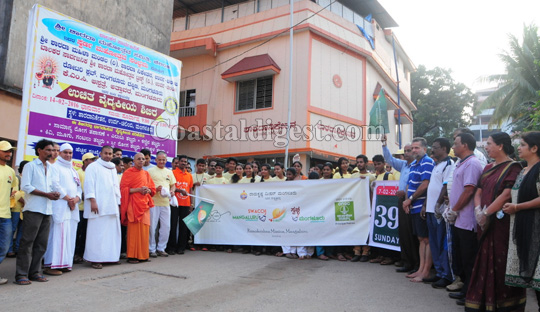
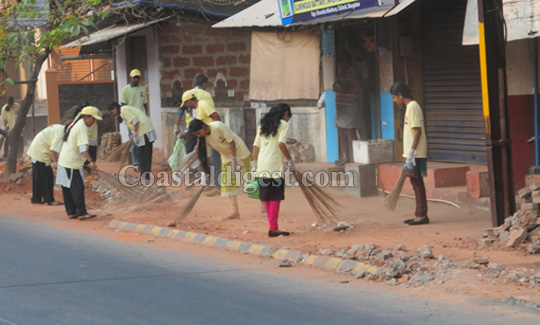
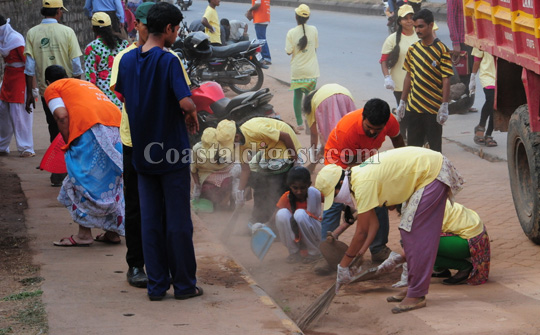
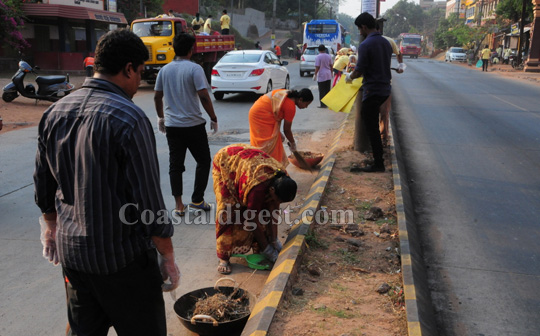
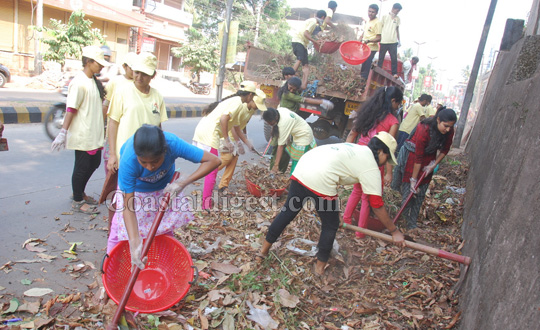
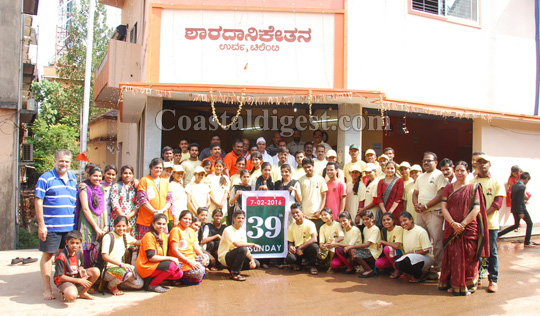
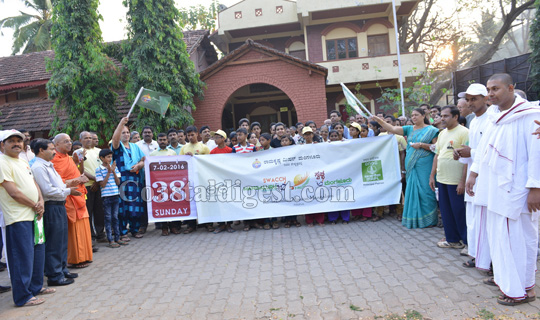
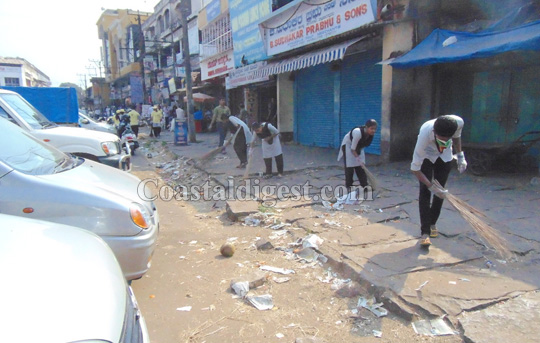
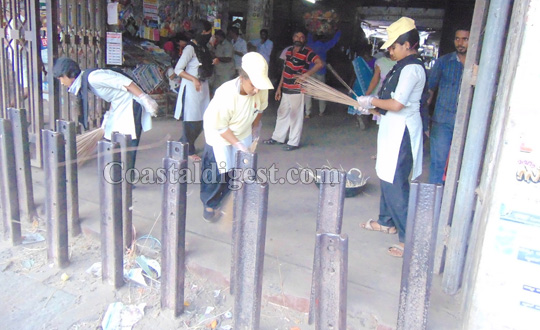
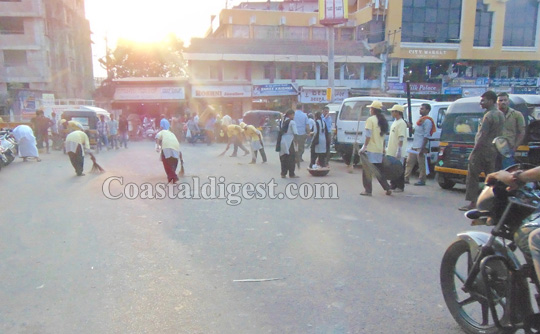
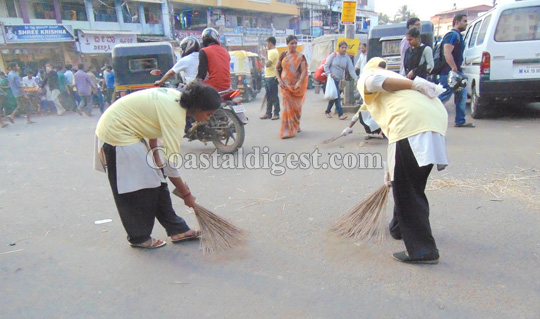
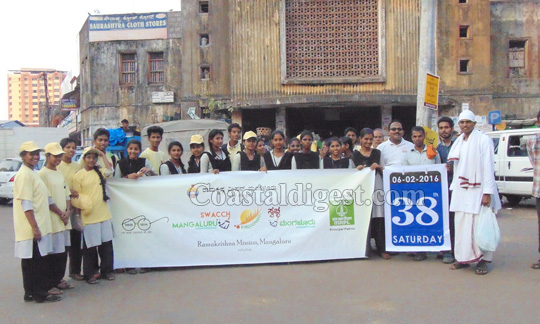
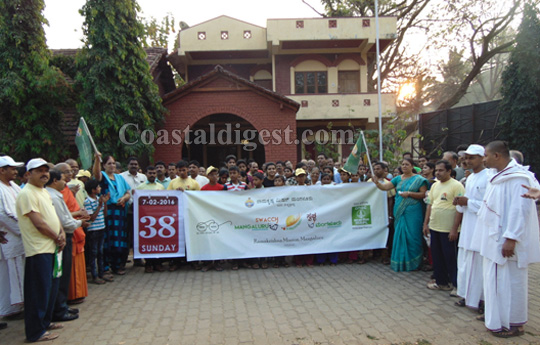
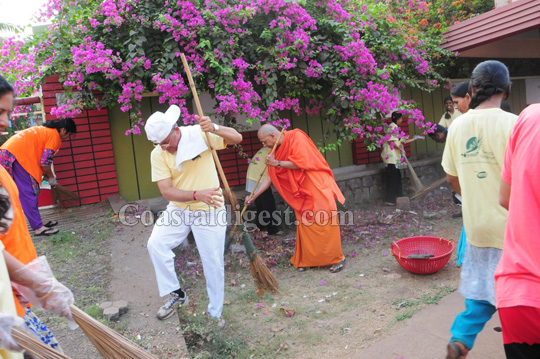
Mangaluru, Feb 7: With the 40-week long Swachh Mangaluru Abhiyan on its home stretch, Ramakrishna Math, chief organisers of the campaign in association with MRPL, principal patron of the event carried out a special weekend of cleanliness. While volunteers cleaned up the Central market area on Saturday, they targeted the Karangalpady Jail road area and Chilimbi area respectively for the 38th and 39th Swachh Mangaluru Abhiyan respectively on Sunday.
ramakrishna 4

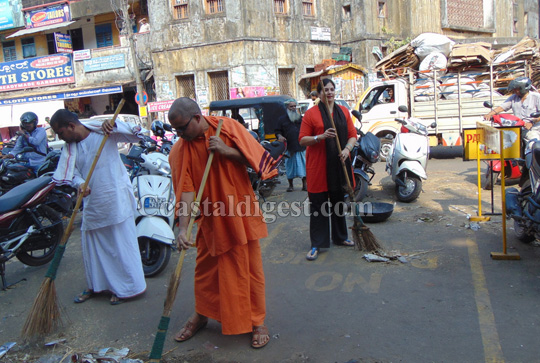
Swami Dharmavratanandaji of Ramakrishna Math, Mangaluru and Deepa Pai, managing director of Hangyo Ice creams Ltd, Rajashekhar Hebbar, principal, GFGC, Car street were present at the special drive at Central market. Volunteers not only cleaned Central market area with brooms but also heaps of dirt and garbage that had filled the nooks and corners of the market were thoroughly cleaned. They also distributed awareness handbills to all shops and customers in the market.

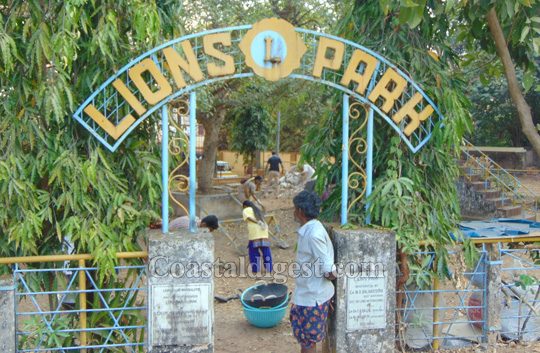
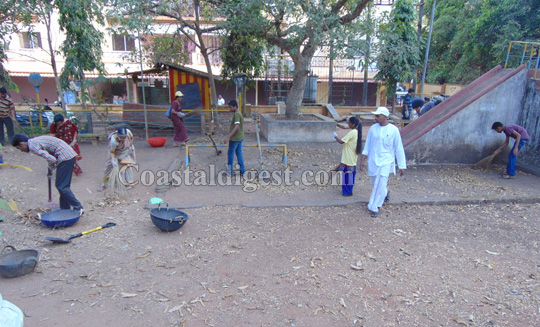
The 38th abhiyan was carried out in Karangalpady Jail Road area on Sunday. Jacintha Vijay Alfred, Mayor and Lily Pinto flagged off the drive in the presence of Swami Jitakamanandaji, president, Ramakrishna Math. The Mayor cleaned the premises of DIET with broom. Volunteers were divided into three groups and each one cleaned Jail Road, C G Kamath Road and Lions Park under the guidance of Dr Satish Rao, Ramkumar Bekal and Satish Bhat.

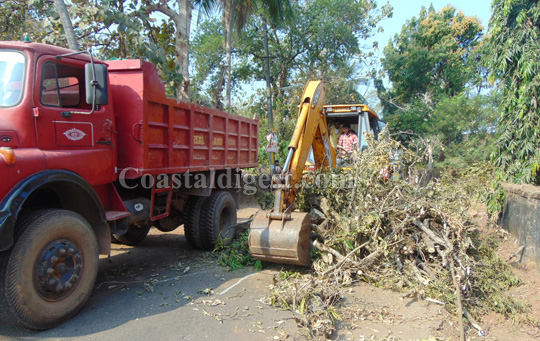
Branches of trees pruned by authorities and that lay unattended along the roads were cleared using earth excavator machines helping the pedestrians. Worn out direction boards were repainted and awareness handbills were distributed among different households. The 39th Swachh Mangaluru Abhiyan was carried in Chilimbi area. Ganesh Karnik, MLC briefed volunteers about the abhiyan. Volunteers cleaned different areas in and around Chilmbi for almost 3 hours later.
ramakrishna 1

ramakrishna 2

ramakrishna 3

ramakrishna 5

ramakrishna 6

ramakrishna 7

ramakrishna 8

ramakrishna 9

ramakrishna 10

ramakrishna 11

ramakrishna 12

ramakrishna 13

ramakrishna 14

ramakrishna 15

ramakrishna 16

ramakrishna 17

ramakrishna 18

Comments

fathima
 - 
Monday, 8 Feb 2016

Great and Godly work.Keep up the same spirit.I request schools and colleges to have atleast half an hour cleanliness classes for students.
Lets not be lifeless towrds our surroundings.
In Japan, they involve students from 5th grade and above in farming in the school premises.Potatoes,tomatoes are grown by students in the farm.Same vegetables are taken to school canteen for lunch .We need to implement farming classes in schools so that child gets encouraged in the agriculture field and help the farmers with new farming technologies etc.

Add new comment

  • Coastaldigest.com reserves the right to delete or block any comments.
  • Coastaldigset.com is not responsible for its readers’ comments.
  • Comments that are abusive, incendiary or irrelevant are strictly prohibited.
  • Please use a genuine email ID and provide your name to avoid reject.
News Network
February 12,2020

New Delhi, Feb 12: Cooking gas LPG price on Wednesday was hiked by a steep Rs 144.5 per cylinder due to spurt in benchmark global rates of the fuel.

But to insulate domestic users, the government almost doubled the subsidy it provides on the fuel to keep per cylinder outgo almost unchanged.

LPG price was increased to Rs 858.50 per 14.2 kg cylinder from Rs 714 previously, according to a price notification of state-owned oil firms.

This is the steepest hike in rates since January 2014 when prices had gone up by Rs 220 per cylinder to Rs 1,241.

Domestic LPG users, who are entitled to buy 12 bottles of 14.2-kg each at subsidised rates in a year, will get more subsidy.

The government subsidy payout to domestic users has been increased from Rs 153.86 per cylinder to Rs 291.48, industry officials said.

For Pradhan Mantri Ujjwala Yojana (PMUY) beneficiaries, the subsidy has increased from Rs 174.86 to Rs 312.48 per cylinder.

After accounting for the subsidy that is paid directly into the bank accounts of LPG users, a 14.2-kg cylinder would cost Rs 567.02 for domestic users and Rs 546.02 for PMUY users.

The government gave out 8 crore free LPG connections to poor women under PMUY to increase coverage of environment-friendly fuel in kitchens.

Normally, LPG rates are revised on 1st of every month but this time it took almost two weeks for the revision to take place - a phenomenon which industry officials said was due to approvals needed for such a big jump in subsidy outgo.

Others said the decision to defer the increase could have been because of assembly elections in Delhi. Delhi voted on February 8.

Comments

Add new comment

  • Coastaldigest.com reserves the right to delete or block any comments.
  • Coastaldigset.com is not responsible for its readers’ comments.
  • Comments that are abusive, incendiary or irrelevant are strictly prohibited.
  • Please use a genuine email ID and provide your name to avoid reject.
News Network
June 13,2020

Mangaluru, Jun 13: A bus agent died after the compound wall of his house collapsed on him at Matadagudde, near Gurupura-Kaikamba, on Friday afternoon. This is the first rain-related death reported in Dakshina Kannada.

The victim is Narayana Naika, 52. According to police, heavy rain on Friday afternoon blocked a small water stream adjacent to his compound wall, and the deceased was clearing it. The stone compound wall then suddenly collapsed on him, and he got buried underneath. He sustained grievous head injuries and died on the way to hospital.

Narayana is survived by his wife and two children.

Dakshina Kannada received an average rainfall of 26.1mm in the last 24 hours till 8.30 am on Friday. The highest rainfall was recorded at Puttur and Mangaluru taluks at 31.3mm and 30.3mm, respectively. Bantwal and Sullia taluks received 26.3mm and 24.6mm of rain, respectively.

Comments

Add new comment

  • Coastaldigest.com reserves the right to delete or block any comments.
  • Coastaldigset.com is not responsible for its readers’ comments.
  • Comments that are abusive, incendiary or irrelevant are strictly prohibited.
  • Please use a genuine email ID and provide your name to avoid reject.
coastaldigest.com news network
February 23,2020

Mangalore University has been participating in the campus bird count a sub-event of ‘Great backyard bird count’ (GBBC) organized by Bird Count India for the past 5 years. This year, CBC was held from 14th to 17th February of 2020 across various campuses in India.

This year the four days event was successfully ended up with the sightings of 103 species of birds from various locations across the campus spread on 300 acres. In this Black Drongo, Black Kite, Brahminy Kite, Common Iora, Green Wabler, Purple-rumed Sunbird, Red-whiskered Bulbul, White-cheeked Barbet, Jungle Babbler and Plum headed parakeets were the common birds, and also observed House Crow with nest and nestlings, Indian Robin nest with eggs, Bronzed Drongo constructing the nest and Shikra mating and carrying nesting materials.  Whereas Yellow-billed Babbler is rare in the campus, Ashy Drongo, Barn Swallow, Booted Eagle, Grey Wagtail, Indian Pitta etc. were migratory birds, Grey-headed Bulbul (Near Threatened bird), Rufous Babbler and Grey-headed Bulbul were Western Ghats Endemics  and Brown Wood Owl, Barn Owl, Spotted Owlet, Nightjars (Savanna, Indian and Jerdon’s) and Sri Lanka Frogmouth were nocturnal birds. Blue-eared Kingfisher Grey-bellied Cuckoo which was very rare and new additions to avian list of the campus.

In the first year (2016) of Mangalore University’s CBC recorded 77 species, in 2017 recorded 95 species, in 2018 recorded 110 species and in 2019 recorded 107 species of birds. However some of the common species like Rose ringed parakeets, Blue tailed bee-eater, Nilgiri Flowerpecker and Indian roller etc., sighted last year were not seen this year. But with 2 new additions from this CBC, the checklist of Mangalore University Campus has been updated with a total of 141 species.

This event was coordinated by Vivek Hasyagar from the Department of Applied Zoology and Maxim Rodrigues from the Department of Marine Geology. Survey trails were led by more than 60 students and research scholars from various Departments of Mangalore University includes Applied Zoology, Biosciences, Microbiology, Botany, Physics, Chemistry and Material Science.  In addition, some enthusiastic participants from St. Aloysius College had involved in identifying the birds around the campus.

Quote:

Wild/planned fire affects negatively on the existing ecologically sensitive areas in and around the campus especially in lateritic grasslands. Because many insectivorous birds are dependent on these lateritic grassland habitats for their food and breeding grounds for many ground dwelling birds like Yellow wattled lapwing, Red wattled lapwing, Indian Robin and Barred buttonquails. Conserving these habitats will be helpful in protecting these birds.

Quotes from the participants: “The Campus Bird Count 2020 at Mangalore University was an experience of its own kind. Observing birds in their natural habitat gave me new perspective of viewing them not only as another living being, but as equals, or even of higher intelligence. The Campus Bird Count is an important step towards documenting bird life year after year, and creating awareness amongst youngsters, so that proper conservation steps can be taken to protect them from human interference”.

-Jyotsna Dessai ( 1 M.Sc Zoology)

Comments

Add new comment

  • Coastaldigest.com reserves the right to delete or block any comments.
  • Coastaldigset.com is not responsible for its readers’ comments.
  • Comments that are abusive, incendiary or irrelevant are strictly prohibited.
  • Please use a genuine email ID and provide your name to avoid reject.