


Techie Held For Hacking Air India Frequent Flyers Accounts

July 18, 2016

New Delhi, Jul 18: A 23-year-old techie has been arrested for hacking Air India's Frequent Flyer member accounts and using them to book tickets sold to several travel agents, Delhi Police said on Sunday.
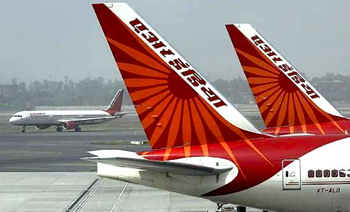
airindiaThe accused, Anitesh Giri Goswami, a BCA graduate from Pune, was arrested from Jaipur on Friday.

According to police, a complaint was received in the Cyber Crime Cell of the Delhi Police's Economic Offences Wing (EOW) alleging some persons were selling Air India tickets by redeeming of miles of genuine Flying Returns Members after hacking the Frequent Flyer members account.

In a statement, the EOW said it was found that the hub of the scam was in Rajasthan's Jodhpur and Anitesh was its mastermind. On basis of electronic surveillance and information of a local informer, a raid was conducted at an apartment in Jaipur and Anitesh was nabbed.

A laptop, several mobile phones and other relevant documents were also recovered from his possession.

Police further claimed that Anitesh was an IT expert, who had earlier worked with Kingfisher Airlines and Air India and was well versed with the online ticket-booking system and functioning of Air India's intranet and internet-based systems.

Explaining the modus operandi, police said that Anitesh first understood functioning of the ticketing system as well as the points/miles system of the airlines and then hacked into the Loyalty Plus programme website of Air India.

After gaining access, he administrator user rights, which he used to upgrade several other user IDs with the same rights, police said.

Using these IDs, he verified hundreds of dormant accounts of Frequent Flyer members by uploading fraudulently prepared KYC (know your customer) documents, and used these membership accounts and the miles or points accumulated in these accounts for booking airline tickets. These were sold to various travel or ticketing agents based in Pune, Delhi, Jaipur and Mumbai.

He gained access to the internal functioning of Air India website while working at the Jodhpur airport, and left his Air India job to start exploiting loopholes in the Frequent Flyer Programme's functioning.

Comments

Suresh
 - 
Monday, 18 Jul 2016

May be brother of arnab!!

Ahmed Ali K
 - 
Monday, 18 Jul 2016

Both Go-Swamis are jokers and talk of the town now a days

Add new comment

  • Coastaldigest.com reserves the right to delete or block any comments.
  • Coastaldigset.com is not responsible for its readers’ comments.
  • Comments that are abusive, incendiary or irrelevant are strictly prohibited.
  • Please use a genuine email ID and provide your name to avoid reject.
News Network
March 10,2020

Bengaluru, Mar 10: Techies living in a Whitefield apartment block where the city's first Coronavirus patient was residing have been asked to work from home.

The Karnataka government is in touch with the heads of IT and ITES companies, some of which are said to have asked their staff to work from home.

Deputy Chief Minister Dr C Ashwath Narayan, who also holds the IT and BT Portfolio, said the government had directed the companies to explore giving their employees the work-from-home option.

Comments

Add new comment

  • Coastaldigest.com reserves the right to delete or block any comments.
  • Coastaldigset.com is not responsible for its readers’ comments.
  • Comments that are abusive, incendiary or irrelevant are strictly prohibited.
  • Please use a genuine email ID and provide your name to avoid reject.
News Network
April 2,2020

The current physical distancing guidelines provided by the World Health Organisation (WHO) and by the US Centers for Disease Control and Prevention (CDC) may not be adequate to curb the coronavirus spread, according to a research which says the gas cloud from a cough or sneeze may help virus particles travel up to 8 metres. The research, published in the Journal of the American Medical Association, noted that the the current guidelines issued by the WHO and CDC are based on outdated models from the 1930s of how gas clouds from a cough, sneeze, or exhalation spread.

Study author, MIT associate professor Lydia Bourouiba, warned that droplets of all sizes can travel 23 to 27 feet, or 7-8 metres, carrying the pathogen.

According to Bourouiba, the current guidelines are based on "arbitrary" assumptions of droplet size, "overly simplified", and "may limit the effectiveness of the proposed interventions" against the deadly pandemic.

 She explained that the old guidelines assume droplets to be one of two categories, small or large, taking short-range semi-ballistic trajectories when a person exhales, coughs, or sneezes.

However based on more recent discoveries, the MIT scientist said, sneezes and coughs are made of a puff cloud that carries ambient air, transporting within it clusters of droplets of a wide range of sizes.

Bourouiba warned that this puff cloud, with ambient air entrapped in it, can offer the droplets moisture and warmth that can prevent it from evaporation in the outer environment.

"The locally moist and warm atmosphere within the turbulent gas cloud allows the contained droplets to evade evaporation for much longer than occurs with isolated droplets," she said.

"Under these conditions, the lifetime of a droplet could be considerably extended by a factor of up to 1000, from a fraction of a second to minutes," the researcher explained in the study.

The MIT scientist, who has researched the dynamics of coughs and sneezes for years, added that these droplets settle along the trajectory of a cough or sneeze contaminating surfaces, with their residues staying suspended in the air for hours.

"Even when maximum containment policies were enforced, the rapid international spread of COVID-19 suggests that using arbitrary droplet size cutoffs may not accurately reflect what actually occurs with respiratory emissions, possibly contributing to the ineffectiveness of some procedures used to limit the spread of respiratory disease," Bourouiba wrote in the study

Comments

Add new comment

  • Coastaldigest.com reserves the right to delete or block any comments.
  • Coastaldigset.com is not responsible for its readers’ comments.
  • Comments that are abusive, incendiary or irrelevant are strictly prohibited.
  • Please use a genuine email ID and provide your name to avoid reject.
News Network
July 6,2020

Bengaluru, Jul 6: Criminal cases will be registered against private hospitals that refuse treatment to COVID-19 patients, Medical Education Minister Dr K Sudhakar said on Sunday.

Addressing a press conference here at Vidhana Soudha, he said: "No hospital should refuse to admit patients and if any hospital is found denying treatment criminal cases will be registered against them."

He spoke to media persons after returning from his surprise visit to Jayanagar General Hospital and Rajiv Gandhi Chest Hospital responded to the questions regarding private hospitals refusing to treat covid patients.

"The government has come up with 6 different systems for treatment of COVID-19 patients. COVID care centres, government medical colleges, private medical college, government hospitals, corporate hospitals and home isolation with proper facilities and according to government guidelines," the minister added.

Dr Sudhakar gave the statistics of 4 metropolitan cities in the country including Delhi, Mumbai, Chennai and Bengaluru.

"Bengaluru's and the mortality rate is the lowest at 1.46%. The aim is to increase testing by optimal utilisation of capacity especially in private labs. Once we increase testing, it is natural that the positive cases will also increase," he said.

"So citizens need not panic due to this but should take all precautionary measures. He advised to get tested in the nearest fever clinics as soon as any symptoms like cough, fever etc are found. Guidelines regarding the home isolation will be released soon," the minister said.

He announced that 400 ambulances will be deployed in Bengaluru and 2 each for every ward.

He said that the government recommended patients at private hospitals will be provided with insurance under Suvarna Arogya Suraksha Trust.

"If private hospitals refuse to admit the patients, call 1912 helpline to get assistance. If admitted in Private hospital voluntarily the treatment cost will be borne by patients as per the rates fixed by the government," Sudhakar said.

He said that the cost of testing at private labs has been capped at Rs 2,200 as per test.

Comments

Add new comment

  • Coastaldigest.com reserves the right to delete or block any comments.
  • Coastaldigset.com is not responsible for its readers’ comments.
  • Comments that are abusive, incendiary or irrelevant are strictly prohibited.
  • Please use a genuine email ID and provide your name to avoid reject.