


Terrorist who blew himself up in Jeddah was an NRI, confirms Saudi Arabia

coastaldigest.com web desk
May 1, 2018

Newsroom, May 1: The bomber who blew himself up outside the US Consulate in Jeddah, a coastal city of Saudi Arabia two years ago was a non-resident Indian, confirmed the authorities of the Kingdom on the basis of DNA tests.

The accused who killed himself in bid to cause harm to others has been identified as Fayaz Kagzi, an Indian national and alleged operative of the Lashkar-e-Toiba, a senior security official said.

The Jeddah blast on July 4, 2016, which injured two security officers, was the first of three attacks to hit the kingdom that day. The other two were also in the form of blasts near a Shia mosque in Qatif and outside the Masjid-i-Nabvi in Medina.

The National Investigation Agency informed the Patiala house court in Delhi that the terror mastermind was dead. Sources said that NIA believes Kagzi, who hails from Beed in Maharashtra, was the 'mastermind', 'financier' of the 2010 German bakery blast and 2012 JM Road bombing. The 34-year-old was also wanted in the Aurangabad arms haul case and is suspected of teaching Hindi to 26/11 terrorists, including Ajmal Kasab.

Saudi authorities had first released the picture of the Jeddah bomber and called him Abdullah Qalzar Khan, a Pakistani national. Maharashtra Anti-Terrorism Squad (ATS) officers identified the man in the picture as Fayaz Kagzi and subsequently, with the help of NIA, shared their suspicion with Jeddah.

Kagzi fled to Pakistan via Bangladesh in 2006 and shifted his base to Saudi Arabia in 2009 to oversee the recruitment of Indian nationals to LeT. Sources say that it is possible that he took on a new name of Abdullah Qalzar Khan while in Pakistan.

Abu Jundal, a convict in the Aurangabad arms haul case, had told investigators that he met Kagzi in Saudi Arabia. Jundal was extradited to India in 2012 and is currently facing trial in conspiracy against India cases.

Agencies believe after Jundal's extradition, Kagzi switched alliance to ISIS and became part of the Jeddah suicide bombing conspiracy.

India and Saudi Arabia have in recent times cooperated in terrorism-related cases. India could arrest Lashkar's Abdul Karim Tunda only after Saudi authorities cooperated.

Saudi Arabian ambassador to India, Dr Saud bin Mohammed Al Sati, had said last week that the kingdom has a very strong cooperation with India on countering terrorism, extremism and terror financing.

Comments

Roshan Deen
 - 
Wednesday, 2 May 2018

Suicide bomber who blew himself up near the United States consulate in Jeddah early Monday has been identified as a Pakistani citizen, the Saudi interior ministry said on Tuesday.
The ministry identified the man as 35-year-old Abdullah Gulzar Khan, who worked as a driver in the kingdom.
Khan had been living with his wife and her parents in Jeddah for 12 years, the interior ministry said in a tweet. July 05, 2016
https://www.dawn.com/news/1269220

Add new comment

  • Coastaldigest.com reserves the right to delete or block any comments.
  • Coastaldigset.com is not responsible for its readers’ comments.
  • Comments that are abusive, incendiary or irrelevant are strictly prohibited.
  • Please use a genuine email ID and provide your name to avoid reject.
Agencies
July 8,2020

The Central Board of Secondary Education (CBSE) has rationalised by up to 30 per cent the syllabus for classes 9 to 12 for the academic year 2020-21 to reduce course load on students amid the COVID-19 crisis, Union HRD Minister Ramesh Pokhriyal 'Nishank' announced on Tuesday.

The curriculum has been rationalised while retaining the core elements, the Human Resource Development said.

Among the chapters dropped after the rationalisation exercise are lessons on democracy and diversity, demonetisation, nationalism, secularism, India's relations with its neighbours and growth of local governments in India, among others.

"Looking at the extraordinary situation prevailing in the country and the world, CBSE was advised to revise the curriculum and reduce course load for the students of classes 9 to 12.

"To aid the decision, a few weeks back I also invited suggestions from all educationists on the reduction of syllabus for students and I am glad to share that we received more than 1.5K suggestions. Thank you, everyone, for the overwhelming response," Nishank tweeted.

"Considering the importance of learning achievement, it has been decided to rationalise syllabus up to 30 per cent by retaining the core concepts," he added.

The Union minister said the changes made in the syllabi have been finalised by the respective course committees with the approval of the curriculum committee and the Governing Body of the Board.

"The heads of schools and teachers have been advised by the board to ensure that the topics that have been reduced are also explained to the students to the extent required to connect different topics. However, the reduced syllabus will not be part of the topics for internal assessment and year-end board examination.

"Alternative academic calendar and inputs from the NCERT on transacting the curriculum using different strategies shall also be part of the teaching pedagogy in the affiliated schools," a senior official of the HRD ministry said.

For classes 1 to 8, the National Council of Education Research and Training (NCERT) has already notified an alternative calendar and learning outcomes.

According to the updated curriculum, among the chapters deleted from class 10 syllabus are-- democracy and diversity, gender, religion and caste, popular struggles and movement, challenges to democracy

For class 11, the deleted portions included chapters on federalism, citizenship, nationalism, secularism, growth of local governments in India.

Similarly, class 12 students will not be required to study chapters on India's relations with its neighbours, changing nature of India's economic development, social movements in India and demonetisation, among others.

Universities and schools across the country have been closed since March 16 when the central government announced a nationwide classroom shutdown as one of the measures to contain the COVID-19 outbreak.

A nationwide lockdown was announced on March 24, which came into effect the next day. While the government has eased several restrictions, schools and colleges continue to remain closed.

Comments

Add new comment

  • Coastaldigest.com reserves the right to delete or block any comments.
  • Coastaldigset.com is not responsible for its readers’ comments.
  • Comments that are abusive, incendiary or irrelevant are strictly prohibited.
  • Please use a genuine email ID and provide your name to avoid reject.
News Network
August 6,2020

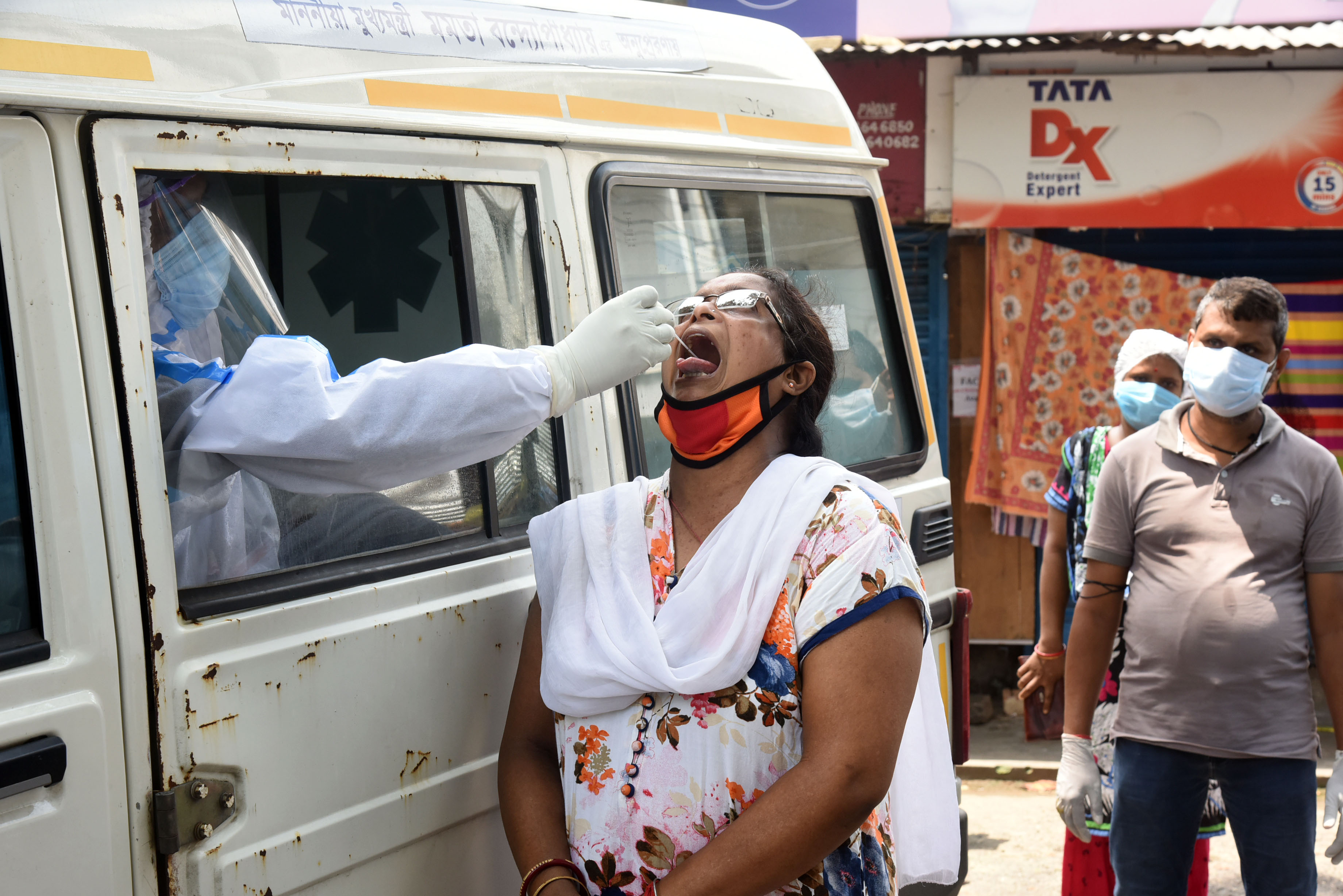
Bengaluru, Aug 6: No private hospital in Karnataka can turn away a patient without attending to him or her, irrespective of the Coronavirus status, an official has said.

"Private medical establishments shall not deny treatment and admission to any patient approaching the establishment irrespective of the fact that such patient may or may not be suffering from Covid-19," an official from the state Health and Family Welfare Department said on Wednesday.

Likewise, no private hospital can insist on a patient for a Covid-19 test report, said the official invoking the Disaster Management Act.

"The establishments also cannot insist for Covid test report," he said, directing all private hospitals to strictly abide by their responsibilities.

According to the department, it is the duty of every private hospital to provide first aid and take lifesaving steps when any patient approaches it.

"It is the duty of every private medical establishment to provide first aid and take lifesaving measures to stabilise the patient," he said.

The department also invoked statutes from Karnataka Medical Establishments Act 2017, under sections 11 and 11 (A) to drive home the message.

The directives assume significance at a time when several cases of private hospitals denying admissions and fleecing patients across the state have emerged.

"It has been noticed that some of the private hospitals are refusing treatment and admission to emergency patients, causing distress and this has resulted in complications, leading to death in certain cases," said the official.

The district authorities have been directed to take action on the erring hospitals as the department reiterated the responsibilities of private medical establishments.

Comments

Add new comment

  • Coastaldigest.com reserves the right to delete or block any comments.
  • Coastaldigset.com is not responsible for its readers’ comments.
  • Comments that are abusive, incendiary or irrelevant are strictly prohibited.
  • Please use a genuine email ID and provide your name to avoid reject.
News Network
January 16,2020

Mangaluru, Jan 16: Following the widespread protests against the National Register of Citizens (NRC) and Citizenship Amendment Act (CAA), former minister and MLA UT Khader on Thursday urged the Centre and State government to address the concerns of the people.

Speaking to reporters here on Thursday, he said there is widespread confusion among the public with regard to the implementation of the Act. People are reluctant to open their doors to Asha workers, out of fear that the NRC exercise is being implemented, said Khader.

He urged the chief minister and home minister to gain the trust of the people on the CAA issue.

Comments

Add new comment

  • Coastaldigest.com reserves the right to delete or block any comments.
  • Coastaldigset.com is not responsible for its readers’ comments.
  • Comments that are abusive, incendiary or irrelevant are strictly prohibited.
  • Please use a genuine email ID and provide your name to avoid reject.