


Thank you NRIs! India retains top position in remittances with $80 billion

Agencies
December 8, 2018

Washington, Dec 8: India will retain its position as the world's top recipient of remittances this year with its diaspora sending a whopping $80 billion back home, the World Bank said in a report on Saturday.

India is followed by China ($67 billion), Mexico and the Philippines ($34 billion each) and Egypt ($26 billion), according to the global lender.

With this, India has retained its top spot on remittances, according to the latest edition of the World Bank's Migration and Development Brief.

The bank estimates that officially-recorded remittances to developing countries will increase by 10.8 per cent to reach $528 billion in 2018. This new record level follows a robust growth of 7.8 per cent in 2017.

Global remittances, which include flows to high-income countries, are projected to grow by 10.3 per cent to $689 billion, it said.

Over the last three years, India has registered a significant flow of remittances from $62.7 billion in 2016 to $65.3 billion 2017. In 2017, remittances constituted 2.7 per cent of India's GDP, it said.

The bank said remittances to South Asia are projected to increase by 13.5 per cent to $132 billion in 2018, a stronger pace than the 5.7 per cent growth seen in 2017.

The upsurge is driven by stronger economic conditions in advanced economies, particularly the US, and the increase in oil prices having a positive impact on outflows from some GCC countries such as the UAE which reported a 13 per cent growth in outflows for the first half of 2018.

Bangladesh and Pakistan both experienced strong upticks of 17.9 per cent and 6.2 per cent in 2018, respectively, the Bank said.

For 2019, it is projected that remittances growth for the region will slow to 4.3 per cent due to a moderation of growth in advanced economies, lower migration to the GCC and the benefits from the oil price spurt dissipating.

The Gulf Cooperation Council (GCC) is a regional inter-governmental political and economic bloc of Bahrain, Kuwait, Oman, Qatar, Saudi Arabia and the UAE.

As global growth is projected to moderate, future remittances to low- and middle-income countries are expected to grow moderately by four per cent to reach USD 549 billion in 2019. Global remittances are expected to grow 3.7 per cent to $715 billion in 2019.

The brief notes that the global average cost of sending $200 remains high at 6.9 per cent in the third quarter of 2018. Reducing remittance flows to three per cent by 2030 is a global target under Sustainable Development Goal (SDG) 10.7.

Increasing the volume of remittances is also a global goal under the proposals for raising financing for the SDGs, it said.

"Even with technological advances, remittances fees remain too high, double the SDG target of 3 per cent. Opening up markets to competition and promoting the use of low-cost technologies will ease the burden on poorer customers," said Mahmoud Mohieldin, Senior Vice President for the 2030 Development Agenda, United Nations Relations, and Partnerships at the Bank.

The average cost of remitting in South Asia was the lowest at 5.4 per cent, while Sub-Saharan Africa continued to have the highest at 9 per cent.

No solutions are yet in sight for practices that drive up costs, such as de-risking action of banks, which lead to closure of bank accounts of remittance service providers.

Another persistent factor that keeps fees high is the exclusive partnership between national post office systems and any single money transfer operator, as it allows the operator to charge higher fees to poorer customers dependent on post offices, the bank said.

"The future growth of remittances is vulnerable to lower oil prices, restrictive migration policies, and an overall moderation of economic growth.

"Remittances have a direct impact on alleviating poverty for many households, and the World Bank is well positioned to work with countries to facilitate remittance flows," said Michal Rutkowski, senior director of the social protection and jobs global practice at the World Bank.

Comments

NRI s saving Modi by not allowing GDP to fall in its worst level. Modi looting all our money for staues and Rich thieves.

Arif
 - 
Saturday, 8 Dec 2018

Proud to be a NRI. Thanks to Arab countries for saving many Indians

Hindu Rashtra …
 - 
Saturday, 8 Dec 2018

Modiji Ki Jai.. Haters wont accept Modiji's efforts. We dont care haters. He is the best PM. True dedicated humble hon. PM.

Mohan
 - 
Saturday, 8 Dec 2018

Great.. Should not show to MODI. He may cry by telling you people ignored our soldiers

Vinod
 - 
Saturday, 8 Dec 2018

Kerala economy depending NRI. They are the main contributors. Then tourism

Suresh
 - 
Saturday, 8 Dec 2018

NRIs are rocking always. They are the saviours of indian economy

Add new comment

  • Coastaldigest.com reserves the right to delete or block any comments.
  • Coastaldigset.com is not responsible for its readers’ comments.
  • Comments that are abusive, incendiary or irrelevant are strictly prohibited.
  • Please use a genuine email ID and provide your name to avoid reject.
coastaldigest.com news network
May 19,2020

Udupi, May 18: As many as eight fresh coronavirus positive cases have been reported in coastal districts of Udupi and Uttara Kannada. 

No fresh positive case was reported in Dakshina Kannada since yesterday.

According to Health and Family Welfare Department, two men aged 38 and 24 years, an 8-year-old boy and a 24-year-old woman tested positive for coronavirus in Udupi district today. 

All of them were under quarantine after returning from Maharashtra recently. They were shifted to covid-19 hospital for treatment. With this the number of covid-19 positive cases in Udupi district mounted to 15.

Meanwhile, Uttara Kannada district also received a jolt with four more cases. Yesterday it had reported eight cases.

Comments

Add new comment

  • Coastaldigest.com reserves the right to delete or block any comments.
  • Coastaldigset.com is not responsible for its readers’ comments.
  • Comments that are abusive, incendiary or irrelevant are strictly prohibited.
  • Please use a genuine email ID and provide your name to avoid reject.
News Network
April 11,2020

Bengaluru, Apr 11: Former prime minister H D Deve Gowda claimed the lockdown decision was taken in 'haste' without forethought because of which farmers and the working class were 'suffering' and suggested measures to mitigate the impact. The state government should have consulted experienced citizens, officials, progressive farmers, farmer organisations and wholesale traders about the pros and cons before lockdown, he said in a letter to Chief Minister B S Yediyurappa, while highlighting that 61 per cent of the state's population depended on agriculture.

Because of the "hasty decision taken without any preparations", farmers of the country and the state are facing financial distress," he said in the April 9 letter, a copy of which was released to media here on Friday. The JD(S) patriarch suggested taking up some measures, including ensuring no restrictions on agriculture activities, procurement of horticulture produce at a fair price, relaxing export curbs on it, to provide relief to farmers, agriculture labourers, and daily wage workers.

On Sunday, Gowda had said he has assured Prime Minister Narendra Modi of his support in the nation's battle against COVID-19 pandemic when the latter called him to discuss the situation. In his letter to the chief minister, Gowda said: "...the lockdown implemented to control the spread of coronavirus has led our farmers into despair and put their lives into a burning fire.

This lockdown looks like a decision taken at haste without proper thinking and forethought for our farmers, agriculture labourers, and daily wage workers." He said the lockdown decision was taken after remaining 'quite' for about two months since the first corona infection was reported in the country on January 30. Among the suggestions made by the former prime minister include, procurement of horticulture produce at a fair price like in the case of milk from villages by the government through related organisations like Karnataka Horticulture Federation, HOPCOMS among others.

As horticulture produce was perishable, there should be no restriction on its procurement, transportation and marketing; all processing related activities of horticulture produce should be given relaxation from the lockdown, he said. Gowda also called for relaxation on exports for horticulture produce and its processed items. There should be no restriction on agriculture activities; a national grid has to be set up for marketing of horticulture produce, he said.

If such measures were not taken up immediately, the government will have to pay compensation to farmers for losses. Lack of remedial measures would lead to a shortage of supply, leading to rebellion from the people and may result in farmers' suicides and bringing about a situation that might be more grave than coroanvirus, he said.

Comments

Add new comment

  • Coastaldigest.com reserves the right to delete or block any comments.
  • Coastaldigset.com is not responsible for its readers’ comments.
  • Comments that are abusive, incendiary or irrelevant are strictly prohibited.
  • Please use a genuine email ID and provide your name to avoid reject.
News Network
July 28,2020

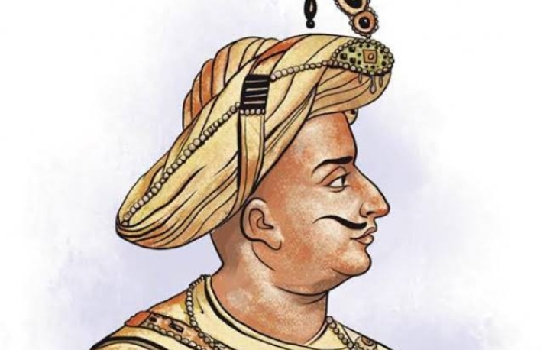
Bengaluru, Jul 28: After the Central Board of Secondary Education (CBSE) reduced the syllabi for Classes 9 to 12 due to COVID-19 pandemic, the Karnataka government has followed the suit. The Department of Public Instruction has omitted the chapters on legendary south Indian rulers Hyder Ali and Tipu Sultan from the textbooks of Class 7 in their attempt to reduce syllabus for state board schools by 30 per cent. 

The department, however, has decided to retain similar chapters on Tipu Sultan in 6th and 10th Classes, though the syllabus in text books for all classes from 1 to 10th has been trimmed. 

The trimmed textbooks uploaded on the website of the Department of State Education Research and Training (DSERT) by Karnataka state Textbook Society revealed removal of chapters on Tipu Sultan for the seventh grade.

Justifying the decision, officials said, "students study similar chapters in Class 6 and more in the 10th grade." Yet another senior official from the Text Book Society said, "Trimming does not mean we have removed half of the syllabus from textbooks. It is only keeping in mind the repetition we have condensed the chapters. In case students study about a particular dynasty in higher grades, then the same had been removed from lower grades."

A few months ago, there was an uproar over dropping of content on Tipu Sultan and MLAs from the ruling BJP also demanded the same and petitioned to the Chief Minister. Even an expert committee led by Prof Baraguru Ramachandrappa suggested to not drop any content on the historic figure. However, the department still decided to drop lessons from one of the classes while keeping the syllabus short for the next 120 active academic days.

Earlier this month, a controversy had erupted over the CBSE's decision to omit topics like federalism, secularism, citizenship, etc while reducing the syllabus for Classes 9 to 12. The education board had issued a detailed clarification later, stating that topics claimed to be dropped "are either being covered by the rationalised syllabus or in the Alternative Academic Calendar of NCERT".

"The rationalisation of syllabus up to 30 per cent has been undertaken by the Board for nearly 190 subjects of class 9 to 12 for the academic session 2020-21 as a one-time measure only. The objective is to reduce the exam stress of students due to the prevailing health emergency situation and prevent learning gaps," it said.

Last week, the Congress in Uttar Pradesh expressed its concern over 'deliberate and systematic' deletions of chapters related to the freedom struggle and the party's role in it from the Class 10-12 syllabi of the Secondary Education Board.

Comments

Add new comment

  • Coastaldigest.com reserves the right to delete or block any comments.
  • Coastaldigset.com is not responsible for its readers’ comments.
  • Comments that are abusive, incendiary or irrelevant are strictly prohibited.
  • Please use a genuine email ID and provide your name to avoid reject.