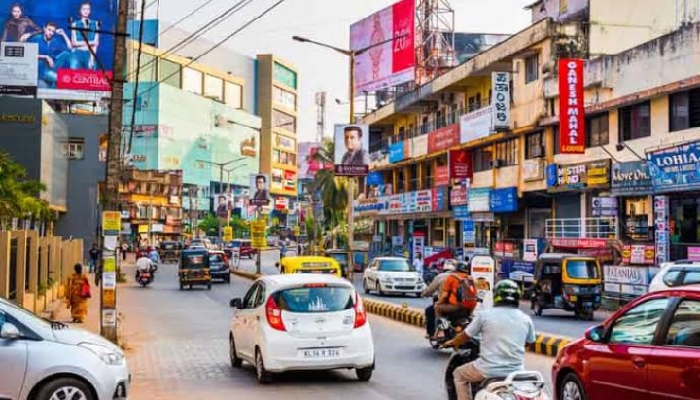
Thank you NRIs! India retains top position in remittances with $80 billion

Agencies
December 8, 2018

Washington, Dec 8: India will retain its position as the world's top recipient of remittances this year with its diaspora sending a whopping $80 billion back home, the World Bank said in a report on Saturday.

India is followed by China ($67 billion), Mexico and the Philippines ($34 billion each) and Egypt ($26 billion), according to the global lender.

With this, India has retained its top spot on remittances, according to the latest edition of the World Bank's Migration and Development Brief.

The bank estimates that officially-recorded remittances to developing countries will increase by 10.8 per cent to reach $528 billion in 2018. This new record level follows a robust growth of 7.8 per cent in 2017.

Global remittances, which include flows to high-income countries, are projected to grow by 10.3 per cent to $689 billion, it said.

Over the last three years, India has registered a significant flow of remittances from $62.7 billion in 2016 to $65.3 billion 2017. In 2017, remittances constituted 2.7 per cent of India's GDP, it said.

The bank said remittances to South Asia are projected to increase by 13.5 per cent to $132 billion in 2018, a stronger pace than the 5.7 per cent growth seen in 2017.

The upsurge is driven by stronger economic conditions in advanced economies, particularly the US, and the increase in oil prices having a positive impact on outflows from some GCC countries such as the UAE which reported a 13 per cent growth in outflows for the first half of 2018.

Bangladesh and Pakistan both experienced strong upticks of 17.9 per cent and 6.2 per cent in 2018, respectively, the Bank said.

For 2019, it is projected that remittances growth for the region will slow to 4.3 per cent due to a moderation of growth in advanced economies, lower migration to the GCC and the benefits from the oil price spurt dissipating.

The Gulf Cooperation Council (GCC) is a regional inter-governmental political and economic bloc of Bahrain, Kuwait, Oman, Qatar, Saudi Arabia and the UAE.

As global growth is projected to moderate, future remittances to low- and middle-income countries are expected to grow moderately by four per cent to reach USD 549 billion in 2019. Global remittances are expected to grow 3.7 per cent to $715 billion in 2019.

The brief notes that the global average cost of sending $200 remains high at 6.9 per cent in the third quarter of 2018. Reducing remittance flows to three per cent by 2030 is a global target under Sustainable Development Goal (SDG) 10.7.

Increasing the volume of remittances is also a global goal under the proposals for raising financing for the SDGs, it said.

"Even with technological advances, remittances fees remain too high, double the SDG target of 3 per cent. Opening up markets to competition and promoting the use of low-cost technologies will ease the burden on poorer customers," said Mahmoud Mohieldin, Senior Vice President for the 2030 Development Agenda, United Nations Relations, and Partnerships at the Bank.

The average cost of remitting in South Asia was the lowest at 5.4 per cent, while Sub-Saharan Africa continued to have the highest at 9 per cent.

No solutions are yet in sight for practices that drive up costs, such as de-risking action of banks, which lead to closure of bank accounts of remittance service providers.

Another persistent factor that keeps fees high is the exclusive partnership between national post office systems and any single money transfer operator, as it allows the operator to charge higher fees to poorer customers dependent on post offices, the bank said.

"The future growth of remittances is vulnerable to lower oil prices, restrictive migration policies, and an overall moderation of economic growth.

"Remittances have a direct impact on alleviating poverty for many households, and the World Bank is well positioned to work with countries to facilitate remittance flows," said Michal Rutkowski, senior director of the social protection and jobs global practice at the World Bank.

Comments

NRI s saving Modi by not allowing GDP to fall in its worst level. Modi looting all our money for staues and Rich thieves.

Arif
 - 
Saturday, 8 Dec 2018

Proud to be a NRI. Thanks to Arab countries for saving many Indians

Hindu Rashtra …
 - 
Saturday, 8 Dec 2018

Modiji Ki Jai.. Haters wont accept Modiji's efforts. We dont care haters. He is the best PM. True dedicated humble hon. PM.

Mohan
 - 
Saturday, 8 Dec 2018

Great.. Should not show to MODI. He may cry by telling you people ignored our soldiers

Vinod
 - 
Saturday, 8 Dec 2018

Kerala economy depending NRI. They are the main contributors. Then tourism

Suresh
 - 
Saturday, 8 Dec 2018

NRIs are rocking always. They are the saviours of indian economy

Add new comment

  • Coastaldigest.com reserves the right to delete or block any comments.
  • Coastaldigset.com is not responsible for its readers’ comments.
  • Comments that are abusive, incendiary or irrelevant are strictly prohibited.
  • Please use a genuine email ID and provide your name to avoid reject.
News Network
February 22,2020

Bengaluru, Feb 22: Thanks to joint efforts by the Protector of Emigrants in Bengaluru and Indian Embassy in Qatar, a 26-year-old woman from Karnataka who had been kept in confinement in Qatar has been rescued and brought back to India.

Anupama (name changed) from Holenarasipura in Hassan district arrived in Bengaluru on Thursday night. She was allegedly locked up in a house for 14 days, restrained from using a mobile and wasn't fed. There were three other women with her. On the midnight of February 12, they broke the window panes and fled before contacting local police.

Anupama, a diploma graduate in computer science, was jobless and her friend working in Kuwait suggested she try for a job abroad. She contacted an agency based in Chikkamagaluru which offered her a nanny's job in Qatar. After document verification, the agency demanded she pay Rs 2 lakh but she said she didn't have that kind of money.

The agency sent Anupama on a visitor visa but told her if questioned by immigration officials, she must claim she was visiting her sister. They also gave her a return ticket.

As Anupama was travelling abroad for the first time, she said she was ignorant about several things.

On January 12, Anupama left Bengaluru. But as she reached Qatar, all her documents, including passport, were confiscated by the agency. Her return ticket was cancelled and she was sent to a house to work as babysitter-cum-cook for Rs 30,000. She lived with four other maids in the same house, where they were made to work for 16-18 hours a day.

"I used to wake up around 5.30am every day and had to prepare breakfast for the employers by 6.30am. My work would end around 11pm every day. We never even got time to eat," Anupama told media on Friday. Four days into work, Anupama's nose started bleeding. However, the employers cared little and insisted she continue to work. After 18 days, she requested her employers that she be relieved.

The agency sent her to a house where three women were already present and locked her up with them. "They used to give us a glass of raw rice, an onion, tomato and potato to cook for ourselves. While we got rice every day, we had to use the vegetables for three days. We were not supposed to use mobiles or go out. Two people were monitoring us," she recalled.

Anupama and the others decided to approach police but for that they needed to escape. Around 1.30am on February 12, the four women managed to break window panes and jumped out. They ran for more than a kilometre and managed to approach police, who summoned the agency and got the women to speak to their families.

Anupama called her brother-in-law, who approached the Protector of Emigrants office in Koramangala, Bengaluru. Shubham Singh, PoE in Bengaluru, said they took up the issue with the Indian Embassy in Qatar, which immediately got in touch with Qatar police. Anupama said, "We were kept in prison for a couple of days and were sent to the deportation centre later."

Meanwhile, the Indian embassy got the agency to return the women's documents. However, the agents did not pay their salaries. Two of the women were sent to Hyderabad and the third to Kerala. On Friday, Anupama met Singh at his office, where her statement was recorded. "We have started the process of initiating action against the agency in India," he said.

Comments

Add new comment

  • Coastaldigest.com reserves the right to delete or block any comments.
  • Coastaldigset.com is not responsible for its readers’ comments.
  • Comments that are abusive, incendiary or irrelevant are strictly prohibited.
  • Please use a genuine email ID and provide your name to avoid reject.
Agencies
February 12,2020

Bengaluru, Feb 12: Karnataka Sanghatanegala Okkoota, a congregation of various pro-Kannada organisations, has called for a state-wide bandh in Karnataka on Thursday (13 February 2020) demanding reservation in jobs for Kannadigas in both government and private sectors.

The Karnataka bandh, which will begin from 6 am to 6 pm, is likely to impact life in Bengaluru as well as in other parts of the state. Interestingly, Ola and Uber drivers have also extended support to the bandh. 

In Bengaluru, some other drivers’ associations, including Jai Bharatha Vehicle Owners and Drivers Association and Adarsha Auto and Taxi Union have also supported the bandh.

It is not yet clear as to whether the Karnataka State Road Transport Corporation (KSRTC) staff and workers associations will back Thursday’s bandh.

Several other organisations like the Karnataka Film Chamber of Commerce (KFCC), Centre of Indian Trade Unions (CITU), and Lorry Owners Association have supported the February 13 bandh.

In view of the bandh call, schools, colleges and hospitals across Karnataka are likely to remain closed on Thursday.

The Sarojini Mahishi report, which in 1984 suggested that Kannadigas should be given some reservation in jobs in private companies, public sector undertakings and multinational companies, is yet to be implemented.

It is to be noted that Sarojini Mahishi, a four-time MP and Janatha party leader, was appointed by the Ramakrishna Hegde government to head the panel in 1983. The committee submitted an interim report in June 1984. However, a final report was tabled in December 1986 with 58 recommendations, of which the Karnataka government had accepted 45.

Comments

Add new comment

  • Coastaldigest.com reserves the right to delete or block any comments.
  • Coastaldigset.com is not responsible for its readers’ comments.
  • Comments that are abusive, incendiary or irrelevant are strictly prohibited.
  • Please use a genuine email ID and provide your name to avoid reject.
coastaldigest.com news network
August 2,2020

Mangaluru/Udupi, Aug 2: The twin coastal districts of Dakshina Kannada and Udupi witnessed sporadic movement of vehicles and relatively less commercial activities today in spite of the withdrawal of ‘Sunday lockdown’ by the state government. 

After the central government announced guidelines under Unlock 3.0, the Karnataka government has removed the complete lockdown concept on Sundays and done away with the night curfews too. So from today (August 2), there will be no lockdown on Sundays.

KSRTC operated its buses as usually. However, compared to other days, today the number of private and city buses on the roads in Dakshina Kannada was limited. 

In Udupi, city buses remained off the roads as the number of passengers was less. However, KSRTC and NARM buses were seen transporting passengers.

In containment zones ban on movement of people will continue till August 31 in Udupi. The Santhekatte market used to function on Saturdays, as there was Sunday lockdown on earlier Sundays. Now the market will be open on Sundays only.

Comments

Add new comment

  • Coastaldigest.com reserves the right to delete or block any comments.
  • Coastaldigset.com is not responsible for its readers’ comments.
  • Comments that are abusive, incendiary or irrelevant are strictly prohibited.
  • Please use a genuine email ID and provide your name to avoid reject.