


Thank you NRIs! India retains top position in remittances with $80 billion

Agencies
December 8, 2018

Washington, Dec 8: India will retain its position as the world's top recipient of remittances this year with its diaspora sending a whopping $80 billion back home, the World Bank said in a report on Saturday.

India is followed by China ($67 billion), Mexico and the Philippines ($34 billion each) and Egypt ($26 billion), according to the global lender.

With this, India has retained its top spot on remittances, according to the latest edition of the World Bank's Migration and Development Brief.

The bank estimates that officially-recorded remittances to developing countries will increase by 10.8 per cent to reach $528 billion in 2018. This new record level follows a robust growth of 7.8 per cent in 2017.

Global remittances, which include flows to high-income countries, are projected to grow by 10.3 per cent to $689 billion, it said.

Over the last three years, India has registered a significant flow of remittances from $62.7 billion in 2016 to $65.3 billion 2017. In 2017, remittances constituted 2.7 per cent of India's GDP, it said.

The bank said remittances to South Asia are projected to increase by 13.5 per cent to $132 billion in 2018, a stronger pace than the 5.7 per cent growth seen in 2017.

The upsurge is driven by stronger economic conditions in advanced economies, particularly the US, and the increase in oil prices having a positive impact on outflows from some GCC countries such as the UAE which reported a 13 per cent growth in outflows for the first half of 2018.

Bangladesh and Pakistan both experienced strong upticks of 17.9 per cent and 6.2 per cent in 2018, respectively, the Bank said.

For 2019, it is projected that remittances growth for the region will slow to 4.3 per cent due to a moderation of growth in advanced economies, lower migration to the GCC and the benefits from the oil price spurt dissipating.

The Gulf Cooperation Council (GCC) is a regional inter-governmental political and economic bloc of Bahrain, Kuwait, Oman, Qatar, Saudi Arabia and the UAE.

As global growth is projected to moderate, future remittances to low- and middle-income countries are expected to grow moderately by four per cent to reach USD 549 billion in 2019. Global remittances are expected to grow 3.7 per cent to $715 billion in 2019.

The brief notes that the global average cost of sending $200 remains high at 6.9 per cent in the third quarter of 2018. Reducing remittance flows to three per cent by 2030 is a global target under Sustainable Development Goal (SDG) 10.7.

Increasing the volume of remittances is also a global goal under the proposals for raising financing for the SDGs, it said.

"Even with technological advances, remittances fees remain too high, double the SDG target of 3 per cent. Opening up markets to competition and promoting the use of low-cost technologies will ease the burden on poorer customers," said Mahmoud Mohieldin, Senior Vice President for the 2030 Development Agenda, United Nations Relations, and Partnerships at the Bank.

The average cost of remitting in South Asia was the lowest at 5.4 per cent, while Sub-Saharan Africa continued to have the highest at 9 per cent.

No solutions are yet in sight for practices that drive up costs, such as de-risking action of banks, which lead to closure of bank accounts of remittance service providers.

Another persistent factor that keeps fees high is the exclusive partnership between national post office systems and any single money transfer operator, as it allows the operator to charge higher fees to poorer customers dependent on post offices, the bank said.

"The future growth of remittances is vulnerable to lower oil prices, restrictive migration policies, and an overall moderation of economic growth.

"Remittances have a direct impact on alleviating poverty for many households, and the World Bank is well positioned to work with countries to facilitate remittance flows," said Michal Rutkowski, senior director of the social protection and jobs global practice at the World Bank.

Comments

NRI s saving Modi by not allowing GDP to fall in its worst level. Modi looting all our money for staues and Rich thieves.

Arif
 - 
Saturday, 8 Dec 2018

Proud to be a NRI. Thanks to Arab countries for saving many Indians

Hindu Rashtra …
 - 
Saturday, 8 Dec 2018

Modiji Ki Jai.. Haters wont accept Modiji's efforts. We dont care haters. He is the best PM. True dedicated humble hon. PM.

Mohan
 - 
Saturday, 8 Dec 2018

Great.. Should not show to MODI. He may cry by telling you people ignored our soldiers

Vinod
 - 
Saturday, 8 Dec 2018

Kerala economy depending NRI. They are the main contributors. Then tourism

Suresh
 - 
Saturday, 8 Dec 2018

NRIs are rocking always. They are the saviours of indian economy

Add new comment

  • Coastaldigest.com reserves the right to delete or block any comments.
  • Coastaldigset.com is not responsible for its readers’ comments.
  • Comments that are abusive, incendiary or irrelevant are strictly prohibited.
  • Please use a genuine email ID and provide your name to avoid reject.
News Network
February 7,2020

Mangaluru, Feb 7: In an attempt to promote menstrual hygiene among women, the Karnataka State Road Transport Corporation (KSRTC) has installed vending machines and incinerators to dispense and dispose off sanitary napkins at 10 bus stands of the state including Mangaluru.

The machines have been installed inside the women's washroom and women can purchase sanitary napkins from the vending machines by inserting five rupee coins.

Nearly 100 napkins can be stored in the vending machines at a time and housekeeping personnel have been instructed to replenish the stock, as and when required.

While directions on how to use the machine have been displayed near the machines, people can get seek assistance from housekeeping staff if needed.

Initially, the machines were installed at two depots in Bengaluru on a pilot basis and in the second phase it has been extended to 10 KSRTC bus depots.

Comments

Add new comment

  • Coastaldigest.com reserves the right to delete or block any comments.
  • Coastaldigset.com is not responsible for its readers’ comments.
  • Comments that are abusive, incendiary or irrelevant are strictly prohibited.
  • Please use a genuine email ID and provide your name to avoid reject.
coastaldigest.com news network
August 3,2020

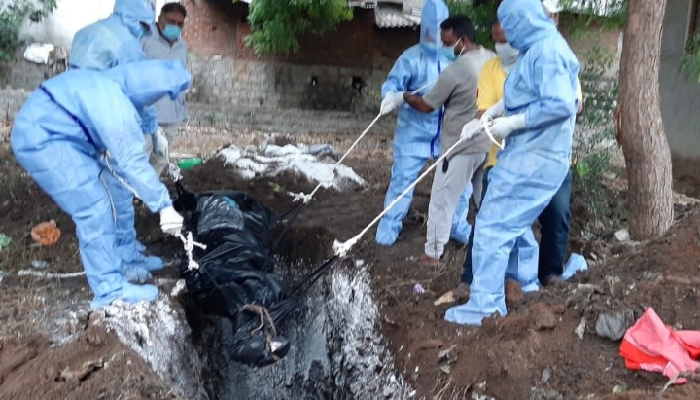
Koppal, Aug 3: The activists of Popular Front of India (PFI) have won the heart of the people by performing the last rites of a local leader of Bharatiya Janata Party in Koppla district of Karnataka. 

Somashekhara Gowda, a senior BJP leader in Koppal’s Gangavathi died of covid-19. His family members were reportedly quarantined. His own party activists also were not ready to participate in the last rite due to the fear of coronavirus infection.

Following requests, a team of PFI comprised of district secretary Fayaz, and members Yaseen, Abdul Aalam, Shamid Razi and Husain Azarauddin performed the last rites as per Veerashaiva Lingayat traditions. 

Speaking to media persons PFI district president Zaheer Abbas lamented that people still have plenty of misconceptions about covid-19. “Due to the misconceptions, performing the last rites of those who die of covid-19 has become a challenge,” he said.

He said that PFI activists followed all the health guidelines and took necessary precautions while performing the last rites. “Under the guidance of district health officials and with the consent of the family members of the deceased, the last rites were performed as per Veerashaiva Lingayat traditions,” he said.

Comments

Add new comment

  • Coastaldigest.com reserves the right to delete or block any comments.
  • Coastaldigset.com is not responsible for its readers’ comments.
  • Comments that are abusive, incendiary or irrelevant are strictly prohibited.
  • Please use a genuine email ID and provide your name to avoid reject.
coastaldigest.com web desk
May 23,2020

The decision of the Indian government to ease the coronavirus-linked global travel restrictions imposed on those having OCI cards has given a big relief to many stranded overseas citizens of India across the world.

OCI card is issued to people of Indian origin globally which gives them almost all the privileges of an Indian national except for the right to vote, government service and buying agricultural land. The OCI card gives them a visa-free travel to India.

On Friday, the central government allowed certain categories of OCI card holders, who are stranded abroad, to come to the country. Earlier, according to the regulations issued by the Indian government in April, visas of foreign nationals and OCI cards were suspended as part of the new international travel restrictions following the COVID-19 pandemic.

This privilege of visa free travel to India was causing distress among a large number of people of Indian-origin and Indian citizens in countries like the US whose children were OCI card holders as they were born in this country.

Many Indian parents, several of whom lost their jobs as a result of the economic crisis due to coronavirus pandemic, but were not allowed to take the special evacuation flights of Air India from various US cities, took to social media and urged the Indian leaders to allow them to travel to India.

“This is a big relief for the OCI card holders. It was a humanitarian crisis in the making. I am pleased that the Indian Government listened to their voices,” said social activist Prem Bhandari, chairman of Jaipur Foot USA, who has been taking up the cause of the OCI card holders.

Dr Arathi Krishna, former deputy chairperson of NRI Forum of Karnataka government, who had been demanding this relaxation, many of the thousands of stranded OCI card holders in defferent parts of the world were in pursuading her to exert pressure on the authorities concerned for this much needed relaxation.

The restrictions on traveling of OCI card holders to India was issued by govt of India on March 13 in the wake of global outbreak of coronavirus pandemic. 

She said: "Many parents who are Indian nationals could not travel for emergency purpose to India after repatriation flights started due to their minor children being OCI card holders. Many children who were OCI card holders could not travel to India to perform last rites when there was death in their family due to these restrictions"

"I was constantly pressurising and bringing these issues to the attention of ministry officials in External Affairs and Home Affairs departments. I was following up with Mr Dammu Ravi who is heading the COVID task force  task firce in the ministry of overseas Indian affairs who took interest in solving this problem through his consistent efforts with MHA. Iam thankful to Fireign Secretary too for his efforts and concern and to MHA for making it easier now for OCI card holders to travel in repatriation flights with emergency reasons," she said.

Comments

Add new comment

  • Coastaldigest.com reserves the right to delete or block any comments.
  • Coastaldigset.com is not responsible for its readers’ comments.
  • Comments that are abusive, incendiary or irrelevant are strictly prohibited.
  • Please use a genuine email ID and provide your name to avoid reject.