



These ailing cows have only options: Being in isolation or facing massacre

[email protected] (News Network)
September 9, 2016

Kolar, Sep 9: There is alarm over the outbreak of Brucellosis disease in Kolar district following the detection of Brucella abortus bacterium in 998 cattle, including 258 cows. Symptoms of Brucellosis have been found in animals at Rakshith Farm owned by Kolar MLA Varthur R Prakash.
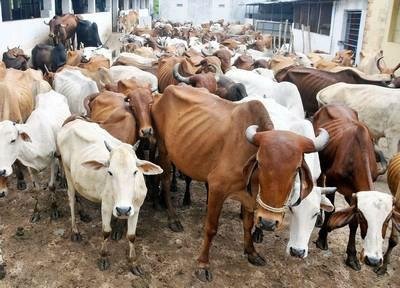
cattleAlso known as 'bangs disease' and `contagious abortion', Brucellosis spreads from the vaginal discharge of an infected cow or from an aborted foetus. It's said to have no treatment and the disease poses a major risk as milk consumed from the infected cows can cause undulant fever among humans.

Animal husbandry department's deputy director (Kolar) S Channakeshava said: “We have been screening the animals for Brucellosis for the past one year and 258 cows tested positive. We have ordered culling of these cows and directed farm owners to bury the carcasses deep in the soil to prevent contamination.”

Meanwhile, Animal Husbandry Minister A Manju said that there was no need to cull the brucellosis infected cattle in the diary. Manju told media persons in Bengaluru that an 11-member expert committee constituted by the department had opined that there was no need to cull over 900 animals that had tested positive for brucellosis, as the disease was endemic.

The committee has in turn advised that the infected animals be quarantined in an isolated area in the farm. The animals will be kept in isolation for at least three months, before another round of tests are conducted. If they test positive again, then they will be continued to be kept in isolation. The committee has recommended that the animals should not be used for breeding purposes and taken out of the farm.

The farm, which commenced operations a year ago at Begli village on the outskirts of Kolar (about 70km from Bengaluru), has over 2,500 cross-bred cows brought from Maharashtra by Prakash. Though animal husbandry staff detected Brucellosis several months ago, they reportedly did not raise a red flag and the issue was kept under wraps for "observation and scientific analysis".

In the meantime, according to sources in the animal husbandry department, some cows were either sold to farmers in the region or sent to slaughter houses.

The issue snowballed into a controversy after some political activists alleged that nearly 7,000 litres of infected milk were supplied to the local milk producers' cooperative society from Rakshith Farm. They also alleged that Prakash was trying to sell the infected cows to farmers.

Dr T Jayaram, senior deputy director of the department, said Brucellosis disease is a zoonotic disease, is animal borne and can be easily transmitted to humans who come in close contact with affected animals. The affected animal would develop various disorders which results in abortion twice in a row and after two abortions though the animal looks good, it would have traces of the bacteria and spread it to other animals. Any human who comes in close contact with the animal will develop various health disorders, including high fever, joint pain and impotency.

Comments

Naren kotian
 - 
Sunday, 11 Sep 2016

jihadists galige kotre .they will eat ..haha ..otnalli jihadi galu saaybekashte ....we should start injecting banned anti biotics to cows before selling ...5-6 consumption inda multi organ failure guarantee....haha

Satyameva jayate
 - 
Saturday, 10 Sep 2016

Another option for naren urgent Viren to take them to Singapore......protect mothers......

TRUE INDIAN
 - 
Friday, 9 Sep 2016

ITS HARAM TO EAT SICK COW. SORRY NO NEED

TRUE INDIAN
 - 
Friday, 9 Sep 2016

What they have done during mothers day. They let their cow mother to eat garbage plastics etc.

Abbu Beary
 - 
Friday, 9 Sep 2016

Pathetic condition of mothers and gods of saffron terrorists.

Add new comment

  • Coastaldigest.com reserves the right to delete or block any comments.
  • Coastaldigset.com is not responsible for its readers’ comments.
  • Comments that are abusive, incendiary or irrelevant are strictly prohibited.
  • Please use a genuine email ID and provide your name to avoid reject.
News Network
March 28,2020

Bengaluru, Mar 28: Sun Tsu, in 'The Art of War' speaks of a skilful general who can subdue his enemy without any fighting. This constitutes the ultimate triumph which is referred to as stratagem. Today, we would need one such when we are faced with the '21-day corona challenge' for India.
Nearly four weeks back, Dr Jyothsna Rao, Dr Gururaj Rao and I sat across the OPD in the afternoon at HCG Bengaluru discussing our ongoing cancer immunology research. While on this topic, we drifted into the discussion on the coronavirus. During this engaging discussion, we wondered the similarity of the enigma between the virus and cancer. I paused to ask Dr Jyothsna and Dr Guru - how we wish we could do something against this virus.
Dr Jyothsna is a PhD from NCBS and had worked under Dr Ralph Steinman, physician and researcher from Rockefeller University, who won the Nobel Prize for his discovery of the dendritic cell and its role in adaptive immunity in 2011. Dr Gururaj is a molecular and cell biologist who did his PhD at the Chapel Hill, University of North Carolina and is the Director of iCrest.
Jyothsna while hearing our perplexing conversation on the covid intervened, "Yes, surely. I think we should take a break from cancer and focus on the innate and adaptive immunity role in COVID-19."
Thus began this sincere attempt to relook the human immune system from the eyes of the COVID-19.
We have 10 types of immune cells at the least which are widely dispersed in millions across the body. When our body is invaded by a foreign organism (bacteria, fungi or virus), these cells work with each other to destroy the invader.
Now, the question is - how do the immune cells talk to each other? They use small-molecule substances called cytokines (cyto means cells; kine means movement). There are many cytokines that are involved in work on the immune system. The most relevant for viruses are interferons.
Interferons (IFN) as the name reflects have an ability to interfere with the viral activity and stop their multiplication. These specialised signal proteins are released by our cells in response to a viral attack to forewarn other cells. They help build the antiviral proteins within the cells to kill the virus as it tries to invade the new cells.
Historically, interferons are a group of cytokines known to be potent antiviral agents against viruses and a hallmark cytokine induced by the host upon viral infections. Interferons possess unique immunoregulatory activities and are signature cytokines released by (TH1) T immune cells, which are crucial in viral infections.
As the outbreak of COVID-19 grapples us, an urgent need for finding strategies to combat the virus is growing. Coronaviruses (CoVs) are a group of RNA viruses. In patients infected with coronavirus, it was indicated that the activation of the IFN does not occur until 48 hours post-infection. Thus the delayed IFN-related antiviral response by the healthy cells leads to coronavirus evade the immune response.
Numerous studies have presented the success in defeating CoVs by the direct administration of IFNs. In a combination as a concoction, it was shown to synergistically inhibit the virus replication in vitro.
Moreover, it is understood that the earlier induction of IFNs in children although they have a less developed immune system could be the reason behind the children being least affected.
The key to success in reducing the disease fatality might be the stimulation of the immune responses to trigger IFN production at the very early stages of the disease, which might be done through the administration of IFN. Despite the evidence for the efficacy of IFNs in treating CoV-induced infections, the proper dosing and ideal timing for such interventions needs to be verified in clinical trials.
For the later stages of the diseases in advance stages where patients are on ventilator and have developed respiratory distress, we propose to utilise the mesenchymal cells derived from donor bone marrow that have been known to treat acute respiratory syndrome. Mesenchymal cells are known to possess anti-inflammatory activity and thus used often in autoimmune diseases.
With this scientific background, we have activated T cells from healthy donors, in a cGMP facility at iCrest - HCG hospital with an enriched cocktail of cytokines rich in Interferons. Injections of this cocktail we believe will result in a surge of cytokines in the body of the infected person and will boost his ability to fight the virus in the early phases. We are in the initial phases of this study and hope to be ready in the coming weeks with meaningful data on its potential utility.
Currently, it awaits government approvals (Union and state) and we have applied to central drugs authority for their initial evaluation and further directions.
As my Guru often expounded the philosophy of 'Seva' - the goal of education is knowledge, the end goal of knowledge is service. In this attempt to serve our fellow humans at this brink of unprecedented crisis, medical fraternity stands with you and promises to do our best for your safety.
We assure to exhaust every bit of our spirit in this fight against coronavirus. We have lost the sight of shores and travelled thus far, but that is the mandatory first step to cross the ocean. Are we going to succeed in this battle, is something only time will answer. 

Comments

Add new comment

  • Coastaldigest.com reserves the right to delete or block any comments.
  • Coastaldigset.com is not responsible for its readers’ comments.
  • Comments that are abusive, incendiary or irrelevant are strictly prohibited.
  • Please use a genuine email ID and provide your name to avoid reject.
News Network
March 9,2020

Bengaluru, Mar 9: The BJP government in Karnataka on Monday scrapped the Shaadi Bhagya Scheme that was launched by Congress government in the state in 2013.

Under the scheme, Rs 50,000 was given to Muslim brides for marriage expenses after they submitted their Aadhar and BPL cards.

While the previous coalition government had allocated Rs 60 crore budget for the scheme, the BJP government decided to discontinue the scheme. Congress called the move by the state government as "anti-minority".

"They have launched a scheme for the majority community. I welcome that. But why are you discontinuing one scheme? It is a small scheme where marginalized people get a little help from the government," Congress MLA Rizwan Arshad told reporters.

"He (Karnataka Chief Minister) has wilfully reduced the money allotted to all the schemes," he added.

BJP MLA Basavana Gowda Patil Yantal welcomed the decision of the Karnataka Government to scrap the scheme.

"The minority does not need appeasement because equal citizenship needs to apply to all in this country. I wholeheartedly welcome this move by the Karnataka Government," Yantal told reporters.

"Should we not give the majority people anything in India? India not giving anything to the majority, is that secular? We have already given them Pakistan," he said.

The MLAs from the minority community in the state have demanded a meeting with the Karnataka Chief Minister B S Yeddyurappa.

Comments

Add new comment

  • Coastaldigest.com reserves the right to delete or block any comments.
  • Coastaldigset.com is not responsible for its readers’ comments.
  • Comments that are abusive, incendiary or irrelevant are strictly prohibited.
  • Please use a genuine email ID and provide your name to avoid reject.
coastaldigest.com news network
June 16,2020

New Delhi, Jun 16: The class 10 and 12 students of the CICSE board can choose not to appear for pending board exams and be marked as per their performance in pre-board exams or internal assessment, according to top officials.

The board had also submitted the proposal before the Bombay High Court on Monday in response to a petition filed by a parent seeking directions to the authorities to cancel exams in view of the spike in COVID-19 cases.

According to Gerry Arathoon, Chief Executive and Secretary, Council for the Indian School Certificate Examinations (CISCE), the students will have to communicate their option to their respective schools by June 22.

For latest updates on coronavirus outbreak, click here

The exams which were postponed due to the lockdown to contain the spread of coronavirus, are now scheduled to be conducted from July 1 to 14. However, several parents have been demanding the exams be scrapped.

"The students will be given two options---they either appear for the rescheduled exams or choose to have their results based on their performance in the pre-board exams or internal assessment. The option will be available only for the pending exams, the result of the subjects for which exams were already conducted, will be calculated as per performance in the exam only," Arathoon said.

The board also clarified that the students will not be entitled to make a subject-wise choice between the two options for pending exams.

Unlike the Central Board of Secondary Education (CBSE), which will only be conducting exams in 29 subjects crucial for promotion and admission to higher educational institutions, the CISCE will be conducting all pending exams.

The pending CBSE exams are scheduled from July 1 to 15. The schedule for the board exams has been decided in order to ensure that they are completed before competitive examinations. While the engineering entrance exam JEE-Mains is scheduled to be held from July 18 to 23, the medical entrance exam NEET is scheduled for July 26.

While the CBSE has given the option to not appear for pending board exams for differently-abled students, it has canceled the examinations for its around 250 schools situated abroad and has adopted the criteria of awarding marks on the basis of either practical exams conducted or the internal assessment marks.

Coronavirus India update: State-wise total number of confirmed cases, deaths on June 16

A group of parents has filed a petition in the Supreme Court seeking a direction to the CBSE to declare results on the basis of tests already conducted, and calculate the total on an average basis with internal assessment marks of the remaining subjects.

Universities and schools across the country have been shut since March 16, when the Centre announced a countrywide classroom shut down as part of measures to contain the COVID-19 outbreak. A nationwide lockdown was announced on March 24, which came into effect the next day.

While the government has eased several restrictions, schools and colleges continue to remain closed.

According to Home Ministry guidelines, there will be no exam centres in containment zones.

"Wearing of face masks by teachers, staff and students will be mandatory. There shall be provisions of thermal screening and sanitiser at the centres and social distancing rules will have to be followed at exam centres. Special buses may be arranged by states and UTs for transportation of students to exam centres," the Home Ministry has said.

Comments

Add new comment

  • Coastaldigest.com reserves the right to delete or block any comments.
  • Coastaldigset.com is not responsible for its readers’ comments.
  • Comments that are abusive, incendiary or irrelevant are strictly prohibited.
  • Please use a genuine email ID and provide your name to avoid reject.