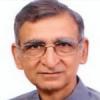
They kill people and then hold govt responsible: Ramanath Rai hits back at BJP

coastaldigest.com news network
March 5, 2018

Mangaluru, Mar 5: Retorting to the Bharatiya Janata Party’s so called Jana Suraksha Yatra, Dakshina Kannada district in-charge minister B Ramanath Rai said that the saffronists are known for disrupting peace and then taking political advantage of the situation. 

Addressing a media conference at the district Congress committee office in the city on Monday, the minister said that those who had directly involved in murders and communal violence in coastal districts of Karnataka are now holding chief minister Siddaramaiah-led Congress government for those murders. 

“BJP has no moral right to go on a Jana Suraksha Yatra because it is trying to create fear in the society. It has in fact taken to politics of violence in this region,” he charged.

"The murders occurring in the coastal Karnataka in an organised manner suggest that the Sangh Parivar is directly responsible for them. The Jana Suraksha Yatra is a ruse to mislead people. The aim of their Yatra is creating more communal disturbance," Mr Rai opined.

“In Bantwal taluk alone BJP and Sangh Parivar are responsible for five communal murders in last four years,” said Mr Rai, who represents Bantwal constituency in the legislative assembly.

Comments

Frustrated man 
 - 
Monday, 5 Mar 2018

They killing innocents and put blame on you. And police in your govt arrests other innocents. No difference between you and them. 

Add new comment

  • Coastaldigest.com reserves the right to delete or block any comments.
  • Coastaldigset.com is not responsible for its readers’ comments.
  • Comments that are abusive, incendiary or irrelevant are strictly prohibited.
  • Please use a genuine email ID and provide your name to avoid reject.
News Network
August 7,2020

Bengaluru, Aug 7: Amid the rising number of COVID-19 cases in Karnataka, the state's health department issued fresh guidelines for the disposal of bodies of COVID patients.

"Although an increased risk of COVID infection from a dead body to health workers or family members who follow standard precautions while handling the body is unlikely, the lack of scientific data requires the utmost care to avoid the inadvertent spread of COVID-19 during these times," the statement from the health department's press release read, emphasising on the dignity of the dead and the religious and cultural tradition.

The 23-page press release elaborated on guidelines regarding testing, handling of dead bodies and other specificities in relation to the management of COVID-19 bodies.

"Testing should not be insisted in every case of death, but only when they have a recorded history of influenza-like symptoms. The body should be handed over to the family members/ relatives in a dignified manner immediately after swab collection and hospitals should provide handouts with a list of dos and don'ts in English and Kannada laying down relevant information," the statement said.

It added, "At the mortuary, health care workers, mortuary staff and the family of the deceased body shall not come in direct contact with the dead body and must wear full personal protective equipment (PPE). If the family or relative are for any reason unable to cremate or bury the body, the local health authority shall arrange for the dignified last rites as per the religious traditions of the family."

Regarding autopsies (post mortem) on COVID-19 bodies, the state department said that they should be avoided, except in necessary circumstances.

The statement also gave detailed guidelines regarding the appropriate recording of COVID-19 deaths in line with the Indian Council of Medical Research (ICMR) guidelines.

Additionally, the health department made a statement about the admission procedure for COVID positive patients referred by other district administrations saying, "It is now mandatory for all the referrals from the BBMP admission and discharge of COVID positive patients to be done through the online COVID Hospital Bed Management System (CHBMS)."

The state's count of coronavirus cases was 1,51,449 in the past 24 hours.

So far, a total of 2,804 people have died due to COVID-19 in the state, while the average recovery rate in Karnataka is 49.3 per cent.

Comments

Add new comment

  • Coastaldigest.com reserves the right to delete or block any comments.
  • Coastaldigset.com is not responsible for its readers’ comments.
  • Comments that are abusive, incendiary or irrelevant are strictly prohibited.
  • Please use a genuine email ID and provide your name to avoid reject.
Ram Puniyani
June 29,2020

In Minneapolis, US an African American, George Floyd lost his life as the white policeman, Derek Chauvin, caught hold of him and put his knee on his neck. This is a technique developed by Israel police. For nine long minutes the knee of the while policeman was on the neck of George, who kept shouting, I can’t breathe.

Following this gruesome murder America erupted with protests, ‘Black lives matter’. The protestors were not just African Americans but also a large section of whites. Within US one police Chief apologized for the act of this. In a touching gesture of apology the police force came on its knees. This had reverberations in different parts of the World.

The act was the outcome of the remnants of the racial hatred against blacks by the whites. It is the hatred and the perceptions which are the roots of such acts of violence. What was also touching that the state of democracy in US is so deep that even the police apologized, the nation, whites and blacks, stood up as a sensitive collective against this violence.

US is not the only country where the brutal acts of violence torment the marginalized sections of society. In India there is a list of dalits, minorities and adivasis who are regularly subjected to such acts. But the reaction is very different. We have witnessed the case of Tabrez Ansari, who was tied to the pole by the mob and beaten ruthlessly. When he was taken to police station, police took enough time to take him to hospital and Tabrez died.

Mohsin Sheikh, a Pune techie was murdered by Hindu Rashtra Sena mob, the day Modi came to power in 2014. Afrazul was killed by Shambhulal Regar, videotaped the act released on social media. Regar believed that Muslims are indulging in love Jihad, so deserve such a fate. Mohammad Akhlaq is one among many names who were mob lynched on the issue of beef cow. The list can fill pages after pages.

Recently a young dalit boy was shot dead for the crime of entering a temple. In Una four dalits were stripped above waste and beaten mercilessly. Commenting on this act the Union Minister Ramvilas Paswan commented that it is a minor incident. Again the list of atrocities against dalits is long enough. The question is what Paswan is saying is the typical response to such gruesome murders and tortures. In US loss of one black life, created the democratic and humane response. In India there is a general silence in response to these atrocities. Some times after a good lapse of time, the Prime Minister will utter, ‘Mother Bharati has lost a son’. Most of the time victim is blamed. Some social groups raise their voice in some fora but by and large the deafening silence from the country is the norm.

India is regarded as the largest democracy. Democracy is the rule of law, and the ground on which the injustices are opposed. In America though the present President is insensitive person, but its institutions and processes of democratic articulations are strong. The institutions have deepened their roots and though prejudices may be guiding the actions of some of the officers like the killer of George, there are also police officers who can tell their President to shut up if he has nothing meaningful to say on the issue. The prejudices against Blacks may be prevalent and deep in character, still there are large average sections of society, who on the principles of ‘Black lives matter’. There are large sections of vocal population who can protest the violation of basic norms of democracy and humanism.

In India by contrast there are multiple reasons as to why the lives of Tabrez Ansari, Mohammad Akhlaq, Una dalit victims and their likes don’t matter. Though we claim that we are a democracy, insensitivity to injustices is on the rise. The strong propaganda against the people from margins has become so vicious during last few decades that any violence against them has become sort of a new normal. The large populace, though disturbed by such brutalities, is also fed the strong dose of biases against the victims. The communal forces have a great command over effective section of media and large section of social media, which generates Hate against these disadvantaged groups, thereby the response is muted, if at all.

As such also the process of deepening of our democracy has been weak. Democracy is a dynamic process; it’s not a fixed entity. Decades ago workers and dalits could protest for their rights. Now even if peasants make strong protests, dominant media presents it as blocking of traffic! How the roots of democracy are eroded and are visible in the form where the criticism of the ruling dispensation is labelled as anti National..

Our institutions have been eroded over a period of time, and these institutions coming to the rescue of the marginalized sections have been now become unthinkable. The outreach of communal, divisive ideology, the ideology which looks down on minorities, dalits and Adivasis has risen by leaps and bounds.

The democracy in India is gradually being turned in to a hollow shell, the rule of law being converted in to rule of an ideology, which does not have faith in Indian Constitution, which looks down upon pluralism and diversity of this country, which is more concerned for the privileges of the upper caste, rich and affluent. The crux of the matter is the weak nature of democracy, which was on way to become strong, but from decades of 1980s, as emotive issues took over, the strength of democracy started dwindling, and that’s when the murders of the types of George Floyd, become passé. One does complement the deeper roots of American democracy and its ability to protect the democratic institutions, which is not the case in India, where protests of the type, which were witnessed after George Floyd’s murder may be unthinkable, at least in the present times. 

Comments

Add new comment

  • Coastaldigest.com reserves the right to delete or block any comments.
  • Coastaldigset.com is not responsible for its readers’ comments.
  • Comments that are abusive, incendiary or irrelevant are strictly prohibited.
  • Please use a genuine email ID and provide your name to avoid reject.
Media Release
June 4,2020

Dr Soofi Anwar, Director Academics of University of Stirling RAK, UAE Campus, has achieved the prestigious professional recognition of Senior Fellow of the Higher Education Academy (HEA) UK. He has achieved this milestone through the Stirling Framework for Evidencing Learning and Teaching Enhancement (SFELTE), the Continuing Professional Development Framework (CPD) for learning and teaching at University of Stirling, Scotland, UK. 

He was recognized for this achievement on recently concluded virtual Learning & Teaching Conference-2020 organized by University of Stirling Campus in UK.  He has secured his Ph.D. in Management from University of Azteca, Mexico.

Dr. Soofi Anwar has over 20 years of experience in teaching and academic leadership at higher education level and has worked in leading universities in UAE, Bahrain and India. He was conferred the prestigious Middle East Education Leadership Award, as the Best Professor in Management-2018 in recognition of his academic excellence, exemplary leadership in higher education. Prior to his current role, he has worked on leadership position in Birla Institute of Technology Offshore Campus RAK.

He has completed his MBA from Dept. of Business Administration, Mangalore University in 1999 and his B. Com degree from Canara College Mangaluru.

He has published numerous research papers in management and in the area of teaching and learning in higher education in reputed academic journals and international conferences proceedings. He is a member of editorial board of two leading management journals and engaged in reviewing faculty research publications in the area of management and marketing. 

He is a son of Haji Abdul Khadar Kodijal and Mrs. Mariyamma from Konaje, Mangaluru.

Comments

Add new comment

  • Coastaldigest.com reserves the right to delete or block any comments.
  • Coastaldigset.com is not responsible for its readers’ comments.
  • Comments that are abusive, incendiary or irrelevant are strictly prohibited.
  • Please use a genuine email ID and provide your name to avoid reject.