



Those Who Have Aadhaar Must Link To PAN For I-T Returns, Says SC

June 9, 2017

New Delhi, Jun 9: The Supreme Court upheld the newly-inserted provision in the Income Tax Act mandating linking of the Aadhaar number with the Permanent Account Number (PAN) on Friday, but partially blocked its operation.aadhar
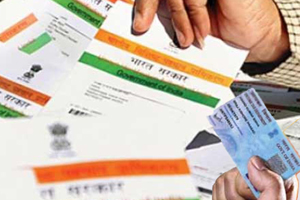
A bench of Justice A.K. Sikri and Justice Ashok Bhushan in their judgment held that those who already possess the Aadhaar number will have to link it with PAN, but it cannot be insisted upon in case of people not possessing it.

The bench said that those who have already applied for Aadhaar number but are yet to receive it would suffer no adverse consequences and their PAN cards would not be invalidated as this would have "serious consequences".

Section 139AA of the Income Tax Act, incorporated by way of the Finance Act 2017-2018, provides for the invalidisation of PAN if it is not linked to Aadhaar number.

Holding that the said provision was not violative of the Constitution's Article 14 (Right to Equality) and Article 19 (Right to freedom of speech and expression), Justice Sikri, pronouncing the judgment, said that the new provision may be effective prospectively and not retrospectively, and the transactions already undertaken in the past cannot be reopened.

The court also rejected the plea by the petitioners -- senior Communist Party of India leader Binoy Visman, Maj.Gen. S.G. Vombatkere (retd.) and Safai Karamchari Andolan convenor Bezwada Wilson that it should be voluntary and not mandatory.

Addressing repeated concerns of the petitioners about leakage of personal information of the citizens collected while enrolling them for Aadhaar number, the court said this concern needs to be addressed and asked the government to tighten the procedures to guard against this.

Holding that the court could not question the wisdom of legislature to enact a particular law, the bench said that issue raised before it was of seminal importance.

Referring to the right of human dignity as a facet of Article 21 raised by the petitioners while steering clear from raising the issue of privacy, the court said that these were overlapping and did not address them as a matter relating to privacy was pending before the Constitution Bench.

Citing "judicial discipline", the court said that the question whether privacy was a fundamental right is before a larger Constitution Bench.

The question whether privacy was a right was referred to the Constitution Bench on August 11, 2015, following conflicting judgments by the apex court on privacy.

While an eight-judge bench in 1954 and a six-judge bench in 1964 had held that privacy was not a fundamental right, subsequently in nearly 25 judgments by smaller benches, this view underwent change and it came to be recognised and cemented as a part of fundamental rights under Article 21.

Comments

Add new comment

  • Coastaldigest.com reserves the right to delete or block any comments.
  • Coastaldigset.com is not responsible for its readers’ comments.
  • Comments that are abusive, incendiary or irrelevant are strictly prohibited.
  • Please use a genuine email ID and provide your name to avoid reject.
News Network
May 15,2020

Mangaluru, May 15: Dakshina Kannada Superintendent of Police on Friday warned those who are opposing quarantine to either go for it or face legal action under Epidemic Diseases Act.

In a release here on Friday, Mr B M Laxmi Prasad said that schools and hostels have been identified for quarantining those who arrive from other states. Those, who return, will be quarantined in the respective Gram Panchayat/local bodies’ jurisdiction. The public should not panic over the quarantine facility.

The quarantine facility has been introduced in the interest of the general public. If anyone opposes or protests against such facility, then legal action will be initiated against them, he warned.

Comments

Add new comment

  • Coastaldigest.com reserves the right to delete or block any comments.
  • Coastaldigset.com is not responsible for its readers’ comments.
  • Comments that are abusive, incendiary or irrelevant are strictly prohibited.
  • Please use a genuine email ID and provide your name to avoid reject.
News Network
May 18,2020

Bengaluru, May 18: Former Karnataka Chief Minister Siddaramaiah has called a meeting of Congress Legislature Party (CLP) to discuss various issues related to coronavirus and "failures" of the state government in tackling the outbreak.

The meeting, which will be held on May 19 at 4 pm, will also discuss packages announced by the central and state government, the amendment to the APMC Act by the state cabinet and the cancellation of various schemes including Mathrushree and Santhwana scheme.

Earlier, Siddaramaiah had alleged that the Centre and Karnataka government failed in containing the coronavirus spread despite having enough time for preparations.

Meanwhile, the ongoing nationwide lockdown has been extended till May 31. 

Comments

Add new comment

  • Coastaldigest.com reserves the right to delete or block any comments.
  • Coastaldigset.com is not responsible for its readers’ comments.
  • Comments that are abusive, incendiary or irrelevant are strictly prohibited.
  • Please use a genuine email ID and provide your name to avoid reject.
News Network
April 29,2020

Washington, Apr 29: A US government panel on Tuesday called for India to be put on a religious freedom blacklist over a "drastic" downturn under Prime Minister Narendra Modi, triggering a sharp rebuttal from New Delhi.

The US Commission on International Religious Freedom recommends but does not set policy, and there is virtually no chance the State Department will follow its lead on India, an increasingly close US ally.

In an annual report, the bipartisan panel narrowly agreed that India should join the ranks of "countries of particular concern" that would be subject to sanctions if they do not improve their records.

"In 2019, religious freedom conditions in India experienced a drastic turn downward, with religious minorities under increasing assault," the report said.

It called on the United States to impose punitive measures, including visa bans, on Indian officials believed responsible and grant funding to civil society groups that monitor hate speech.

The commission said that Modi's Hindu nationalist government, which won a convincing election victory last year, "allowed violence against minorities and their houses of worship to continue with impunity, and also engaged in and tolerated hate speech and incitement to violence."

It pointed to comments by Home Minister Amit Shah, who notoriously referred to mostly Muslim migrants as "termites," and to a citizenship law that has triggered nationwide protests.

It also highlighted the revocation of the autonomy of Kashmir, which was India's only Muslim-majority state, and allegations that Delhi police turned a blind eye to mobs who attacked Muslim neighborhoods in February this year.

Coronavirus state-wise India update: Total number of confirmed cases, deaths on April 29

The Indian government, long irritated by the commission's comments, quickly rejected the report.

"Its biased and tendentious comments against India are not new. But on this occasion, its misrepresentation has reached new levels," foreign ministry spokesman Anurag Srivastava said.

"We regard it as an organization of particular concern and will treat it accordingly," he said in a statement.

The State Department designates nine "countries of particular concern" on religious freedom -- China, Eritrea, Iran, Myanmar, North Korea, Pakistan, Saudi Arabia, Tajikistan and Turkmenistan.

The commission asked that all nine countries remain on the list. In addition to India, it sought the inclusion of four more -- Nigeria, Russia, Syria and Vietnam.

Pakistan, India's historic rival, was added by the State Department in 2018 after years of appeals by the commission.

In its latest report, the commission said that Pakistan "continued to trend negatively," voicing alarm at forced conversions of Hindus and other minorities, abuse of blasphemy prosecutions and a ban on the Ahmadi sect calling itself Muslim.

India's citizenship law fast-tracks naturalization for minorities from neighbouring countries -- but not if they are Muslim.

Modi's government says it is not targeting Muslims but rather providing refuge to persecuted people and should be commended.

But critics consider it a watershed move by Modi to define the world's largest democracy as a Hindu nation and chip away at independent India's founding principle of secularism.

Tony Perkins, the commission's chair, called the law a "tipping point" and voiced concern about a registry in the northeastern state of Assam, under which 1.9 million people failed to produce documentation to prove that they were Indian citizens before 1971 when mostly Muslim migrants flowed in during Bangladesh's bloody war of independence.

"The intentions of the national leaders are to bring this about throughout the entire country," Perkins told an online news conference.

"You could potentially have 100 million people, mostly Muslims, left stateless because of their religion. That would be, obviously, an international issue," said Perkins, a Christian activist known for his opposition to gay rights who is close to President Donald Trump's administration.

Three of the nine commissioners dissented -- including another prominent Christian conservative, Gary Bauer, who voiced alarm about India's direction but said the ally could not be likened to non-democracies such as China.

"I am deeply concerned that this public denunciation risks exactly the opposite outcome than the one we all desire," Bauer said.

Trump, who called for a ban on Muslim immigration to the US when he ran for president, hailed Modi on a February visit to New Delhi.

Comments

Add new comment

  • Coastaldigest.com reserves the right to delete or block any comments.
  • Coastaldigset.com is not responsible for its readers’ comments.
  • Comments that are abusive, incendiary or irrelevant are strictly prohibited.
  • Please use a genuine email ID and provide your name to avoid reject.