Thumbay Moideen among top Indian leaders in Arab world listed by Forbes

[email protected] (CD Network)
May 4, 2016

Dubai, May 4: Thumbay Moideen, the Founder President of Thumbay Group has been included in the Forbes' list of Top Indian Leaders in the Arab World' for the second consecutive year.

moideen 1

The prestigious award was presented to Mr. Moideen at a glittering event held at Waldorf Astoria, Dubai Palm Jumeirah at 7:00 pm on Tuesday, 3rd May 2016, to celebrate the most successful and groundbreaking Indian leaders in the Middle East.

His Excellency Mr. T.P. Seetharam, Ambassador of India to the UAE delivered the keynote speech at the event. This year's event was the fourth edition of the awards which recognize the most powerful and prosperous of Indian heads in the Arab world who have set up some of the most successful companies in the Middle East, using their vision, ingenuity and formidable leadership to bring capital to their shareholders and investment into the economies of the region.

moideen 2

After receiving the award, Mr. Moideen said that he was honored to figure in the list of top Indian leaders in the Arab world for the second consecutive year. “We take pride in these honors and recognitions, which motivate us further and add more responsibility to what we do.

While thanking Forbes for this prestigious recognition, I also thank my dedicated team for their hard work and commitment. I would also like to acknowledge the support of the Rulers of this great country, for their constant encouragement for our endeavors,” he added.

Founded by Mr. Thumbay Moideen in 1998, Thumbay Group is an international business conglomerate headquartered in DIFC - Dubai. The Group has successfully diversified into 14 different sectors in a span of just 17 years.

The Group today employs more than 3500 people, which will rise to 6000 with the completion of ongoing projects in the next two years, and to 15,000 employees by the end of 2020.

The Gulf Medical University, the leading private medical university in the region owned and operated by Thumbay Group has a student cohort of over 73 nationalities and faculty and staff from over 22 countries.

The Thumbay chain of hospitals, the constituent teaching hospitals of the Gulf Medical University, is one of the largest healthcare services provider in the UAE, serving over 2500 patients daily, from more than 175 countries. Apart from being an acknowledged leader in the health sector, Thumbay Group operates a reputed pharmacy chain, diagnostic centres, multi-brand retail outlets, world-class wellness centres, a prestigious chain of coffee shops, restaurants, popular health & lifestyle publication, etc.

moideen 3

Comments

Yaseen Baig
 - 
Wednesday, 4 May 2016

Congratulations sir, we are proud of you.

Yaseen Baig
 - 
Wednesday, 4 May 2016

Congratulations sir, we are proud of you.

Yaseen Baig
 - 
Wednesday, 4 May 2016

Congratulations sir, we are proud of you.

Prof.M.Abubake…
 - 
Wednesday, 4 May 2016

CONGRATULATIONS SIR.

AbdurRahman Thumbe
 - 
Wednesday, 4 May 2016

Entire Thumbe village is proud of you sir.

Add new comment

  • Coastaldigest.com reserves the right to delete or block any comments.
  • Coastaldigset.com is not responsible for its readers’ comments.
  • Comments that are abusive, incendiary or irrelevant are strictly prohibited.
  • Please use a genuine email ID and provide your name to avoid reject.
coastaldigest.com news network
August 2,2020

Bengaluru, Aug 2: All the seven Airports in Karnataka have seen poor traffic even after the restoration of domestic flight services post covid-19 lockdown. Interestingly, Mangaluru International Airport, the second biggest in the state, has slipped to third position in number of number of passengers and flights. 

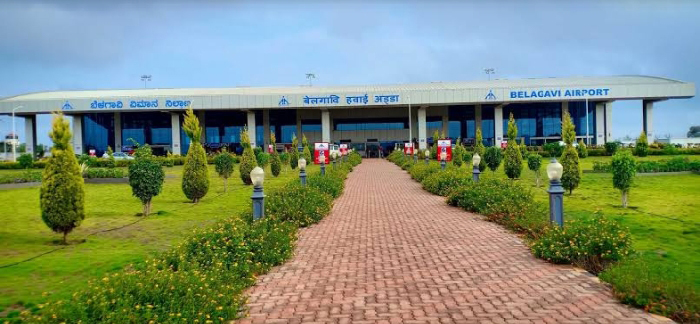
Of all the seven airports in State-- Bengaluru, Mangaluru, Hubballi, Belagavi, Mysuru, Kalaburagi and Vijaynagara (Hosapete)-- it was the Sambra (Belagavi) airport which saw the highest number of passengers and flights after Bengaluru. 

According to Airports Authority of India report released on their website recently, the Sambra airport outperformed the Managluru international airport in June. 

As many 10,224 passengers travelled to or from Belagavi airport in June, whereas Mangaluru airport saw a footfall of only 8,608 passengers including 3,726 international and 4,882 domestic passengers. Belagavi airport handled 391 flights whereas Mangaluru airport handled 190 flights.

Even the Bengaluru international airport saw a decline in the number of passengers and flights in June. Only 3.69 lakh domestic and 10,654 international passengers arrived or departed from Kempegowda International Airport, Bengaluru in June as against 27.59 lakh total passengers in June 2019. 

Between April-June 2020 the Bengaluru airport saw only 4.54 lakh total passengers (domestic and international) as against 84.11 lakh total passenger during the same period last year. The number of flights to and from Bengaluru also saw a huge dip in June with only 731 international (2,582 in June 2019) and 4290 domestic (16,216 in June 2019) flights.

Though the Mysuru domestic airport handled a higher number of flights compared to last June, the number of passengers either arriving or departing saw a decline. Last year June 4,775 passengers travelled in 96 flights, whereas in June 2020 the airport handled 3,158 passengers and 330 flights.

Hubballi airport saw the least number of passengers or flights among the seven airports in Karnataka in June. It saw only 55 passengers either arriving or departing from the city's airport in 14 flights in the month of June. In the same month last year, Hubballi airport, which was third busiest before the pandemic, had facilitated 45,973 passengers and handled 604 flights.

Since April 2020 to June, the Hubballi airport has handled only 18 flights (as against 1,958 during the same period last year) and 122 passengers (1,50,416 between April-June 2019).

Comments

Add new comment

  • Coastaldigest.com reserves the right to delete or block any comments.
  • Coastaldigset.com is not responsible for its readers’ comments.
  • Comments that are abusive, incendiary or irrelevant are strictly prohibited.
  • Please use a genuine email ID and provide your name to avoid reject.
Ram Puniyani
February 4,2020

As democracy is seeping in slowly all over the world, there is an organization which is monitoring the degree of democracy in the individual countries, The Economist Intelligence Unit. As such in each country there are diverse factors which on one hand work to deepen it, while others weaken it. Overall there is a march from theoretical democracy to substantive one. The substantive democracy will herald not just the formal equality, freedom and community feeling in the country but will be founded on the substantive quality of these values. In India while the introduction of modern education, transport, communication laid the backdrop of beginning of the process, the direction towards deepening of the process begins with Mahatma Gandhi when he led the non-cooperation movement in 1920, in which average people participated. The movement of freedom for India went on to become the ‘greatest ever mass movement’ in the World.

The approval and standards for democracy were enshrined in Indian Constitution, which begins ‘We the people of India’, and was adopted on 26th January 1950. With this Constitution and the policies adopted by Nehru the process of democratization started seeping further, the dreaded Emergency in 1975, which was lifted later restored democratic freedoms in some degree. This process of democratisation is facing an opposition since the decade of 1990s after the launch of Ram Temple agitation, and has seen the further erosion with BJP led Government coming to power in 2014. The state has been proactively attacking civil liberties, pluralism and participative political culture with democracy becoming flawed in a serious way. And this is what got reflected in the slipping of India by ten places, to 51st, in 2019. On the index of democracy India slipped down from the score of 7.23 to 6.90. The impact of sectarian BJP politics is writ on the state of the nation, country.

Ironically this lowering of score has come at a time when the popular protests, the deepening of democracy has been given a boost and is picking up with the Shaheen Bagh protests. The protest which began in Shaheen Bagh, Delhi in the backdrop of this Government getting the Citizenship amendment Bill getting converted into an act and mercilessly attacking the students of Jamia Milia Islamia, Aligarh Muslim University along with high handed approach in Jamia Nagar and neighbouring areas.  From 15th December 2019, the laudable protest is on.

It is interesting to note that the lead in this protest has been taken by the Muslim women, from the Burqa-Hijab clad to ‘not looking Muslim’ women and was joined by students and youth from all the communities, and later by the people from all the communities. Interestingly this time around this Muslim women initiated protest has contrast from all the protests which earlier had begun by Muslims. The protests opposing Shah Bano Judgment, the protests opposing entry of women in Haji Ali, the protests opposing the Government move to abolish triple Talaq. So far the maulanas from top were initiating the protests, with beard and skull cap dominating the marches and protests. The protests were by and large for protecting Sharia, Islam and were restricted to Muslim community participating.

This time around while Narendra Modi pronounced that ‘protesters can be identified by their clothes’, those who can be identified by their external appearance are greatly outnumbered by all those identified or not identified by their appearance.

The protests are not to save Islam or any other religion but to protect Indian Constitution. The slogans are structured around ‘Defence of democracy and Indian Constitution’. The theme slogans are not Allahu Akbar’ or Nara-E-Tadbeer’ but around preamble of Indian Constitution. The lead songs have come to be Faiz Ahmad Faiz’s ‘Hum Dekhenge’, a protest against Zia Ul Haq’s attempts to crush democracy in the name of religion. Another leading protest song is from Varun Grover, ‘Tanashah Aayenge…Hum Kagaz nahin Dikhayenge’, a call to civil disobedience against the CAA-NRC exercise and characterising the dictatorial nature of the current ruling regime.

While BJP was telling us that primary problem of Muslim women is Triple talaq, the Muslim women led movements has articulated that primary problem is the very threat to Muslim community. All other communities, cutting across religious lines, those below poverty line, those landless and shelter less people also see that if the citizenship of Muslims can be threatened because of lack of some papers, they will be not far behind in the victimization process being unleashed by this Government.

While CAA-NRC has acted as the precipitating factor, the policies of Modi regime, starting from failure to fulfil the tall promises of bringing back black money, the cruel impact of demonetisation, the rising process of commodities, the rising unemployment, the divisive policies of the ruling dispensation are the base on which these protest movements are standing. The spread of the protest movement, spontaneous but having similar message is remarkable. Shaheen Bagh is no more just a physical space; it’s a symbol of resistance against the divisive policies, against the policies which are increasing the sufferings of poor workers, the farmers and the average sections of society.

What is clear is that as identity issues, emotive issues like Ram Temple, Cow Beef, Love Jihad and Ghar Wapasi aimed to divide the society, Shaheen Bagh is uniting the society like never before. The democratisation process which faced erosion is getting a boost through people coming together around the Preamble of Indian Constitution, singing of Jan Gan Man, waving of tricolour and upholding the national icons like Gandhi, Bhagat Singh, Ambedkar and Maulana Azad. One can feel the sentiments which built India; one can see the courage of people to protect what India’s freedom movement and Indian Constitution gave them.

Surely the communal forces are spreading canards and falsehood against the protests. As such these protests which is a solid foundation of our democracy. The spontaneity of the movement is a strength which needs to be channelized to uphold Indian Constitution and democratic ethos of our beloved country.


Comments

Add new comment

  • Coastaldigest.com reserves the right to delete or block any comments.
  • Coastaldigset.com is not responsible for its readers’ comments.
  • Comments that are abusive, incendiary or irrelevant are strictly prohibited.
  • Please use a genuine email ID and provide your name to avoid reject.
coastaldigest.com news network
June 10,2020

Udupi, June 10: Philanthropist and businessman Haji P K Abuswalih Kannangar passed away today at a private hospital in Mangaluru. He was 85. 

He was a resident of Pombathota house at Kannangar in Kaup taluk of Udupi district.

He was the proprietor of Green Store in Mudigere for past five decades and also was a coffee planter. 

He had served as the president of Muhayaddin Juma Masjid at Mudigere Hand-post in the past. He was also former president of Mudigere Taluk unit of Indian National Congress.

Comments

Add new comment

  • Coastaldigest.com reserves the right to delete or block any comments.
  • Coastaldigset.com is not responsible for its readers’ comments.
  • Comments that are abusive, incendiary or irrelevant are strictly prohibited.
  • Please use a genuine email ID and provide your name to avoid reject.