


Tipu Sultan’s legacy continues to endure

[email protected] (The Hindu)
May 5, 2015

Mysuru, May 5: The death of Tipu Sultan on May 4, 1799, brought to close a fascinating chapter in Indian history; but his legacy continues to endure notwithstanding the controversy surrounding him in the present times.
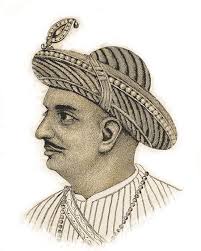
tipuThough it has been 216 years since the death of Tipu Sultan, historians are unanimous in pointing out that his initiatives in the socio-economic fields have continued to endure, though these were fast fading from public memory.

The expansion of sericulture in the Mysuru region has been credited to Tipu Sultan. The Mysore Gazetteer notes that Tipu secured the know-how from Bengal and introduced mulberry cultivation in 21 centres. In what could be described as a step to encourage local industry, he banned the export of cotton to ensure that local weavers were not denied the raw material.

The introduction of sugarcane on a large scale has also been attributed to Tipu Sultan for which he secured the assistance of Chinese experts, according to the Gazetteer, which notes that quality sugar and candy were produced with their assistance.

During the pause between the various wars he fought, Tipu Sultan took some reformatory measures including a ban on alcohol. Cattle being closely linked to agriculture, Tipu Sultan encouraged livestock breeding. Hallikar and Amrit Mahal breeds are believed to be products of this initiative.

Rocket technology

Modern day historians also credit Hyder Ali and Tipu Sultan with an elementary knowledge of missile or rocket technology, which is considered to be the prototype of present-day missiles and rockets. They were put to full use during the wars with the British. Some of these have been preserved at the Royal Artillery Museum in England. The paintings at Dariya Daulat, the summer palace of Tipu Sultan at Srirangapatana, are a clear indicator of the use of these missiles in wars.

A courtyard within the ruins of the Srirangapatana Fort was identified by archaeologists as the possible spot from where the missiles were launched. Scientists from DRDO have also visited the spot on many occasions in a bid to ensure better maintenance. Plans for a ‘missile museum’ are yet to materialise.

Rally, tributes mark death anniversary

Rallies were held and tributes offered to mark the 216th death anniversary of eighteenth-c entury warrior king Tipu Sultan in Mysuru and his erstwhile capital Srirangapatna near here on Monday.

While Congress leaders gathered at the office of the Mysuru City (District) Congress Committee on Sayyaji Rao Road in the morning and garlanded the portrait of Tipu Sultan on his ‘Shaheed Diwas’, large number of people paid tributes to Tipu Sultan at Srirangapatna.

Rallyists led by Kannada protagonist Vatal Nagaraj, who arrived in Srirangapatna from Bengaluru, offered floral tributes at the site near the northern fringe of the fort, where Tipu’s body was found in 1799, and Gumbaz, where his mortal remains are buried. Activists of the Kannada Chaluvali Vatal Paksha (KCVP) from Bengaluru accompanied Mr. Nagaraj, who made stop-overs at Ramanagaram and Mandya enroute to Srirangapatna to address the public.

Mr. Nagaraj said the commitment of Tipu Sultan, known as the Tiger of Mysore, was so strong for his land that he even pledged his children for the sake of the country and its people. “A statue of Tipu should be built in front of Parliament. I will speak to the Lok Sabha Speaker and leaders of other political parties in this regard,” he said.

Mr. Nagaraj also demanded that the road leading to Devanahalli, Tipu’s birthplace, be named after him. He also urged the State Government to build a memorial for Tipu Sultan on 500 acres of land in Bengaluru.

Comments

Sandra
 - 
Friday, 4 Mar 2016

Thanks for finally writing about >Tipu Sultan’s legacy continues to endure

Add new comment

  • Coastaldigest.com reserves the right to delete or block any comments.
  • Coastaldigset.com is not responsible for its readers’ comments.
  • Comments that are abusive, incendiary or irrelevant are strictly prohibited.
  • Please use a genuine email ID and provide your name to avoid reject.
coastaldigest.com news network
January 22,2020

Mangaluru, Jan 22: Eminent industrialist Dr Mohammed Yusuf has been elected the chairperson of the Karnataka State Board of Auqaf. 

10 members of the Board cast their votes in the election held to the top post today at its office in the city. While Dr Yusuf, who was backed by the Congress, secured six votes, K N M Shafi Sa’adi, who was backed by the BJP, secured only 4 votes.

Addressing reporters, Dr Yusuf said that there was 1.32 lakh acres of Wakf land at the time of Independence. A large number of the properties were lost under various laws, including the Inam Land Abolition Act.

Flanked by Congress MLA Tanveer Sait and Minorities Welfare Dept secretary A B Ibrahim, Dr Yusuf vowed to strive hard to make the Board an example for the entire country. 

74-year-old Dr Yusuf had held the post more than once in the past. A veterinarian, Dr Yusuf had quit the government job and set up business in Bengaluru and Dubai decades ago and has earned considerable success.

Comments

Add new comment

  • Coastaldigest.com reserves the right to delete or block any comments.
  • Coastaldigset.com is not responsible for its readers’ comments.
  • Comments that are abusive, incendiary or irrelevant are strictly prohibited.
  • Please use a genuine email ID and provide your name to avoid reject.
News Network
July 28,2020

Hounde, Jul 28: Coronavirus and its restrictions are pushing already hungry communities over the edge, killing an estimated 10,000 more young children a month as meager farms are cut off from markets and villages are isolated from food and medical aid, the United Nations warned Monday.

In the call to action shared with The Associated Press ahead of publication, four UN agencies warned that growing malnutrition would have long-term consequences, transforming individual tragedies into a generational catastrophe.

Hunger is already stalking Haboue Solange Boue, an infant from Burkina Faso who lost half her former body weight of 5.5 pounds (2.5 kilograms) in just a month. Coronavirus restrictions closed the markets, and her family sold fewer vegetables. Her mother was too malnourished to nurse.

“My child,” Danssanin Lanizou whispered, choking back tears as she unwrapped a blanket to reveal her baby's protruding ribs.

More than 550,000 additional children each month are being struck by what is called wasting, according to the UN — malnutrition that manifests in spindly limbs and distended bellies. Over a year, that's up 6.7 million from last year's total of 47 million. Wasting and stunting can permanently damage children physically and mentally.

“The food security effects of the COVID crisis are going to reflect many years from now,” said Dr. Francesco Branca, the WHO head of nutrition. “There is going to be a societal effect.”

From Latin America to South Asia to sub-Saharan Africa, more poor families than ever are staring down a future without enough food.

In April, World Food Program head David Beasley warned that the coronavirus economy would cause global famines “of biblical proportions” this year. There are different stages of what is known as food insecurity; famine is officially declared when, along with other measures, 30% of the population suffers from wasting.

The World Food Program estimated in February that one Venezuelan in three was already going hungry, as inflation rendered salaries nearly worthless and forced millions to flee abroad. Then the virus arrived.

“Every day we receive a malnourished child,” said Dr. Francisco Nieto, who works in a hospital in the border state of Tachira.

In May, Nieto recalled, after two months of quarantine, 18-month-old twins arrived with bodies bloated from malnutrition. The children's mother was jobless and living with her own mother. She told the doctor she fed them only a simple drink made with boiled bananas.

“Not even a cracker? Some chicken?” he asked.

“Nothing,” the children's grandmother responded. By the time the doctor saw them, it was too late: One boy died eight days later.

The leaders of four international agencies — the World Health Organization, UNICEF, the World Food Program and the Food and Agriculture Organization — have called for at least dollar 2.4 billion immediately to address global hunger.

But even more than lack of money, restrictions on movement have prevented families from seeking treatment, said Victor Aguayo, the head of UNICEF's nutrition program.

“By having schools closed, by having primary health care services disrupted, by having nutritional programs dysfunctional, we are also creating harm,” Aguayo said. He cited as an example the near-global suspension of Vitamin A supplements, which are a crucial way to bolster developing immune systems.

In Afghanistan, movement restrictions prevent families from bringing their malnourished children to hospitals for food and aid just when they need it most. The Indira Gandhi hospital in the capital, Kabul, has seen only three or four malnourished children, said specialist Nematullah Amiri. Last year, there were 10 times as many.

Because the children don't come in, there's no way to know for certain the scale of the problem, but a recent study by Johns Hopkins University indicated an additional 13,000 Afghans younger than 5 could die.

Afghanistan is now in a red zone of hunger, with severe childhood malnutrition spiking from 690,000 in January to 780,000 — a 13% increase, according to UNICEF.

In Yemen, restrictions on movement have blocked aid distribution, along with the stalling of salaries and price hikes. The Arab world's poorest country is suffering further from a fall in remittances and a drop in funding from humanitarian agencies.

Yemen is now on the brink of famine, according to the Famine Early Warning Systems Network, which uses surveys, satellite data and weather mapping to pinpoint places most in need.

Some of the worst hunger still occurs in sub-Saharan Africa. In Sudan, 9.6 million people live from one meal to the next — a 65% increase from the same time last year.

Lockdowns across Sudanese provinces, as around the world, have dried up work and incomes for millions. With inflation hitting 136%, prices for basic goods have more than tripled.

“It has never been easy but now we are starving, eating grass, weeds, just plants from the earth,” said Ibrahim Youssef, director of the Kalma camp for internally displaced people in war-ravaged south Darfur.

Adam Haroun, an official in the Krinding camp in west Darfur, recorded nine deaths linked with malnutrition, otherwise a rare occurrence, over the past two months — five newborns and four older adults, he said.

Before the pandemic and lockdown, the Abdullah family ate three meals a day, sometimes with bread, or they'd add butter to porridge. Now they are down to just one meal of “millet porridge” — water mixed with grain. Zakaria Yehia Abdullah, a farmer now at Krinding, said the hunger is showing “in my children's faces.”

“I don't have the basics I need to survive,” said the 67-year-old, who who hasn't worked the fields since April. “That means the 10 people counting on me can't survive either.”

Comments

Add new comment

  • Coastaldigest.com reserves the right to delete or block any comments.
  • Coastaldigset.com is not responsible for its readers’ comments.
  • Comments that are abusive, incendiary or irrelevant are strictly prohibited.
  • Please use a genuine email ID and provide your name to avoid reject.
coastaldigest.com news network
July 31,2020

Mangaluru, July 31: Coronavirus related deaths in Dakshina Kannada continued to surge, with the district administration recording five more fatalities in a day, thus taking the tally to 155.

The district has recorded multiple deaths every day from July 1 to 31. A majority of the deaths are due to comorbid conditions.

Among the five deaths reported today, a 47-year-old man from Mangaluru, was admitted to private hospital on July 30, and breathed his last on the same day. He was suffering from ARDS, Type 1 respiratory failure, COPD, Type II DM, HTN and died due to cardiac arrest.

Another patient was a 75-year-old man from Bantwal, who was admitted to a private hospital on July 23, and passed away on July 30. He was suffering from acute coronary syndrome, pneumonia (ARDS), metabolic encephalopathy, acute kidney injury, systemic hypertension, and type 2 diabetes mellitus.

The third patient was a 63-year-old man from Mangaluru, who was admitted to a private hospital on July 18, and passed away on July 30. He was suffering from ARDS, septic shock, renal failure, and secondary bacterial infection.

The fourth patient was an 88-year-old woman from Davanagere, who was admitted to a private hospital on July 9, and passed away on July 30. She was suffering from septic shock, and secondary bacterial infection.

The fifth patient was a 75-year-old man from Mangaluru. He was admitted to Wenlock hospital on July 15, and passed away on July 30. He was suffering from refractory ARDS, septic shock, renal failure, acute coronary event, arrhythmias, pulmonary thromboembolism, and hemoperitoneum.

The district administration said that though the above patients contracted coronavirus, the exact cause of their deaths is being investigated by a team of experts and their report is awaited.

On the other hand, Dakshina Kannada district recorded a total of 204 fresh cases, taking the tally to 5,713. Among the 204 new cases are 75 primary contacts, 63 with influenza-like illness (ILI), and 14 with severe acute respiratory illness (SARI). As many as 52 cases are under investigation. As many as 70 patients were discharged on Friday from Wenlock as well as private hospitals.

As per the district health bulletin, a total of 40,706 samples have been tested so far and 34,993 out of them have tested negative. Among the 5,713 positive cases reported in the district, only 2,929 are currently active. As many as 2,631 persons have recovered and been discharged.

Comments

Add new comment

  • Coastaldigest.com reserves the right to delete or block any comments.
  • Coastaldigset.com is not responsible for its readers’ comments.
  • Comments that are abusive, incendiary or irrelevant are strictly prohibited.
  • Please use a genuine email ID and provide your name to avoid reject.