


Tipu Sultan’s legacy continues to endure

[email protected] (The Hindu)
May 5, 2015

Mysuru, May 5: The death of Tipu Sultan on May 4, 1799, brought to close a fascinating chapter in Indian history; but his legacy continues to endure notwithstanding the controversy surrounding him in the present times.
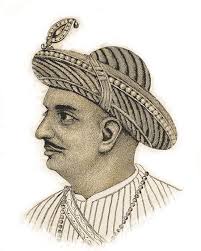
tipuThough it has been 216 years since the death of Tipu Sultan, historians are unanimous in pointing out that his initiatives in the socio-economic fields have continued to endure, though these were fast fading from public memory.

The expansion of sericulture in the Mysuru region has been credited to Tipu Sultan. The Mysore Gazetteer notes that Tipu secured the know-how from Bengal and introduced mulberry cultivation in 21 centres. In what could be described as a step to encourage local industry, he banned the export of cotton to ensure that local weavers were not denied the raw material.

The introduction of sugarcane on a large scale has also been attributed to Tipu Sultan for which he secured the assistance of Chinese experts, according to the Gazetteer, which notes that quality sugar and candy were produced with their assistance.

During the pause between the various wars he fought, Tipu Sultan took some reformatory measures including a ban on alcohol. Cattle being closely linked to agriculture, Tipu Sultan encouraged livestock breeding. Hallikar and Amrit Mahal breeds are believed to be products of this initiative.

Rocket technology

Modern day historians also credit Hyder Ali and Tipu Sultan with an elementary knowledge of missile or rocket technology, which is considered to be the prototype of present-day missiles and rockets. They were put to full use during the wars with the British. Some of these have been preserved at the Royal Artillery Museum in England. The paintings at Dariya Daulat, the summer palace of Tipu Sultan at Srirangapatana, are a clear indicator of the use of these missiles in wars.

A courtyard within the ruins of the Srirangapatana Fort was identified by archaeologists as the possible spot from where the missiles were launched. Scientists from DRDO have also visited the spot on many occasions in a bid to ensure better maintenance. Plans for a ‘missile museum’ are yet to materialise.

Rally, tributes mark death anniversary

Rallies were held and tributes offered to mark the 216th death anniversary of eighteenth-c entury warrior king Tipu Sultan in Mysuru and his erstwhile capital Srirangapatna near here on Monday.

While Congress leaders gathered at the office of the Mysuru City (District) Congress Committee on Sayyaji Rao Road in the morning and garlanded the portrait of Tipu Sultan on his ‘Shaheed Diwas’, large number of people paid tributes to Tipu Sultan at Srirangapatna.

Rallyists led by Kannada protagonist Vatal Nagaraj, who arrived in Srirangapatna from Bengaluru, offered floral tributes at the site near the northern fringe of the fort, where Tipu’s body was found in 1799, and Gumbaz, where his mortal remains are buried. Activists of the Kannada Chaluvali Vatal Paksha (KCVP) from Bengaluru accompanied Mr. Nagaraj, who made stop-overs at Ramanagaram and Mandya enroute to Srirangapatna to address the public.

Mr. Nagaraj said the commitment of Tipu Sultan, known as the Tiger of Mysore, was so strong for his land that he even pledged his children for the sake of the country and its people. “A statue of Tipu should be built in front of Parliament. I will speak to the Lok Sabha Speaker and leaders of other political parties in this regard,” he said.

Mr. Nagaraj also demanded that the road leading to Devanahalli, Tipu’s birthplace, be named after him. He also urged the State Government to build a memorial for Tipu Sultan on 500 acres of land in Bengaluru.

Comments

Sandra
 - 
Friday, 4 Mar 2016

Thanks for finally writing about >Tipu Sultan’s legacy continues to endure

Add new comment

  • Coastaldigest.com reserves the right to delete or block any comments.
  • Coastaldigset.com is not responsible for its readers’ comments.
  • Comments that are abusive, incendiary or irrelevant are strictly prohibited.
  • Please use a genuine email ID and provide your name to avoid reject.
coastaldigest.com news network
June 9,2020

Bengaluru, Jun 9: The total number of positive COVID-19 cases in Karnataka rose to 5,921 on Tuesday after the state reported two deaths and 161 new cases of the virus.

"Two deaths and 161 new COVID-19 positive cases reported from yesterday 5 pm till today at 5 pm, taking the total number of positive cases to 5,921," said Karnataka Health Department.

The toll in the state is presently at 66.

While 164 patients have been discharged today, the number of discharged patients so far is 2,605. The active cases in the state stands at 3,248.

Among the new cases, Yadgir contributed highest (61), followed by Bengaluru Urban (29) and Dakshina Kannada (23). Udupi did not report any new case. More details to follow.

Comments

Add new comment

  • Coastaldigest.com reserves the right to delete or block any comments.
  • Coastaldigset.com is not responsible for its readers’ comments.
  • Comments that are abusive, incendiary or irrelevant are strictly prohibited.
  • Please use a genuine email ID and provide your name to avoid reject.
News Network
March 28,2020

Bengaluru, Mar 28: Sun Tsu, in 'The Art of War' speaks of a skilful general who can subdue his enemy without any fighting. This constitutes the ultimate triumph which is referred to as stratagem. Today, we would need one such when we are faced with the '21-day corona challenge' for India.
Nearly four weeks back, Dr Jyothsna Rao, Dr Gururaj Rao and I sat across the OPD in the afternoon at HCG Bengaluru discussing our ongoing cancer immunology research. While on this topic, we drifted into the discussion on the coronavirus. During this engaging discussion, we wondered the similarity of the enigma between the virus and cancer. I paused to ask Dr Jyothsna and Dr Guru - how we wish we could do something against this virus.
Dr Jyothsna is a PhD from NCBS and had worked under Dr Ralph Steinman, physician and researcher from Rockefeller University, who won the Nobel Prize for his discovery of the dendritic cell and its role in adaptive immunity in 2011. Dr Gururaj is a molecular and cell biologist who did his PhD at the Chapel Hill, University of North Carolina and is the Director of iCrest.
Jyothsna while hearing our perplexing conversation on the covid intervened, "Yes, surely. I think we should take a break from cancer and focus on the innate and adaptive immunity role in COVID-19."
Thus began this sincere attempt to relook the human immune system from the eyes of the COVID-19.
We have 10 types of immune cells at the least which are widely dispersed in millions across the body. When our body is invaded by a foreign organism (bacteria, fungi or virus), these cells work with each other to destroy the invader.
Now, the question is - how do the immune cells talk to each other? They use small-molecule substances called cytokines (cyto means cells; kine means movement). There are many cytokines that are involved in work on the immune system. The most relevant for viruses are interferons.
Interferons (IFN) as the name reflects have an ability to interfere with the viral activity and stop their multiplication. These specialised signal proteins are released by our cells in response to a viral attack to forewarn other cells. They help build the antiviral proteins within the cells to kill the virus as it tries to invade the new cells.
Historically, interferons are a group of cytokines known to be potent antiviral agents against viruses and a hallmark cytokine induced by the host upon viral infections. Interferons possess unique immunoregulatory activities and are signature cytokines released by (TH1) T immune cells, which are crucial in viral infections.
As the outbreak of COVID-19 grapples us, an urgent need for finding strategies to combat the virus is growing. Coronaviruses (CoVs) are a group of RNA viruses. In patients infected with coronavirus, it was indicated that the activation of the IFN does not occur until 48 hours post-infection. Thus the delayed IFN-related antiviral response by the healthy cells leads to coronavirus evade the immune response.
Numerous studies have presented the success in defeating CoVs by the direct administration of IFNs. In a combination as a concoction, it was shown to synergistically inhibit the virus replication in vitro.
Moreover, it is understood that the earlier induction of IFNs in children although they have a less developed immune system could be the reason behind the children being least affected.
The key to success in reducing the disease fatality might be the stimulation of the immune responses to trigger IFN production at the very early stages of the disease, which might be done through the administration of IFN. Despite the evidence for the efficacy of IFNs in treating CoV-induced infections, the proper dosing and ideal timing for such interventions needs to be verified in clinical trials.
For the later stages of the diseases in advance stages where patients are on ventilator and have developed respiratory distress, we propose to utilise the mesenchymal cells derived from donor bone marrow that have been known to treat acute respiratory syndrome. Mesenchymal cells are known to possess anti-inflammatory activity and thus used often in autoimmune diseases.
With this scientific background, we have activated T cells from healthy donors, in a cGMP facility at iCrest - HCG hospital with an enriched cocktail of cytokines rich in Interferons. Injections of this cocktail we believe will result in a surge of cytokines in the body of the infected person and will boost his ability to fight the virus in the early phases. We are in the initial phases of this study and hope to be ready in the coming weeks with meaningful data on its potential utility.
Currently, it awaits government approvals (Union and state) and we have applied to central drugs authority for their initial evaluation and further directions.
As my Guru often expounded the philosophy of 'Seva' - the goal of education is knowledge, the end goal of knowledge is service. In this attempt to serve our fellow humans at this brink of unprecedented crisis, medical fraternity stands with you and promises to do our best for your safety.
We assure to exhaust every bit of our spirit in this fight against coronavirus. We have lost the sight of shores and travelled thus far, but that is the mandatory first step to cross the ocean. Are we going to succeed in this battle, is something only time will answer. 

Comments

Add new comment

  • Coastaldigest.com reserves the right to delete or block any comments.
  • Coastaldigset.com is not responsible for its readers’ comments.
  • Comments that are abusive, incendiary or irrelevant are strictly prohibited.
  • Please use a genuine email ID and provide your name to avoid reject.
News Network
August 4,2020

Bengaluru, Aug 4: The Central Crime Branch-Bengaluru conducted raids at 35 locations in Hennur and Banaswadi areas on Tuesday morning and arrested seven foreign nationals without valid passports and visas.

The Crime Branch also recovered fake currency during the raid, which is currently underway, informed the police.

"Central Crime Branch-Bengaluru conducted raids at 35 locations in Hennur and Banaswadi area today morning and arrested seven foreign nationals without valid passports and visa, fake currency also recovered," Sandeep Patil, Joint Commissioner of Police, Crime, Bengaluru said.

Comments

Add new comment

  • Coastaldigest.com reserves the right to delete or block any comments.
  • Coastaldigset.com is not responsible for its readers’ comments.
  • Comments that are abusive, incendiary or irrelevant are strictly prohibited.
  • Please use a genuine email ID and provide your name to avoid reject.