Tragedy strikes family as 5 kids drown while taking bath in river

[email protected] (CD Network)
May 28, 2016

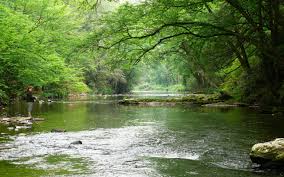
Kasargod, May 28: In a gut-wrenching tragedy, five children drowned in Chamathachal River in Payyavur near Kannur on Saturday. One child was rescued by locals.

riverThe victims have been identified as Orija (13) daughter of Salin in Akkamparambu, Thirur and his son Safan (7), Manik (13), son of Salin's brother Benoy, Ayal (7), daughter of Joseph Kuttikkattil and his son Akhil (5).

The incident took place around 4 pm when the six children went to take bath in the river at Thirur area. The victims, which included two girls, were said to be cousins.

Though the local residents took the victims to the hospital they could not be saved. The victims were reportedly relatives and two of them were brothers.

Condoling the deaths of the children K.C. Joseph MLA said that the local government should list out such dangerous spots near the water bodies and place identification boards near such spots.

The bodies of the victims have been shifted to Pariyaram medical college hospital.

Comments

 - 
Wednesday, 22 Nov 2017

Diane Arbus had begun to push the boundaries of documentary photography with her images of
people on the edges of society, and Donovan was pushing the
boundaries of fashion photography. This is where you can find clips
from all of your favorite E. He Tweets at least 10 times
a day and follows about 116,240 users.

Add new comment

  • Coastaldigest.com reserves the right to delete or block any comments.
  • Coastaldigset.com is not responsible for its readers’ comments.
  • Comments that are abusive, incendiary or irrelevant are strictly prohibited.
  • Please use a genuine email ID and provide your name to avoid reject.
News Network
April 13,2020

Mangaluru, Apr 13: Struck by the boredom of lockdown imposed to curb the spread of coronavirus, a 17-year old was caught on Sunday trying to sneak his friend out of his apartment complex by stuffing him inside a suitcase, police said.

"A minor, aged 17-years-old, a resident of Orchid Apartment, Balmatta invited his friend, a resident of Motisham Apartment, Pandeshwar to stay with him on April 11, Saturday," said PS Harsha, the Commissioner of Police, Mangaluru.

The friend wanted to return back to his apartment in Pandeshwar the next day but due to strict security put in place, he got inside a large trolley suitcase. Security guards at the apartment, however, got suspicious when they noticed the wobbling of the suitcase that was being wheeled to the gate.

Based on the suspicions, security personnel alerted the residents of the building and opened the suitcase from which they were shocked to find the boy's friend stepping out. Police were later called in.

A case has been registered against the two minors at the East Police station, police said adding that the duo will be produced before the Juvenile Justice Board.

Comments

Add new comment

  • Coastaldigest.com reserves the right to delete or block any comments.
  • Coastaldigset.com is not responsible for its readers’ comments.
  • Comments that are abusive, incendiary or irrelevant are strictly prohibited.
  • Please use a genuine email ID and provide your name to avoid reject.
News Network
April 19,2020

Kasaragod, Apr 19: Kasaragod, Kerala's COVID-19 hotspot, is the only district in the southern state lacking adequate health infrastructure.

In spite of treating the highest number of COVID-19 patients in the state with meagre infrastructural facilities and even without the support of a medical college in the north Kerala district, no deaths have been reported due to coronavirus.

The state health department views the performance of M Kunhiraman and his team, consisting of Janardhana Naik and Krishna Naik, at the General hospital in Kasaragod as a success story.

"Not only did they control the situation quickly with minimum infrastructure, they also started turning out a large number of negative cases within a few weeks and creditably ensured zero mortality.

This can be showcased as a best global model," Chairman of the Information Education and Communication (IEC) Committee and Project Director Kerala State Aids Control Society, R Ramesh said.

Recalling the ordeal, Janardhana Naik said his first major challenge was the physical examination of a patient with suspected COVID-19.

"Even with the PPE kit, nobody knew how effective they were and it took a whole 30 minutes to wear them properly.

But as time passed, we got accustomed to it," he said.

The traditional method of dealing with a patient involved knowing his or her history, observation and physical examination.

For hundreds of years, the hands-on body approach has been the soul of the doctor-patient relationship -- taking the pulse, tapping on and listening to the chest, feeling lumps.

With the onset of COVID-19 all that has changed.

"In fact, the whole exercise was fraught with grave risks because everything connected with COVID-19 was new.

Doctors have to keep a distance even though the physical examination wearing a Personal Protective Equipment (PPE) is difficult.

Sounds from the body are inaudible, vision is blurred through the smog-covered goggles and a stethoscope seldom has any use," Janardhana Naik said.

It was from March 15 that the hospital started receiving COVID-19 patients, primarily from Dubai.

By the time the first person came, the hospital was ready for him.

Soon, patient numbers began to swell and in a couple of weeks they reached about 91.

From then on, it was teamwork.

Committees were formed for each and every task, including the help desk, IT, treatment, medical board, training, food, waste disposal and data maintenance.

Initially, patients had many misgivings about the hospital.

"Some were disillusioned and even aggressive. Some were not happy with the facilities the hospital had to offer.

But gradually through good treatment and counselling by a psychiatrist, who visited the hospital on alternate days, the confidence and mood of the patients changed and they became friendly with the staff," Naik elaborated.

Counselling was also given to the concerned family members of the patients.

Besides treatment, the medical staff had to spend a considerable amount of time clearing the doubts of patients.

When they got discharged some patients insisted on seeing the faces of the medical staff, who till then were anonymous entities covered from head to toe.

Some even wanted to take selfies with them.

However, the medical team politely turned down their requests and preferred to remain hidden in their work attires.

The mood of the patients also rubbed off on the doctors and hospital staff.

All the physicians and hospital staff are now more confident of dealing with contagious diseases after treating COVID-19 patients.

"Our previous experience of treating H1N1, Chikungunya and Dengue cases helped us a lot.

Words of encouragement from the Health Minister K K Shailaja, Health Principal Secretary Dr Rajan N Khobragade and Health Services Director Dr Sarita R L gave us the impetus to build up confidence.

Moreover, the field health workers did a wonderful job in containing the viral spread," Naik added.

As the number of coronavirus cases rose, the state government on April 5 deputed a 26-member medical team from Thiruvananthapuram to set up a COVID-19 hospital in the district.

They turned a block of the under construction Government Medical College as a hospital-like facility, setting up a 200 bed facility to treat coronavirus patients.


Comments

Add new comment

  • Coastaldigest.com reserves the right to delete or block any comments.
  • Coastaldigset.com is not responsible for its readers’ comments.
  • Comments that are abusive, incendiary or irrelevant are strictly prohibited.
  • Please use a genuine email ID and provide your name to avoid reject.
coastaldigest.com news network
February 23,2020

Mangalore University has been participating in the campus bird count a sub-event of ‘Great backyard bird count’ (GBBC) organized by Bird Count India for the past 5 years. This year, CBC was held from 14th to 17th February of 2020 across various campuses in India.

This year the four days event was successfully ended up with the sightings of 103 species of birds from various locations across the campus spread on 300 acres. In this Black Drongo, Black Kite, Brahminy Kite, Common Iora, Green Wabler, Purple-rumed Sunbird, Red-whiskered Bulbul, White-cheeked Barbet, Jungle Babbler and Plum headed parakeets were the common birds, and also observed House Crow with nest and nestlings, Indian Robin nest with eggs, Bronzed Drongo constructing the nest and Shikra mating and carrying nesting materials.  Whereas Yellow-billed Babbler is rare in the campus, Ashy Drongo, Barn Swallow, Booted Eagle, Grey Wagtail, Indian Pitta etc. were migratory birds, Grey-headed Bulbul (Near Threatened bird), Rufous Babbler and Grey-headed Bulbul were Western Ghats Endemics  and Brown Wood Owl, Barn Owl, Spotted Owlet, Nightjars (Savanna, Indian and Jerdon’s) and Sri Lanka Frogmouth were nocturnal birds. Blue-eared Kingfisher Grey-bellied Cuckoo which was very rare and new additions to avian list of the campus.

In the first year (2016) of Mangalore University’s CBC recorded 77 species, in 2017 recorded 95 species, in 2018 recorded 110 species and in 2019 recorded 107 species of birds. However some of the common species like Rose ringed parakeets, Blue tailed bee-eater, Nilgiri Flowerpecker and Indian roller etc., sighted last year were not seen this year. But with 2 new additions from this CBC, the checklist of Mangalore University Campus has been updated with a total of 141 species.

This event was coordinated by Vivek Hasyagar from the Department of Applied Zoology and Maxim Rodrigues from the Department of Marine Geology. Survey trails were led by more than 60 students and research scholars from various Departments of Mangalore University includes Applied Zoology, Biosciences, Microbiology, Botany, Physics, Chemistry and Material Science.  In addition, some enthusiastic participants from St. Aloysius College had involved in identifying the birds around the campus.

Quote:

Wild/planned fire affects negatively on the existing ecologically sensitive areas in and around the campus especially in lateritic grasslands. Because many insectivorous birds are dependent on these lateritic grassland habitats for their food and breeding grounds for many ground dwelling birds like Yellow wattled lapwing, Red wattled lapwing, Indian Robin and Barred buttonquails. Conserving these habitats will be helpful in protecting these birds.

Quotes from the participants: “The Campus Bird Count 2020 at Mangalore University was an experience of its own kind. Observing birds in their natural habitat gave me new perspective of viewing them not only as another living being, but as equals, or even of higher intelligence. The Campus Bird Count is an important step towards documenting bird life year after year, and creating awareness amongst youngsters, so that proper conservation steps can be taken to protect them from human interference”.

-Jyotsna Dessai ( 1 M.Sc Zoology)

Comments

Add new comment

  • Coastaldigest.com reserves the right to delete or block any comments.
  • Coastaldigset.com is not responsible for its readers’ comments.
  • Comments that are abusive, incendiary or irrelevant are strictly prohibited.
  • Please use a genuine email ID and provide your name to avoid reject.