Transit One: Heralding the concept of theme-based malls in Mangaluru

[email protected] (Business Desk)
February 19, 2016

Mangaluru: Whether we like it or not malls have become more of a norm than an exception in India. The only visible change is that from big multilevel malls the focus is slowly shifting towards smaller and theme based malls, which no doubt is a welcome development.
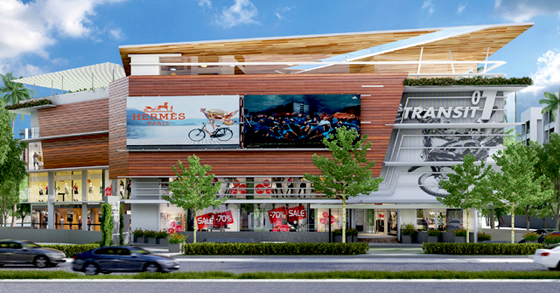
transit1

Mangaluru is also fast catching up with this trend thanks to the initiative taken by Ecologic Habitats LLP, a well-known real estate firm comprising of a team having over 30 years of experience in the field. This real estate leader, in association with Caizer group, is all set to introduce a theme based transit mall aptly named "Transit One." 'Stop, recharge, restart', is the basic concept theme of the mall coming up on NH66, opposite Unity Hall, just a stone's throw from the busy and upcoming Thokkottu junction. Being a transit mall its aim is to target both the local populace as well as the travellers passing through this busy highway.

Come November and the foundation for this smaller version of the mall, the first of its kind in Mangaluru, will be laid and the ground plus four storey mall will be ready in the next 2 ½ years. Slated to come up in a 40 cent land adjacent to NH-66, Transit One will be an affordable and egalitarian mall catering to the local demographic unlike the existing huge malls that cater only to a section of the society. Nevertheless, the promoters say "This is basically a stop-over mall where we want travellers to stop, recharge and restart. Size-wise it is not a huge mall but it will have everything that malls have. We will set new benchmarks with many firsts to the credit of this mall. We want to give shops to every category of people - those who come with an investment of Rs 10 lakhs to 10 crores. We believe that the design, location, structure, elevation and the novel concept of the project will make Transit One the most attractive destination of Mangaluru with unlimited opportunities to unwind and skylark.

Potential for Growth

The setting of this upcoming mall on Thokkottu Junction, which forms the gateway to Mangaluru City, is the USP of this project apart from its inimitable structure. It is designed to proclaim its enigmatic presence with an irresistible allure. The promoters have done a neat homework before venturing into this project. Needless to say, the project is the outcome of painstaking research of almost 1 ½ years which convinced the promoters that it is the best location and concept and they decided to take a plunge. One of the partners of the project says "We have conducted a detailed survey and found that this area forms the nerve centre of the city from its gateway Thokkottu, that connects the city to Deralakatte, the IT and education hub of Mangaluru. This hub houses about 7000 medical students, 1000 doctors, about 3000 IT honchos and more than 5000 NRI households. Sadly, the surrounding area does not boast of infrastructure, development and other entertainment facilities to cater to this vast segment of young, enthusiastic, passionate and cosmopolitan crowd. Our research has clearly shown that this area has enormous potential for growth. The fact that 40% of the shops are already sold clearly demonstrates that people have realised the strategic importance of this location."

Being a premium education and health care centre Mangaluru city has vast potential for growth to emerge as an important business, industrial and IT hub. It has been recognised as one among the 36 Tier II cities in India to emerge as magnets for investment in infrastructure. Smart city naturally means better infrastructure, amenities and enhanced lifestyle. Though mall culture per se is not a novelty in India the compact nature of this themed mall will be an added attraction as it has many others firsts to its credit.

Many Firsts

"Transit One" will be the first mall in the region to offer an exclusive floor for smaller vanilla store units.. The promoters point out "The sky-high cost of space in malls is a major concern for many and therefore we want to address this concern of people through this mall." It will be the first mall with External LCD display, the mall boasts of the primacy given to landscape design and it is the first mall built by making a comprehensive study of the requirements of the customers. They have roped in the services of India's leading Landscape Architect Rohit Marol of Terra Firma for its unique landscape. The suburbs are best suited for theme-based malls and having realised the great potential for development of this area the promoters have made valiant efforts to source the best names in varied fields.

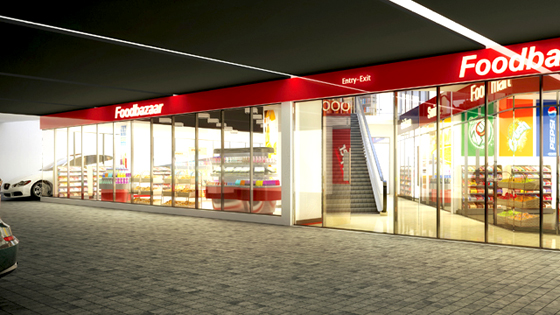
Another salient feature of the project is the drive-in super market, a novelty in a mall, which makes shopping convenient and pleasurable, unlike the present set up in most malls which makes it a tedious process. The entire 1st, 2nd and 3rd floor is set aside for branded and semi- branded shops in varied categories of products. Having taken care of the shopping needs of both the travellers and domestic customers the promoters have also given utmost priority to the visitors gastronomic needs. Because in this age where eating out become fashionable, one cannot think of modern malls without food courts. Promoters of malls usually consider fine-dining restaurants as a quintessential factor to their overall tenant mix and they have been proved right. This is largely because these restaurants help give the exclusivity factor to the malls and also due to the fact that food is a major footfall driver towards malls attracting horde of families to savour variegated and choicest of cuisine available here. So much so, today malls are becoming repository of cost effective multi-cuisine food and entertainment destinations.

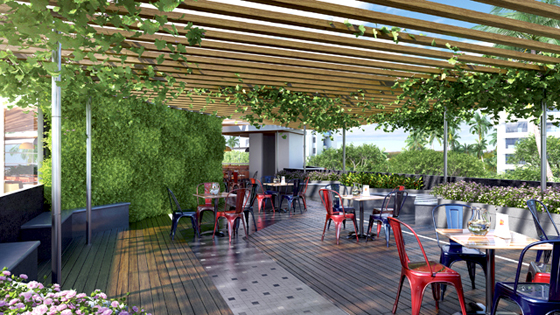
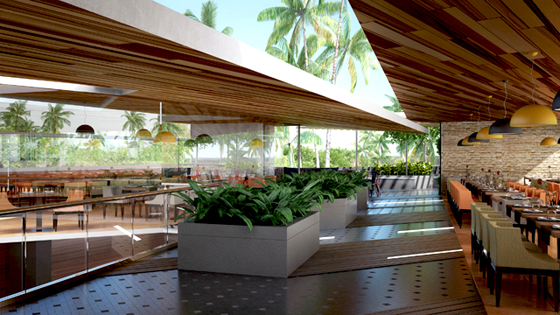
It is therefore, natural that the promoters of Transit One have given top priority to eating-out to allure customers. This mall will boast of food courts - a 3 star restaurant, a landscaped terrace roof top club and a multi-cuisine restaurant to cater to the cosmopolitan crowd of the surrounding area.

"Transit One" is conceived as a one-stop-shop mall wherein customers don't have to go anywhere else scouting for other shops to buy anything and everything they require. "We want this mall to cater to the needs of all segments of the society. Even if a woman wants to buy a bindi or a ribbon or a student wants to buy a book or pencil they don't have to look for another shop. We believe and endorse the idea of Small world of large Happiness", the promoters point out.

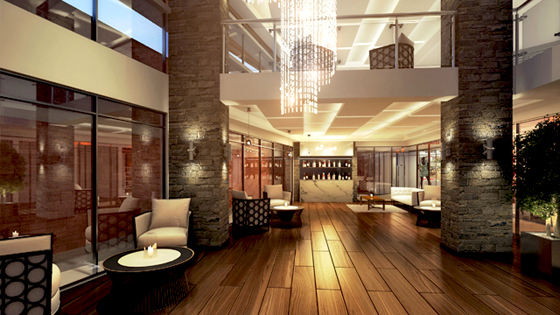
The promoters have sourced the services of the best names in the real estate field, to come out with this theme-based destination mall appealing in its design, eye-catching with its structure, attractive in its overall appearance and spacious and comfortable to stroll around with its theme-designed spaces. The services of leading Mangaluru based Architects 2PKM have been sought for this project. The combined effort of all trusted professionals in the project team is sure to give the true value for money to the investors.

Transit One has everything that is going to make it the most eagerly awaited mall of Mangaluru. True to its name the promoters want the travellers and the local crowd to experience the on-going journey of life via Transit One. With this mall going to become a reality soon, the young, educated and yuppie crowd of the academic hub of Mangaluru and people of Mangaluru can certainly look forward to for a place that is sure to come close to their dream destination.
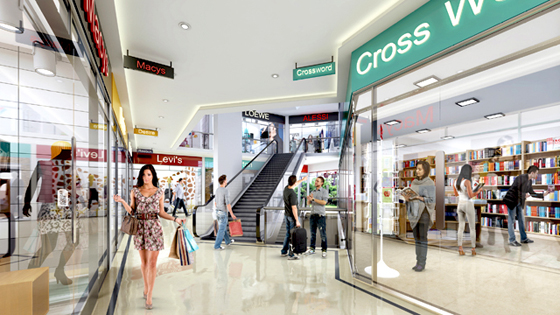
transit2

Branded and semi-branded shops

transit3

Mini vanilla shops

transit4

Three-star restaurant

transit5

Landscaped food court

transit6

Open terrace restaurant

transit7

Exclusive supermarket


To book your space or for more details contact

Ecologic Habitats

Crystal Arc, 3rd Floor, Balmatta Road,

KMC Mercara Trunk Rd,

Hampankatta, Mangaluru, Karnataka 575002

Ph: 91 97410 70000 / 91 93420 71729

91 824 6066 666

Email : [email protected]

Website:http://www.ecologichabitats.com/commercialspace.html

Comments

Embee
 - 
Friday, 19 Feb 2016

Its all one thing to make things look good... mangalore real estate is just slumping... doesnt look like a great investment

Saleem Khan
 - 
Friday, 19 Feb 2016

Small Theatre should be there, Anyways good try all the best for your future endeavors.inshallah

Sameer Mohammed
 - 
Friday, 19 Feb 2016

will this beat Moideen Bava's Forum Fiza Mall ? Looks like this will be greenery Mall of Mangalore.

Farooq
 - 
Friday, 19 Feb 2016

wow wonderful themes based mall, i want to visit once, Tell me when its gone a complete.

Add new comment

  • Coastaldigest.com reserves the right to delete or block any comments.
  • Coastaldigset.com is not responsible for its readers’ comments.
  • Comments that are abusive, incendiary or irrelevant are strictly prohibited.
  • Please use a genuine email ID and provide your name to avoid reject.
News Network
March 28,2020

Bengaluru, Mar 28: Sun Tsu, in 'The Art of War' speaks of a skilful general who can subdue his enemy without any fighting. This constitutes the ultimate triumph which is referred to as stratagem. Today, we would need one such when we are faced with the '21-day corona challenge' for India.
Nearly four weeks back, Dr Jyothsna Rao, Dr Gururaj Rao and I sat across the OPD in the afternoon at HCG Bengaluru discussing our ongoing cancer immunology research. While on this topic, we drifted into the discussion on the coronavirus. During this engaging discussion, we wondered the similarity of the enigma between the virus and cancer. I paused to ask Dr Jyothsna and Dr Guru - how we wish we could do something against this virus.
Dr Jyothsna is a PhD from NCBS and had worked under Dr Ralph Steinman, physician and researcher from Rockefeller University, who won the Nobel Prize for his discovery of the dendritic cell and its role in adaptive immunity in 2011. Dr Gururaj is a molecular and cell biologist who did his PhD at the Chapel Hill, University of North Carolina and is the Director of iCrest.
Jyothsna while hearing our perplexing conversation on the covid intervened, "Yes, surely. I think we should take a break from cancer and focus on the innate and adaptive immunity role in COVID-19."
Thus began this sincere attempt to relook the human immune system from the eyes of the COVID-19.
We have 10 types of immune cells at the least which are widely dispersed in millions across the body. When our body is invaded by a foreign organism (bacteria, fungi or virus), these cells work with each other to destroy the invader.
Now, the question is - how do the immune cells talk to each other? They use small-molecule substances called cytokines (cyto means cells; kine means movement). There are many cytokines that are involved in work on the immune system. The most relevant for viruses are interferons.
Interferons (IFN) as the name reflects have an ability to interfere with the viral activity and stop their multiplication. These specialised signal proteins are released by our cells in response to a viral attack to forewarn other cells. They help build the antiviral proteins within the cells to kill the virus as it tries to invade the new cells.
Historically, interferons are a group of cytokines known to be potent antiviral agents against viruses and a hallmark cytokine induced by the host upon viral infections. Interferons possess unique immunoregulatory activities and are signature cytokines released by (TH1) T immune cells, which are crucial in viral infections.
As the outbreak of COVID-19 grapples us, an urgent need for finding strategies to combat the virus is growing. Coronaviruses (CoVs) are a group of RNA viruses. In patients infected with coronavirus, it was indicated that the activation of the IFN does not occur until 48 hours post-infection. Thus the delayed IFN-related antiviral response by the healthy cells leads to coronavirus evade the immune response.
Numerous studies have presented the success in defeating CoVs by the direct administration of IFNs. In a combination as a concoction, it was shown to synergistically inhibit the virus replication in vitro.
Moreover, it is understood that the earlier induction of IFNs in children although they have a less developed immune system could be the reason behind the children being least affected.
The key to success in reducing the disease fatality might be the stimulation of the immune responses to trigger IFN production at the very early stages of the disease, which might be done through the administration of IFN. Despite the evidence for the efficacy of IFNs in treating CoV-induced infections, the proper dosing and ideal timing for such interventions needs to be verified in clinical trials.
For the later stages of the diseases in advance stages where patients are on ventilator and have developed respiratory distress, we propose to utilise the mesenchymal cells derived from donor bone marrow that have been known to treat acute respiratory syndrome. Mesenchymal cells are known to possess anti-inflammatory activity and thus used often in autoimmune diseases.
With this scientific background, we have activated T cells from healthy donors, in a cGMP facility at iCrest - HCG hospital with an enriched cocktail of cytokines rich in Interferons. Injections of this cocktail we believe will result in a surge of cytokines in the body of the infected person and will boost his ability to fight the virus in the early phases. We are in the initial phases of this study and hope to be ready in the coming weeks with meaningful data on its potential utility.
Currently, it awaits government approvals (Union and state) and we have applied to central drugs authority for their initial evaluation and further directions.
As my Guru often expounded the philosophy of 'Seva' - the goal of education is knowledge, the end goal of knowledge is service. In this attempt to serve our fellow humans at this brink of unprecedented crisis, medical fraternity stands with you and promises to do our best for your safety.
We assure to exhaust every bit of our spirit in this fight against coronavirus. We have lost the sight of shores and travelled thus far, but that is the mandatory first step to cross the ocean. Are we going to succeed in this battle, is something only time will answer. 

Comments

Add new comment

  • Coastaldigest.com reserves the right to delete or block any comments.
  • Coastaldigset.com is not responsible for its readers’ comments.
  • Comments that are abusive, incendiary or irrelevant are strictly prohibited.
  • Please use a genuine email ID and provide your name to avoid reject.
Media Release
February 14,2020

Veteran journalist P. Sainath has said that the nation is in a crisis. And this crisis is not limited to just the rural area. It has become a national crisis at various areas such as agriculture, education, economy, job creation etc.

He was delivering the endowment lecture on the topic ‘Indian democracy at the post-liberalization and post-truth era’ at Media Manthan 2020 organized by the PG department of journalism and mass communication at St Aloysius College (Autonomous). 

Mr Sainath said that the many policies adopted in the 90s led to India becoming unusually unequal. Referring to the speech Ambedkar had made at the Constituent Assembly while handing over the draft of the Constitution, Mr Sainath said, “Ambedkar had warned about the weakness of Indian democracy that liberty without equality allows the supremacy of a few over the multitude. Liberty, equality and fraternity must be kept together as we cannot have one without the other.” 

Mr Sainath stated that the agrarian crisis was no longer about the loss of productivity, employment or about farmer suicide; it was a societal, civilizational crisis. Commenting on the lopsided policies such as cow-slaughter ban, he explained how cow slaughter ban had adversely affected many industries due to their interdependency. While Muslims who slaughtered cows were rendered helpless, the cattle traders who were mostly OBCs lost their earnings as the cattle prices crashed. An important industry like Kolhapur sandals industry in Maharashtra went bankrupt as a result of the cow slaughter ban in Maharashtra. He said the policymakers had no idea how the rural industries were interconnected. Demonetisation too devastated the rural economy as 98 percent of rural transactions happen through cash. 

Mr Sainath also spoke about the crisis of inequality which affects the Dalits and the Adivasis far more than anyone else as 90 percent of the rural households take home less than Rs 10,000/- per month. “Women are yet another group whose labour is never counted in the gross domestic product. Women and girls globally do unpaid work which amounts to about 12.5 billion working hours per year. Monetarily speaking, this is worth 10.8 trillion dollars,” Mr Sainath added. 

Speaking about the crisis of jobs Mr Sainath said that major companies were laying off employees just to create more profits for the investors and the adoption of artificial intelligence in the industry would further destroy millions of jobs.

Rector of St Aloysius College Institutions Fr Dionysius Vaz SJ, Principal Dr (Fr) Praveen Martis SJ, HOD of Journalism and Mass Communication department Dr (Fr) Melwyn Pinto SJ were present.

‘Veerappan and Vijay Mallya’s business models are interesting!’

Addressing the gathering during his endowment lecture on Friday, Mr Sainath made an interesting comment on the so called ‘revenue model’. “Whenever I visit IIMs and IITs for lectures on my PARI project, the students there ask me what my revenue model for my project is. I tell them that I do not have a revenue model. In fact, journalism does not begin with a revenue model. Gandhiji, Ambedkar, Bhagat Singh were all great journalists. But they did not have a revenue model,” Mr Sainath said.

On a lighter note, he said that the best revenue model that he liked was that of forest brigand Veerappan and liquor baron Vijay Mallya. “Veerappan ruled the forest for forty years and from the top ministers to the villagers he could dictate terms and liver royally. Similarly, Mallya’s revenue model was to steal the banks and run away abroad and live like a king,” Mr Sainath added.

Journalism is not and can never be a business. It is a calling, he opined. While newspaper can be a business, television can be a business, journalism per se cannot be reduced to a business. “Unfortunately today, journalists are recruited on a contract basis and they have no bargaining power; and there are no unions to fight for their cause. Hence, they are at the mercy of the corporate media houses for their survival and are made to write stories that cannot be called journalism,” Mr Sainath said.

Answering a question as to the pressures he faced as a journalist, he said that external pressures from the government or others could be very well handled. It is the internal pressures from once own media house that journalists find it difficult to manage.


Comments

Add new comment

  • Coastaldigest.com reserves the right to delete or block any comments.
  • Coastaldigset.com is not responsible for its readers’ comments.
  • Comments that are abusive, incendiary or irrelevant are strictly prohibited.
  • Please use a genuine email ID and provide your name to avoid reject.
News Network
July 29,2020

Bengaluru Jul 29: There will be a centralised system in place in Karnataka to classify asymptomatic, symptomatic and mild symptomatic persons and recommend treatment based on the severity of the cases, said Medical Education Minister Dr K Sudhakar on Tuesday here.

"Various existing apps related to COVID-19 will be brought under one platform to get real-time information which will assist in strategising allocation of hospitals/beds to the needy. This will probably remove the delay in bed allocation and treatment which is being faced now. The patients will get all information in one phone call," Dr Sudhakar said.

Sudhakar spoke with a team of experts from the government and Infosys.

Referring to a company by name Step 1, which is providing such services in Delhi and Madhya Pradesh, the Minister said that a similar system will be implemented in the state as well.

"This company is having a team of doctors and nurses which is guiding the people whether they need hospital treatment or home isolation after they are tested positive for COVID-19. More than 70 per cent of the positive cases are being asymptomatic or mildly symptomatic and are advised to go for home isolation," the minister said.

"The load on the hospitals is reduced and severe cases can be administered proper treatment. Infosys co-ordinates with the government to provide technical support for this system," Dr Sudhakar added.

Earlier during the day, the minister held a video conference with the heads of private medical colleges to review COVID preparedness.
The government has already passed guidelines to allocate 50 per cent of hospital beds for COVID patients.

Comments

Add new comment

  • Coastaldigest.com reserves the right to delete or block any comments.
  • Coastaldigset.com is not responsible for its readers’ comments.
  • Comments that are abusive, incendiary or irrelevant are strictly prohibited.
  • Please use a genuine email ID and provide your name to avoid reject.