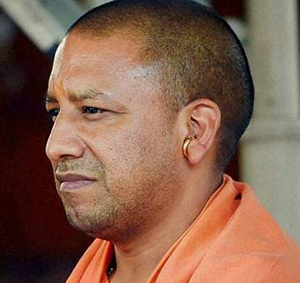
Tribal woman files case against Yogi for sharing her nude pic on social media

Agencies
June 21, 2017

New Delhi, Jun 21: A tribal woman in Assam's Biswanath district has filed a case against Uttar Pradesh Chief Minister Yogi Aditynath and Assam Lok Sabha MP Ram Prasad Sarma for sharing her nude photo on social media.yogi

The photograph was taken 10 years ago during a protest in Guwahati.

Laxmi Orang has filed a complaint in the court of sub-divisional judicial magistrate under various sections of the Indian Penal Code (IPC) the Information Technology Act.

"Yogi Adityanath, without knowing any fact, commented in the social media that the rally was on behalf of the BJP and the Congress workers attacked it," Orang said referring to her participating in an agitation in Guwahati in 2007.

"When Prime Minister Narendra Modi is campaigning for Beti Bachao, Beti Padhao at the same time his party Chief Minister (Adityanath) is doing this type of work. Is this democracy?" she questioned.

Want justice for her: MP Ram Prasad Sarma

When contacted, Sarma said "it (the stripping) was a fact and a true incident during that time. I shared it so that people know that an unfortunate girl was a victim and no justice has been given to her till now.

"I have not given any comment with the shared post," Sarma said adding he had asked Assam Chief Minister Sarbananda Sonowal a few days ago to reopen her case so that she gets justice.

Comments

Stranger
 - 
Wednesday, 21 Jun 2017

Ella Kalla Swamigalu...........
Showing public one face and other face is bathroom....
All from Goondaism party... ie. RSS/BJP

zinga
 - 
Thursday, 22 Jun 2017

oddu olage haakbegu intha ... thu ivana janmakke

Add new comment

  • Coastaldigest.com reserves the right to delete or block any comments.
  • Coastaldigset.com is not responsible for its readers’ comments.
  • Comments that are abusive, incendiary or irrelevant are strictly prohibited.
  • Please use a genuine email ID and provide your name to avoid reject.
News Network
March 28,2020

Bengaluru, Mar 28: Sun Tsu, in 'The Art of War' speaks of a skilful general who can subdue his enemy without any fighting. This constitutes the ultimate triumph which is referred to as stratagem. Today, we would need one such when we are faced with the '21-day corona challenge' for India.
Nearly four weeks back, Dr Jyothsna Rao, Dr Gururaj Rao and I sat across the OPD in the afternoon at HCG Bengaluru discussing our ongoing cancer immunology research. While on this topic, we drifted into the discussion on the coronavirus. During this engaging discussion, we wondered the similarity of the enigma between the virus and cancer. I paused to ask Dr Jyothsna and Dr Guru - how we wish we could do something against this virus.
Dr Jyothsna is a PhD from NCBS and had worked under Dr Ralph Steinman, physician and researcher from Rockefeller University, who won the Nobel Prize for his discovery of the dendritic cell and its role in adaptive immunity in 2011. Dr Gururaj is a molecular and cell biologist who did his PhD at the Chapel Hill, University of North Carolina and is the Director of iCrest.
Jyothsna while hearing our perplexing conversation on the covid intervened, "Yes, surely. I think we should take a break from cancer and focus on the innate and adaptive immunity role in COVID-19."
Thus began this sincere attempt to relook the human immune system from the eyes of the COVID-19.
We have 10 types of immune cells at the least which are widely dispersed in millions across the body. When our body is invaded by a foreign organism (bacteria, fungi or virus), these cells work with each other to destroy the invader.
Now, the question is - how do the immune cells talk to each other? They use small-molecule substances called cytokines (cyto means cells; kine means movement). There are many cytokines that are involved in work on the immune system. The most relevant for viruses are interferons.
Interferons (IFN) as the name reflects have an ability to interfere with the viral activity and stop their multiplication. These specialised signal proteins are released by our cells in response to a viral attack to forewarn other cells. They help build the antiviral proteins within the cells to kill the virus as it tries to invade the new cells.
Historically, interferons are a group of cytokines known to be potent antiviral agents against viruses and a hallmark cytokine induced by the host upon viral infections. Interferons possess unique immunoregulatory activities and are signature cytokines released by (TH1) T immune cells, which are crucial in viral infections.
As the outbreak of COVID-19 grapples us, an urgent need for finding strategies to combat the virus is growing. Coronaviruses (CoVs) are a group of RNA viruses. In patients infected with coronavirus, it was indicated that the activation of the IFN does not occur until 48 hours post-infection. Thus the delayed IFN-related antiviral response by the healthy cells leads to coronavirus evade the immune response.
Numerous studies have presented the success in defeating CoVs by the direct administration of IFNs. In a combination as a concoction, it was shown to synergistically inhibit the virus replication in vitro.
Moreover, it is understood that the earlier induction of IFNs in children although they have a less developed immune system could be the reason behind the children being least affected.
The key to success in reducing the disease fatality might be the stimulation of the immune responses to trigger IFN production at the very early stages of the disease, which might be done through the administration of IFN. Despite the evidence for the efficacy of IFNs in treating CoV-induced infections, the proper dosing and ideal timing for such interventions needs to be verified in clinical trials.
For the later stages of the diseases in advance stages where patients are on ventilator and have developed respiratory distress, we propose to utilise the mesenchymal cells derived from donor bone marrow that have been known to treat acute respiratory syndrome. Mesenchymal cells are known to possess anti-inflammatory activity and thus used often in autoimmune diseases.
With this scientific background, we have activated T cells from healthy donors, in a cGMP facility at iCrest - HCG hospital with an enriched cocktail of cytokines rich in Interferons. Injections of this cocktail we believe will result in a surge of cytokines in the body of the infected person and will boost his ability to fight the virus in the early phases. We are in the initial phases of this study and hope to be ready in the coming weeks with meaningful data on its potential utility.
Currently, it awaits government approvals (Union and state) and we have applied to central drugs authority for their initial evaluation and further directions.
As my Guru often expounded the philosophy of 'Seva' - the goal of education is knowledge, the end goal of knowledge is service. In this attempt to serve our fellow humans at this brink of unprecedented crisis, medical fraternity stands with you and promises to do our best for your safety.
We assure to exhaust every bit of our spirit in this fight against coronavirus. We have lost the sight of shores and travelled thus far, but that is the mandatory first step to cross the ocean. Are we going to succeed in this battle, is something only time will answer. 

Comments

Add new comment

  • Coastaldigest.com reserves the right to delete or block any comments.
  • Coastaldigset.com is not responsible for its readers’ comments.
  • Comments that are abusive, incendiary or irrelevant are strictly prohibited.
  • Please use a genuine email ID and provide your name to avoid reject.
News Network
February 5,2020

Bengaluru, Feb 5: The Karnataka government on Tuesday launched the Janasevaka scheme in a few municipal corporation wards to ensure home delivery of various services like ration cards, senior citizen identity and health cards.

The scheme, which was launched by Chief Minister B S Yediyurappa, will pertain to 53 services involving 11 departments.

"Janasevaka under the Sakala scheme is a programme to avail the benefits of government schemes at the doorstep. Our objective is to make the lives of the citizens of Karnataka easy by launching this scheme," the Chief Minister said. Sakala aims to ensure in-time delivery of government services to citizens by practising innovative and efficient management systems through capacity building in government and empowering citizens to exercise their right to service.

Minister for Sakala and Primary and Secondary Education S Suresh Kumar said: "The scheme that was implemented in Dasarahalli area on a pilot basis will now be extended to Mahadevapura, Bommanahalli and Rajajinagar areas."

He added that it will benefit the senior citizens of the city.

If the scheme works well, it will be implemented across Bengaluru in all the 27 assembly segments, Kumar said, adding that based on the experiment in Bengaluru, it will be extended to Mysuru, Mangaluru and Hubballi-Dharwad.

Under the scheme, there will be one volunteer in each ward. These volunteers have been outsourced. A toll-free helpline has been set up for this scheme which will work from 8 am to 8 pm.

A sum of Rs 115 will be charged to provide the home delivery services.

In addition to it, the Karnataka government has also decided to seek information under the RTI Act easy by making it online.

People can apply from home by paying the fee online. This will make the process hassle-free, the Chief Minister said.

Comments

Add new comment

  • Coastaldigest.com reserves the right to delete or block any comments.
  • Coastaldigset.com is not responsible for its readers’ comments.
  • Comments that are abusive, incendiary or irrelevant are strictly prohibited.
  • Please use a genuine email ID and provide your name to avoid reject.
News Network
April 16,2020

New Delhi, Apr 16: Minority Affairs Minister Mukhtar Abbas Naqvi on Thursday directed state waqf boards to ensure strict implementation of lockdown and social distancing guidelines during the holy month of Ramzan starting next week amid the coronavirus pandemic.

At a meeting via video conferencing, Naqvi asked the state waqf boards' officials to create awareness among people to offer prayers and perform other religious rituals like "iftar (breaking of fast)" during Ramzan, which begins on April 24 or 25, staying inside their homes.

More than seven lakh registered mosques, eidgahs, imambadas, dargahs and other religious and social institutions come under state waqf boards across the country. The Central Waqf Council is the regulatory body of state waqf boards in India.

"We should cooperate with health workers, security forces, administrative officers, sanitation workers. They are working for our safety and well-being even putting their own lives at risk in this coronavirus pandemic," Naqvi said.

"We should also demolish rumours and misinformation being spread about quarantine and isolation centres by creating awareness among people that such centres are only meant to protect people, their families and the society from the pandemic," the minister said.

Naqvi told all the state waqf boards and religious and social organisations that everyone should remain cautious of any type of fake news and conspiracies aimed at creating misinformation. 

"Authorities have been working for safety and well-being of all citizens of the country without any discrimination. Such type of rumours and conspiracies are a nefarious design to weaken the fight against coronavirus," he said.

"We should work united to win this fight against corona by defeating any type of rumour, misinformation and conspiracy," the minister said.

Naqvi asked officials of all the state waqf boards to play an active and effective role in ensuring that people follow the guidelines of the Union Home Ministry, state governments and the Central Waqf Council while fulfilling religious responsibilities during Ramzan.

In view of the challenges of the COVID-19 pandemic, all religious and social activities and mass gatherings in all the temples, gurdwaras, churches and other religious and social places of the country have been stopped, he said. 

Similarly, any mass gatherings in mosques and other Muslim religious places of the country has also been stopped, Naqvi said.

He said that due to the COVID-19 threat, religious leaders as well as religious and social organisations from all regions of the country, have appealed to people to offer prayers and perform all other religious rituals staying inside their homes during Ramzan. 

Most of the Muslim nations of the world have also banned mass gatherings at mosques and other religious places during the holy month, he pointed out.

Prime Minister Narendra Modi, in cooperation with all the state governments, has been working effectively for the safety and well-being of the people, he said.

The cooperation of the people has brought great relief to India in the war against COVID-19 Naqvi said, adding that several challenges are still there before the country. 

"We can defeat these challenges of the coronavirus pandemic by following all the guidelines of the central and state governments strictly," he asserted.

Chairman and senior officials from state waqf boards such as Uttar Pradesh (Shia & Sunni), Andhra Pradesh, Bihar (Shia & Sunni), Dadra & Nagar Haveli, Haryana, Karnataka, Kerala, Madhya Pradesh, Punjab, West Bengal, Andaman & Nicobar, Assam, Manipur, among others participated in the meeting.

State waqf boards from Rajasthan, Telangana, Delhi, Chhattisgarh, Gujarat, Himachal Pradesh, Jammu and Kashmir, Jharkhand, Maharashtra, Odisha, Puducherry, Tamil Nadu, Tripura and Uttarakhand also participated.


Comments

Add new comment

  • Coastaldigest.com reserves the right to delete or block any comments.
  • Coastaldigset.com is not responsible for its readers’ comments.
  • Comments that are abusive, incendiary or irrelevant are strictly prohibited.
  • Please use a genuine email ID and provide your name to avoid reject.