Trump flouts warnings, declares Jerusalem Israel's capital

Agencies
December 7, 2017

Washington, Dec 7: Defying dire, worldwide warnings, US President Donald Trump on Wednesday broke with decades of US and international policy by recognizing Jerusalem as Israel's capital.

Despite urgent appeals from Arab and European leaders and the risk of anti-American protests and violence, Trump declared that he was ending an approach that for decades has failed to advance the prospects for peace. He also for the first time personally endorsed the concept of a 'two-state solution' for Israel and the Palestinians, provided both sides agree to it.

"I have determined that it is time to officially recognize Jerusalem as the capital of Israel," he said in a White House address, calling it 'overdue' and in the best interests of the United States. He said recognition acknowledged the 'obvious' that Jerusalem is the seat of Israel's government despite the disputed status that is one of the key elements in the Israeli-Palestinian conflict.

"This is nothing more or less than the recognition of reality," he said.

Trump also directed that the State Department begin the process of moving the US Embassy from Tel Aviv to Jerusalem as required by US law. Officials said, however, that the move will take years to complete.

Trump maintained that his decision would not compromise the city's geographic and political borders, which will still be determined by Israel and the Palestinians.

Ahead of Trump's speech, Arab and Muslim leaders spoke about the potential for violence. In Gaza, hundreds of Palestinian protesters burned American and Israeli flags. They also waved Palestinian flags and banners proclaiming Jerusalem as their 'eternal capital,' language that Israelis similarly use for their nation.

Even America's closest allies in Europe questioned the wisdom of Trump's radical departure from the past US position, which was studiously neutral over the sovereignty of the city.

Jerusalem includes the holiest ground in Judaism. It's also home to Islam's third-holiest shrine and major Christian sites, and any perceived harm to Muslim claims to the city has triggered protests in the past, in the Holy Land and beyond.

America's consulate in Jerusalem has ordered US personnel and their families to avoid visiting Jerusalem's Old City or the West Bank, and urged American citizens in general to avoid places with increased police or military presence.

Comments

Add new comment

  • Coastaldigest.com reserves the right to delete or block any comments.
  • Coastaldigset.com is not responsible for its readers’ comments.
  • Comments that are abusive, incendiary or irrelevant are strictly prohibited.
  • Please use a genuine email ID and provide your name to avoid reject.
News Network
April 28,2020

Washington, Apr 28: After nearly three weeks in an intensive care unit in Los Angeles, doctors treating 41-year-old Broadway actor Nick Cordero for COVID-19 were forced to amputate his right leg.

The flow of blood had been impeded by a blood clot: yet another dangerous complication of the disease that has been bubbling up in frontline reports from China, Europe and the United States.

To be sure, so-called "thrombotic events" occur for a variety of reasons among intensive care patients, but the rates among COVID-19 patients are far higher than would be otherwise expected.

"I have had 40-year-olds in my ICU who have clots in their fingers that look like they'll lose the finger, but there's no other reason to lose the finger than the virus," Shari Brosnahan, a critical care doctor at NYU Langone said.

One of these patients is suffering from a lack of blood flow to both feet and both hands, and she predicts an amputation may be necessary, or the blood vessels may get so damaged that an extremity could drop off by itself.

Blood clots aren't just dangerous for our limbs, but can make their way to the lungs, heart or brain, where they may cause lethal pulmonary embolisms, heart attacks, and strokes.

A recent paper from the Netherlands in the journal Thrombosis Research found that 31 percent of 184 patients suffered thrombotic complications, a figure that the researchers called "remarkably high" -- even if extreme consequences like amputation are rare.

Behnood Bikdeli, a doctor at New York-Presbyterian Hospital, assembled an international consortium of experts to study the issue. Their findings were published in the Journal of The American College of Cardiology.

The experts found the risks were so great that COVID-19 patients "may need to receive blood thinners, preventively, prophylactically," even before imaging tests are ordered, said Bikdeli.

What exactly is causing it? The reasons aren't fully understood, but he offered several possible explanations.

People with severe forms of COVID-19 often have underlying medical conditions like heart or lung disease -- which are themselves linked to higher rates of clotting.

Next, being in intensive care makes a person likelier to develop a clot because they are staying still for so long. That's why for example people are encouraged to stretch and move around on long haul flights.

It's also now clear the COVID-19 illness is associated with an abnormal immune reaction called "cytokine storm" -- and some research has indicated this too is linked to higher rates of clotting.

There could also be something about the virus itself that is causing coagulation, which has some precedent in other viral illnesses.

A paper in the journal The Lancet last week showed that the virus can infect the inner cell layer of organs and of blood vessels, called the endothelium. This, in theory, could interfere with the clotting process.

According to Brosnahan, while thinners like Heparin are effective in some patients, they don't work for all patients because the clots are at times too small.

"There are too many microclots," she said. "We're not sure exactly where they are."

Autopsies have in fact shown some people's lungs filled with hundreds of microclots.

The arrival of a new mystery however helps solve a slightly older one.

Cecilia Mirant-Borde, an intensive care doctor at a military veterans hospital in Manhattan, told AFP that lungs filled with microclots helped explain why ventilators work poorly for patients with low blood oxygen.

Earlier in the pandemic doctors were treating these patients according to protocols developed for acute respiratory distress syndrome, sometimes known as "wet lung."

But in some cases, "it's not because the lungs are occupied with water" -- rather, it's that the microclotting is blocking circulation and blood is leaving the lungs with less oxygen than it should.

It has just been a little under five months since the virus emerged in Wuhan, China, and researchers are learning more about its impact every day.

"While we react surprised, we shouldn't be as surprised as we were. Viruses tend to do weird things," said Brosnahan.

While the dizzying array of complications may seem daunting, "it's possible there'll be one or a couple of unifying mechanisms that describe how this damage happens," she said.

"It's possible it's all the same thing, and that there'll be the same solution."

Comments

Add new comment

  • Coastaldigest.com reserves the right to delete or block any comments.
  • Coastaldigset.com is not responsible for its readers’ comments.
  • Comments that are abusive, incendiary or irrelevant are strictly prohibited.
  • Please use a genuine email ID and provide your name to avoid reject.
News Network
January 28,2020

New Delhi, Jan 28: Stepping up attack on Chief Minister Arvind Kejriwal, Union Home Minister Amit Shah on Monday dared the AAP chief to visit the anti-CAA protest site at Shaheen Bagh so that the people of Delhi can decide whom to vote for in the assembly election.

Addressing a rally in Rithala in northwest Delhi, Shah said Kejriwal and Congress leader Rahul Gandhi were against the construction of Ram temple, the scrapping of provisions of Article 370 and not bothered about the country's image and soldiers.

The opposition fears that they will upset their vote bank, he said and asked, "Are you their vote bank? Where is their vote bank?" To this, the crowd replied, "Shaheen Bagh".

The BJP leader claimed that the Delhi Police has booked Sharjeel Imam, a JNU student, on the charge of sedition for his comment of "trying to cut chicken's neck" and breaking the North East from the rest of the country.

"I want to ask Kejriwal whether he is in favour of apprehending Sharjeel Imam or not? Whether you are with the people of Shaheen Bagh or not, please tell the people of Delhi," Shah said.

Imam was one of the initial organisers of the Shaheen Bagh protest.

Hitting back at the BJP, Kejriwal alleged that the saffron party does not want to open the Shaheen Bagh stretch of the Kalindi Kunj road as it is doing "dirty politics" over it.

He said law and order in the national capital lies entirely with the Centre and "if they are saying that they need permission from me, I am giving them permission, open the road in one hour".

"I can give it to you in writing, the BJP does not want to open the route in Shaheen Bagh. The Shaheen Bagh route will remain closed till February 8 (election day) and it will open February 9," Kejriwal told reporters.

Calling Kejriwal a member of the 'tukde tukde' gang, a term used by the BJP to attack groups it accuses of working to promote violent leftists and separatism, Shah sought to return fire and said the protesters of Shaheen Bagh will not listen to his party.

"They will not listen to us. You people (AAP leaders) say that you are with Shaheen Bagh, if you have the guts then go and sit with them and let Delhi decide," Shah said.

At another election rally in Janakpuri, Shah accused Gandhi and Kejriwal of doing politics of "vote bank" on national issues and "supporting" the protest at Shaheen Bagh while instigating riots and vandalism.

"The Modi government will not spare anti-national elements," he warned.

Upon mentioning the recent Supreme Court judgment on Ayodhya, Shah was greeted with cheers and chants of 'Jai Shri Ram'.

The home minister further said that this was the first Republic Day in Jammu and Kashmir after the abrogation of Article 370 and the tricolour was unfurled there with enthusiasm and without any bloodshed.

The former BJP president also attacked the Kejriwal government for not fulfilling promises like regularising temporary employees, providing free wifi, opening new schools and colleges, constructing roads and cleaning the Yamuna.

"Kejriwal government is in power since five years but till today there is no clean drinking water in the city. There are no good schools or hospitals as claimed by him. When I visited a Delhi government school, I saw that it was operating from a building that was illegally built and falls in the list of those that to be erased," Shah said.

He claimed that Kejriwal came to power with the help of Anna Hazare's anti-corruption movement but "completely changed" later on.

"He had said that he would not take any government accommodation or vehicles and other facilities but after becoming chief minister he availed all these facilities," Shah said.

He also slammed the Delhi government for not sanctioning the prosecution of former JNU students' union leader Kanhaiya Kumar in a sedition case.

Shah said if the national capital comes under the leadership of Modi, it will become the best city in the world.

The BJP has a vision for development of Delhi and cleaning the Yamuna river will be on top of our agenda, he said.

"Yamuna river is still dirty as against his (Kejriwal) claims of cleaning the river... Modi and Yogi (Adityanath) have cleaned Ganga river as promised. We will make Yamuna Riverfront like Sabarmati riverfront in Ahmedabad," Shah said.

However, a sizeable majority of those present at the public meeting was not convinced by the claims and promises made by Shah.

Bablu Yadav, a migrant and resident of Janakpuri said, "Shah and Modi can only talk but Kejriwal knows how to perform. They keep raking up issues like Ayodhya, Kashmir, Muslims and Pakistan... what are they waiting for if they want to attack Pakistan? They are in power, so why don't they destroy it instead of telling us how wrong Pakistan is?"

Another local Deepak Shrivastava who attended the Janakpuri meeting said, "All we hear from Modi and Shah are pep talks. I am an engineer from BHU and searching for a job. This government has failed the country's youth."

"Now, they have a problem with protests in universities but it is the same youth who brought them to power in 2014. The same youth will ensure their defeat," he added.

The public meeting in Janakpuri witnessed two incidents of pick-pocketing as the thieves managed to steal Rs 37,500 in cash and a mobile phone, police said.


Comments

Indian Soul
 - 
Tuesday, 28 Jan 2020

The biggest ANti-Nationals of INDIA are criminal Modi & AMith Shah Tadi PAAR...how long you will win by EVM...one day the people of indian will teach you a lesion of your life...

Add new comment

  • Coastaldigest.com reserves the right to delete or block any comments.
  • Coastaldigset.com is not responsible for its readers’ comments.
  • Comments that are abusive, incendiary or irrelevant are strictly prohibited.
  • Please use a genuine email ID and provide your name to avoid reject.
Agencies
July 30,2020

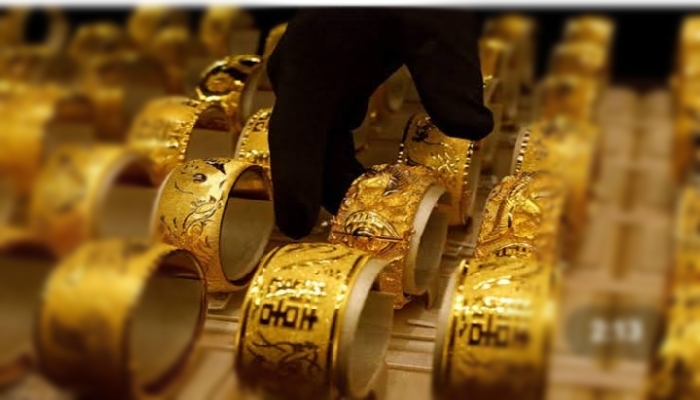
New Delhi, Jul 30: India's gold demand in 2020 is expected to fall to the lowest level in 26 years with domestic bullion prices hitting a record high and as falling disposable incomes could curtail retail purchases, the World Gold Council (WGC) said on Thursday.

Lower demand by the world's second-biggest bullion consumer could limit a rally in global prices, which hit a record high earlier this month, although it could also reduce India's trade deficit and support the ailing rupee.

"Fast rising gold prices could act as headwinds," said Somasundaram PR, the managing director of WGC's Indian operations.

Local gold futures have jumped 35% so far this year after rising a quarter in 2019.

India's gold consumption in the first half of 2020 plunged 56% on-year to 165.6 tonnes. Meanwhile, the coronavirus-triggered lockdown also slashed demand by 70% in the June quarter to 63.7 tonnes, the lowest in more than a decade, the WGC said in a report published on Thursday.

Millions of Indians have lost their jobs or taken a pay cut after the country imposed a lockdown on its 1.3 billion people to curb the spread of the virus that has infected more than 1.5 million Indians.

Consumption is generally high during the June quarter due to weddings and key festivals such as Akshaya Tritiya, but lockdown restrictions kept shoppers indoors this year.

The weak demand in the first half could drag down India's gold consumption in 2020 to the lowest since 1994, when demand stood at 415 tonnes, Somasundaram said, adding that it is still difficult to provide an estimate for full-year demand as the coronavirus crisis is still unfolding.

"Indian demand has previously jumped as much as 300 tonnes in a quarter. Latent demand could come out in the second half," Somasundaram said.

Comments

Add new comment

  • Coastaldigest.com reserves the right to delete or block any comments.
  • Coastaldigset.com is not responsible for its readers’ comments.
  • Comments that are abusive, incendiary or irrelevant are strictly prohibited.
  • Please use a genuine email ID and provide your name to avoid reject.