


Trump throws G-7 into disarray with tweets after he leaves

Agencies
June 10, 2018

La Malbaiel, Jun 10: ashing out at the longtime U.S. ally and northern neighbor, President Donald Trump tweeted that Canadian Prime Minister Justin Trudeau is “dishonest & weak” and that the U.S. was pulling back its endorsement of the G-7 summit’s communique in part because of what he called Mr. Trudeau’s “false statements” at a news conference.

In an extraordinary set of tweets aboard Air Force One, on its way to Singapore for Tuesday’s summit with North Korea’s Kim Jong Un, Mr. Trump threw the G-7 summit into disarray on Saturday and threatened to escalate his trade war just as Canada released the G-7’s official communique. Its statement took a generally positive view of the leaders’ positions on trade matters while acknowledging tensions with the U.S.

A few hours earlier, Mr. Trudeau had told reporters that all seven leaders had come together to sign the joint declaration.

Mr. Trump tweeted- “Based on Justin’s false statements at his news conference, and the fact that Canada is charging massive Tariffs to our U.S. farmers, workers and companies, I have instructed our U.S. Reps not to endorse the Communique as we look at Tariffs on automobiles flooding the U.S. Market!”

In a statement, a spokesman for Mr. Trudeau did not address Mr. Trump’s insults. “We are focused on everything we accomplished here at the “G7 summit,” spokesman Cameron Ahmad said. “The Prime Minister said nothing he hasn’t said before both in public, and in private conversations with the President.”

Mr. Trump’s personal attack on Mr. Trudeau is unprecedented in the countries’ longstanding relationship.

As he exited the world summit, Mr. Trump had delivered a stark warning to America’s trading partners not to counter his decision to impose tariffs on steel and aluminum imports. But the summit host, Mr. Trudeau, whose nation was among those singled out by Mr. Trump, pushed back and said he would not hesitate to retaliate against his neighbor to the south.

“If they retaliate, they’re making a mistake,” Mr. Trump declared before departing the annual Group of Seven summit, which includes Britain, Italy, France, Germany and Japan.

Mr. Trudeau later said he reiterated to Mr. Trump that tariffs will harm industries and workers on both sides of the U.S.-Canada border. He said unleashing retaliatory measures “is not something I relish doing” but that he wouldn’t hesitate to do so because “I will always protect Canadian workers and Canadian interests.”

“As Canadians, we are polite, we’re reasonable, but also we will not be pushed around,” Mr. Trudeau said.

Despite the sharp differences, Mr. Trudeau said all seven leaders had come together to sign a joint declaration despite having “some strong, firm conversations on trade, and specifically on American tariffs.”

Mr. Trump himself insisted relationships with allies were a “ten” just before he left the summit. But Mr. Trump’s abbreviated stay at this Quebec resort saw him continuing the same type of tough talk on trade as when he departed the White House, when he accused Mr. Trudeau of being “indignant.”

The summit came during an ongoing trade dispute with China and served as a precursor to the unprecedented meeting with Mr. Kim, in which Mr. Trump has sought to extend a hand to the Asian autocrat who has long bedeviled the international order.

“His message from Quebec to Singapore is that he is going to meld the industrial democracies to his will and bring back Russia,” said Steve Bannon, Mr. Trump’s former campaign and White House adviser. Mr. Bannon said China is “now on notice that Trump will not back down from even allies’ complaints in his goal of ‘America First.’”

Speaking on Saturday during a rare solo news conference, Mr. Trump said he pressed for the G-7 countries to eliminate all tariffs, trade barriers and subsidies in their trading practices. He reiterated his longstanding view that the U.S. has been taken advantage of in global trade, adding, “We’re like the piggy bank that everybody’s robbing, and that ends.”

Mr. Trump cited progress on reaching an agreement on the North American Free Trade Agreement with Canada and Mexico, saying the final outcome would lead either to an improved trade deal or separate pacts with the two U.S. neighbors. Mr. Trump said he was discussing two types of sunset provisions in which any of the countries could leave the deal. A Canadian official said the leaders discussed accelerating the pace of the talks.

But Mr. Trudeau objected strenuously to a sunset clause of any length. “If you put an expiry date on any trade deal, that’s not a trade deal. That’s our unequivocal position,” he said.

Prior to his arrival on Friday, the president injected additional controversy by suggesting that the G-7 offer a seat at the table to Russia, which was ousted from the group in 2014. Mr. Trump said on Saturday that re-admitting Russia to the elite club would be “an asset,” telling reporters, “We’re looking for peace in the world.” Mr. Trump said he had not spoken with Russian President Vladimir Putin in a while.

Discussing Russia’s absence, Mr. Trump made the vague comment that “something happened a while ago where Russia is no longer in. I think it would be an asset to have Russia back in.” In fact, Russia was expelled from what was then the G-8 after it invaded and annexed Crimea and for its support for pro-Russia separatists in Ukraine.

Mr. Trump placed the blame on his predecessor, President Barack Obama. “He was the one who let Crimea get away that was during his administration,” he said, adding- “Obama can say all he wants, but he allowed Russia to take Crimea. I may have had a much different attitude.”

It was not clear what Mr. Trump thought Mr. Obama should have done to prevent Mr. Putin from sending in Russian troops to seize the Black Sea peninsula from neighboring Ukraine.

Mr. Trudeau said he told Mr. Trump that readmitting Russia “is not something that we are even remotely looking at at this time.”

Mr. Trump departed the annual G-7 gathering after arriving late to a breakfast on gender equity and skipping later sessions on climate change, clean energy and ocean protection.

Mr. Trump’s recent moves, building on 18 months of nationalist policy-making, left him out of step with the globally minded organization and prompted speculation that the group could fracture into something more like the “G-6 plus one.”

A key question was whether the seven countries could agree on a joint statement of priorities at the conclusion of the meeting. Mr. Macron said Thursday on Twitter, “The American President may not mind being isolated, but neither do we mind signing a 6 country agreement if need be.” Mr. Trump said on Friday he thinks the group will produce a joint statement.

In public, Mr. Trump bantered easily with his fellow leaders, but the meeting came at a tense moment in the relationships, with allies steaming over Mr. Trump’s new tariffs on imported steel and aluminum from Canada, Mexico and the European Union.

French President Emmanuel Macron said he and Mr. Trump had “open and direct” discussions, adding that he thought there was a way to get a “win-win” outcome on trade. Details remained unclear.

Comments

Add new comment

  • Coastaldigest.com reserves the right to delete or block any comments.
  • Coastaldigset.com is not responsible for its readers’ comments.
  • Comments that are abusive, incendiary or irrelevant are strictly prohibited.
  • Please use a genuine email ID and provide your name to avoid reject.
Agencies
July 29,2020

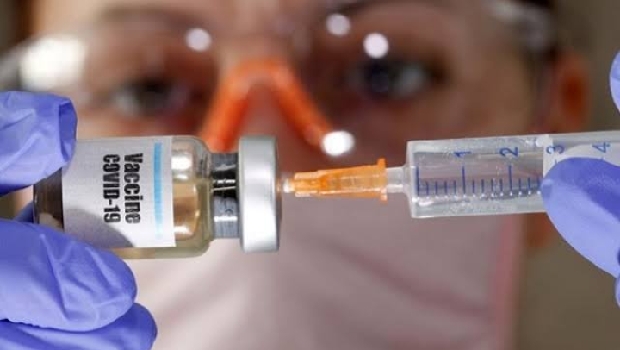
If everything goes as Russia’s expectation, it will be world’s first country to approve a coronavirus vaccine for widespread in the second week of August despite safety and efficacy concerns, according to a report. The adenoviral vector-based vaccine developed by Russian military and government researchers is currently in phase 2 trials.

According to a report from CNN, Russian officials are hoping to get approval for the COVID-19 vaccine developed by the Moscow-based Gamaleya Institute on Agust 10 or even before that. The officials told the outlet that the vaccine will be approved for public use with frontline healthcare workers receiving it first.

“It’s a Sputnik moment,” said Kirill Dmitriev, head of Russia’s sovereign wealth fund, which is financing Russian vaccine research, referring to the successful 1957 launch of the world’s first satellite by the Soviet Union, according to CNN.

“Americans were surprised when they heard Sputnik’s beeping. It’s the same with this vaccine. Russia will have got there first,” he was quoted as saying.

However, Russia is yet to release the scientific data on its coronavirus vaccine trials, hence, questions remain about the safety and efficacy of the vaccine, said the report. The vaccine is in the second phase of testing with developers planning to launch the phase 3 trials sometime after August 3.

Earlier, Interfax reported, citing Health Minister Mikhail Murashko, that the vaccine will be widely used in parallel with phase 3 trials. He said the country plans to vaccinate medics who are at high-risk for COVID-19 next month before clinical trials are completed.

Murashko added that individuals at higher risk of getting infected with the coronavirus such as older people or those with health conditions will also be prioritised for the vaccine, although he did not estimate or reveal when that would happen. The minister added 800 people will be recruited for the phase 3 trials.

Meanwhile, health officials were more cautious considering the fact that human testing of the vaccine is incomplete, and the state registration is expected to begin after August 3, reported The Moscow Times.

On Monday, Moderna and Pfizer announced the commencement of the final phase 3 trials of their candidate vaccines against the SARS-CoV-2 virus, which has so far claimed at least 654,477 lives and infected 16,514,500 people worldwide. 

Researchers will recruit up to 30,000 volunteers in separate trials both backed by the US government. India's first indigenous coronavirus vaccine, COVAXIN, is undergoing phase 1 human clinical trials across the country. More than 150 COVID-19 vaccines are being developed all over the world with at least six candidates already in late-stage clinical trials.

Comments

Add new comment

  • Coastaldigest.com reserves the right to delete or block any comments.
  • Coastaldigset.com is not responsible for its readers’ comments.
  • Comments that are abusive, incendiary or irrelevant are strictly prohibited.
  • Please use a genuine email ID and provide your name to avoid reject.
News Network
February 5,2020

Feb 5: Pakistan will buy more palm oil from Malaysia, Prime Minister Imran Khan said on Tuesday, aiming to help offset lost sales after top buyer India put curbs on Malaysian imports last month amid a diplomatic row.

India imposed restrictions on refined palm oil imports and informally asked traders to stop buying from Malaysia, the world's biggest producer of the edible oil. Sources said the move was in retaliation for Malaysia's criticism of India's policy on Kashmir.

Malaysian Prime Minister Mahathir Mohamad said on Tuesday that he discussed palm oil with Khan who was on a visit to Malaysia and that Pakistan had indicated it would import more from Malaysia.

"That's right, especially since we noticed India threatened Malaysia for supporting the Kashmir cause, threatened to cut palm oil imports," Khan told a joint news conference, referring to India's Muslim-majority region of Kashmir.

"Pakistan will do its best to compensate for that."

India is a Hindu-majority country while Malaysia and Pakistan are mainly Muslim. India and Pakistan have been mostly hostile to each other since the partition of British India in 1947, and have fought two of their three wars over competing territorial claims in Kashmir.

Pakistan may have bought around 135,000 tonnes of Malaysian palm oil last month, a record high, India-based dealers who track such shipments told Reuters on condition of anonymity.

The figure is close to estimates of 141,500 tonnes from Refinitiv, which show sales to India in January may have plunged 80% from a year earlier to 40,400 tonnes.

Malaysia will release official export data on Monday.

Pakistan bought 1.1 million tonnes of palm oil from Malaysia last year, while India bought 4.4 million tonnes, according to the Malaysian Palm Oil Council.

Malaysian palm oil futures rose on Tuesday after Khan's comments and on expectations of a steep drop in production in January.

STRONG TIES

India has repeatedly objected to Mahathir speaking out against its move last year to strip Kashmir's autonomy and make it easier for non-Muslims from neighbouring Muslim-majority Bangladesh, Pakistan and Afghanistan to gain citizenship.

At the news conference, Mahathir did not refer to Kashmir but Khan did.

"The way you, PM, have stood with us and spoken about this injustice going on, on behalf of Pakistan I really want to thank you," Khan said.

He also said he was sad he had been unable to attend a summit of Muslim leaders in Malaysia in December. Saudi Arabia did not attend the summit, saying it was the wrong forum to discuss matters affecting the world's Muslims and Khan belatedly pulled out.

Some Pakistani officials, unnamed because they were not authorised to speak to the media, said at the time that Khan pulled out under pressure from Saudi Arabia, a close ally, although local media reported his officials denied that was the reason for his absence.

"Unfortunately our friends, who are very close to Pakistan as well, felt that somehow the conference was going to divide the ummah," Khan said, using the Arabic word for the Muslim community but not mentioning Saudi Arabia by name.

"It is clearly a misconception, as that was not the purpose of the conference."

Comments

Add new comment

  • Coastaldigest.com reserves the right to delete or block any comments.
  • Coastaldigset.com is not responsible for its readers’ comments.
  • Comments that are abusive, incendiary or irrelevant are strictly prohibited.
  • Please use a genuine email ID and provide your name to avoid reject.
Agecnies
July 13,2020

Moscow, Jul 13: Russia has become the first nation to complete clinical trials of a COVID-19 vaccine on humans. Chief researcher Elena Smolyarchuk, who heads the Center for Clinical Research on Medications at Sechenov University, told Russian news agency TASS on Sunday that the human trials for the vaccine have been completed at the university and the volunteers will be discharged soon.

"The research has been completed and it proved that the vaccine is safe. The volunteers will be discharged on July 15 and July 20," Smolyarchuk was quoted as saying in the report.

Though the results have been favourable with respect to the medication’s effectiveness, no further information was provided on when this vaccine would enter commercial production stage.

Russia had allowed clinical trials of two forms of a potential COVID-19 vaccine developed by the Gamaleya National Research Center for Epidemiology and Microbiology on June 18.

The first vaccine, in the form of a solution for intramuscular administration, was carried out at the Burdenko Military Hospital.

Another vaccine, in the form of a powder for the preparation of a solution for intramuscular administration, was carried out at Sechenov First Moscow State Medical University.

The first stage of research on the vaccine at Sechenov University involved a group of 18 volunteers and the second group involved 20 volunteers.

After vaccination, all volunteers were expected to remain in isolation in a hospital for 28 days.

Earlier, results of the COVID-19 vaccine tests performed on a group of volunteers in Russia showed that they were developing immunity to the coronavirus.

"The data obtained by the Gamalei National Research Center for Epidemiology and Microbiology, proves that volunteers of the first and second groups are forming an immune response after injections of the vaccine against the coronavirus," according to an earlier statement from the Russian Defense Ministry.

Russia has reported 719,449 cases and 11,188 deaths to date.

There are at least 21 vaccines currently under key trials, according to the World Health Organisation (WHO).

The overall number of global COVID-19 cases crossed 12.9 million, while the deaths have increased to more than 5,69,000, according to Johns Hopkins University in the US.

As of Monday morning, the total number of cases stood at 1,29,10,357, while the fatalities rose to 5,69,128.

The US accounted for the world's highest number of infections at over 33 lakh. Brazil came in the second place with over 18 lakh infections. India is third worst affected with over 8.7 lakh people reported to have COVID-19.

Comments

Add new comment

  • Coastaldigest.com reserves the right to delete or block any comments.
  • Coastaldigset.com is not responsible for its readers’ comments.
  • Comments that are abusive, incendiary or irrelevant are strictly prohibited.
  • Please use a genuine email ID and provide your name to avoid reject.