



Tsunami hits Japan after strong quake, nuclear plant briefly disrupted

November 22, 2016

Tokyo, Nov 22: A powerful earthquake rocked northern Japan on Tuesday, briefly disrupting cooling functions at a nuclear plant and generating a tsunami that hit the same region devastated by a massive quake, tsunami and nuclear disaster in 2011.
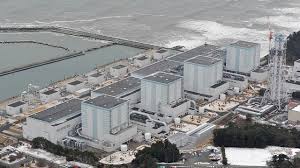
1quaThe earthquake, which was felt in Tokyo, had a magnitude of 7.4, the Japan Meteorological Service said, and was centred off the coast of Fukushima prefecture at a depth of about 10 km (6 miles).

There were no reports of deaths or serious injuries several hours after the quake hit at 5:59 a.m. (2059 GMT Monday).

A tsunami of up to 1.4 metres (4.5 feet) had been observed around Sendai, about 70 km (45 miles) north of Fukushima, with smaller waves hitting ports elsewhere along the coast, public broadcaster NHK said.

Television footage showed ships moving out to sea from harbours as tsunami warning signals wailed, after warnings of waves of up to 3 metres (10 feet) were issued.

"We saw high waves but nothing that went over the tidal barriers," a man in the city of Iwaki told NTV television network.

The Pacific Tsunami Warning Center in Hawaii said the tsunami threat had now largely passed. "Sea level fluctuations may continue along some coasts of Japan over the next few hours," it said.

The U.S. Geological Survey measured Tuesday's quake at magnitude 6.9, down from an initial 7.3.

All Japan's nuclear power plants on the coast threatened by the tsunami are shut down in the wake of the March 2011 disaster, which knocked out Tokyo Electric Power Co's Fukushima Daiichi nuclear plant, spilling radiation into the air and sea.

A spokeswoman for Tokyo Electric Power, known as Tepco, said the cooling system for a storage pool for spent nuclear fuel at the reactor at its Fukushima Daini Plant had been halted. A spokesman said the cooling system had restarted soon after.

No other damage from the quake has been confirmed at any of its power plants, although there have been blackouts in some areas, the spokeswoman said.

Only two reactors are operating in Japan, both in the southwest. Even when in shutdown, nuclear plants need cooling systems operating to keep spent fuel cool.

Tohoku Electric Power Co said there was no damage to its Onagawa nuclear plant, while the Kyodo news agency reported there were no irregularities at the Tokai Daini nuclear plant in Ibaraki prefecture.

COAST EVACUATED

One woman suffered cuts to her head from falling dishes, Kyodo news agency reported, citing fire department officials. Japanese Minister for Disaster Management Jun Matsumoto told reporters about three hours after the quake that there had been no reports of significant injuries so far.

NHK showed footage of residents of Ishinomaki, a city badly hit in 2011, standing on a hill dressed in hats and heavy coats, staring down at the ocean. Several thousand people along the coast evacuated or were told to evacuate.

Earthquakes are common in Japan, one of the world's most seismically active areas. Japan accounts for about 20 percent of the world's earthquakes of magnitude 6 or greater.

The March 11, 2011, quake was magnitude 9, the strongest quake in Japan on record. The massive tsunami it triggered caused the world's worst nuclear crisis since Chernobyl a quarter of a century earlier.

Nissan Motor Co said it would suspend work at its engine factory in Fukushima at least until the latest tsunami warning was lifted. A spokesman said there were no injuries or damage at the plant, which was badly damaged in the 2011 disaster.

Separately, Toyota Motor Corp said all its factories in northeastern Japan were operating as usual.

An Iwaki city fire department official said there was smoke or fire at Kureha's research centre in a petrochemical complex in Iwaki city at 6:17 a.m. (2117 GMT Monday) but it was extinguished soon after. Other details were not clear, he said, but no other major damage had been reported in the city so far.

Japan's famous Shinkansen bullet trains were halted along one stretch of track and some other train lines were also stopped.

One hotel in Ofunato, also badly hit by the 2011 quake, initially told guests to stay in the facility but later bussed them to higher ground.

Japanese financial markets were little affected, with Nikkei futures recovering after a brief fall and the yen up a touch against the U.S. dollar, although still near a five-month low hit earlier in the session.

Comments

Rikaz
 - 
Tuesday, 22 Nov 2016

CD, Tsunami did not hit Japan today...where did you get this information????

ali
 - 
Tuesday, 22 Nov 2016

Tsunami hit to Japan After modi visit. He is the sign of bad luck. India has to wait for another 2 & half years for ache din to come.

\ Jab Modi chala jaayega tho ache din aayega\"."

Add new comment

  • Coastaldigest.com reserves the right to delete or block any comments.
  • Coastaldigset.com is not responsible for its readers’ comments.
  • Comments that are abusive, incendiary or irrelevant are strictly prohibited.
  • Please use a genuine email ID and provide your name to avoid reject.
Agencies
March 1,2020

Washington, Mar 1: Beginning April 1, Indians wishing to immigrate to America will now have to pay an additional $50,000 for the EB-5 or the US investor visa, a media report said.

Although, this additional tax would impact all visa categories, it will predominantly create a barrier for people investing in the EB-5 visa programme, the American Bazaar daily said in the report on Friday.

In 2019, the EB-5 investor visa programme, for the first time since the 1990's, increased the minimum investment amount to $900,000.

With this increase in minimum investment, the new 5 per cent additional tax would mean that applicants would have to pay the extra $50,000, when they move money to an escrow account in the US to fulfil their application criterion.

"The changes to the tax on remittances is a reminder to Indians to carefully plan their tax position before making the move to the US," the American Bazaar quoted Mark Davies, Global Chairman, Davies & Associates LLC, as saying.

"People seeking to emigrate who do not wish to pay this tax at source and rather account for it later may wish to move their money ahead of the new rules coming into effect.

"It is possible to pre-emptively move money into an escrow account in the US until such a time as they are ready to proceed with emigration process," he added.

Comments

Add new comment

  • Coastaldigest.com reserves the right to delete or block any comments.
  • Coastaldigset.com is not responsible for its readers’ comments.
  • Comments that are abusive, incendiary or irrelevant are strictly prohibited.
  • Please use a genuine email ID and provide your name to avoid reject.
News Network
April 21,2020

New York, Apr 21: Oil prices plunged below zero on Monday as demand for energy collapses amid the coronavirus pandemic and traders don't want to get stuck owning crude with nowhere to store it.

Stocks were also slipping on Wall Street in afternoon trading, with the S&P 500 down 0.9%, but the market's most dramatic action was by far in oil, where benchmark U.S. crude for May delivery plummeted to negative $3.70 per barrel, as of 2:15 pm. Eastern time.

Much of the drop into negative territory was chalked up to technical reasons — the May delivery contract is close to expiring so it was seeing less trading volume, which can exacerbate swings. But prices for deliveries even further into the future, which were seeing larger trading volumes, also plunged.

Demand for oil has collapsed so much due to the coronavirus pandemic that facilities for storing crude are nearly full.

Tanks could hit their limits within three weeks, according to Chris Midgley, head of analytics at S&P Global Platts.

Benchmark U.S. crude oil for June delivery, which shows a more ”normal” price, fell 14.8% to $21.32 per barrel, as factories and automobiles around the world remain idled. Big oil producers have announced cutbacks in production in hopes of better balancing supplies with demand, but many analysts say it's not enough.

“Basically, bears are out for blood,” analyst Naeem Aslam of Avatrade said in a report. “The steep fall in the price is because of the lack of sufficient demand and lack of storage place given the fact that the production cut has failed to address the supply glut.”

Halliburton swung between gains and sharp losses, even though it reported stronger results for the first three months of 2020 than analysts expected. The oilfield engineering company said that the pandemic has created so much turmoil in the industry that it “cannot reasonably estimate” how long the hit will last. It expects a further decline in revenue and profitability for the rest of 2020, particularly in North America.

Brent crude, the international standard, was down $1.78 to $26.30 per barrel. .

In the stock market, the mild drops ate into some of the big gains made since late March, driven lately by investors looking ahead to parts of the economy possibly reopening as infections level off in hard-hit areas.

Pessimists have called the rally overdone, pointing to the severe economic pain sweeping the world and continued uncertainty about how long it will last.

The Dow Jones Industrial Average was down 364 points, or 1.5%, to 23,887. The Nasdaq was down 0.1%..

More gains from companies that are winners in the new stay-at-home economy helped limit the market's losses Amazon rose 1.4%, and Netflix jumped 3.8% as people shut in at home buy staples and look to fill their time. Clorox likewise rose toward a new record and was up 1% as households and businesses that remain open look to stay clean.

In Tokyo the Nikkei 225 fell 1.1% after Japan reported that its exports fell nearly 12% in March from a year earlier as the pandemic hammered demand in its two biggest markets, the U.S. and China.

The Hang Seng index in Hong Kong lost 0.2%, and South Korea's Kospi fell 0.8%.

European markets were modestly higher The German DAX was up 0.5%, the French CAC 40 was up 0.7% and the FTSE 100 in London gained 0.7%.

In a sign of continued caution in the market, Treasury yields remained extremely low. The yield on the 10-year Treasury slipped to 0.64% from 0.65% late Friday. It started the year near 1.90%. Bond yields drop when their prices rise, and investors tend to buy Treasurys when they're worried about the economy.

Stocks have been on a generally upward swing recently, and the S&P 500 just closed out its first back-to-back weekly gain since the market began selling off in February. Promises of massive aid for the economy and markets by the Federal Reserve and U.S. government ignited the rally, which sent the S&P 500 up as much as 28.5% since a low on March 23.

More recently, countries around the world have tentatively eased up on business-shutdown restrictions put in place to slow the spread of the virus.

But health experts warn the pandemic is far from over and new flareups could ignite if governments rush to allow ”normal” life to return prematurely.

The S&P 500 remains about 15% below its record high in February as millions more U.S. workers file for unemployment every week amid the shutdowns.

Many analysts also warn that a significant part of the recent recovery in stocks is due to the expectation among some investors that the economy will rebound sharply once economic quarantines are lifted. They're essentially predicting that a line chart of the economy will ultimately resemble the letter “V,” with a wild ride down but then a quick pivot to a vigorous recovery.

That may be to optimistic. “We caution that a U-shaped recovery is also quite likely,” where the economy bottoms out and stays at that low level for a while before recovering, strategists at Barclays warned in a recent report.

Without strong testing programs for COVID-19, businesses likely won't feel comfortable bringing back their full workforces for a while.

”With risk assets now overbought, the chance for a correction has increased,” Morgan Stanley strategists wrote in a report.

Comments

Add new comment

  • Coastaldigest.com reserves the right to delete or block any comments.
  • Coastaldigset.com is not responsible for its readers’ comments.
  • Comments that are abusive, incendiary or irrelevant are strictly prohibited.
  • Please use a genuine email ID and provide your name to avoid reject.
Agencies
April 25,2020

From loudspeakers on the roof of a Minnesota mosque, the Islamic call to prayer echoed for the first time ever throughout a Minneapolis neighbourhood late on Thursday as the Muslim community there prepared to begin the holy month of Ramadan.

It echoed again on Friday morning and will continue five times a day during the holy month. 

The simple, short call - known as the adhan - marked an historical moment for Minneapolis and major cities across the United States, community members said. While the adhan is commonly broadcast throughout the Middle East, North Africa and other places, for many Muslims in the US, it is only heard inside mosques or community centres.

"There's definitely a lot of excitement," said Imam Abdisalam Adam, who is on the board of the Dar al-Hijrah mosque, from where the adhan will be broadcast.
"Some people see it as historic," Adam told Al Jazeera. "To the point ... that they're not doing it, able to see it in their lifetime." 

Recited by different representatives from mosques around the city, the call to prayer is expected to reach thousands in the Cedar-Riverside neighbourhood in Minneapolis, according to Jaylani Hussein, the executive director of Minnesota's Council on American-Islamic Relations (CAIR).

While Hussein says the community had discussed broadcasting the call for years, it became even more pressing this year when the coronavirus pandemic forced mosques to shut their doors and residents to stay inside. The coronavirus has infected more than 870,000 people nationwide and killed at least 50,000.
"We wanted to touch those individuals who frequent this mosque and this community," Hussein said. "If we cannot be physically together, at least this echo, this voice, this call to prayer can be an extension of us being together at this difficult time. To give some people some solace."
Ramadan - Minnesota.

The Dar al-Hijrah mosque in the Cedar-Riverside neighbourhood of Minneapolis, Minnesota [Courtesy of Abdisalem Adam] 
Ramadan is traditionally a time when Muslims worldwide regularly attend mosques for daily prayers and break their fasts together. But this year, most have been told to pray at home and forgo community iftars in favour of staying safe from the COVID-19 crisis.

Adam, the imam, said while the Muslim community is experience loss this Ramadan, they hope the call to prayer broadcast will create a "semblance of normalcy".

"With the loss of Friday prayers and the regular congregational prayers, we are hoping that this will give a sense of solace and connection to the spiritual needs of community members," he added. 

An avenue to greater investment?

The Cedar-Riverside neighbourhood is a densely populated area of Minneapolis that has historically been an entry point for many immigrants and today is home to large Somali and Oromo communities.

Ramla Bile, a Somali American who lives in a neighbourhood adjacent to Cedar-Riverside, has been active in the community for years. She welcomed the broadcast of the call to prayer, saying it will help people "feel the spirit of Ramadan in a way that is meaningful".

But she also hopes the city of Minneapolis, which provided the noise permit for the broadcast, will make bigger strides to invest in the community in even more tangible ways.

"There's been a lot of need and a lot hurt in the community in light of the COVID-19 pandemic. And then there's the ongoing conversation you've been having," she said, pointing to deep-seated Islamophobia, systemic racism and the need for infrastructure projects like sprinkler systems in high-rise buildings. 

"We need to see greater investments to support the most vulnerable members of our community," Bile said referring to the neighbourhood's elders, undocumented individuals, low-income families and others.

"Right now, we're waiting for a bailout for our micro-businesses who comprise our Somali malls, or a rent freeze for neighbourhood residents," she added.

For CAIR's Hussein and Imam Adam, they hope this Ramadan's call to prayer helps encourage other communities around the US to take similar steps.

"This will hopefully inspire others … to think about what could happen in future Ramadans and beyond," Hussein said.

Adam added that while the virus has devastated communities and upended daily life, it has also shown that "we're in this together".

"It just shows the significance of the global village and how interconnected and interdependent we are as a world community," he said. "I think that there will be a lot of change in our way of life for the better. I hope so."


Comments

Add new comment

  • Coastaldigest.com reserves the right to delete or block any comments.
  • Coastaldigset.com is not responsible for its readers’ comments.
  • Comments that are abusive, incendiary or irrelevant are strictly prohibited.
  • Please use a genuine email ID and provide your name to avoid reject.