


UAE moots high-speed underwater rail between Fujairah and Mumbai

coastaldigest.com web desk
December 1, 2018

Newsroom: Running high on technologies, the United Arab Emirates is now planning to set a benchmark by building an underwater train between Fujairah and India’s commercial capital Mumbai. The total rail network will be less than 2,000 km long.

The project which aims at providing high-speed rail travel between the two countries is proposed by the UAE-based company National Advisor Bureau.

To reciprocate this, India will provide UAE with freshwater and oil through pipelines, National Advisor Bureau Limited managing director and chief consultant Abdulla Alshehhi said during the UAE-India Conclave in Abu Dhabi.

"This is a concept. We plan to connect Indian city of Mumbai with Fujairah through ultra-speed floating trains. The project aims to boost bilateral trade. There will be export of oil to India from Fujairah port and import of excess water from Narmada River, north of Mumbai. In addition, other GCC partners can also improve export and import," Alshehhi said.

Apart from passenger transit, Alshehhi said there are plans to facilitate the exchange of goods from India to UAE and export of oil through a pipeline as well.

Floating trains or 'Maglev' use magnet repulsion system to move the 'train' at a great speed taking advantage of the lack of friction. The high-speed Maglevs trains are currently under operations in China and Japan, but several countries like Australia, US, Israel and UK have plans to introduce the rail system.

Comments

Joseph Stalin
 - 
Saturday, 1 Dec 2018

If it is UAE initiated project then it will be real soon. But if it is feku's project, it will be fake promise like black money return, 1 lakh to bank account, petrol price decrease etc

Add new comment

  • Coastaldigest.com reserves the right to delete or block any comments.
  • Coastaldigset.com is not responsible for its readers’ comments.
  • Comments that are abusive, incendiary or irrelevant are strictly prohibited.
  • Please use a genuine email ID and provide your name to avoid reject.
News Network
July 28,2020

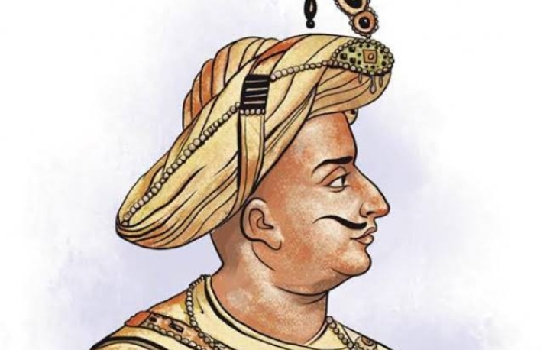
Bengaluru, Jul 28: After the Central Board of Secondary Education (CBSE) reduced the syllabi for Classes 9 to 12 due to COVID-19 pandemic, the Karnataka government has followed the suit. The Department of Public Instruction has omitted the chapters on legendary south Indian rulers Hyder Ali and Tipu Sultan from the textbooks of Class 7 in their attempt to reduce syllabus for state board schools by 30 per cent. 

The department, however, has decided to retain similar chapters on Tipu Sultan in 6th and 10th Classes, though the syllabus in text books for all classes from 1 to 10th has been trimmed. 

The trimmed textbooks uploaded on the website of the Department of State Education Research and Training (DSERT) by Karnataka state Textbook Society revealed removal of chapters on Tipu Sultan for the seventh grade.

Justifying the decision, officials said, "students study similar chapters in Class 6 and more in the 10th grade." Yet another senior official from the Text Book Society said, "Trimming does not mean we have removed half of the syllabus from textbooks. It is only keeping in mind the repetition we have condensed the chapters. In case students study about a particular dynasty in higher grades, then the same had been removed from lower grades."

A few months ago, there was an uproar over dropping of content on Tipu Sultan and MLAs from the ruling BJP also demanded the same and petitioned to the Chief Minister. Even an expert committee led by Prof Baraguru Ramachandrappa suggested to not drop any content on the historic figure. However, the department still decided to drop lessons from one of the classes while keeping the syllabus short for the next 120 active academic days.

Earlier this month, a controversy had erupted over the CBSE's decision to omit topics like federalism, secularism, citizenship, etc while reducing the syllabus for Classes 9 to 12. The education board had issued a detailed clarification later, stating that topics claimed to be dropped "are either being covered by the rationalised syllabus or in the Alternative Academic Calendar of NCERT".

"The rationalisation of syllabus up to 30 per cent has been undertaken by the Board for nearly 190 subjects of class 9 to 12 for the academic session 2020-21 as a one-time measure only. The objective is to reduce the exam stress of students due to the prevailing health emergency situation and prevent learning gaps," it said.

Last week, the Congress in Uttar Pradesh expressed its concern over 'deliberate and systematic' deletions of chapters related to the freedom struggle and the party's role in it from the Class 10-12 syllabi of the Secondary Education Board.

Comments

Add new comment

  • Coastaldigest.com reserves the right to delete or block any comments.
  • Coastaldigset.com is not responsible for its readers’ comments.
  • Comments that are abusive, incendiary or irrelevant are strictly prohibited.
  • Please use a genuine email ID and provide your name to avoid reject.
News Network
April 5,2020

Bengaluru, Apr 5: The COVID-19 related lockdown has substantially improved the air quality of Bengaluru, taking it from satisfactory level to good, a senior state pollution control board offcial said here on Sunday.

"During the course of the lockdown 19 problem, we reached good position from satisfactory.

It is between zero to 50 AQI (Air Quality Index) now. We have good quality air," the Karnataka State Pollution Control Board member secretary Basavaraj Patil told PTI.

He said the indicator for knowing the air quality in

"If the AQI is zero to 50 then it is good. If it is 50 to 100 then it is satisfactory. 101 to 150 is moderate and if it is 151 to 200, then it is poor, he explained.

Patil said as per available recrods, there has been a 60 to 65 per cent reduction in pollution during the lockdown.

The city railway station and Peenya industrial area, which used to be among the areas with highest AQI, has seen pollution levels come down significantly, he said.

Another major contributor of pollution was construction activities, which too had ground to a halt due to the lockdown, resulting in zero dust emission.

Patil opined that the improved air quality would boost the immune system of the people.

"It will improve the immune system of people, including those who have breathing problems like asthma," he said.

He asked the public to learn lessons from the lockdown and later switch to sustainable means of transport such as public transport, walking and cycling,.

"We can still reduce the pollution load even after the lockdown is over," Patil said.

Comments

Add new comment

  • Coastaldigest.com reserves the right to delete or block any comments.
  • Coastaldigset.com is not responsible for its readers’ comments.
  • Comments that are abusive, incendiary or irrelevant are strictly prohibited.
  • Please use a genuine email ID and provide your name to avoid reject.
News Network
June 20,2020

Udupi, Jun 20: The wife and daughter of a 54-year-old man who succumbed to Covid-19, tested positive for the virus on Saturday.

Sources said that the family returned to Udupi on June 18 and the man died the same day while his wife and daughter tested positive today.

The man and his family had arrived at their house in Thekkatte on Thursday, June 18 afternoon. Later in the day, the man died. He was suffering from jaundice and had arrived from Mumbai in the state of illness.

Comments

Add new comment

  • Coastaldigest.com reserves the right to delete or block any comments.
  • Coastaldigset.com is not responsible for its readers’ comments.
  • Comments that are abusive, incendiary or irrelevant are strictly prohibited.
  • Please use a genuine email ID and provide your name to avoid reject.