UAE to tow giant icebergs from Antarctic for water need

Agencies
July 2, 2018

Dubai, Jul 2: A United Arab Emirates (UAE) firm has launched an official website for a project to tow icebergs from Antarctica to the UAE coasts during the first quarter of 2020 "to leverage them as new sources of water in the region".

The National Advisor Bureau Ltd put forward the UAE-IcebergProject to highlight the upcoming stages and benefits in environment and economy, Xinhua reported on Sunday quoting UAE state news agency WAM.

The project is estimated to cost $50-60 million.

The pilot phase of the project will kick off during the second half of 2019 towards the coast of Perth in Australia, or the coast of Cape Town in South Africa.

The company is currently developing a unique technology which would reduce project costs, ensure zero ice melting during the transportation phase, and facilitate water-transfer processes to customers at minimal costs.

The project which will support the UAE's quest for clean drinking water was first mentioned in the UAE media in May 2017.

WAM reported the project would also place the UAE on the "glacial tourism map" as the first desert country to offer glacial tourism on its coasts, saving iceberg enthusiasts the trouble of travelling to the North and South Poles.

Comments

SATHYA VISHWASI
 - 
Monday, 2 Jul 2018

HEIGHT OF MADNESS, FOOLISHNESS AND SIGN OF Money intoxication .

Add new comment

  • Coastaldigest.com reserves the right to delete or block any comments.
  • Coastaldigset.com is not responsible for its readers’ comments.
  • Comments that are abusive, incendiary or irrelevant are strictly prohibited.
  • Please use a genuine email ID and provide your name to avoid reject.
Agencies
July 31,2020

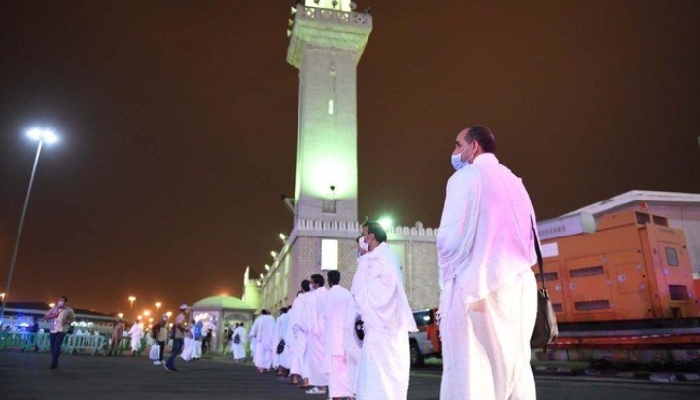
Jeddah, Jul 31: Hajj 2020 pilgrims arrived in Muzdalifah Thursday night to rest after spending the day in Arafat.

Earlier, the pilgrims scaled Mount Arafat to pray and repent, as a highly unusual Hajj approached its climax. They listened to a sermon delivered by Sheikh Abdullah Al-Manea and prayed Dhuhr and Asr prayers together at the Al-Namirah Mosque in Arafat.

This year’s pilgrimage is the smallest in modern times, after the number of participants was greatly restricted to prevent the spread of the coronavirus. 

Tight security was in place around the foot of the rocky hill outside Makkah, also known as Jabal Al-Rahma or Mount of Mercy, in preparation for the high point of the annual ritual.

Video footage shown on state television showed the pilgrims setting off on their climb to the summit. They wore face masks and observed strict social-distancing rules imposed by Saudi authorities.As sprinklers sprayed water on them to provide relief from the summer desert heat, the pilgrims raised their palms as they climbed the slopes of the hill — the site of Prophet Muhammad’s last sermon. When they reached the top they recited holy verses and prayed for forgiveness for their sins.

Earlier, the pilgrims were taken in buses from Mina to Mount Arafat. Strict precautionary measures were in place, with each group accompanied by security teams, ambulances and civil defense vehicles. 

When they arrived, their temperatures were checked before they entered Namirah Mosque to hear a sermon that was translated into 10 languages.

“The camps were set up for pilgrims in Arafat early on,” said Minister of Hajj and Umrah Muhammad Salih Bentin. The sermon at Namirah Mosque was delivered by Sheikh Abdullah Al-Manea, who led the pilgrims in noon and afternoon prayers.

“During Hajj this year, we reiterate that it is essential for pilgrims, as well as everyone assisting them, to adhere to the precautionary regulations that have been implemented,” Al-Manea, a member of the Council of Senior Scholars, said during his sermon. “This is to be done for their own safety.

“Precautions have been put in place to protect lives against the damage that the pandemic can cause, and also to actualize Islam’s teachings pertaining to safeguarding human life by Allah’s permission.”

The stay in Arafat is described as the pinnacle of Hajj and Muslims around the world reflect the actions of pilgrims by asking for forgiveness and praying for their deepest desires.
Pilgrims left Arafat in coaches for Muzdalifah after sunset and will pray the Maghrib and Isha prayers there.

After sunset prayers, the pilgrims made their way down Mount Arafat to Muzdalifah, where they will spend the night before the final Hajj ritual, the symbolic stoning of the devil. 

This year, each pilgrim received sanitized pebbles in advance of the event on Friday, which is the first day of Eid Al-Adha.
This year the Kingdom faced the unprecedented challenge of ensuring pilgrims attending Hajj were protected as much as possible from the risks of the coronavirus.

They will then sleep, pray the Fajr prayer there tomorrow and then leave for Mina.

Comments

Add new comment

  • Coastaldigest.com reserves the right to delete or block any comments.
  • Coastaldigset.com is not responsible for its readers’ comments.
  • Comments that are abusive, incendiary or irrelevant are strictly prohibited.
  • Please use a genuine email ID and provide your name to avoid reject.
News Network
June 30,2020

Srinagar, Jun 30: On the deadly attack at Karachi Stock Exchange on Monday morning, a Kashmiri social activist and journalist warned that the incident is a stark reminder to all those in Pakistan supporting Jihad and attacked Pakistan prime minister Imran Khan for ignoring development agenda in Balochistan.

Yana Mir, the editor-in-chief of The Real Kashmir News, said, "Karachi Stock Exchange attack is a reminder to all those in Pakistan supporting Jihad. Remember @imrankhan that Youth is restless and they want development agenda. These young boys of BLA are also looking for a life which is settled and peaceful. Wake up Imran Khan and you Kashmiris also. Pakistan is going to finish you. Open your eyes."
Four heavily armed terrorists attacked the busy Pakistan Stock Exchange building in Karachi with grenades today, killing four security guards and a police officer before being shot dead in an exchange of fire, authorities said.

The terrorists, who arrived in a car, stormed the Karachi Stock Exchange building by firing indiscriminately and lobbed grenades at the main gate of the multi-storey building situated in the city's high-security commercial hub.

Balochistan is a well-known region rich in natural resources but the Balochis have always been deprived of basic facilities. No hospitals are available in Balochistan. If there are some then medical facilities and equipment are not available in hospitals. The education system is pathetic and similar is the case with the infrastructure: the roads, water system, agriculture and almost all fields of life.

It is pertinent to mention that enforced disappearances and abductions by the Pakistani military establishment have also been carried out regularly and for innumerable times in Balochistan. Leaders, activists, and vocal members of various student organizations have been detained by the security forces and kept in confinement. While others have been shot dead.

This crime against humanity has been going on for so long and so systematically in Balochistan that it has come to be considered as a normal state of affairs in the province. Many social and human rights activists have flagged the issue of oppression by the Pakistani establishment before the United Nations and other international agencies.

According to the Commission of Inquiry on Enforced Disappearances, an entity established by the Pakistani government, about 5,000 cases of enforced disappearances have been registered since 2014. Most of them are still unresolved.

Independent local and international human rights organisations put the numbers much higher. Around 20,000 have reportedly been abducted only from Balochistan, out of which more than 2,500 have turned up dead as bullet-riddled dead bodies, bearing signs of extreme torture.

Before being elected as Prime Minister, Imran Khan had admitted in multiple interviews about the involvement of Pakistan's intelligence agencies in enforced disappearances as well as extrajudicial killings and vowed to resign if he was unable to put an end to the practice, holding those involved responsible. But times have passed and only reports are available to narrate the true story.

Comments

Add new comment

  • Coastaldigest.com reserves the right to delete or block any comments.
  • Coastaldigset.com is not responsible for its readers’ comments.
  • Comments that are abusive, incendiary or irrelevant are strictly prohibited.
  • Please use a genuine email ID and provide your name to avoid reject.
Arab News
March 21,2020

Jeddah, Mar 21: Saudi government ministers on Friday announced a war chest of more than SR120 billion ($32 billion) to fight the “unprecedented” health and economic challenges facing the country as a result of the killer coronavirus pandemic.

During a press conference in Riyadh, finance minister and acting minister of economy and planning, Mohammed Al-Jadaan, unveiled a SR70 billion stimulus package to support the private sector, especially small- and medium-sized enterprises (SMEs) and businesses worst-hit by the virus outbreak.

And the Saudi Arabian Monetary Authority (SAMA) has also sidelined SR50 billion to help the Kingdom’s banking sector, financial institutions and SMEs.

Al-Jadaan said the government had introduced tough measures to protect the country’s citizens while immediately putting in place a financial safety net. He added that the Kingdom was moving decisively to address the global COVID-19 disease crisis and cushion the financial and economic impact of the outbreak on the country.

The SR70 billion package of initiatives revealed by the minister will include exemptions and postponement of some government dues to help provide liquidity for private-sector companies.

Minister of Health Dr. Tawfig Al-Rabiah noted the raft of precautionary measures that had been introduced by the Kingdom in cooperation with the private sector and government agencies to combat the spread of the coronavirus, highlighting the important contribution of the data communication services sector.

He reassured the Saudi public that the Kingdom would continue to do whatever was required to tackle the crisis.

“This pandemic has a lot of challenges. It’s difficult to make presumptions at this moment as we’ve seen; many developed countries did not expect the rate of transmission of this virus.

“We see that the reality of the situation is different from what many expected. The virus is still being studied and though we know the means of transmission, it is transmitted at a very fast rate, having spread to many countries faster than expected.

“We see that many countries have not taken the strong precautionary measures from the beginning of the crisis which led to the vast spread of the virus in these countries,” Al-Rabiah said.

He pointed out that social distancing would help slow the spread.

Al-Jadaan said the Saudi government had the financial and economic capacity to deal with the situation. “We have large reserves and large investments, but we do not want to withdraw from the reserves more than what was already announced in the budget. We do not want to liquidate any of the government’s investments so we will borrow.

“We have approval from the government after the finance committee raised its recommendations to increase the proportion of the domestic product borrowing from 30 percent to 50 percent. We do not expect to exceed 50 percent from now until the end of 2022,” he added.

The government would use all the tools available to it to finance the private sector, especially SMEs, and ensure its ongoing stability.

The finance minister said that at this stage it was difficult to predict the economic impact of the pandemic on the private sector, but he emphasized that international coordination, most notably through G20 countries and health organizations, was ongoing.

On recorded cases of the COVID-19 disease in the Kingdom, Al-Rabiah said: “Many of the confirmed cases are without symptoms, this is due to the precautionary measures being considered.

“As soon as a case is confirmed, we contact and examine anyone who was in direct contact with the patient. This epidemiological investigation, is conducted on a large scale to investigate any case that was in contact with the patient.”

Al-Jadaan also announced the formation of a committee made up of the ministers of finance, economy and planning, commerce, and industry and mineral resources, along with the vice chairman of the board of the Saudi National Development Fund, and its governor.

The committee will be responsible for identifying and reviewing incentives, facilities, and other initiatives led by the fund.

Committees had also been established, said Al-Jadaan, to study the impact and repercussions of the coronavirus crisis on all sectors and regions, and look at ways of overcoming them through subsidies or stimulus packages.


Comments

Add new comment

  • Coastaldigest.com reserves the right to delete or block any comments.
  • Coastaldigset.com is not responsible for its readers’ comments.
  • Comments that are abusive, incendiary or irrelevant are strictly prohibited.
  • Please use a genuine email ID and provide your name to avoid reject.