UAE to tow giant icebergs from Antarctic for water need

Agencies
July 2, 2018

Dubai, Jul 2: A United Arab Emirates (UAE) firm has launched an official website for a project to tow icebergs from Antarctica to the UAE coasts during the first quarter of 2020 "to leverage them as new sources of water in the region".

The National Advisor Bureau Ltd put forward the UAE-IcebergProject to highlight the upcoming stages and benefits in environment and economy, Xinhua reported on Sunday quoting UAE state news agency WAM.

The project is estimated to cost $50-60 million.

The pilot phase of the project will kick off during the second half of 2019 towards the coast of Perth in Australia, or the coast of Cape Town in South Africa.

The company is currently developing a unique technology which would reduce project costs, ensure zero ice melting during the transportation phase, and facilitate water-transfer processes to customers at minimal costs.

The project which will support the UAE's quest for clean drinking water was first mentioned in the UAE media in May 2017.

WAM reported the project would also place the UAE on the "glacial tourism map" as the first desert country to offer glacial tourism on its coasts, saving iceberg enthusiasts the trouble of travelling to the North and South Poles.

Comments

SATHYA VISHWASI
 - 
Monday, 2 Jul 2018

HEIGHT OF MADNESS, FOOLISHNESS AND SIGN OF Money intoxication .

Add new comment

  • Coastaldigest.com reserves the right to delete or block any comments.
  • Coastaldigset.com is not responsible for its readers’ comments.
  • Comments that are abusive, incendiary or irrelevant are strictly prohibited.
  • Please use a genuine email ID and provide your name to avoid reject.
Agencies
August 2,2020

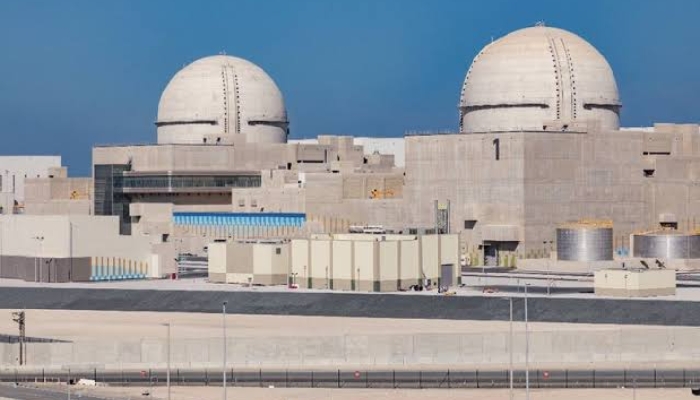
Dubai, Aug 2: The United Arab Emirates (UAE) announced on Saturday that it has started operations in the first of four reactors at the Barakah nuclear power station - the first nuclear power plant in the Arab world.

Emirates Nuclear Energy Corporation (ENEC), which is building and operating the plant with Korea Electric Power Corporation (KEPCO) said in a press release that its subsidiary Nawah Energy Company "has successfully started up Unit 1 of the Barakah Nuclear Energy Plant, located in the Al Dhafrah Region of Abu Dhabi".

That signals that Unit 1, which had fuel rods loaded in March, has achieved "criticality" - a sustained fission chain reaction.

"The start-up of Unit 1 marks the first time that the reactor safely produces heat, which is used to create steam, turning a turbine to generate electricity," said ENEC.

Barakah, which was originally scheduled to open in 2017, has been dogged by delays and is billions of dollars over budget. It has also raised myriad concerns among nuclear energy veterans who are concerned about the potential risks Barakah could visit upon the Arabian Peninsula, from an environmental catastrophe to a nuclear arms race.

Paul Dorfman, an honorary senior research fellow at the Energy Institute, University College London and founder and chair of the Nuclear Consulting Group, has criticised the Barakah reactors' "cheap and cheerful" design that he says cuts corners on safety.

Dorfman authored a report (PDF) last year detailing key safety features Barakah's reactors lack, such as a "core catcher" to literally stop the core of a reactor from breaching the containment building in the event of a meltdown. The reactors are also missing so-called Generation III Defence-In-Depth reinforcements to the containment building to shield against a radiological release resulting from a missile or fighter jet attack.

Both of these engineering features are standard on new reactors built in Europe, says Dorfman.

There have been at least 13 aerial attacks on nuclear facilities in the Middle East - more than any other region on earth.

The vulnerability of critical infrastructure in the Arabian Peninsula was further laid bare last year after Saudi Arabia's oil facilities at Abqaiq and Khurais were attacked by 18 drones and seven cruise missiles - an assault that temporarily knocked out more than half of the kingdom's oil production.

On Saturday, Dorfman reiterated his concern that there is no regional protocol in place to determine liability should an accident or incident at Barakah result in radioactive contamination spreading from the UAE to its neighbours. 

"Given Barakah has started up, because of all the well-rehearsed nuclear safety and security problems, it may be critically important that the Gulf states collectively evolve a Nuclear Accident Liability Convention, so that if anything does go wrong, victim states may have some sort of redress," Dorfman told Al Jazeera. 

The UAE has substantial oil and gas reserves, but it has made huge investments in developing alternative energy sources, including nuclear and solar.

Experts though have questioned why the UAE - which is bathed in sunlight and wind - has pushed ahead with nuclear energy - a far more expensive and riskier option than renewable energy sources.

When the UAE first announced Barakah in 2009, nuclear power was cheaper than solar and wind. But by 2012 - when the Emirates started breaking ground to build the reactors - solar and wind costs had plummeted dramatically.

Between 2009 and 2019, utility-scale average solar photovoltaic costs fell 89 percent and wind fell 43 percent, while nuclear jumped 26 percent, according to an analysis by the financial advisory and asset manager Lazard.

There are also concerns about the potential for Barakah to foment nuclear proliferation in the Middle East - a region rife with geopolitical fault lines and well-documented history of nuclear secrecy.

The UAE has sought to distance itself from the region's bad behaviour by agreeing not to enrich its own uranium or reprocess spent fuel. It has also signed up to the United Nation's nuclear watchdog's Additional Protocol, significantly enhancing inspection capabilities, and secured a 123 Agreement with the United States that allows bilateral civilian nuclear cooperation.


Comments

Add new comment

  • Coastaldigest.com reserves the right to delete or block any comments.
  • Coastaldigset.com is not responsible for its readers’ comments.
  • Comments that are abusive, incendiary or irrelevant are strictly prohibited.
  • Please use a genuine email ID and provide your name to avoid reject.
News Network
April 30,2020

Riyadh, Apr 30: Saudi Arabia on Thursday recorded 1,351 new coronavirus cases in the last 24 hours, bringing the total number of infections in the country to 22,753, the Ministry of Health said in a statement.

The ministry also announced 5 more deaths and 210 new recoveries, raising the total number of fatalities and recoveries to 162 and 3,163 respectively.

Riyadh with 440 cases topped the list, followed by 392 cases in Makkah, 120 in Jeddah and 119 in Madinah.

Comments

Add new comment

  • Coastaldigest.com reserves the right to delete or block any comments.
  • Coastaldigset.com is not responsible for its readers’ comments.
  • Comments that are abusive, incendiary or irrelevant are strictly prohibited.
  • Please use a genuine email ID and provide your name to avoid reject.
News Network
January 17,2020

Bengaluru, Jan 17: India’s latest communication satellite GSAT-30 was successfully launched from the Spaceport in French Guiana during the early hours on Friday.

In a press release, ISRO, has stated that the launch vehicle 'Ariane-5 VA-251' was blasted off from Kourou Launch Base, French Ginana at 0230 hours, carrying India’s GSA-30 and EUTELSAT KONNECT for Eutelasat, as per schedule.

The Ariane 5 upper stage in an elliptical Geosynchronous Transfer Orbit.

With a lift-off mass of 3,357 kg, GSAT-30 will provide continuity to operational services on some of the in-orbit satellites.

GSAT-30 derives its heritage from ISRO’s earlier INSAT/GSAT satellite series and will replace INSAT-4A in orbit.

“GSAT-30 has a unique configuration of providing flexible frequency segments and flexible coverage. The satellite will provide communication services to Indian mainland and islands through Ku-band and wide coverage covering Gulf countries, a large number of Asian countries and Australia through C-band," ISRO Chairman Dr K Sivan said.

Dr Sivan also said that “GSAT-30 will provide DTH Television Services, connectivity to VSATs for ATM, Stock-exchange, Television uplinking and teleport Services, Digital Satellite News Gathering (DSNG) and e-governance applications. The satellite will also be used for bulk data transfer for a host of emerging telecommunication applications.”

ISRO’s Master Control Facility (MCF) at Hassan in Karnataka took over the command and control of GSAT-30 immediately after its separation from the launch vehicle. Preliminary health checks of the satellite revealed its normal health.

In the days ahead, orbit-raising maneuvers will be performed to place the satellite in Geostationary Orbit (36,000 km above the equator) by using its onboard propulsion system.

During the final stages of its orbit raising operations, the two solar arrays and the antenna reflectors of GSAT-30 will be deployed. Following this, the satellite will be put in its final orbital configuration.

The satellite will be operational after the successful completion of all in-orbit tests.

Comments

Add new comment

  • Coastaldigest.com reserves the right to delete or block any comments.
  • Coastaldigset.com is not responsible for its readers’ comments.
  • Comments that are abusive, incendiary or irrelevant are strictly prohibited.
  • Please use a genuine email ID and provide your name to avoid reject.

