UAE to tow giant icebergs from Antarctic for water need

Agencies
July 2, 2018

Dubai, Jul 2: A United Arab Emirates (UAE) firm has launched an official website for a project to tow icebergs from Antarctica to the UAE coasts during the first quarter of 2020 "to leverage them as new sources of water in the region".

The National Advisor Bureau Ltd put forward the UAE-IcebergProject to highlight the upcoming stages and benefits in environment and economy, Xinhua reported on Sunday quoting UAE state news agency WAM.

The project is estimated to cost $50-60 million.

The pilot phase of the project will kick off during the second half of 2019 towards the coast of Perth in Australia, or the coast of Cape Town in South Africa.

The company is currently developing a unique technology which would reduce project costs, ensure zero ice melting during the transportation phase, and facilitate water-transfer processes to customers at minimal costs.

The project which will support the UAE's quest for clean drinking water was first mentioned in the UAE media in May 2017.

WAM reported the project would also place the UAE on the "glacial tourism map" as the first desert country to offer glacial tourism on its coasts, saving iceberg enthusiasts the trouble of travelling to the North and South Poles.

Comments

SATHYA VISHWASI
 - 
Monday, 2 Jul 2018

HEIGHT OF MADNESS, FOOLISHNESS AND SIGN OF Money intoxication .

Add new comment

  • Coastaldigest.com reserves the right to delete or block any comments.
  • Coastaldigset.com is not responsible for its readers’ comments.
  • Comments that are abusive, incendiary or irrelevant are strictly prohibited.
  • Please use a genuine email ID and provide your name to avoid reject.
News Network
June 26,2020

Dubai, Jun 26: As summers in Dubai bloom in its full glory, the most savoured summer fruit - Mongo - is getting the most special treatment in the city as it gets delivered to customers via an emperor like ride of a Lamborghini.

As per a video report by Gulf News, the Pakistan Supermarket in Dubai is delivering the king of fruits to the doorsteps of its customers in a green coloured Lamborghini to match the level of its supremacy among fruits.

"The king should travel like a king," says the managing director of the store, Mohammad Jehanzeb who delivers the pulpy fruit by himself and also takes the customers on a short ride in the luxury car.

In order to avail the offer rolled out on the Facebook page of the famous supermarket, customers are required to make a minimum order of Dh100, reports the Gulf News.

"The idea is to put a smile on people's faces and make them feel special," says Jehanzeb who has put a smile on the face of dozens of Dubai residents amidst the throes of a pandemic with his 'Mangoes in Lamborghini' campaign.

The delicacy this year has gone viral with videos of delighted mango lovers taking a joy ride in the supercar doing rounds over the internet.

"The joy ride was essentially meant for kids who have been sequestered at homes because of the coronavirus but adults are equally thrilled at the prospect of getting behind the wheels of my Lamborghini Huracan. I am happy to oblige them too," says Jehanzeb.

"Each order takes about an hour. We do about 7-8 home deliveries a day but are hoping to ramp up the numbers to 12," he adds.

Arshad Khan who hails from the Indian city of nawabs - Lucknow- ordered the 'nawabi' varieties - Sindhri and Anwar Ratol - and said that his children were exhilarated after hearing the roar of the Lamborghini outside their Falcon City villa.

"For someone who hails from Lucknow -- the land of the famous dussheri and landga mangoes -- I was a bit skeptical about the taste of Pakistani mangoes. I ordered them for the sheer experience of seeing them come to my place in a luxury supercar," Gulf News quoted Khan as saying.

"It was quite exhilarating and I must confess that the mangoes were as delicious as the ones back home," he added.

Mango fruit has been a delicacy in the 16th-century Hindustan sub-continent. It holds a fascinating narrative in Babur Nama which is an autobiography of the Mughal emperor Zahiruddin Muhammad Babur.

Comments

Add new comment

  • Coastaldigest.com reserves the right to delete or block any comments.
  • Coastaldigset.com is not responsible for its readers’ comments.
  • Comments that are abusive, incendiary or irrelevant are strictly prohibited.
  • Please use a genuine email ID and provide your name to avoid reject.
Agencies
July 29,2020

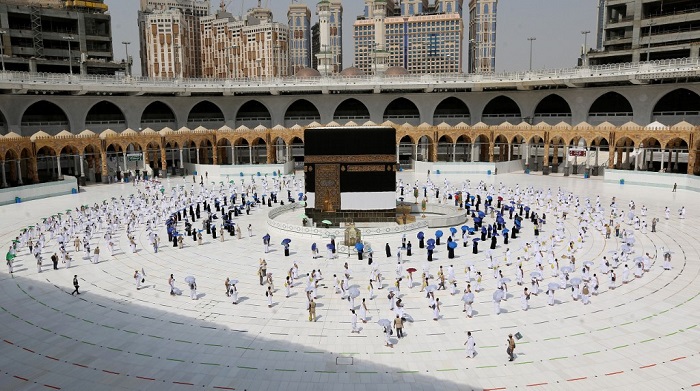
Dubai, Jul 29: Muslim pilgrims on Wednesday begin the annual Haj, downsized this year as the Saudi hosts strive to prevent a coronavirus outbreak during the five-day pilgrimage.

The Haj, one of the five pillars of Islam and a must for able-bodied Muslims at least once in their lifetime, is usually one of the world's largest religious gatherings.

But this year only up to 10,000 people already residing in the Kingdom will participate in the ritual, a tiny fraction of the 2.5 million pilgrims from around the world that attended last year.

"There are no security-related concerns in this pilgrimage, but (downsizing) is to protect pilgrims from the danger of the pandemic," said Khalid bin Qarar Al Harbi, Saudi Arabia's director of public security.

Pilgrims will be required to wear masks and observe social distancing during a series of religious rites that are completed over five days in the holy city of Makkah and its surroundings in western Saudi Arabia.

Those selected to take part in the Haj were subject to temperature checks and placed in quarantine as they began trickling into Makkah at the weekend.

State media showed health workers sanitising their luggage, and some pilgrims reported being given electronic wristbands to allow authorities to monitor their whereabouts.

Workers, clutching brooms and disinfectant, were seen cleaning the area around the Kaaba, the structure at the centre of the Grand Mosque draped in gold-embroidered cloth towards which Muslims around the world pray.

Haj authorities have cordoned off the Holy Kaaba this year, saying pilgrims will not be allowed to touch it, to limit the chances of infection.

They also reported setting up multiple health facilities, mobile clinics and ambulances to cater to the pilgrims.

Saudi authorities said only around 1,000 pilgrims residing in the Kingdom would be permitted for the Haj. Some 70 per cent of the pilgrims are foreigners residing in the Kingdom, while the rest will be Saudi citizens, authorities said.

All worshippers were required to be tested for coronavirus before arriving in the holy city of Makkah and will also have to quarantine after the pilgrimage as the number of cases in the Kingdom nears 270,000.

They were given elaborate amenity kits that include sterilised pebbles for a stoning ritual, disinfectants, masks, a prayer rug and the Ihram, a seamless white garment worn by pilgrims, according to a Haj ministry programme document.

"I did not expect, among millions of Muslims, to be blessed with approval," Emirati pilgrim Abdullah Al Kathiri said in a video released by the Saudi media ministry.

"It is an indescribable feeling... especially since it is my first pilgrimage."

The Haj ministry said non-Saudi residents of the Kingdom from around 160 countries competed in the online selection process but it did not say how many people applied.

Despite the pandemic, many pilgrims consider it safer to participate in this year's ritual without the usual colossal crowds cramming into tiny religious sites, which make it a logistical nightmare and a health hazard.


Comments

Add new comment

  • Coastaldigest.com reserves the right to delete or block any comments.
  • Coastaldigset.com is not responsible for its readers’ comments.
  • Comments that are abusive, incendiary or irrelevant are strictly prohibited.
  • Please use a genuine email ID and provide your name to avoid reject.
News Network
June 2,2020

London/Milan, Jun 2: World Health Organization experts and a range of other scientists said on Monday there was no evidence to support an assertion by a high profile Italian doctor that the coronavirus causing the COVID-19 pandemic has been losing potency.

Professor Alberto Zangrillo, head of intensive care at Italy's San Raffaele Hospital in Lombardy, which bore the brunt of Italy's COVID-19 epidemic, on Sunday told state television that the new coronavirus "clinically no longer exists".

But WHO epidemiologist Maria Van Kerkhove, as well as several other experts on viruses and infectious diseases, said Zangrillo's comments were not supported by scientific evidence.

There is no data to show the new coronavirus is changing significantly, either in its form of transmission or in the severity of the disease it causes, they said.

"In terms of transmissibility, that has not changed, in terms of severity, that has not changed," Van Kerkhove told reporters.

It is not unusual for viruses to mutate and adapt as they spread, and the debate on Monday highlights how scientists are monitoring and tracking the new virus. The COVID-19 pandemic has so far killed more than 370,000 people and infected more than 6 million.

Martin Hibberd, a professor of emerging infectious disease at the London School of Hygiene & Tropical Medicine, said major studies looking at genetic changes in the SARS-CoV-2 virus that causes COVID-19 did not support the idea that it was becoming less potent, or weakening in any way.

"With data from more than 35,000 whole virus genomes, there is currently no evidence that there is any significant difference relating to severity," he said in an emailed comment.

Zangrillo, well known in Italy as the personal doctor of former Prime Minister Silvio Berlusconi, said his comments were backed up by a study conducted by a fellow scientist, Massimo Clementi, which Zangrillo said would be published next week.

Zangrillo told Reuters: "We have never said that the virus has changed, we said that the interaction between the virus and the host has definitely changed."

He said this could be due either to different characteristics of the virus, which he said they had not yet identified, or different characteristics in those infected.

The study by Clementi, who is director of the microbiology and virology laboratory of San Raffaele, compared virus samples from COVID-19 patients at the Milan-based hospital in March with samples from patients with the disease in May.

"The result was unambiguous: an extremely significant difference between the viral load of patients admitted in March compared to" those admitted last month, Zangrillo said.

Oscar MacLean, an expert at the University of Glasgow's Centre for Virus Research, said suggestions that the virus was weakening were "not supported by anything in the scientific literature and also seem fairly implausible on genetic grounds."

Comments

Add new comment

  • Coastaldigest.com reserves the right to delete or block any comments.
  • Coastaldigset.com is not responsible for its readers’ comments.
  • Comments that are abusive, incendiary or irrelevant are strictly prohibited.
  • Please use a genuine email ID and provide your name to avoid reject.

