Udupi: 16-year-old girl ends life after failing SSLC supplementary exams

[email protected] (CD Network)
July 17, 2016

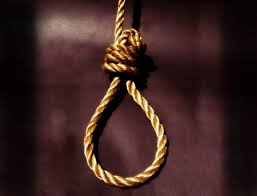
hangUdupi, Jul 17: A teenage girl committed suicide after she learnt that she had failed in the SSLC supplementary exams at Kadtala hamlet coming under the Ajekar police station limits in Udupi.

According to the police, Harshitha (16) had failed in the SSLC examinations held this year.

Hence she had applied and appeared for the SSLC supplementary exams. But when the results of the supplementary were declared, she had failed in it.

She went to her house and committed suicide by hanging, police said.

Comments

SK
 - 
Sunday, 17 Jul 2016

Poor girl, Poor Parents....Nothing to comment....

Add new comment

  • Coastaldigest.com reserves the right to delete or block any comments.
  • Coastaldigset.com is not responsible for its readers’ comments.
  • Comments that are abusive, incendiary or irrelevant are strictly prohibited.
  • Please use a genuine email ID and provide your name to avoid reject.
Agencies
January 12,2020

New Delhi, Jan 12: In a shocking revelation, one unemployed person committed suicide every hour during 2018 when a total of 1,34,516 suicides, including 92,114 male and 42,391 female, were reported in the country, NCRB's "Suicide in India 2018" says.

The latest data, issued by the National Crime Records Bureau (NCRB), which comes under Ministry of Home Affairs, last week reveals that a total of 12,936 unemployed persons committed suicide in 2018, which accounted for 9.6 per cent of the total suicides, and were of aged below 18 years to above 60 years.

Those below 18 years include 31 males and nine females while those between 18 and 30 years comprise 1,240 male and 180 female. A total of 868 male and 95 female were aged between 30 and 45 years. A number of 237 males and 21 females were aged between 45 and 60 years while 2,431 males and 310 females were above 60 years.

Of the total suicides by unemployed persons, males are 10,687 while the females are 2,249.

The highest number of suicides - 12.3 per cent - committed by unemployed persons were in Kerala (1,585 out of 12,936 suicides), 12.2 per cent in Tamil Nadu (1,579), 9.7 per cent in Maharashtra (1,260 suicides), 8.5 per cent in Karnataka (1,094 suicides) and 7 per cent in Uttar Pradesh (902 suicides).

"Each suicide is a personal tragedy that prematurely takes the life of an individual and has a continuing ripple effect, dramatically affecting the lives of families, friends and communities. Every year, more than 1 lakh people commit suicide in our country. There are various causes of suicides like professional/career problems, sense of isolation, abuse, violence, family problems, mental disorders, addiction to alcohol, financial loss, chronic pain etc," says the NCRB adding it collects data on suicides from police recorded suicide cases.

As per the NCRB, rate of suicides has been calculated using projected population for the non-census years whereas for 2011, the population of the Population Census 2011 was used.

The NCRB data says that a total of 1,34,516 suicides were reported in the country during 2018 showing an increase of 3.6 per cent in comparison to 2017 and the rate of suicides has increased by 0.3 during 2018 over 2017.

Government servants accounted for 1.3 per cent (1,707 out of 1,34,516) of the total suicide victims as compared to 6.1 per cent (8,246 out of 1,34,516) of total victims from Private Sector Enterprises.

Employees from Public Sector Undertakings formed 1.5 per cent (2,022 out of 1,34,516) of the total suicide victims, whereas students and unemployed victims accounted for 7.6 per (10,159 victims) of total suicides. Self-employed category accounted for 9.8 per cent of total suicide victims (13,149 out of 1,34,516).

A total of 10,349 persons involved in farming sector (consisting of 5,763 farmers and cultivators and 4,586 agricultural labourers) have committed suicide during 2018, accounting for 7.7 per cent of total suicides victims (1,34,516) in the country.

A total of 11 transgenders have committed suicide in which three were daily wage earners, one each were 'professionals and salaried persons' and 'unemployed persons' while six falls under 'Other Persons'.


Comments

Add new comment

  • Coastaldigest.com reserves the right to delete or block any comments.
  • Coastaldigset.com is not responsible for its readers’ comments.
  • Comments that are abusive, incendiary or irrelevant are strictly prohibited.
  • Please use a genuine email ID and provide your name to avoid reject.
News Network
June 10,2020

Bengaluru, Jun 10: Internet connectivity, provided under the central government's BharatNet initiative, will be improved in rural areas of Karnataka in the next two to three months, said Deputy Chief Minister CN Ashwath Narayan.

After video conferencing with heads of different agencies and officials, on improving the quality of internet in rural areas, Ashwath Narayan said, "I reviewed the progress of the BharatNet implementation and the steps to be taken to improve the quality of internet connectivity in the next two to three months."

"We also discussed the possibility of giving the implementation of BharatNet to a different agency. We will seek permission from the central government and continue the project. We will ease communication with rural people by ensuring quality and high-speed internet to all Gram Panchayats," he added.

When BSNL officials and other agency representatives who attended the video conference shared their problems, the Deputy Chief Minister assured to solve them through proper coordination.

"Through BharatNet, several government schemes are being implemented in rural areas. Civic service centres are issuing birth and death certificates, Aadhaar cards and social security pensions among others. Of the total 6,000 Gram Panchayats in the state, 4,000 have high-speed internet connectivity, and the remaining will be provided with better internet connectivity through a new agency,'' said Ashwath Narayan.

Additional Secretary (e-governance) Rajeev Chawla, Additional Chief Secretary (IT-BT) EV Ramana Reddy, Principal Secretary (RDPR) Uma Mahadevan, Director (IT) Meena Nagaraj, Collegiate Education Director Pradeep and other senior officials were present in the meeting.

Comments

Add new comment

  • Coastaldigest.com reserves the right to delete or block any comments.
  • Coastaldigset.com is not responsible for its readers’ comments.
  • Comments that are abusive, incendiary or irrelevant are strictly prohibited.
  • Please use a genuine email ID and provide your name to avoid reject.
Ram Puniyani
March 8,2020

They say ‘history repeats itself first as a tragedy and then as a farce’. In case of India, communal violence not only keeps repeating itself, the pattern of the tragedy keeps changing every next time. Some features of the violence are constant, but they are under the wraps mostly. The same can be said about the Delhi violence (February 2020). The interpretations, the causative factors are very discernible, but those who are generally the perpetrators have a knack of shifting the blame on the victim community or those who stand for the victims.

As the carnage began presumably in the aftermath of statement of Kapil Mishra of BJP, which was given in front of a top police official, in which he threatened to get the roads emptied. The roots of violence were sown earlier. The interpretations given by the Hindu Nationalist camp is that the riot is due to the changing demographic profile of the area with Muslims increasing in number in those areas, and coming up of Shaheen Bagh which was presented was like ‘Mini Pakistan’. As per them the policies of BJP in matters of triple talaq, Article 370 and CAA, NPR, NRC has unnerved the ‘radical’ elements and so this violence.

As such before coming to the observations of the activists and scholars of communal violence in India, we can in brief say that violence, in which nearly 46 people have died, include one from police and another from intelligence. Majority victims are Muslims. The violence started right under the nose of the police and the ruling party. From the videos and other eye accounts, police not only looked the other way around, at places it assisted those attacking the innocent victims and burning and looting selective shops. Home minister, Amit Shah, was nowhere on the scene. For first three days the rioters had free run. After the paramilitary force was brought in; the violence simmered and slowly reduced in intensity. The state AAP Government, which in a way is the byproduct of RSS supported Anna Hazare movement, was busy reading Hanuman Chalisa and praying at Rajghat with eyes closed to the mayhem going in parts of Delhi.

Communal violence is the sore point of Indian society. It did begin during colonial period due to British policy of ‘Divide and Rule’. At root cause was the communal view of looking at history and pro active British acts to sow the seeds of Hindu-Muslim divide. At other level the administrative and police the British were fairly neutral. On one hand was the national movement, uniting the people and creating and strengthening the fraternal feeling among all Indians. On the other were Muslim Communalists (Muslim League) and Hindu Communalists (Hindu Mahasabha, RSS) who assisted the British goal of ‘divide and rule’ promoting hatred between the communities. After partition the first major change was the change in attitude of police and administration which started tilting against Muslims. Major studies by Dr. Asghar Ali Engineer, Paul Brass and Omar Khalidi demonstrated that anti Muslim bias is discernible in during and after the riots.

Now the partisan role of police has been visible all through. Sri Krishna Commission report brought forth this fact; as did the research of the Ex DIG of UP police Dr. V.N.Rai. Dr. Rai’s studies also concluded that no communal violence can go on beyond 24 hours unless state administration is complicit in the carnage. In one of the violence, investigation of which was done by concerned Citizen’s team (Dhule, 2013) this author observed that police itself went on to undertake the rampage against Muslims and Muslim properties.

General observation about riots is that violence sounds to be spontaneous, as the Home Minister is pointing out, but as such it is well planned act. Again the violence is orchestrated in such a way that it seems Muslims have begun the riots. Who casts the First stone? To this scholars point out that the carnage is so organized that the encircled community is forced to throw the first stone. At places the pretext is made that ‘they’ (minorities) have thrown the first stone.

The pretexts against minorities are propagated, in Gujarat violence Godhra train burning, in Kandhamal the murder of Swami Laxamannand and now Shaheen bagh! The Hindu Muslim violence began as riots. But it is no more a riot, two sides are not involved. It is plain and simple anti Minority violence, in which some from the majority are also the victims.

This violence is possible as the ‘Hate against this minority’ is now more or less structural. The deeper Hate against Muslims and partly against Christians; has been cultivated since long and Hindu nationalist politics, right from its Shakhas to the social media have been put to use for spreading Hatred. The prevalent deeper hate has been supplanted this time by multiple utterances from BJP leaders, Modi (Can be recognized by clothes), Shah (press EVM machine button so hard that current is felt in Shaheen Bagh), Anurag Thakur (Goli (bullet) Maro) Yogi Aditya Nath (If Boli (Words)Do not work Goli will) and Parvesh Varma (They will be out to rape).

The incidental observation of the whole tragedy is the coming to surface of true colors of AAP, which not only kept mum as the carnage was peaking but also went on to praise the role of police in the whole episode. With Delhi carnage “Goli Maro” seems to be becoming the central slogan of Hindu nationalists. Delhi’s this violence has been the first one in which those getting killed are more due to bullets than by swords or knifes! Leader’s slogans do not go in vain! Courts the protectors of our Constitution seem to be of little help as if one of them like Murlidhar Rao gives the verdict to file against hate mongers, he is immediately transferred.

And lastly let’s recall the academic study of Yale University. It concludes; BJP gains in electoral strength after every riot’. In India the grip of communalism is increasing frighteningly. Efforts are needed to combat Hate and Hate mongers.

Comments

Add new comment

  • Coastaldigest.com reserves the right to delete or block any comments.
  • Coastaldigset.com is not responsible for its readers’ comments.
  • Comments that are abusive, incendiary or irrelevant are strictly prohibited.
  • Please use a genuine email ID and provide your name to avoid reject.