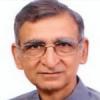
Udupi: Documentary on Haji Abdulla to be released on Monday

coastaldigest.com news network
October 28, 2017

Udupi, Oct 28: The ‘Being Social’ team has produced an hour-long documentary on philanthropist, freedom fighter and founder of Corporation Bank, the late Haji Abdulla Saheb (1882-1935), who lived in the temple-town of Udupi.

Addressing presspersons here on Saturday, Avinash Kamath, head of the team, said it took the team about a year to produce the documentary. He claimed that this was the first documentary on Haji Abdulla Saheb after 82 years of his death. The documentary focuses on his life and achievements.

“The intention of the documentary is to let the present and future generations know about Haji Abdulla Saheb and what he did for Udupi and its people,” he said.

The script of the documentary was written by Shrikanth Shetty and edited by Nithish Rao, while Shashikanth Shetty has done the camera work. The graphics had been designed by Gururaj B., while Mr. Kamath provided the voice over.

Though the documentary is in English, it had Kannada subtitles. It will be uploaded on YouTube.

The documentary will be released at the Nutana Ravindra Mantapa on the MGM College campus at5.30 p.m. on Monday.

Comments

Zafar Syed
 - 
Sunday, 25 Aug 2019

I am grandson of Haji  Abdullah Saheb it is a great honour that a documentary  is made on my great  igrandfather I am proud of him

Afshan Syed
 - 
Sunday, 25 Aug 2019

I am grand daughter of dear Haji Abdulla Saheb  I am so happy that a documentary is made on him Ayesha Syed 

Add new comment

  • Coastaldigest.com reserves the right to delete or block any comments.
  • Coastaldigset.com is not responsible for its readers’ comments.
  • Comments that are abusive, incendiary or irrelevant are strictly prohibited.
  • Please use a genuine email ID and provide your name to avoid reject.
coastaldigest.com news network
June 16,2020

New Delhi, Jun 16: The class 10 and 12 students of the CICSE board can choose not to appear for pending board exams and be marked as per their performance in pre-board exams or internal assessment, according to top officials.

The board had also submitted the proposal before the Bombay High Court on Monday in response to a petition filed by a parent seeking directions to the authorities to cancel exams in view of the spike in COVID-19 cases.

According to Gerry Arathoon, Chief Executive and Secretary, Council for the Indian School Certificate Examinations (CISCE), the students will have to communicate their option to their respective schools by June 22.

For latest updates on coronavirus outbreak, click here

The exams which were postponed due to the lockdown to contain the spread of coronavirus, are now scheduled to be conducted from July 1 to 14. However, several parents have been demanding the exams be scrapped.

"The students will be given two options---they either appear for the rescheduled exams or choose to have their results based on their performance in the pre-board exams or internal assessment. The option will be available only for the pending exams, the result of the subjects for which exams were already conducted, will be calculated as per performance in the exam only," Arathoon said.

The board also clarified that the students will not be entitled to make a subject-wise choice between the two options for pending exams.

Unlike the Central Board of Secondary Education (CBSE), which will only be conducting exams in 29 subjects crucial for promotion and admission to higher educational institutions, the CISCE will be conducting all pending exams.

The pending CBSE exams are scheduled from July 1 to 15. The schedule for the board exams has been decided in order to ensure that they are completed before competitive examinations. While the engineering entrance exam JEE-Mains is scheduled to be held from July 18 to 23, the medical entrance exam NEET is scheduled for July 26.

While the CBSE has given the option to not appear for pending board exams for differently-abled students, it has canceled the examinations for its around 250 schools situated abroad and has adopted the criteria of awarding marks on the basis of either practical exams conducted or the internal assessment marks.

Coronavirus India update: State-wise total number of confirmed cases, deaths on June 16

A group of parents has filed a petition in the Supreme Court seeking a direction to the CBSE to declare results on the basis of tests already conducted, and calculate the total on an average basis with internal assessment marks of the remaining subjects.

Universities and schools across the country have been shut since March 16, when the Centre announced a countrywide classroom shut down as part of measures to contain the COVID-19 outbreak. A nationwide lockdown was announced on March 24, which came into effect the next day.

While the government has eased several restrictions, schools and colleges continue to remain closed.

According to Home Ministry guidelines, there will be no exam centres in containment zones.

"Wearing of face masks by teachers, staff and students will be mandatory. There shall be provisions of thermal screening and sanitiser at the centres and social distancing rules will have to be followed at exam centres. Special buses may be arranged by states and UTs for transportation of students to exam centres," the Home Ministry has said.

Comments

Add new comment

  • Coastaldigest.com reserves the right to delete or block any comments.
  • Coastaldigset.com is not responsible for its readers’ comments.
  • Comments that are abusive, incendiary or irrelevant are strictly prohibited.
  • Please use a genuine email ID and provide your name to avoid reject.
News Network
April 20,2020

Hubballi, Apr 20: Dejected over failure to get alcohol for almost one month, a forty-five year old man and his sister died after consuming hand sanitizer in Kalghatgi taluk of Dharwad district on Sunday.

The deceased persons, identified as Basavaraj Venkappa Kuruvinkoppa and Jambavva Kattimani (50) of little hamlet Gambyapur, died at Karnataka Institute of Medical Sciences (KIMS).

The wife of the deceased person has lodged a complaint at Kalghatgi police station stating that her husband had been addicted to alcohol since the last 10-12 years.

Basavaraj and his sister have reportedly consumed hand sanitizer several times since the last 2-3 days, severely deteriorating their health as they felt it is replacement for liquor and has high levels of spirit content.

They were admitted to KIMS only by Sunday early morning after complaining of serious pain in the stomach. The KIMS director Dr Ramalingappa Anthartani said that the deceased appears to have consumed too much sanitizer and the doctors couldn't save their life as they approached the hospital very late.

He also claimed that he is awaiting the postmortem report to know how much quantity of hand sanitizer the deceased had consumed.

"Condition of the patients was very critical when they were admitted to KIMS hospital. It seems that they had drunk too much hand sanitizer for non-availability of liquor. Consumption of hand sanitizer could prove fatal as it has high chemical contents" KIMS director Dr Ramalingappa Anthartani said

The Karnataka government has prohibited the sale of liquor ever since the Centre declared lockdown to control the spread of Coronavirus. This has prompted the alcohol addicts to buy liquor by paying hefty prices in the black market.

But, many poor people in villages have started consuming cheaper hooch and this trade has recently flourished in the rural areas.

Hooch trade has also prompted officials of the excise department to conduct raids in several villages of North Karnataka region. The many theft cases of liquor shops are reported in Karnataka as drunkards have become desperate to get alcohol.

The Karnataka government was planning to allow the sale of liquor after the end of the first phase of lockdown. But, the rising cases of Corona positive cases has prompted it to extend the ban on liquor sale until May 3.

Comments

Add new comment

  • Coastaldigest.com reserves the right to delete or block any comments.
  • Coastaldigset.com is not responsible for its readers’ comments.
  • Comments that are abusive, incendiary or irrelevant are strictly prohibited.
  • Please use a genuine email ID and provide your name to avoid reject.
Ram Puniyani
June 29,2020

In Minneapolis, US an African American, George Floyd lost his life as the white policeman, Derek Chauvin, caught hold of him and put his knee on his neck. This is a technique developed by Israel police. For nine long minutes the knee of the while policeman was on the neck of George, who kept shouting, I can’t breathe.

Following this gruesome murder America erupted with protests, ‘Black lives matter’. The protestors were not just African Americans but also a large section of whites. Within US one police Chief apologized for the act of this. In a touching gesture of apology the police force came on its knees. This had reverberations in different parts of the World.

The act was the outcome of the remnants of the racial hatred against blacks by the whites. It is the hatred and the perceptions which are the roots of such acts of violence. What was also touching that the state of democracy in US is so deep that even the police apologized, the nation, whites and blacks, stood up as a sensitive collective against this violence.

US is not the only country where the brutal acts of violence torment the marginalized sections of society. In India there is a list of dalits, minorities and adivasis who are regularly subjected to such acts. But the reaction is very different. We have witnessed the case of Tabrez Ansari, who was tied to the pole by the mob and beaten ruthlessly. When he was taken to police station, police took enough time to take him to hospital and Tabrez died.

Mohsin Sheikh, a Pune techie was murdered by Hindu Rashtra Sena mob, the day Modi came to power in 2014. Afrazul was killed by Shambhulal Regar, videotaped the act released on social media. Regar believed that Muslims are indulging in love Jihad, so deserve such a fate. Mohammad Akhlaq is one among many names who were mob lynched on the issue of beef cow. The list can fill pages after pages.

Recently a young dalit boy was shot dead for the crime of entering a temple. In Una four dalits were stripped above waste and beaten mercilessly. Commenting on this act the Union Minister Ramvilas Paswan commented that it is a minor incident. Again the list of atrocities against dalits is long enough. The question is what Paswan is saying is the typical response to such gruesome murders and tortures. In US loss of one black life, created the democratic and humane response. In India there is a general silence in response to these atrocities. Some times after a good lapse of time, the Prime Minister will utter, ‘Mother Bharati has lost a son’. Most of the time victim is blamed. Some social groups raise their voice in some fora but by and large the deafening silence from the country is the norm.

India is regarded as the largest democracy. Democracy is the rule of law, and the ground on which the injustices are opposed. In America though the present President is insensitive person, but its institutions and processes of democratic articulations are strong. The institutions have deepened their roots and though prejudices may be guiding the actions of some of the officers like the killer of George, there are also police officers who can tell their President to shut up if he has nothing meaningful to say on the issue. The prejudices against Blacks may be prevalent and deep in character, still there are large average sections of society, who on the principles of ‘Black lives matter’. There are large sections of vocal population who can protest the violation of basic norms of democracy and humanism.

In India by contrast there are multiple reasons as to why the lives of Tabrez Ansari, Mohammad Akhlaq, Una dalit victims and their likes don’t matter. Though we claim that we are a democracy, insensitivity to injustices is on the rise. The strong propaganda against the people from margins has become so vicious during last few decades that any violence against them has become sort of a new normal. The large populace, though disturbed by such brutalities, is also fed the strong dose of biases against the victims. The communal forces have a great command over effective section of media and large section of social media, which generates Hate against these disadvantaged groups, thereby the response is muted, if at all.

As such also the process of deepening of our democracy has been weak. Democracy is a dynamic process; it’s not a fixed entity. Decades ago workers and dalits could protest for their rights. Now even if peasants make strong protests, dominant media presents it as blocking of traffic! How the roots of democracy are eroded and are visible in the form where the criticism of the ruling dispensation is labelled as anti National..

Our institutions have been eroded over a period of time, and these institutions coming to the rescue of the marginalized sections have been now become unthinkable. The outreach of communal, divisive ideology, the ideology which looks down on minorities, dalits and Adivasis has risen by leaps and bounds.

The democracy in India is gradually being turned in to a hollow shell, the rule of law being converted in to rule of an ideology, which does not have faith in Indian Constitution, which looks down upon pluralism and diversity of this country, which is more concerned for the privileges of the upper caste, rich and affluent. The crux of the matter is the weak nature of democracy, which was on way to become strong, but from decades of 1980s, as emotive issues took over, the strength of democracy started dwindling, and that’s when the murders of the types of George Floyd, become passé. One does complement the deeper roots of American democracy and its ability to protect the democratic institutions, which is not the case in India, where protests of the type, which were witnessed after George Floyd’s murder may be unthinkable, at least in the present times. 

Comments

Add new comment

  • Coastaldigest.com reserves the right to delete or block any comments.
  • Coastaldigset.com is not responsible for its readers’ comments.
  • Comments that are abusive, incendiary or irrelevant are strictly prohibited.
  • Please use a genuine email ID and provide your name to avoid reject.