


Udupi MP assures flyover on NH 66 at Ambalpady Junction

[email protected] (CD Network)
March 24, 2016

Udupi, Mar 24: A feasibility study will be conducted soon for the construction of a flyover at the Ambalpady Junction on National Highway 66, according to Udupi-Chikkamagaluru MP Shobha Karandlaje.
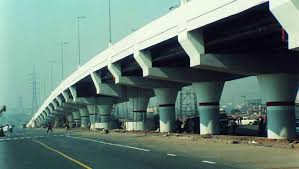
flyoverThe assurance comes after a series of protest by the local residents demanding a vehicle underpass at the Ambalpady Junction. The National Highways Department on March 14 made it clear that an at-grade-level road would be constructed at the junction with sufficient facilities to decongest the traffic such as installation of signal lights, rumbler stripes and barricades.

Ms Karandlaje told media persons that for the present, an at-grade-level road would be constructed at Ambalpady Junction. But as a future measure, a flyover would be constructed there. However, this flyover would not be in the direction of Mangaluru-Kundapur Road, instead it would be in the direction of Brahmagiri-Ambalpady Road.

The public demand for an underpass too would be considered. She would ask the engineers of the National Highways Authority of India (NHAI) to conduct a feasibility study on all available alternatives and suggest proposals. The less costly proposal would be taken up at Ambalpady Junction.

There was public opposition to the way the road on NH 66 had been constructed at the Brahmavar bus stand. Besides Brahmavar, there were some other spots on NH 66 in Udupi district, which were causing problems to people. She would ask the Road Safety Committee of NHAI to visit these spots and find a solution. Emphasis would also be given to construct the Malpe-Tirthahalli National Highway 169A as soon as possible. She would also urge the NHAI to widen the Charmadi Ghat and to concrete it fully. This would provide a better connectivity between Udupi and Chikkamagaluru districts.

This ghat road would then be an alternative to the Shiradi Ghat Road connecting Mangaluru with Bengaluru. The Shiradi Ghat road was prone to problems and road repairs every year, she said.

She had also recommended the inclusion of Hejmady village in Udupi district for the construction of a port under the Sagarmala project of the Union government, she said.

Comments

IBRAHIM.HUSSAIN
 - 
Thursday, 24 Mar 2016

This Shoba do not brain in her head. In the national highway 66 will be having large vehicles and heavy load cargo with hight. If she recommends for fly over Brahma Giri to Ambalapadi direction where the high load cargo vehicles can pass? At least may require 8 - to 10 meter high fly over. it is not possible and not feasible.

It would be better to have a cattle pass bridge this way so that upto truck level high vehicles can pass through and it is very inexpensive.

SK
 - 
Thursday, 24 Mar 2016

Good response.....let us see the reality soon, hope it will not be a promise of 15 lakhs by Feku Maharaj..... Feku played a good drama by replying to the letter of a student from Brahmavar about the problems faced at Brahmavar junction / bus stop.... Does he have any solution to the problems narrated by the student.....

meghana
 - 
Thursday, 24 Mar 2016

First Sincerely complete ongoing project. pumpwel circle, and ujjodi road construction is very slow,

Add new comment

  • Coastaldigest.com reserves the right to delete or block any comments.
  • Coastaldigset.com is not responsible for its readers’ comments.
  • Comments that are abusive, incendiary or irrelevant are strictly prohibited.
  • Please use a genuine email ID and provide your name to avoid reject.
coastaldigest.com news network
May 23,2020

Mudigre, May 23: The throat swab sample of a Primary Health Care doctor at Mudigere in Chikkamagaluru district tested negative for COVID-19. 

It was wrongly tested positive for COVID-19 on May 19, clarified DC Dr Bagadi Gautham. 

The doctor's throat swab was tested again in Shivamogga and Hassan labs where it has tested negative. He will be discharged from hospital, said the DC.

All the 28 contacts of the doctor too tested negative. 

A total of 485 primary contacts and 961 secondary contacts of the doctor were quarantined after the throat swab of the doctor was tested positive. All the contacts who have been quarantined will be sent back home from quarantine centres, added DC.

Comments

Add new comment

  • Coastaldigest.com reserves the right to delete or block any comments.
  • Coastaldigset.com is not responsible for its readers’ comments.
  • Comments that are abusive, incendiary or irrelevant are strictly prohibited.
  • Please use a genuine email ID and provide your name to avoid reject.
News Network
April 5,2020

New Delhi, April 5: Former Karnataka chief minister HD Kumaraswamy on Sunday challenged Prime Minister Narendra Modi to offer a "credible scientific and rational" explanation for his candle-lighting call and said he is giving "meaningless tasks" to an already exhausted population.

The JD(S) leader questioned if the Prime Minister asked the nation to observe a candle-light vigil on the eve of foundation day of BJP.

"Has the PM slyly asked the nation to observe a candle light vigil on the eve of foundation day of BJP? April 6 being its foundation day, what else can explain the choice of date & time for this event? I challenge the PM to offer a credible scientific and rational explanation," Kumaraswamy tweeted.

"The government is yet to provide PPEs for doctors and make test kits affordable for the common man. Without telling the nation what concrete steps are being taken to combat COVID-19 menace, the prime minister is giving meaningless tasks to an already exhausted population," he tweeted.

"It is shameful to convert the national crisis into an event of self aggrandizement & it is beyond shameful to push the hidden agenda of his party in the face of global calamity. May sense prevail upon the PM," the JDS leader said in another tweet.

Amid a nationwide COVID-19 lockdown, Prime Minister Modi on Friday appealed to countrymen to light diyas and candles on April 5 at 9 pm to fight the darkness spread by the pandemic. He asked the people to turn off all the lights in their homes and stand at doors or balconies and light candles or diyas, torches or mobile flashlights for 9 minutes on April 5.

Last month, PM Modi had asked the people to come out in their balconies and clap and beat utensils to show appreciation for doctors, nurses and others helping fight coronavirus on 'Janata Curfew'.

Comments

Add new comment

  • Coastaldigest.com reserves the right to delete or block any comments.
  • Coastaldigset.com is not responsible for its readers’ comments.
  • Comments that are abusive, incendiary or irrelevant are strictly prohibited.
  • Please use a genuine email ID and provide your name to avoid reject.
Agencies
July 5,2020

The deadly coronavirus that entered India while there was still nip in the air has beaten rising mercury, humid conditions, unique Indian genome and has entered monsoon season with more potency as fresh cases are only breaking all records in the country.

India recorded a single-day spike of record 24,850 new coronavirus cases on Sunday, taking its total tally to 6.73 lakh corona-positive cases.

Top Indian microbiologists were hopeful in March that after the 21-day lockdown, as summer approaches, the rise in temperature would play an important role in preventing the drastic spread of COVID-19 virus in India.

Several virologists hinted that by June this year, the impact of COVID-19 would be less than what it appeared in March-April.

The claims have fallen flat as the virus is mutating fast, becoming more potent than ever.

According to experts, the novel coronavirus is a new virus whose seasonality and response to hot humid weather was never fully understood.

"The theory was based on the fact that high temperatures can kill the virus as in sterilisation techniques used in healthcare. But these are controlled environment conditions. There are many other factors besides temperature, humidity which influence the transmission rate among humans," Dr Anu Gupta, Head, Microbiologist and Infection Control, Fortis Escorts Heart Institute, told IANS.

There is no built-up immunity to COVID-19 in humans.

"Also, asymptomatic people might be passing it to many others unknowingly. New viruses tend not to follow the seasonal trend in their first year," Gupta emphasized.

Globally, as several countries are now experiencing hot weather, the World Health Organization (WHO) reported a record hike in the number of coronavirus cases, with the total rising by 2,12,326 in 24 hours in the highest single-day increase since COVID-19 broke out.

So far over 11 million people worldwide have tested positive for the disease which has led to over 5,25,000 deaths, according to data from Johns Hopkins University. The US remained the worst-hit country with over 28 lakh cases, followed by Brazil with 15.8 lakh.

According to Sandeep Nayar, Senior Consultant and HOD, Respiratory Medicine, Allergy & Sleep Disorders, BLK Super Speciality Hospital in New Delhi, whether temperature plays a role in COVID-19 infection is highly debated.

One school of thought said in the tropical regions of South Asia, the virus might not thrive longer.

"On the other hand, another school of thought has found that novel Coronavirus can survive in a hot and humid environment and tropical climate does not make a difference to the virus. According to them, this is what distinguishes the novel coronavirus from other common viruses, which usually wane in hot weather," stressed Nayar.

Not much has been studied in the past and no definite treatment or vaccine is available to date.

"Every day, new properties and manifestation of the disease come up. As of now, the only way to prevent this monster is by taking appropriate precautions. Hand hygiene, social distancing, cough etiquette and face masks definitely reduce spread of COVID-19 infection," Nayar told IANS.

Not just top Indian health experts, even Indian-American scientists had this theory in mind that sunshine and summer may ebb the spread of the coronavirus.

Ravi Godse, Director of Discharge Planning, UPMC Shadyside Pennsylvania in the US told IANS in April: "In the summer, the humidity can go up as well, meaning more water drops in the air. If the air is saturated with water and somebody sneezes virus droplets into such air, it is likely that the droplets will fall to the ground quicker, making them less infectious. So the short answer is yes, summer/sunshine could be bettera.

According to Dr Puneet Khanna, Head of Respiratory Medicine and Pulmonology, Manipal Hospital, Delhi, COVID-19 death rates are not too different in tropical countries but since the disease affected them late it was yet to show its peak in these areas.

"The virus can survive well in hot and humid countries and this is proven now," he stressed.

Comments

Add new comment

  • Coastaldigest.com reserves the right to delete or block any comments.
  • Coastaldigset.com is not responsible for its readers’ comments.
  • Comments that are abusive, incendiary or irrelevant are strictly prohibited.
  • Please use a genuine email ID and provide your name to avoid reject.