


Udupi: Sea erosion damages concrete road near Padukere

News Network
July 14, 2018

Udupi, Jul 14: A concrete road belonging to the Fisheries Department has been damaged due to the fresh sea erosion amidst heavy rains at Kankoda area near Padukere in Udupi district.

The region is a peninsular with the Arabian Sea on the West and the Udyavara rivulet on the East. The concrete road running along the coast connects Malpe and Padukere with the Katapady and Mutt villages.

Sea erosion occurs here almost every here. The most affected area due to sea erosion is near the Pandarinath Bhajana Mandira.

Meanwhile, a few cracks had developed on the slope protection wall built to protect the hillock at Othinene in Byndoor taluk. The soil on the hillock is loose. Hence the slope protection wall was built to prevent any soil from falling on the National Highway 66.

“The personnel of the IRB company, which is implementing the highway widening work, have been placing sand bags to prevent any further slippage of soil at the slope protection wall. It has not affected the movement of vehicles on the highway. But the problem may become serious if there are severe rains. We have given instructions to the IRB company to take protection measures,” Kiran Gurayya, Byndoor Tahsildar, said.

Comments

Kumar
 - 
Saturday, 14 Jul 2018

Udupi, Ullal sea shores and nearby areas are always under threat of erosion. 

Danish
 - 
Saturday, 14 Jul 2018

Too risky. No sand bags or concrete wall beside of that sea?

Add new comment

  • Coastaldigest.com reserves the right to delete or block any comments.
  • Coastaldigset.com is not responsible for its readers’ comments.
  • Comments that are abusive, incendiary or irrelevant are strictly prohibited.
  • Please use a genuine email ID and provide your name to avoid reject.
News Network
July 29,2020

New Delhi, July 29: The government of India today announced Unlock 3.0, lifting of night curfew from August 1 and opening of yoga institutes and gymnasiums from August 5 while educational institutes will remain closed throughout August.

According to the Unlock 3.0 guidelines issued by the Ministry of Home Affairs (MHA), the lockdown in containment zones will be extended until August 30. The new guidelines will be in effect from August 1.

The operation of Metro rail and international flights will remain suspended. Cinema halls, swimming pools, entertainment parks, theatres, bars, auditoriums, assembly halls and similar places will remain shut. Large gatherings are also prohibited.

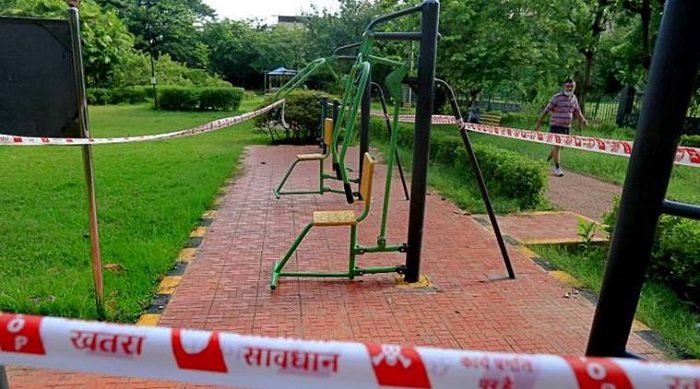
Yoga institutes and gymnasiums will start operating from August 5 for which the Ministry of Health and Family Welfare will be issuing Standard Operating Procedures. 

Independence Day celebrations will be held with social distancing norms in place.

Restrictions on the movement of individuals during the night (Night curfew between 10 PM and 5 AM) have been removed.

According to the order, states have been given powers to prohibit certain activities outside containment zones or impose such restrictions as deemed necessary based on their assessment of the situation.

"However, there shall be no restriction on inter-state and intra-state movement of persons and goods. No separate permission/approval/e-permit will be required for such movements," the order said. 

In the previous two Unlock guidelines, the government had substantially opened various activities.

Comments

Add new comment

  • Coastaldigest.com reserves the right to delete or block any comments.
  • Coastaldigset.com is not responsible for its readers’ comments.
  • Comments that are abusive, incendiary or irrelevant are strictly prohibited.
  • Please use a genuine email ID and provide your name to avoid reject.
News Network
June 1,2020

Manglauru, Jun 1: The southwest monsoon has made an onset over Kerala, marking the commencement of the four-month long rainfall season, the India Meteorological Department said on Monday.

"The southwest monsoon has made an onset over Kerala," IMD director general Mrutyunjay Mohapatra said.

The four-month monsoon season from June to September accounts for 75 per cent of rainfall in the country.

Private forecaster Skymet Weather on May 30 had declared arrival of monsoon, but the IMD had differed, saying conditions were not ripe then for such an announcement.

Orange alert

Meanwhile, coastal Karnataka’s Dakshina Kannada district, which is receiving sporadic rains for past couple of days, is on orange alert.

Deputy Commissioner Sindhu B Rupesh declared the orange alert following IMD’s prediction of heavy rainfall in the region.

Comments

Add new comment

  • Coastaldigest.com reserves the right to delete or block any comments.
  • Coastaldigset.com is not responsible for its readers’ comments.
  • Comments that are abusive, incendiary or irrelevant are strictly prohibited.
  • Please use a genuine email ID and provide your name to avoid reject.
coastaldigest.com news network
May 31,2020

Mangaluru, May 31:  Even as the worst locust attack on India in recent years raised concerns over its impact on crops, swarms of locusts have triggered panic in Karnataka’s Dakshina Kannada too. 

Farmers in the coastal district were taken aback when they found the swarms of locusts, which they feared as the arrival of desert locusts in the region.

According to reports, Renjalady village under the limits of Nuji Baltila Gramp Panchayats in Kadaba taluk and Shirlalu village in Belthangady taluk witnessed locust attacks in last couple of days. 

“Locust swarms were seen in many areas. We have also alerted agriculture department. Already insects have destroyed crops of many farmers,” said a farmer in Shirlalu village.  

Joint director of Dakshina Kannada district agriculture department MC Seetha confirmed that officials have received information from villagers about the locust scare and entemologists have already visited the place to collect more information.

Not Desert Locusts?

“We contacted entemologists and forwarded the pictures that farmers sent to us. Looking at the picture, entemologists have opined that it may be calotropis locust or colour grasshopper. Desert locusts usually arrive in lakhs,” said Ms Seetha. Desert locusts that are destroying crops in other parts of India may not come to Dakshina Kannada, she added.

Comments

Add new comment

  • Coastaldigest.com reserves the right to delete or block any comments.
  • Coastaldigset.com is not responsible for its readers’ comments.
  • Comments that are abusive, incendiary or irrelevant are strictly prohibited.
  • Please use a genuine email ID and provide your name to avoid reject.