


Ujjwala scheme provided LPG access, but failed to promote its use: Study

News Network
January 24, 2020

New Delhi, Jan 24: Although India's Ujjwala programme encouraged adoption of liquefied petroleum gas (LPG) for cooking among the poor, households availing the scheme have not shifted away from using highly polluting fuels like firewood, a study reveals.

The researchers, including those from the University of British Columbia (UBC) in Canada, found that additional incentives to encourage regular use of cooking gas are necessary for a complete transition to clean cooking fuel among poor rural households.

They noted that about 2.9 billion people across Asia, Africa, and Latin America burn solid fuels like firewood to meet their cooking energy needs.

This has significant negative implications for public health, the environment, and societal development, according to the researchers.

Through the Pradhan Mantri Ujjwala Yojana (PMUY), India has provided capital cost subsidies to poor women to adopt a clean-burning cooking fuel or LPG.

The researchers explained that within the first 40 months of the scheme, more than 80 million households obtained LPG stoves.

However, the full benefits of LPG adoption depend on near complete replacement of polluting fuels with LPG, according to a research-based policy brief published in the journal Nature Energy.

The scientists said this cannot be assumed solely on the basis of LPG presence in the household.

"Our research shows that Ujjwala was able to attract new consumers rapidly, but those consumers did not start using LPG on a regular basis," Abhishek Kar, a postdoc at Columbia University in the US, told PTI.

The study analysed LPG sales data for over 25,000 consumers, including PMUY beneficiaries, as well as general rural LPG consumers in Koppal district of Karnataka.

The scientists employed data covering all LPG purchases of PMUY beneficiaries through their first year in the programme.

They also assessed the general rural population's purchases during their first five years as consumers to assess the effect of experience on use.

The findings estimate that an average rural family needs to purchase five 14.2 kilogramme-cylinders annually to meet half of their cooking needs.

However, the study said just seven per cent of PMUY beneficiaries in Koppal purchased five or more cylinders annually, suggesting that the beneficiaries seldom use LPG.

The general (nonPMUY) consumers in this region use on average two times more LPG cylinders than PMUY beneficiaries, the researchers noted.

Yet, only 45 per cent of nonPMUY consumers use five or more cylinders per year -- even after several years of experience with LPG, they said.

The team assessed price and seasonal factors affecting LPG use among the general population over a three-year period.

It found that LPG consumers are sensitive to price and seasonality -- LPG cylinder refill rates are lower in the summer when agricultural activity is limited, and cash is scarce.

"There was no scheme incentives to promote use, except general LPG subsidies which is available to all, including the urban middle class," said Kar, who was a Ph.D. scholar at UBC when the research was published.

"If there is no additional income, what cost would a poor family on an already tight budget cut to pay for an extra expense on a regular basis.

"Ujjwala has started the scheme of 5 kg-cylinder in response, but the impact of that on LPG sales is still publicly unknown," he said.

These findings, the researchers noted, suggest the need for additional measures to promote regular LPG use for all rural populations.

Although the finding come from a single district in Southern India, it may also apply to other areas with similar socio-economic conditions, they said.

A more expansive evaluation of PMUY would help design targeted incentives to transform infrequent users to regular users, according to the researchers.

Comments

Add new comment

  • Coastaldigest.com reserves the right to delete or block any comments.
  • Coastaldigset.com is not responsible for its readers’ comments.
  • Comments that are abusive, incendiary or irrelevant are strictly prohibited.
  • Please use a genuine email ID and provide your name to avoid reject.
Agencies
August 8,2020

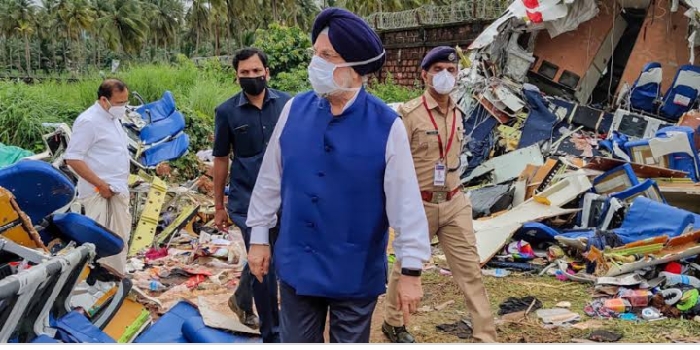
The Civil Aviation Ministry announced an initial assistance of Rs 10 lakh to the dependents of the deceased in the Kozhikode AIE plane crash, while the Kerala government also announced a compensation of Rs 10 lakh each.

Minister of Civil Aviation, Hardeep Singh Puri, who visited the mishap spot on Saturday, said that a detailed probe is already on and the pilot and co-pilot were highly experienced.

He also announced a compensation of Rs 2 lakh each to the injured and Rs. 50,000 each to those who suffered minor injuries. The other normal compensations would be decided in due course.

Puri said that Captain Deepak Vasant Sathe, aged 59, who commandeered the AIE flight, had a flying experience of 10,848 hours, while co-pilot Akhilesh Kumar, aged 32, had a flying experience of 1,723 hours.

"Deepak was one of the most distinguished and experienced pilots. He had a commanding experience of 6,662 hours and was commander of B-737 aircraft for 4,244 hours. He had also operated to Kozhikode international airport 27 times. He joined AIE in 2013 and prior to that he served with the IAF and HAL. He was a figher pilot and a recipient of prestigious sword of honour and a gold medalist," said Puri.

Puri said that even as the flight slipped down to around 35 feet, a major disaster was averted due to timely rescue operations. Local people played an exemplary role and the fire brigade's timely action of cutting the plane body and rescuing the passengers minimised the casualties, he said.

Chief Minister Pinarayi Vijayan also said that the local people and all rescue and relief agencies did a well co-ordinated job. The state government would also meet the entire treatment expenses of the injured.

Till Saturday afternoon, the total number of deaths was 18. While 149 were still in hospitals, 23 were discharged.

Comments

Add new comment

  • Coastaldigest.com reserves the right to delete or block any comments.
  • Coastaldigset.com is not responsible for its readers’ comments.
  • Comments that are abusive, incendiary or irrelevant are strictly prohibited.
  • Please use a genuine email ID and provide your name to avoid reject.
News Network
April 13,2020

New Delhi, Apr 13: India's tally of positive COVID-19 cases rose to 9,152 following an increase of 796 cases in the last 24 hours, the Union Ministry of Health and Family Welfare said on Monday.

Out of the total number of cases, 7,987 patients are active cases while 857 cases have been cured/discharged and migrated.

With 35 deaths in the last 24 hours, the death toll mounted to 308.

According to the ministry, Maharashtra remained at the top with the total cases at 1,985, including 217 patients who have recovered/discharged and 149 patients died.

Delhi's tally of positive COVID-19 cases rose to 1,154 cases, including 27 recovered and 24 patients succumbing to the virus.

Tamil Nadu too reported 1,075 cases, including 50 recovered and 11 patients dead.

Meanwhile, four states have crossed the 500 mark with regards to the total number of cases as Rajasthan recorded 804 cases, Madhya Pradesh with 532 cases, Gujarat with 516 cases and Telangana with 504 cases, as per the ministry.

Comments

Add new comment

  • Coastaldigest.com reserves the right to delete or block any comments.
  • Coastaldigset.com is not responsible for its readers’ comments.
  • Comments that are abusive, incendiary or irrelevant are strictly prohibited.
  • Please use a genuine email ID and provide your name to avoid reject.
News Network
May 15,2020

New Delhi, May 15: Union Health Minister Harsh Vardhan has appealed to all states and Union Territories to ban the sale of smokeless tobacco products and spitting in public places in line with the orders of the Rajasthan and Jharkhand governments to prevent the spread of coronavirus infection.

In a letter to all state health ministers, Vardhan said smokeless tobacco users have a tendency to spit in public places or otherwise and therefore, increase health risks especially those of spreading contagious diseases like COVID-19, tuberculosis, swine flu, encephalitis and others.

"Use of smokeless tobacco also creates an unhygienic environment which further spreads the diseases. The large gathering at the retail outlets where smokeless tobacco products are sold, also pose the risk of spread of COVID-19," he said.

In the letter dated May 11, the Union minister underlined that tobacco use is a major threat to public health globally. He also mentioned the Indian Council of Medical Research's (ICMR) appeal to the public not to consume and spit smokeless tobacco products in public places.

Chewing tobacco products and areca nut increases the production of saliva followed by a very strong urge to spit. Spitting in public places could enhance the spread of the COVID-19, Vardhan said.

"By banning spitting in public places, states and UTs can help in achieving not only Swachh Bharat but also Swasth Bharat (Clean India and Healthy India)," he said.

Vardhan also mentioned the May 1 guidelines issued by the Union Home Ministry under the National Disaster Management Act, 2005, which stipulate that "spitting in public places shall be punishable with fine as may be prescribed by the state/UT local authority and consumption of liquor, pan, gutkha, tobacco etc in public places is not allowed".

Appreciating the efforts of Rajasthan and Jharkhand in this direction, the Union Health Minister urged all states to take similar measures and create widespread awareness regarding the harm of spitting in public places.

The Rajasthan government had by an ordinance banned spinning in public places and sale of paan, gutka and tobacco in the wake of the coronavirus outbreak. The Jharkhand too has imposed a complete ban on all types of tobacco products to prevent spitting in public places that could increase the spread of coronavirus infection.

"I am happy to note that the governments of Jharkhand and Rajasthan have already completely banned the sale of tobacco products and spitting in public places. Therefore, I urge upon you to take similar measures and also create widespread awareness in your state/ UT regarding harms of spitting in public places.

"It is also requested that the directions of Ministry of Home Affairs in this regard may be implemented scrupulously and effectively," Vardhan said in the letter.

Tobacco smoking is a known risk factor for many respiratory infections and increases the severity of related diseases. A review of studies by public health experts convened by WHO on April 29 found that smokers are more likely to develop severe diseases, compared to non-smokers, said Binoy Mathew, senior programme officer of Voluntary Health Association of India.

It is one of the main risk factors for a number of chronic ailments, including cancer, lung and cardiovascular diseases, he said, adding that according to the Global Adult Tobacco Survey, with 268 million or 28.6 per cent of all adults in India, the country has the second largest number of tobacco users in the world.

At least 12 lakh die from tobacco-related diseases every year, Mathew said.

Those keen to quit smoking and smokeless products can avail of free of charge telephone-based services launched by the government. The Ministry of Health has set up a National Tobacco Quit Line Services to provide counselling services to help tobacco consumers quit the habit.

Comments

Add new comment

  • Coastaldigest.com reserves the right to delete or block any comments.
  • Coastaldigset.com is not responsible for its readers’ comments.
  • Comments that are abusive, incendiary or irrelevant are strictly prohibited.
  • Please use a genuine email ID and provide your name to avoid reject.