Ullal Dargah Urs from April 2 to 26, preparation begins

[email protected] (CD Network)
September 10, 2014

Mangalore Press

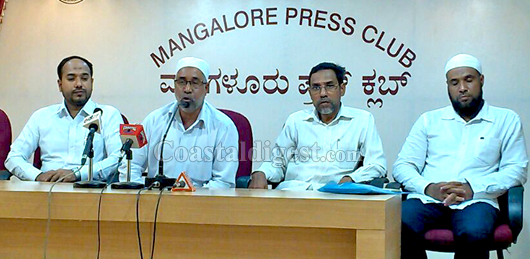
Mangalore, Sep 10: The 20th Urs celebration of the historically famous Dargah Shariff of Hazrat Seyyid Mohammed Shareeful Madani will be held for 25 days from April 2 to April 26, said president of the Dargah U S Hamza.

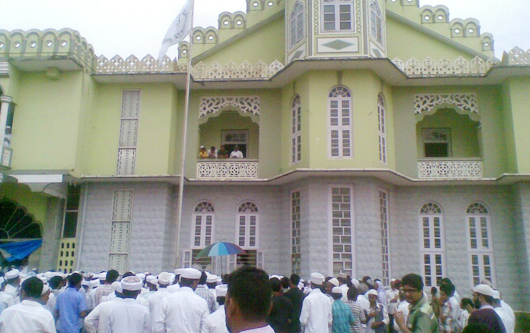
Announcing this at a press conference here, he said that the historically famous Urs fair was held once every five years at the Dargah Shariff at Ullal. Devotees from all over the state, as well as Kerala, Tamil Nadu, Andhra Pradesh and North India arrive to witness and be a part of the glorious celebrations, he said.

This will be the 20th Urs celebrations to be held at the dargah for the duration of 25 days. The flag hoisting ceremony was held on September 5. The Urs will begin with the monthly Zikr and every night there will be special sermons by noted Ulama scholars, he said.

He said that around 20 to 30 lakh devotees from various parts of the country were expected to participate in the Urs celebrations.

There will be monthly Zikr Majlees programme on the inaugural day, and several programmes during the duration of the Uroos including the valedictory ceremony of the Urs on April 23, he added.

Ullal uroos 5 1

Ullal uroos 5 1

Comments

Appas Majid
 - 
Wednesday, 11 Mar 2020

Coming uroos date?

Add new comment

  • Coastaldigest.com reserves the right to delete or block any comments.
  • Coastaldigset.com is not responsible for its readers’ comments.
  • Comments that are abusive, incendiary or irrelevant are strictly prohibited.
  • Please use a genuine email ID and provide your name to avoid reject.
News Network
April 5,2020

Madikeri, Apr 5: Following the novel Coronavirus and imposition of Lockdown in the country and departure of the migrant labour force to their hometowns, the harvest of Pepper and post-harvest process of Coffee have taken a hit in Kodagu region of Karnataka.

In the Coffee land, most of the workers at these estates are primarily from north Karnataka and neighbouring districts, including Periyapatna and Hunsur taluks in Mysuru District. Local workers are also sourced for the job as the harvest area is large.

The Kodagu district which already faced severe natural calamity during the last two years now added with the COVID-19 outbreak and the subsequent Lockdown, many workers have returned to their home districts, barring a few who have been working in the plantations for many years and reside in the estates themselves.

Comments

Add new comment

  • Coastaldigest.com reserves the right to delete or block any comments.
  • Coastaldigset.com is not responsible for its readers’ comments.
  • Comments that are abusive, incendiary or irrelevant are strictly prohibited.
  • Please use a genuine email ID and provide your name to avoid reject.
News Network
March 16,2020

Bengaluru, Mar 16: A 23-year-old mobile app developer was arrested on Saturday for allegedly forging the signature of Infosys Foundation chairperson Sudha Murty to rope in Telugu actor Vijay Devarakonda as an app’s ambassador.

The arrest of Laveti Sai Krishna alias Krishna ML, a resident of Hyderabad, comes a year after the case was registered. Jayanagar police registered a case against Krishna on February 26, 2019 based on a complaint filed by Lt Col (retd) M Ramesh, representative of Infosys Foundation. The complaint was filed after the forged letter didn’t reach Devarakonda and came back to Infosys Foundation instead.

App developer is a B.Pharma holder

“We conducted an investigation and traced the app designer. We caught him and based on information provided by him, we learnt that Krishna was the brain behind the forged signature,” a senior police officer said.

Krishna confessed that he developed a mobile app — ‘Offer nearby’ — and planned to launch it in a big way. He wanted Telugu actor Vijay Devarakonda to be the app’s brand ambassador and tried contacting him. Krishna, however, was unable to meet Vijay.

Krishna then thought he could easily reach the actor if he sent a recommendation letter in the name of Sudha Murty.

“He forged the letterhead of Infosys Foundation and Sudha Murty’s signature. We are verifying his antecedents to know if he committed any other offence earlier,” said Rohini Sepat-Katoch, DCP (south). Rohini said Krishna is a B.Pharma holder and worked with an advertisement firm. Later, he planned to develop an app that provides details of offers for retail customers. He floated Laveti Technologies, and with help from a friend, developed ‘Offer nearby’.

As per the complaint, Krishna created a fake letterhead in the name of Sudha Murty and wrote to Devarakonda, asking him to become the brand ambassador/ partner for his mobile app. Krishna sent it through SpeedPost mentioning the sender’s address as Infosys Foundation. Krishna’s game was up when the letter, which wasn’t delivered to Devarakonda, came back to Infosys Foundation.

Comments

Add new comment

  • Coastaldigest.com reserves the right to delete or block any comments.
  • Coastaldigset.com is not responsible for its readers’ comments.
  • Comments that are abusive, incendiary or irrelevant are strictly prohibited.
  • Please use a genuine email ID and provide your name to avoid reject.
Agencies
May 8,2020

Washington D.C., May 8: The prime time for brain development in a child's life is the first year, where the infant spends most of the time asleep. It is the time when neural connections form and sensory memories are encoded.

However, when sleep is disrupted, as occurs more often among children with autism, brain development may be affected, too.

New research led by the University of Washington finds that sleep problems in a baby's first 12 months may not only precede an autism diagnosis but also may be associated with altered growth trajectory in a key part of the brain, the hippocampus.

The study, which was published in the American Journal of Psychiatry, researchers report that in a sample of more than 400 taken of 6- to 12-month-old infants, those who were later diagnosed with autism were more likely to have had difficulty falling asleep.

It also states that this sleep difficulty was associated with altered growth trajectories in the hippocampus.

"The hippocampus is critical for learning and memory, and changes in the size of the hippocampus have been associated with poor sleep in adults and older children.

As many as 80 per cent of the children with autism spectrum disorder have sleep problems," said Annette Estes, director of the UW Autism Center and senior author of the study.

"In our clinical experience, parents have a lot of concerns about their children's sleep, and in our work on early autism intervention, we observed that sleep problems were holding children and families back," added Estes, who is also a UW professor of speech and hearing sciences.

"It could be that altered sleep is part-and-parcel of autism for some children. One clue is that behavioural interventions to improve sleep don't work for all children with autism, even when their parents are doing everything just right. This suggests that there may be a biological component to sleep problems for some children with autism," said Estes.

To consider links among sleep, brain development, and autism, researchers at the IBIS Network looked at MRI scans of 432 infants, surveyed parents about sleep patterns, and measured cognitive functioning using a standardized assessment.

At the outset of the study, infants were classified according to their risk for developing autism: Those who were at higher risk of developing autism -- about two-thirds of the study sample -- had an older sibling who had already been diagnosed.

Infant siblings of children with autism have a 20 per cent chance of developing autism spectrum disorder -- a much higher risk than children in the general population.

In the current study, 127 of the 432 infants were identified as "low risk" at the time the MRI scans were taken because they had no family history of autism.

They later evaluated all the participants at 24 months of age to determine whether they had developed autism. Of the roughly 300 children originally considered "high familial risk," 71 were diagnosed with autism spectrum disorder at that age.

Problems with sleep were more common among the infants later diagnosed with an autism spectrum disorder, as were larger hippocampi. No other subcortical brain structures were affected, including the amygdala, which is responsible for certain emotions and aspects of memory, or the thalamus, a signal transmitter from the spinal cord to the cerebral cortex.

The authors note that while parents reported more sleep difficulties among infants who developed autism compared to those who did not, the differences were very subtle and only observed when looking at group averages across hundreds of infants.

Sleep patterns in the first years of life change rapidly as infants transition from sleeping around the clock to a more adult-like sleep/wake cycle. Until further research is completed, Estes said, it is not possible to interpret challenges with sleep as an early sign of increased risk for autism.


Comments

Add new comment

  • Coastaldigest.com reserves the right to delete or block any comments.
  • Coastaldigset.com is not responsible for its readers’ comments.
  • Comments that are abusive, incendiary or irrelevant are strictly prohibited.
  • Please use a genuine email ID and provide your name to avoid reject.