'Unauthorised' Bhagwat Katha programme cancelled in Greater Noida

Agencies
December 27, 2018

Noida, Dec 27: A Hindu religious event scheduled to be held on government land in Greater Noida was cancelled after authorities found it did not have requisite permission, officials said, days after the Noida Police asked private companies in sector 58 to stop their Muslim employees from offering namaaz at a park here.

A nine-day Bhagwat Katha, the Hindu religious programme, was scheduled to begin on Wednesday in Greater Noida's residential Sector 37, officials said.

"The programme was being held on a 1,000-sq metre land area which belongs to the Greater Noida Authority. However, no permission was sought by the organisers for the programme so we cancelled it," a Greater Noida Authority official present on spot told news agency.

Greater Noida authority officials said tents and loudspeakers were being installed at the site from Tuesday night.  Around 10 AM, when the Greater Noida authority officials reached there, everything was set up and 25-30 people had gathered, another official, who did not wish to be identified, told news agency.

"The sector's resident welfare association was also not involved in organising the programme, whose main organisers came from outside," the official said.

Earlier, a police station in Noida's Sector 58 had asked 23 private companies to stop their Muslim employees from gathering in a local park without permission for offering Friday namaz. In the wake of the order, which was issued earlier this month, the administration had Tuesday said "unauthorised" religious gatherings will not be allowed at public places.

The Friday prayer order drew flak from politicians with BSP president Mayawati saying such a policy, if at all, should be implemented in all districts and people from all religions. AIMIM Chief Asaduddin Owaisi also criticised it.

"If the Yogi Adityanath government in the state has any such policy of banning religious activities at public places, why is it not being implemented on people belonging to all religions and in all the districts of the state without any discrimination," the Bahujan Samaj Party (BSP) chief said in a release in Lucknow.

Slamming the order, Owaisi tweeted, "UP cops literally showered petals for Kanwariyas, but namaz once a week can mean disrupting peace & harmony."

Comments

abbu
 - 
Thursday, 27 Dec 2018

this bhagwat katha is just planned to stop friday namaz............ authorities want to send msg to people that even hindus program cancelled so they can stop muslims to pray the friday namaz.this is planned by RSS authority..


Add new comment

  • Coastaldigest.com reserves the right to delete or block any comments.
  • Coastaldigset.com is not responsible for its readers’ comments.
  • Comments that are abusive, incendiary or irrelevant are strictly prohibited.
  • Please use a genuine email ID and provide your name to avoid reject.
March 31,2020

New Delhi, Mar 31: India is likely to blacklist about 300 foreigners who came from 16 countries, including Malaysia and Thailand, on tourist visas but attended an Islamic congregation at Nizamuddin here that has become a key source for the spread of coronavirus in the country, officials said on Tuesday.

These foreigners were among around 8,000 people who attended the Tabligh-e-Jamaat at Nizamuddin Markaz facility in March, many of whom have shown symptoms of COVID-19, a Union Home Ministry officlal said.

About 30 of those who attended the Nizamuddin event in mid-March tested positive and at least three have succumbed to the infection in last few days.

"Those who came on tourist visa but attended the Nizamuddin event stands being in our blacklist as they have violated the visa conditions. Tourist visa holders can't attend religious function," a Union Home ministry official said.

If a foreigner is put in the Home ministry's blacklist, he or she can't travel to India in future.

A total of 281 foreigners were found by the police at the Nizamuddin campus in the last two days.

They include 19 people from Nepal, 20 people from Malaysia, one from Afghanistan, 33 from Myanmar, one from Algeria, one from Djibouti, 28 from Kyrgystan, 72 from Indonesia, 7 from Thailand, 34 from Sri Lanka, 19 from Bangladesh, three from England, one from Singapore, four from Fiji, one from France and one from Kuwait.

Most of these foreigners came on a tourist visa, an official said.

Comments

Add new comment

  • Coastaldigest.com reserves the right to delete or block any comments.
  • Coastaldigset.com is not responsible for its readers’ comments.
  • Comments that are abusive, incendiary or irrelevant are strictly prohibited.
  • Please use a genuine email ID and provide your name to avoid reject.
News Network
February 21,2020

Washington, Feb 21: Days ahead of his India visit, US President Donald Trump on Thursday said the two countries could make a "tremendous" trade deal.

"We're going to India, and we may make a tremendous deal there," Trump said in his commencement address at the Hope for Prisoners Graduation Ceremony in Las Vegas.

Trump, accompanied by First Lady Melania Trump, is scheduled to travel to Ahmedabad, Agra and New Delhi on February 24 and 25.

Ahead of the visit, there have been talks about India and the United States agreeing on a trade package as a precursor to a major trade deal.

During his commencement address, Trump indicated that the talks on this might slowdown if he did not get a good deal.

"Maybe we'll slow down. We'll do it after the election. I think that could happen too. So, we'll see what happens," he said.

"But we're only making deals if they're good deals because we're putting America first. Whether people like it or not, we're putting America first," Trump said.

Bilateral India-US trade in goods and services is about three per cent of the US' world trade.

In a recent report, the Congressional Research Service (CRS) said the trading relationship is more consequential for India -- in 2018 the United States was its second largest goods export market (16.0 per cent share) after the European Union (EU, 17.8 per cent), and third largest goods import supplier (6.3 per cent) after China (14.6 per cent) and the EU 28 (10.2 per cent).

"The Trump Administration takes issue with the US trade deficit with India, and has criticised India for a range of 'unfair' trading practices," the CRS said.

"Indian Prime Minister Modi's first term fell short of many observers' expectations, as India did not move forward with anticipated market opening reforms, and instead increased tariffs and trade restrictions," it said.

"Modi's strong electoral mandate may embolden the Indian government to press ahead with its reform agenda with greater vigour. Slowing economic growth in India raises concerns about its business environment," CRS said.

As per a fact sheet issued by the Council on Foreign Relations (CFR), trade in goods and services between the two countries from 1999 to 2018 surged from $16 billion to $142 billion.

India is now the United States' eighth-largest trading partner in goods and services and is among the world's largest economies.

India's trade with the United States now resembles, in terms of volume, the US' trade with South Korea ($167 billion in 2018) or France ($129 billion), said Alyssa Ayres from CFR.

"The United States for two years now has set out in stone pretty clearly the things that they wanted to see to try to get an agreement, and it's basically then on India's doorstep on whether they want to take those steps," Rick Rossow, Wadhwani Chair in US-India Policy Studies at the Center for Strategic and International Studies think-tank told reporters during a conference call.

"The list of US asks has been pretty static all throughout. Not to say that any of these things are easy for India to do, but the United States to my knowledge didn't change the goalposts just because we now consider India to be a middle-income country. The things that we wanted to see happen to get this trade agreement have been pretty static all throughout, no matter how difficult they are," he said in response to a question.

Comments

Add new comment

  • Coastaldigest.com reserves the right to delete or block any comments.
  • Coastaldigset.com is not responsible for its readers’ comments.
  • Comments that are abusive, incendiary or irrelevant are strictly prohibited.
  • Please use a genuine email ID and provide your name to avoid reject.
Agencies
July 29,2020

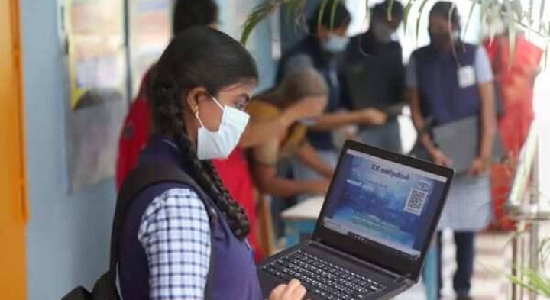
New Delhi, Jul 29: The new National Education Policy (NEP) approved by the Union Cabinet on Wednesday is set to usher in a slew of changes with the vision of creating an education system that contributes directly to transforming the country, providing high-quality education to all, and making India a global knowledge superpower.

The draft of the NEP by a panel headed by former Indian Space Research Organisation (ISRO) chief Kasturirangan and submitted to the Union Human Resource Development Minister Ramesh Pokhriyal when he took charge last year. The new NEP replaces the one formulated in 1986.

Some of the key highlights of the New Education Policy are:-

The policy aims to enable an individual to study one or more specialized areas of interest at a deep level, and also develop character, scientific temper, creativity, spirit of service, and 21st century capabilities across a range of disciplines including sciences, social sciences, arts, humanities, among others.

It identified the major problems facing the higher education system in the country and suggested changes such as moving towards multidisciplinary universities and colleges, with more institutions across India that offer medium of instruction in local/Indian languages, a more multidisciplinary undergraduate education, among others. 

The governance of such institutions by independent boards having academic and administrative autonomy has also been suggested.

Under the suggestions for institutional restructuring and consolidation, it has suggested that by 2040, all higher education institutions (HEIs) shall aim to become multidisciplinary institutions, each of which will aim to have 3,000 or more students, and by 2030 each or near every district in the country there will be at least one HEI.

The aim will be to increase the Gross Enrolment Ratio in HEIs including vocational education from 26.3 per cent (2018) to 50 per cent by 2035.

Single-stream HEIs will be phased out over time, and all will move towards becoming vibrant multidisciplinary institutions or parts of vibrant multidisciplinary HEI clusters.

It also pushes for more holistic and multidisciplinary education to be provided to the students.

Comments

Add new comment

  • Coastaldigest.com reserves the right to delete or block any comments.
  • Coastaldigset.com is not responsible for its readers’ comments.
  • Comments that are abusive, incendiary or irrelevant are strictly prohibited.
  • Please use a genuine email ID and provide your name to avoid reject.