


Unity & Love are basic mantras to address Kashmir problem: PM

August 28, 2016

New Delhi, Aug 28: Prime Minister Narendra Modi today said "Ekta" (unity) and "Mamata" (love) are the basic mantras for addressing the Kashmir problem even as he slammed those pushing children to create unrest, saying they will have to give answers to those "innocent" kids some day. He emphasised that if any life is lost in Kashmir, whether of any youth or any securityman, "that loss is ours, of our own country".
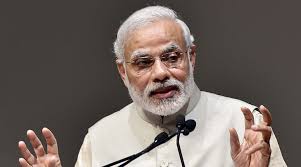
modipmSpeaking on the unrest in the valley in his monthly radio programme 'Mann Ki Baat', Modi said, "From the interactions I had with all parties on Kashmir, one thing emerged from those, which can be put in simple words as 'Ekta' and 'Mamata'. These two things were the basic mantra."

He said all the political parties had spoken in one voice on Kashmir, sending out a "message to the world as well as separatist forces" besides conveying "our sentiments to the people of Kashmir". He equated it to the passage of landmark GST Bill by Parliament for which all the parties came together.

"It is the view of all of us, the view of 125 crore people from a pradhan of a village to the Prime Minister, that if any life is lost in Kashmir, whether of any youth or any securityman, that loss is ours, our own country," Modi said.

At the same time, he slammed "those people who push small children to try to create unrest in Kashmir", saying "some day, they will have to give answers to these innocent children". The Prime Minister's remarks came a day after Jammu and Kashmir Chief MInister Mehbooba Mufti met him and presented a "three-pronged action plan" that includes dialogue with all stakeholders.

Comments

abdul
 - 
Sunday, 28 Aug 2016

Devil preaching the peace & harmony

Add new comment

  • Coastaldigest.com reserves the right to delete or block any comments.
  • Coastaldigset.com is not responsible for its readers’ comments.
  • Comments that are abusive, incendiary or irrelevant are strictly prohibited.
  • Please use a genuine email ID and provide your name to avoid reject.
Agencies
May 28,2020

Kochi, May 28: In these pandemic times, when the businesses are gravely affected and the MSMEs are particularly feeling the heat, a Kerala institute has come up with an initiative to help the distressed industry. The Institute of Small Enterprises and Development (ISED) has come out with a unique platform -- 'business clinic' for extending advisory services to the COVID-19 affected MSMEs in the state.

The Kochi based ISED's multi-disciplinary team of experts will offer free guidance to entrepreneurs to make a self-evaluation for improving their performance.

It will serve the interests of the MSMEs, entrepreneurial aspirants, such as the returning migrants, start-ups, educated unemployed, and women entrepreneurs.

ISED director, PM Mathew said COVID-19 pandemic has shattered the budgets and operations of most SMEs, globally, as also in India.

"Post-lockdown, the operational problems are likely to get aggravated. Beyond the broad macro level projections and debates, it is now time to act at the grassroots level. Many entrepreneurs need appropriate clinical assessment, and moral and psychological support, said Mathew.

According to the work force participation data at the national level, Kerala is ranked 31 in terms of the number of self employed, and placed in second rank in relation to the size of casual labour.

The Kerala Enterprise Development Report, brought out by the ISED states while the number of the unregistered enterprises is sizeable, constituting 76.85 % of the total, the respective share of registered MSMEs is only 9.53 %.

The constraints to these enterprises today are, poor sales, large inventory, delayed payments, damage of stock, wage bill arrears, unreliable labour supplies, fund diversion due to exigencies, GST related problems, and NPA/poor credit score.

"For all businesses, unlike in a sporadic recession in the economy, the danger today is circular and cumulative. Both from the demand side, and the supply angle, there is a serious contraction of business activities, which essentially means a glut in the cash flow. Corporate businesses, obviously, will come out of the mess due to their relative advantages of high reserve funds, liberal credit offerings, and easier access to alternative sources of finance," said Mathew.

Comments

Add new comment

  • Coastaldigest.com reserves the right to delete or block any comments.
  • Coastaldigset.com is not responsible for its readers’ comments.
  • Comments that are abusive, incendiary or irrelevant are strictly prohibited.
  • Please use a genuine email ID and provide your name to avoid reject.
News Network
January 21,2020

Jan 21: Indian policymakers may make it easier for companies to tap foreign funding, as a prolonged cash squeeze makes it tough for firms to borrow at home.

Investors are speculating about potential steps Finance Minister Nirmala Sitharaman could unveil when she presents the nation’s budget on Feb. 1. These measures may include freeing up firms to borrow at higher rates and offering tax breaks to global funds.

“The government will need to relax local rules to make it easier for Indian companies to raise debt overseas and tide over the funding crunch in the onshore market,” said Raj Kothari, London-based head of trading at Jay Capital Ltd. “At the same time, they need to ensure that the borrowers tapping offshore markets abide with stricter corporate governance so as to avoid further defaults.”

A prolonged crisis in India’s shadow bank sector and a pile of bad loans at traditional lenders is making it expensive for Indian companies, other than the best-rated firms, to access funding. The government has tried a series of measures to spur domestic credit, including providing so-called credit enhancement and allowing tiny firms to restructure debt.

Here are some steps Sitharaman may consider to spur foreign borrowing:

• She could raise the cap of 450 basis points above Libor, which limits overall foreign debt costs for Indian companies

• This could help lower-rated firms sell bonds abroad. Indian companies rated BBB currently borrow at more than 10%, about 3.8 percentage points more than their top-rated peers;

• Sitharaman could waive the withholding tax foreign investors need to pay on holdings of rupee-denominated debt sold by Indian companies abroad

• The waiver was offered between September 2018 to March 2019, but wasn’t extended as the highest global interest rates since the financial crisis deterred Indian borrowers. Since then, the three-month Libor has dropped by about 1 percentage point

• She could permit Indian property developers and housing finance lenders to sell overseas bonds for reasons beyond affordable housing projects

• New funding lines to the real estate sector, arguably ground zero of India’s economic slowdown, could help kickstart consumption and investment as the industry is the nation’s biggest job-creator.

Comments

Add new comment

  • Coastaldigest.com reserves the right to delete or block any comments.
  • Coastaldigset.com is not responsible for its readers’ comments.
  • Comments that are abusive, incendiary or irrelevant are strictly prohibited.
  • Please use a genuine email ID and provide your name to avoid reject.
News Network
March 20,2020

New Delhi, Mar 20: The coronavirus pandemic will leave behind a global recession with small businesses, self-employed and daily wagers taking the worst hit, Mahindra Group Chairman Anand Mahindra said on thursday.

"The virus will eventually be conquered, but it will have left behind a global recession. The costs of that are incalculably high at this time. The most fearsome toll will be on small businesses, the self-employed & those whose lives depend on meagre daily wages," Mahindra said in a tweet.

Apart from the toll on lives, the legacy of Covid-19 may well be deaths due to stress, loss of livelihoods, a rise in homelessness and in extreme situations, civil unrest, he added.

"The only global experience that has lessons for us in the current situation is the last world war. In the aftermath of WW2, the US came up with the Marshall plan to revive Europe, effectively a giant fiscal pump-priming," Mahindra said.

In the US, the government dramatically dismantled regulations and opened up the economy to trade and these actions led to a boom-cycle that stretched to 1975, he added.

"This time, there will be no victors, only the vanquished. So every country will have to create its own post ‘virus war” marshall plan & take care of those in society who are hit the hardest. Perhaps we too can build the foundations of a sustained global growth cycle," Mahindra said.

Comments

Add new comment

  • Coastaldigest.com reserves the right to delete or block any comments.
  • Coastaldigset.com is not responsible for its readers’ comments.
  • Comments that are abusive, incendiary or irrelevant are strictly prohibited.
  • Please use a genuine email ID and provide your name to avoid reject.