Unity & Love are basic mantras to address Kashmir problem: PM

August 28, 2016

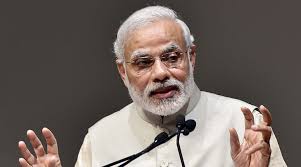
New Delhi, Aug 28: Prime Minister Narendra Modi today said "Ekta" (unity) and "Mamata" (love) are the basic mantras for addressing the Kashmir problem even as he slammed those pushing children to create unrest, saying they will have to give answers to those "innocent" kids some day. He emphasised that if any life is lost in Kashmir, whether of any youth or any securityman, "that loss is ours, of our own country".

modipmSpeaking on the unrest in the valley in his monthly radio programme 'Mann Ki Baat', Modi said, "From the interactions I had with all parties on Kashmir, one thing emerged from those, which can be put in simple words as 'Ekta' and 'Mamata'. These two things were the basic mantra."

He said all the political parties had spoken in one voice on Kashmir, sending out a "message to the world as well as separatist forces" besides conveying "our sentiments to the people of Kashmir". He equated it to the passage of landmark GST Bill by Parliament for which all the parties came together.

"It is the view of all of us, the view of 125 crore people from a pradhan of a village to the Prime Minister, that if any life is lost in Kashmir, whether of any youth or any securityman, that loss is ours, our own country," Modi said.

At the same time, he slammed "those people who push small children to try to create unrest in Kashmir", saying "some day, they will have to give answers to these innocent children". The Prime Minister's remarks came a day after Jammu and Kashmir Chief MInister Mehbooba Mufti met him and presented a "three-pronged action plan" that includes dialogue with all stakeholders.

Comments

abdul
 - 
Sunday, 28 Aug 2016

Devil preaching the peace & harmony

Add new comment

  • Coastaldigest.com reserves the right to delete or block any comments.
  • Coastaldigset.com is not responsible for its readers’ comments.
  • Comments that are abusive, incendiary or irrelevant are strictly prohibited.
  • Please use a genuine email ID and provide your name to avoid reject.
News Network
January 24,2020

New Delhi, Jan 24: Although India's Ujjwala programme encouraged adoption of liquefied petroleum gas (LPG) for cooking among the poor, households availing the scheme have not shifted away from using highly polluting fuels like firewood, a study reveals.

The researchers, including those from the University of British Columbia (UBC) in Canada, found that additional incentives to encourage regular use of cooking gas are necessary for a complete transition to clean cooking fuel among poor rural households.

They noted that about 2.9 billion people across Asia, Africa, and Latin America burn solid fuels like firewood to meet their cooking energy needs.

This has significant negative implications for public health, the environment, and societal development, according to the researchers.

Through the Pradhan Mantri Ujjwala Yojana (PMUY), India has provided capital cost subsidies to poor women to adopt a clean-burning cooking fuel or LPG.

The researchers explained that within the first 40 months of the scheme, more than 80 million households obtained LPG stoves.

However, the full benefits of LPG adoption depend on near complete replacement of polluting fuels with LPG, according to a research-based policy brief published in the journal Nature Energy.

The scientists said this cannot be assumed solely on the basis of LPG presence in the household.

"Our research shows that Ujjwala was able to attract new consumers rapidly, but those consumers did not start using LPG on a regular basis," Abhishek Kar, a postdoc at Columbia University in the US, told PTI.

The study analysed LPG sales data for over 25,000 consumers, including PMUY beneficiaries, as well as general rural LPG consumers in Koppal district of Karnataka.

The scientists employed data covering all LPG purchases of PMUY beneficiaries through their first year in the programme.

They also assessed the general rural population's purchases during their first five years as consumers to assess the effect of experience on use.

The findings estimate that an average rural family needs to purchase five 14.2 kilogramme-cylinders annually to meet half of their cooking needs.

However, the study said just seven per cent of PMUY beneficiaries in Koppal purchased five or more cylinders annually, suggesting that the beneficiaries seldom use LPG.

The general (nonPMUY) consumers in this region use on average two times more LPG cylinders than PMUY beneficiaries, the researchers noted.

Yet, only 45 per cent of nonPMUY consumers use five or more cylinders per year -- even after several years of experience with LPG, they said.

The team assessed price and seasonal factors affecting LPG use among the general population over a three-year period.

It found that LPG consumers are sensitive to price and seasonality -- LPG cylinder refill rates are lower in the summer when agricultural activity is limited, and cash is scarce.

"There was no scheme incentives to promote use, except general LPG subsidies which is available to all, including the urban middle class," said Kar, who was a Ph.D. scholar at UBC when the research was published.

"If there is no additional income, what cost would a poor family on an already tight budget cut to pay for an extra expense on a regular basis.

"Ujjwala has started the scheme of 5 kg-cylinder in response, but the impact of that on LPG sales is still publicly unknown," he said.

These findings, the researchers noted, suggest the need for additional measures to promote regular LPG use for all rural populations.

Although the finding come from a single district in Southern India, it may also apply to other areas with similar socio-economic conditions, they said.

A more expansive evaluation of PMUY would help design targeted incentives to transform infrequent users to regular users, according to the researchers.


Comments

Add new comment

  • Coastaldigest.com reserves the right to delete or block any comments.
  • Coastaldigset.com is not responsible for its readers’ comments.
  • Comments that are abusive, incendiary or irrelevant are strictly prohibited.
  • Please use a genuine email ID and provide your name to avoid reject.
News Network
March 3,2020

New Delhi, Mar 3: A day after two new cases of novel coronavirus that included one from Delhi were reported, the Health Ministry on Tuesday said six cases with "high-viral load" were detected during sample testing in Agra and these people have been kept in isolation. The six people had come in contact with a 45-year-old patient from Delhi, whose case came to light on Monday, and they include his family members.

According to government sources, the man, who is a resident of Mayur Vihar, had visited them in Agra.

The six have been kept in isolation at Safdarjung Hospital in Delhi and their samples are being sent to NIV, Pune for confirmation.

Contact tracing of the people who came in contact with the six is simultaneously being done through the Integrated Disease Surveillance Program (IDSP) network, the ministry said in a statement.

Sources said the patient from Mayur Vihar was shifted to a quarantine ward at Safdarjung Hospital on Sunday night.

His other family members have been asked to stay alert and look out for symptoms. One accountant, who came in contact with the man and some of his family members, was also quarantined, they said.

India on Monday reported two new cases of the novel coronavirus, one from Delhi and another one from Hyderabad. The government has stepped up its efforts to detect and check the infection which has killed 2,912 people in China.

On Monday, Rajasthan Health Minister Raghu Sharma had said that an Italian tourist tested positive for coronavirus in Jaipur.

The first sample collected from him on February 29 tested negative but his condition deteriorated, so a second sample was collected which tested positive on Monday, the minister said, adding, "Since there is a variation in the reports, the samples have been sent to the NIV, Pune for testing".

India had earlier reported three cases from Kerala, including two medical students from Wuhan in China, the epicentre of the deadly novel coronavirus. They had self-reported on their return to the country and tested positive for the infection. They were discharged from hospitals last month following recovery.

The infected person from Delhi had travelled to Italy, while the other patient who tested positive for the COVID-19 infection is from Telangana and had recently travelled to Dubai.

Both the patients had self-reported after they developed symptoms.

"They tested positive. They are stable and being closely monitored," ministry said on Monday.

The government has asked people to avoid non-essential travel to Iran, Italy, South Korea and Singapore and said India was in discussions with authorities in Iran and Italy, two countries badly affected by the infection, to evacuate Indians there.

The novel coronavirus or COVID-19, which originated in China, has spread to over 60 countries.

Comments

Add new comment

  • Coastaldigest.com reserves the right to delete or block any comments.
  • Coastaldigset.com is not responsible for its readers’ comments.
  • Comments that are abusive, incendiary or irrelevant are strictly prohibited.
  • Please use a genuine email ID and provide your name to avoid reject.
News Network
January 2,2020

Perambalur, Jan 2: Veteran Tamil writer Nellai Kannan was arrested in Perambalur for criticizing Prime Minister Narendra Modi and Home Minister Amit Shah during a protest against Citizenship (Amendment) Act.

The Tirunelveli Police had registered the FIR against the writer for the speech delivered at a meeting, which was called by the Social Democratic Party of India on December 29 last year.

The police have booked him on the basis of multiple complaints filed by BJP leaders.

Kannan has been booked under Sections 504, 505(1) and 505(2) of the Indian Penal Code.

Comments

Add new comment

  • Coastaldigest.com reserves the right to delete or block any comments.
  • Coastaldigset.com is not responsible for its readers’ comments.
  • Comments that are abusive, incendiary or irrelevant are strictly prohibited.
  • Please use a genuine email ID and provide your name to avoid reject.